
For several years now, the future of future Alfa Romeo Giulia and Stelvio seemed relatively well-designed. The two models were set to usher in a new generation based on Stellantis’ STLA Large platform, with a 100% electric focus. But the past few months have completely reshuffled the deck, to the point where one might now wonder whether the Biscione’s upcoming sedans and SUVs will ultimately be developed, at least in part, with Maserati’s future industrial partner.
Long-awaited replacements
The current Alfa Romeo Giulia and Stelvio are now approaching their tenth year on the market. Despite a design that has stood the test of time remarkably well and handling that is still considered the benchmark in their respective categories, these two models need a new generation to revitalize their sales momentum.
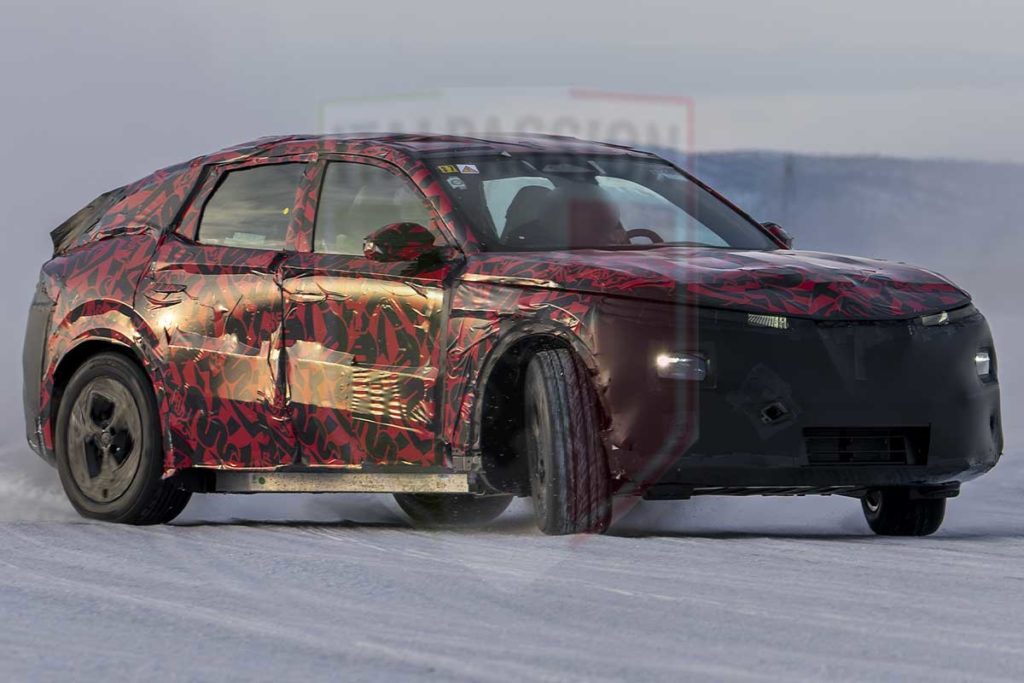
When creating Stellantis, the group had clearly outlined its plan: the upcoming Giulia and Stelvio would be based on the STLA Large platform and would adopt a 100 % electric powertrain. The project was even far enough along that prototypes of the future Stelvio were photographed during winter testing in Lapland.
Then, after a first rumors in late 2024, a dramatic turn of events in 2025. Faced with an electric vehicle market that was less dynamic than expected, Stellantis decided to rethink its strategy. The upcoming Giulia and Stelvio have been delayed in order to incorporate a multi-energy lineup that includes gasoline, hybrid, and electric versions. The problem is that the platform STLA Large LP3 had not been designed to accommodate hybrid powertrains. Added to this is another challenge: Stellantis does not currently have a high-performance hybrid powertrain capable of naturally meeting the expectations of a Giulia or a Stelvio, which are positioned in the premium sports segment.
The Alfa Romeo-Maserati Synergy Strategy
While the projects were delayed, Stellantis announced a Strategic partnership between Alfa Romeo and Maserati. A logical approach on paper.
On one side, the upcoming Alfa Romeo Giulia and Stelvio. On the other, the upcoming Maserati Quattroporte and Levante. These four models are positioned in similar segments (D-segment and premium for Alfa Romeo; E-segment and luxury for Maserati) and are set to be produced at the same plant in Cassino, which is slated to become the group’s production hub for premium and luxury models in Italy.
This industrial approach fit perfectly into the overall organization of the group’s Italian brands. The Alfa Romeo Junior is already based on the CMP platform, which it shares with other Stellantis models. The future Alfa Romeo Tonale will use the STLA Medium platform, which is shared, in particular, with the future DS No. 7 and Lancia Gamma, all of which are produced in Melfi. As for the upcoming Giulietta, it is expected to be based on the STLA One platform.
In other words, until recently, the picture seemed relatively clear: the Giulia, Stelvio, Quattroporte, and Levante would share a common technical platform as part of a strategy to leverage synergies between Alfa Romeo and Maserati.
Filosa's latest statements are a game-changer
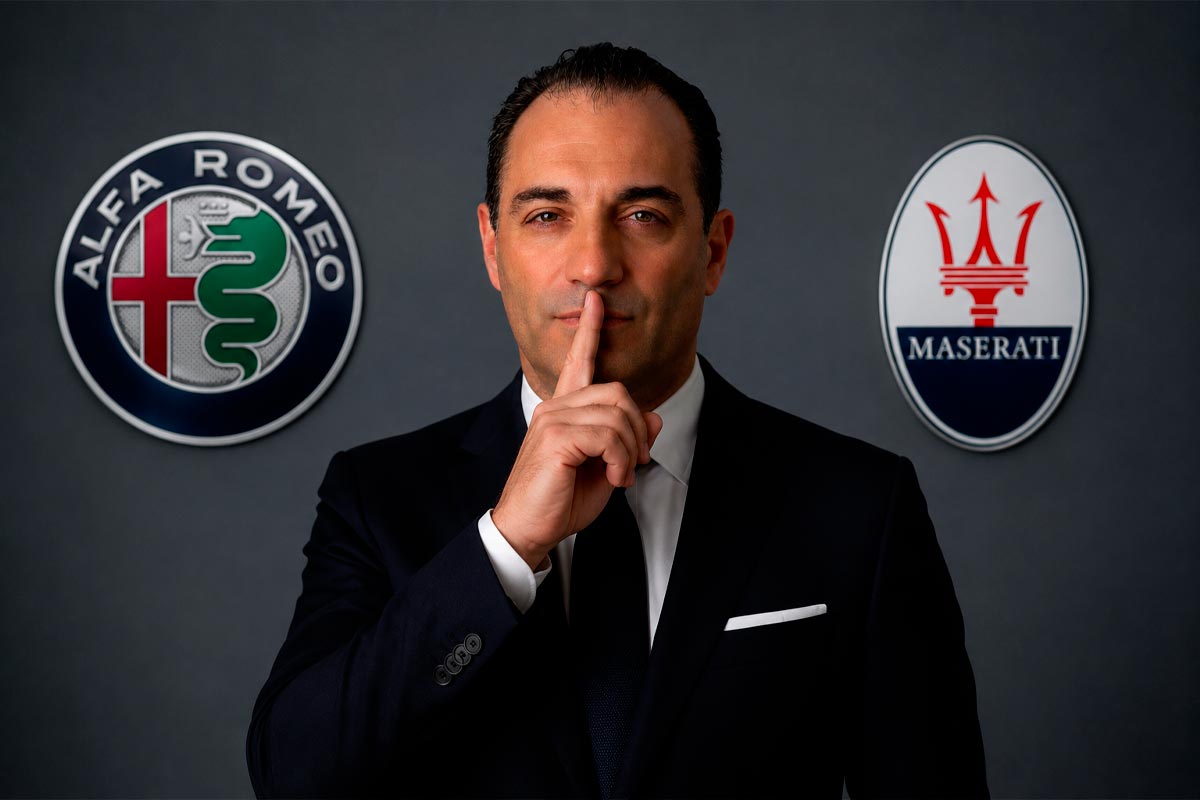
It is precisely this certainty that has just been called into question by Antonio Filosa. Testifying before the Italian Parliament on June 17, 2026, to outline Stellantis’s industrial strategy in Italy, the new CEO spoke about Maserati’s future in particularly surprising terms.
According to him, Stellantis is currently in talks with two potential partners to collaborate on the development of the Trident brand.
«We are in talks with two major partners who can provide us with technology, development resources, and excellent ideas.»
Antonio Filosa also said that the group would soon select its partner. He added:
«Maserati is not for sale, Cassino is not for sale.»
He went on to add that cooperation and development partnerships could be established both in Cassino and at the group’s other plants (such as Leapmotor in Spain and Dongfeng in France). Finally, the executive explained that Maserati deserved a separate discussion and that a concrete industrial plan for the brand would be presented next December. That deadline still seems a long way off, given that only a few models, concealed under tarps, were briefly shown. As of now, there is no confirmation of the nationality of these two partners. While some may be dreaming of Ferrari, there has been rumors involving Huawei and JAC Motors.
What if the future of the Giulia and Stelvio also depended on this partner?
This is probably the most interesting question raised by these statements. Because if Stellantis is currently looking for a technology partner to develop future Maserati models, this suggests that, aside from a few mockups and design concepts, the future Quattroporte and Levante do not yet seem far enough along to go into production anytime soon.
So, what will become of the much-touted synergies between Maserati and Alfa Romeo? If the next-generation Quattroporte and Levante are developed with the help of an outside partner, it seems hard to imagine that the future Giulia and Stelvio would remain completely outside the scope of this collaboration—especially if the goal is to share investments, platforms, or certain powertrain technologies.
For now, the situation remains completely unclear. And if there are two models whose future seems less certain today than it did a year ago, they are precisely the upcoming Alfa Romeo Giulia and Stelvio. Until we know more, the current Giulia and Stelvio will have to hold the fort. Antonio Filosa has confirmed that they will remain in the lineup for some time yet and will even be offered in new special editions. It’s a way to keep customers waiting… but also a sign that their replacements are likely further off than ever.
 English
  French
  Italian
  Spanish
  German
  Japanese
  Dutch
Dutch
It's better to leave Alfa and Maserati to another automaker—it can't get any worse.
The only one who can handle it… is Ferrari. In France, aside from Alpine, they haven’t had the expertise for anything in a long time, and their results in endurance racing are proof of that—so a sports car… not even in a dream.
True.
Get them both into the Ferrari team, perhaps in the same way that Ferrari left FIAT.
Stellantis retains 49%; 51% is sold.
This preserves the synergies for Ferrari, while giving Alfa and Maserati more freedom to move into different classes.
For me
Alfa could be ‘entry-level’ sports cars, a bit like Lotus.
Maserati could evolve into what it once was: a ‘civilized’ Ferrari. Think AMG or Alpina.
And sell the old one, too, considering what they're doing with it.
The decision to replace the 100% EV models had already been made back when FCA was still in charge. Stelltruc then forced a switch to the wider STLA platform partway through the process… which, as we know, delayed the entire project.
As far as I know, there is no longer any development underway! Alfa will either disappear or use American or Chinese platforms. The subcontractors involved (according to my sources) no longer have any active orders!!!!
The models will simply be badges with a slightly modified body and a few distinctive features.
We've come a long way from the days when we designed a car from scratch. Now we design a car just like we design an Android app.
It is dilution and disappearance.
The bodywork is barely different at Stellanpisse. Often, two-thirds—if not three-quarters—of the car is the same from one model to the next.
Thanks for this really interesting information—it explains the Quattroporte expected in 2025 (and then postponed to 2028), which I was wondering what platform it would be based on.
No, the electric 100% models were never approved under FCA, but of course under Stellantruc, as you say.
«The decision to replace the 100% EV models was made back when the company was still FCA.»
I wouldn't be so sure about that. As far as I know, it was Tavares—and Imparato—who made the decision to fully electrify the Alfa Romeo lineup (and Maserati, for that matter).
The only hope for Maserati and Alfa is a sale to another automaker—and hopefully not a Chinese one. Stellantis lacks the financial resources, and—what’s even more serious—the ability to develop these two prestigious brands.
Other «traditional» automakers are not necessarily in good financial health or in a position to make the necessary and sufficient investments. German automakers, too, are facing competition from China. .
There aren't many other options. I think a Chinese automaker will do better than Stellantis.
Apart from Ferrari, no one will be able to succeed… no one!
They have the financial resources, but not the expertise, since they’ve let all their best people go. They’re a group of mediocrities: they have no technical edge, no expertise, no vision, and no unique selling point. They don’t even have any ideas…
It’s clear that the other automakers aren’t doing any better, and no matter who owns Alfa Romeo, they won’t sell any more cars until there’s a real advertising campaign and, above all, dealerships—because cutting back on dealers wasn’t a good idea.
Alfa customers don't want to buy a 1.2 PureTec Junior or a 1.2 three-cylinder VW or anything like that, but not many people seem to understand that.
It has to be at least a 1.6- or 2.0-liter 4- or 6-cylinder engine.
Alfa Romeo and Maserati should be sold to Ferrari. Maybe Lancia, too.
That won't do any good.
He’s beating around the bush; they have nothing to offer now that the STLA Large project has been scrapped—a model that likely won’t go into production in Europe. It’s a shame, because with Peugeot, Opel, and DS, there was potential for some synergies on large hybrid SUVs.
In fact, it is precisely because customers want more Opel or Peugeot DS models that the group is in this situation.
The only way is to sell PSA/OV, which is completely dead and buried.
We’re paying the price for the mistakes made by Tavares and Imparato, who wanted the Giulia and Stelvio to be exclusively electric, unable to understand that they had to go through the hybridization phase. Partnering with the Chinese for electric motors wouldn’t be surprising, given that the Chinese are 10 years ahead in electric cars.
After all, these are just rumors, so they're not worth much.
We’d like to see a GranTurismo Folgore platform for the Quattroporte Folgore and the future electric Giulia, with electric motors from Fiat Powertrain, batteries assembled at Mirafiori as is already the case, and a partnership with Ferrari for the infotainment system and gearshift controls via paddles—but that’s probably asking too much, too obvious.
Thank you for putting it into words.
P.S.: The ZF is still reeeally good…
We're digging to the bottom.
And then there's the guy who says he needs partners to come up with «great ideas.» Well, get lost if you don't have any—that's your job 🤦🏼♂️
If Alfa Romeo, Maserati, Fiat, and basically all of Stellantis' brands had never been part of Stellantis or FCA, and had been left to their own devices, they would have had a better chance of surviving as true automakers.
I think this is all a clumsy setup for a broader decline in industries and manufacturers across European countries,
led by the evil EU and especially the European Commission.
I’m sad to say this, but most EU member states no longer exist as countries but as provinces of a larger, more evil union—the European Union—just like the former Soviet Union, or perhaps even worse.
They sold Magneti Marelli… and this is the result!
As Audiard says:
«Idiots will try anything, and that's how you spot them!»
Anyway, let's hope it lasts!
Alfa and Maserati must remain Italian to preserve their character and appeal. Components can come from elsewhere, but the design, engineering, and final assembly must be Italian.
Zombified brands, basically. They’re not appealing, and above all, they don’t inspire confidence. I’d almost wish that the Chinese would buy them out with their unlimited resources and create new models themselves. They’re already doing that with other brands—why not with these two? At least they have the resources, the ideas, and now… the know-how, too!!
Asians love Europe and its cultural heritage; this is evident from the large number of tourists who visit our romantic regions.
They'll take better care of our jewelry.
Next, you have to choose the right partner; Leapmotor seems to be targeting the mass market. This might be a complementary approach.
If Maserati, Alfa, and Lancia were to partner with Toyota/Lexus/Mazda, we’d all be over the moon, but with PSA… We’d all be in tears. We need to put an end to this bogus merger, and FCA needs to turn to a viable partner—and if not Ferrari, then the Toyota Group is the only one worth considering… because the other European brands are in the same shape as Stellantis.
«If Maserati, Alfa, and Lancia were to partner with Toyota/Lexus/Mazda, we'd all be over the moon.»
No, not me.
Maserati cars are totally underrated. Everyone talks about depreciation, but most people have never even driven a Maserati.
I've been driving all 911 models for 30 years; I've driven the Ferrari Roma, the Mercedes SL63, and the Aston Martin, but my Granturismo Modena is the best of them all. A true Granturismo for long-distance driving: quiet, air suspension, large trunk, low fuel consumption, four-seater, and environmentally friendly.
Everywhere I drive, people give me a „thumbs up“—it’s not like I’m showing off, and you rarely see this car around.
That’s exactly right. We bought a Levante Diesel a year ago. By the way, it’s our first Maserati—around here, almost no one dares to buy a car like that, but you can all go ahead and talk nonsense. We don’t care; we haven’t regretted our decision for a single second so far. We’re the only ones in our town who drive a Maserati, and that alone puts us in a good mood.
I've always believed that Italian automakers should have stayed away from the Americans, and they would have been better off giving the French a wide berth—a very wide berth, in fact. It's a shame that the Italian auto industry is being run into the ground this way.