

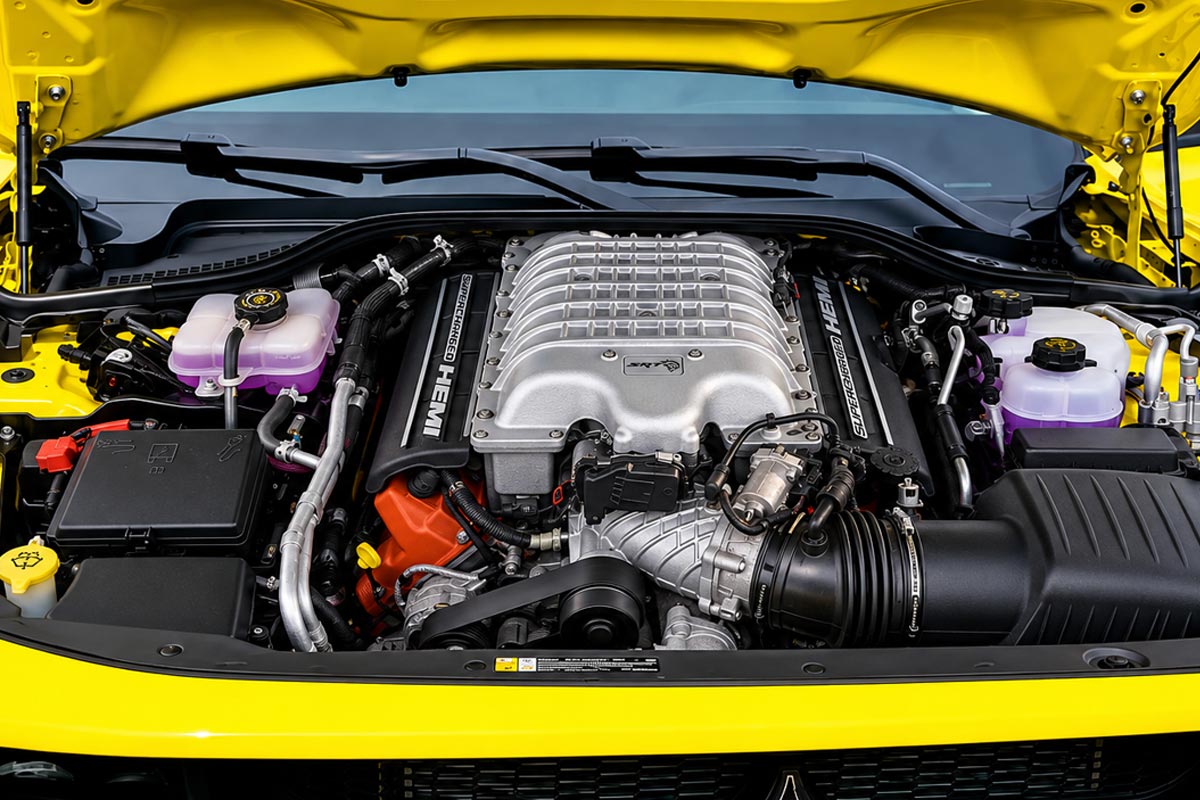
Stellantis continues its dramatic shift back to the U.S. market. While the group is pursuing its electrification strategy in Europe, the trend in the United States is quite different. After revived the HEMI V8 engines at Ram, then entered an increasingly powerful Hurricane six-cylinder engine With the new Dodge Charger, the automaker is set to take another step forward. The V8 is indeed making a comeback under the hood of the new Charger, and this time, it’s more than just a rumor. An internal document from Stellantis has just revealed some particularly interesting information.
An internal document confirms the return of the V8 in 2028
For several months now, rumors have been swirling about the return of the V8 at Stellantis. In particular, we had mentioned the possibility of a new 5.2-liter engine, potentially under development at the Trenton plant in the U.S. But in the end, it appears that an engine well known to Dodge enthusiasts is set to make a comeback.
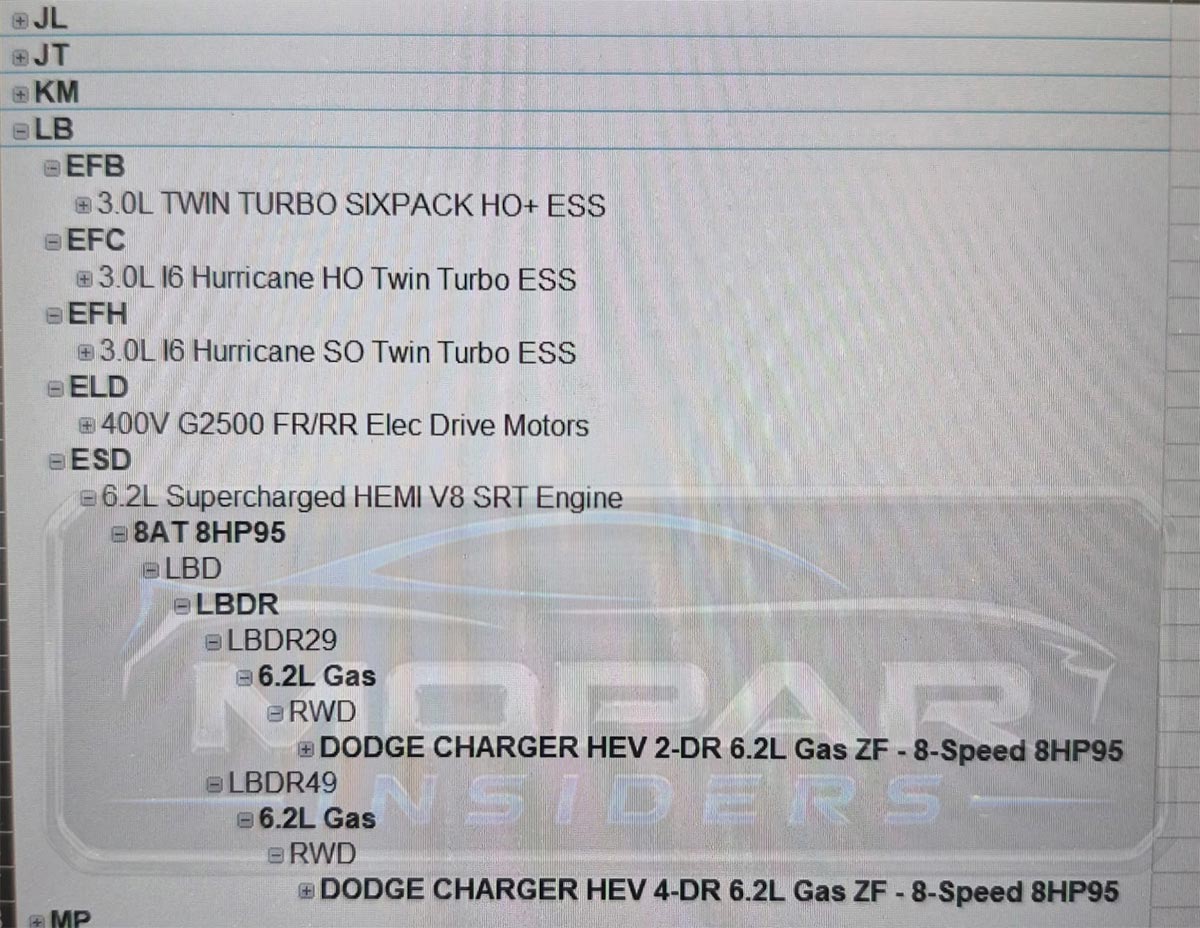
The American media outlet MoparInsiders obtained an internal Stellantis document detailing the engine options planned for the 2028 Dodge Charger. And among the various configurations is a particularly interesting option: the 6.2L HEMI V8 engine, paired with the ZF 8HP95 eight-speed automatic transmission. This is, of course, the famous Hellcat engine, which had disappeared from the Charger when the previous generation was discontinued. The document even mentions two configurations: a two-door Charger (LB29) and a four-door Charger (LB49), both rear-wheel drive.
Of course, Stellantis has not yet officially announced this engine, and production plans are always subject to change. But this time, we’re not just dealing with rumors: the V8 is mentioned in black and white in an internal planning document for 2028.
A V8 to round out an already very powerful lineup
This reversal is all the more surprising given that Stellantis seemed to have found a replacement for the V8 in the Hurricane inline-six engine. The new Dodge Charger, developed on the STLA Large platform, was initially launched as a 100 % all-electric model before adding internal combustion engine options. For 2028, the document still mentions the all-electric version, but also three variants of the 3.0-liter twin-turbo six-cylinder engine: 420 HP, 550 HP, and even 600 HP—the latter power rating having recently been announced for the Charger Super Bee.
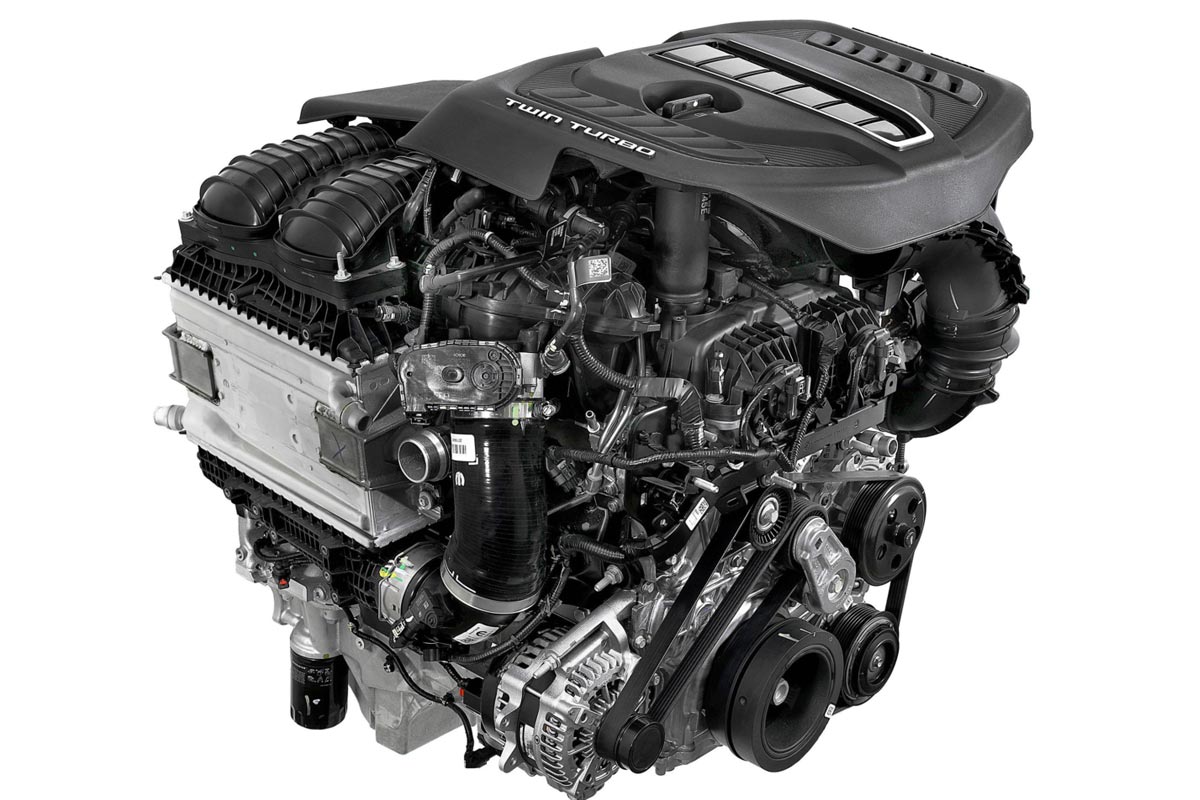
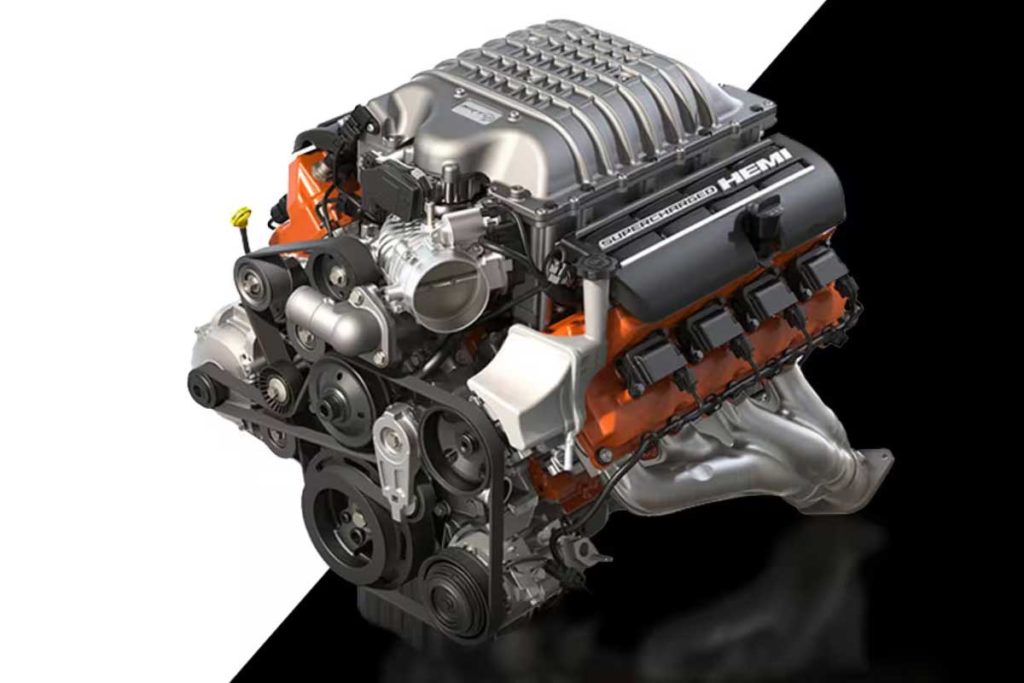
With that level of performance, why bring back a V8? Simply because American customers aren’t just looking for power figures. The sound, the mechanical character, and the image of the HEMI remain important selling points for muscle car enthusiasts. The power output of this upcoming Dodge Charger Hellcat is not yet known. By way of comparison, the supercharged 6.2-liter V8 in the 2027 Ram 1500 SRT TRX produces 777 HP.
Is this news also relevant to Maserati?
Beyond the return of the V8 to Dodge, this document reveals another key piece of information: the STLA Large platform can accommodate a powerful HEMI V8, paired with a ZF transmission capable of handling exceptionally high torque.
That’s interesting, since this architecture is also intended for use in other models from the Stellantis group… especially in the United States. It would be unthinkable to imagine this American V8 under the hood of a future Alfa Romeo. The Italian brand will prioritize a V6 hybrid powertrain first introduced with the CuoreRosso concept for its future D-segment model. This approach is very different from the one taken in the United States, where Stellantis now appears to be favoring large-displacement engines without necessarily turning to electrification.
But there is another Italian automaker that might be interested in bringing back the V8: Maserati. We recently reported that Statements by Davide Danesin, Maserati’s director of engineering, who explained that his teams were technically ready to incorporate a new eight-cylinder engine. According to him, the decision now depends primarily on Stellantis’ strategy.
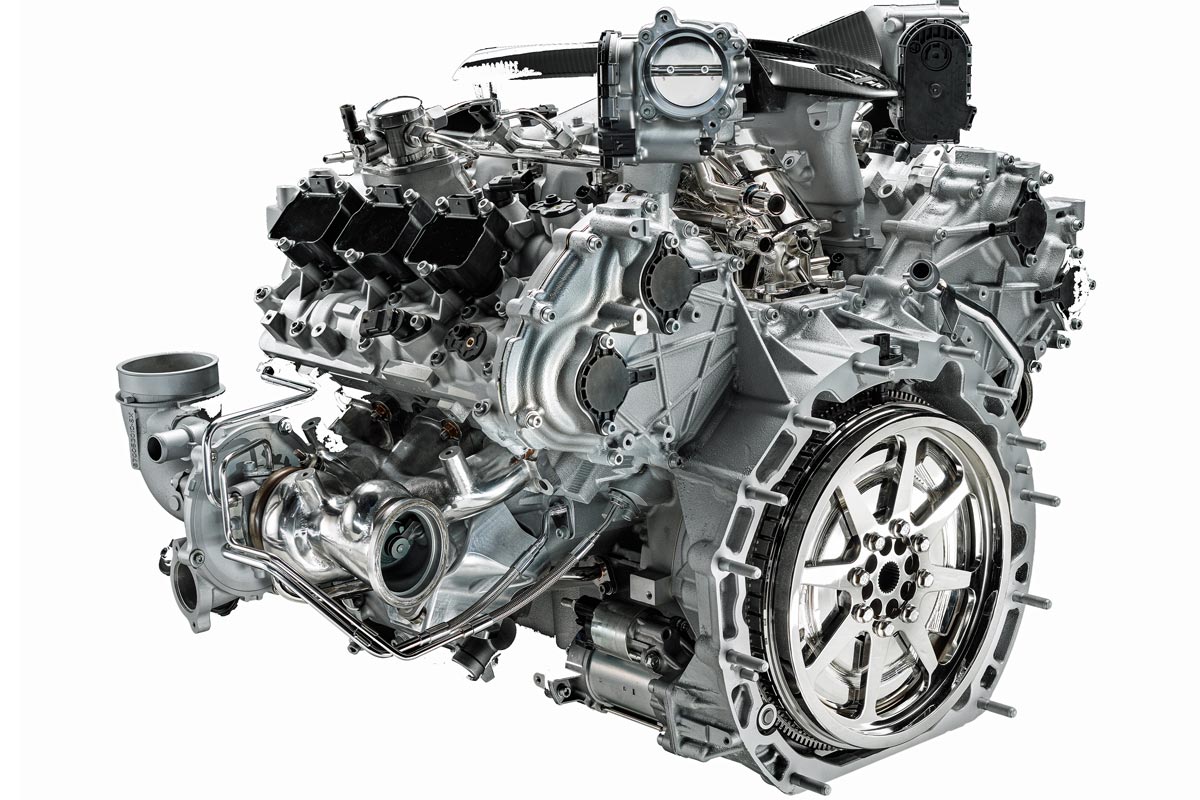
It remains to be seen which engine might be chosen. The executive had made it clear that the American HEMI V8s were too large for Maserati’s current architectures. A more compact solution—possibly based on the Nettuno V6 architecture—therefore seems more feasible. But developing a new V8 represents a considerable investment. And Stellantis’s history has already shown us that American engines can make the crossing to Europe, as demonstrated by the Pentastar V6. If Maserati really wanted to offer a V8 again, would it be simpler to add two cylinders to the Nettuno V6 or to modify an American V8…? Stay tuned!
 English
  French
  Italian
  Spanish
  German
  Japanese
  Dutch
Dutch