

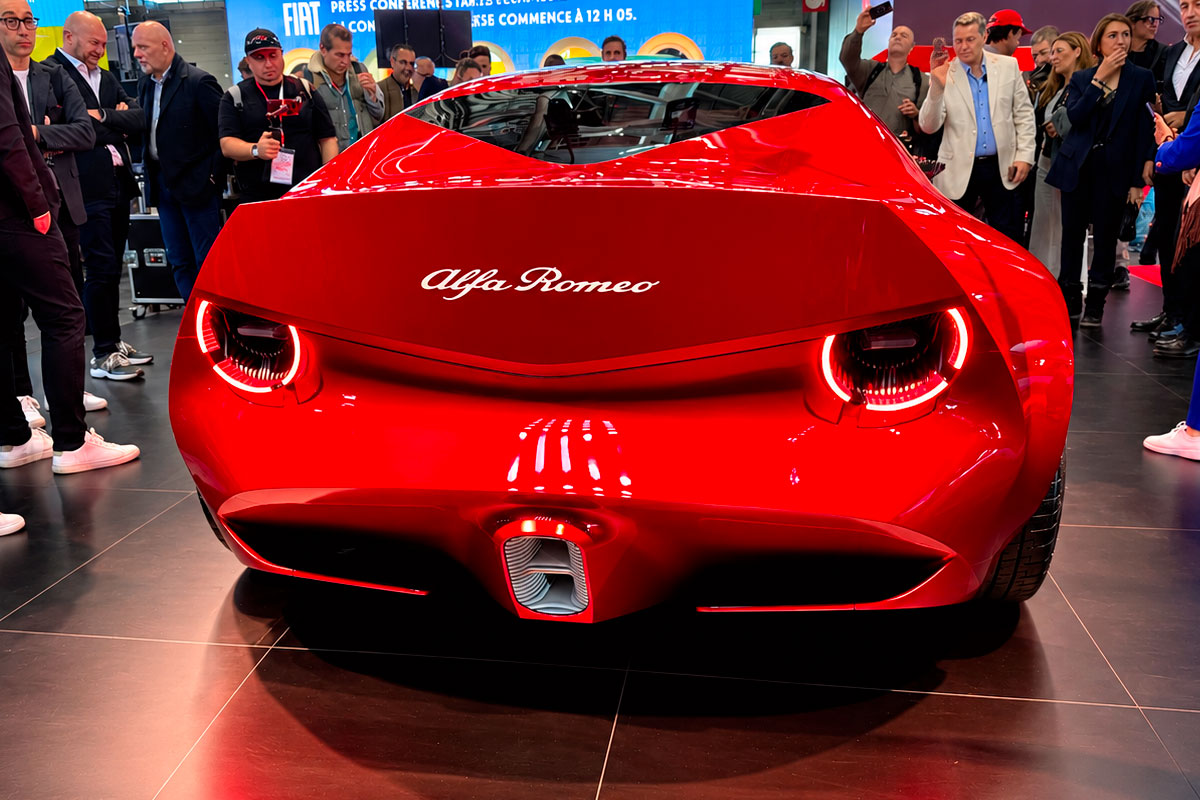
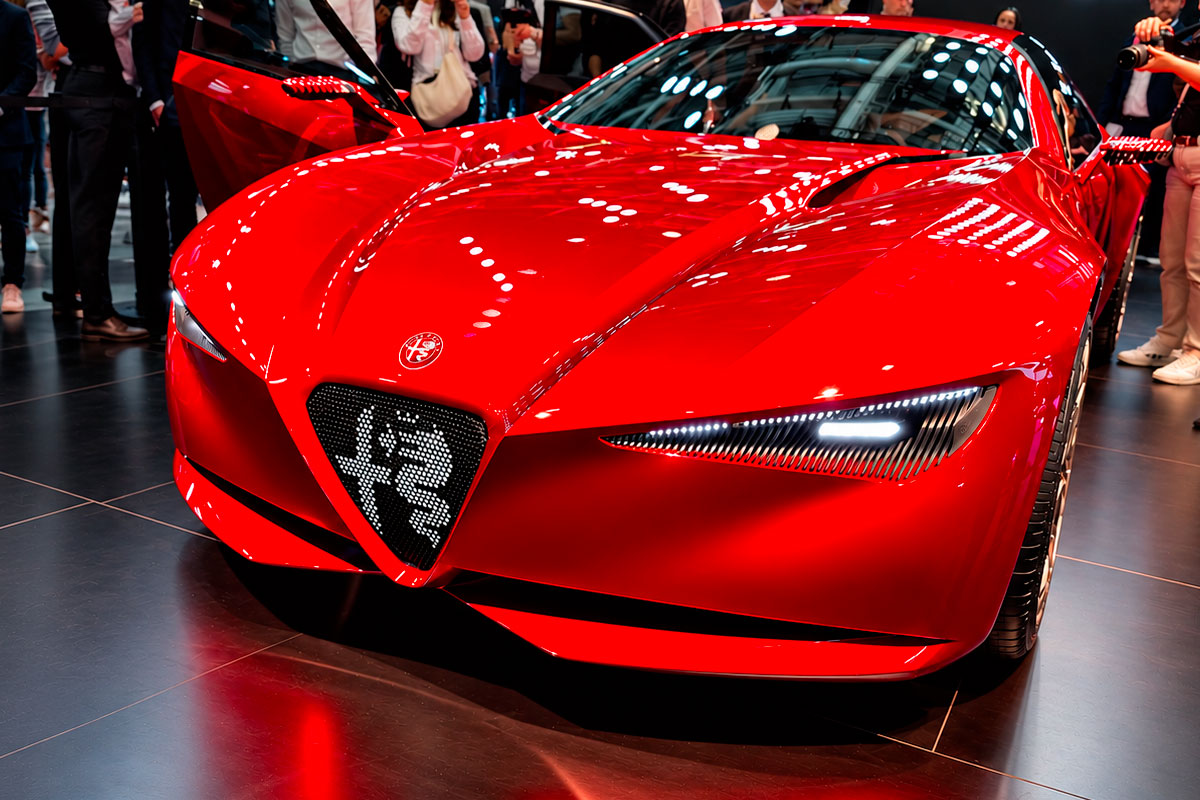
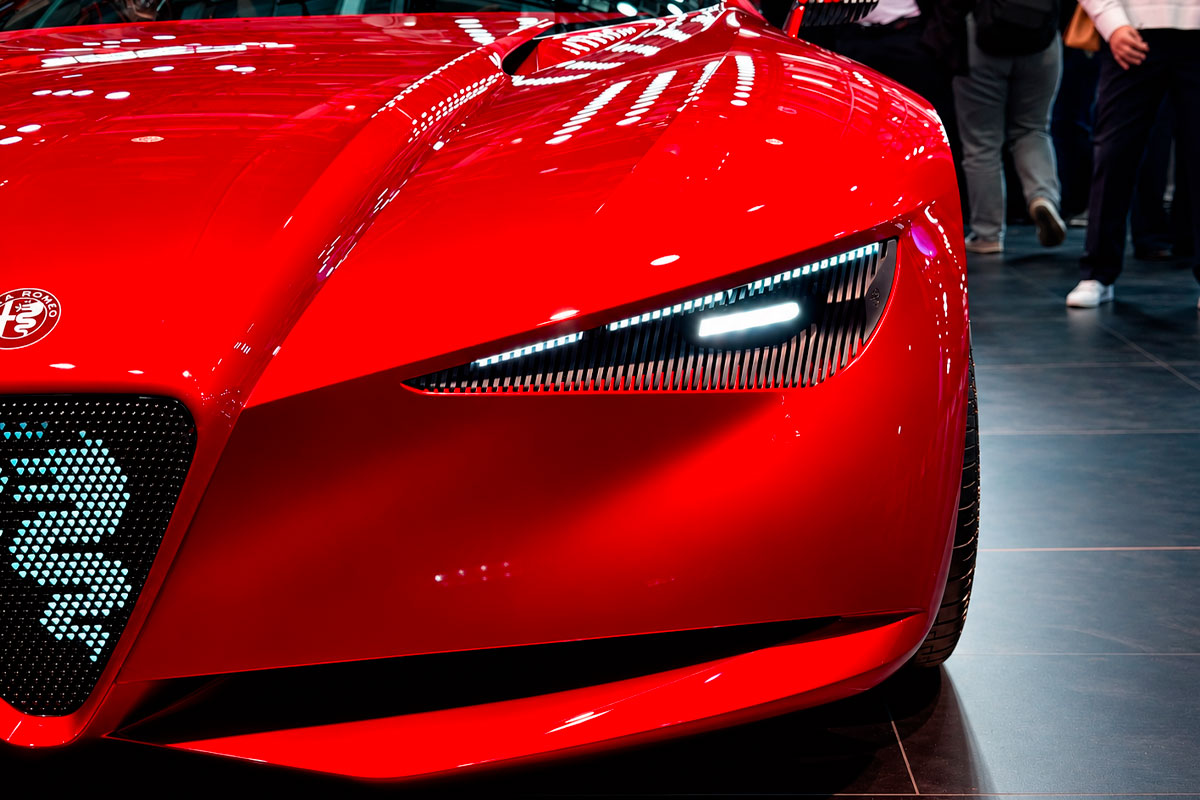
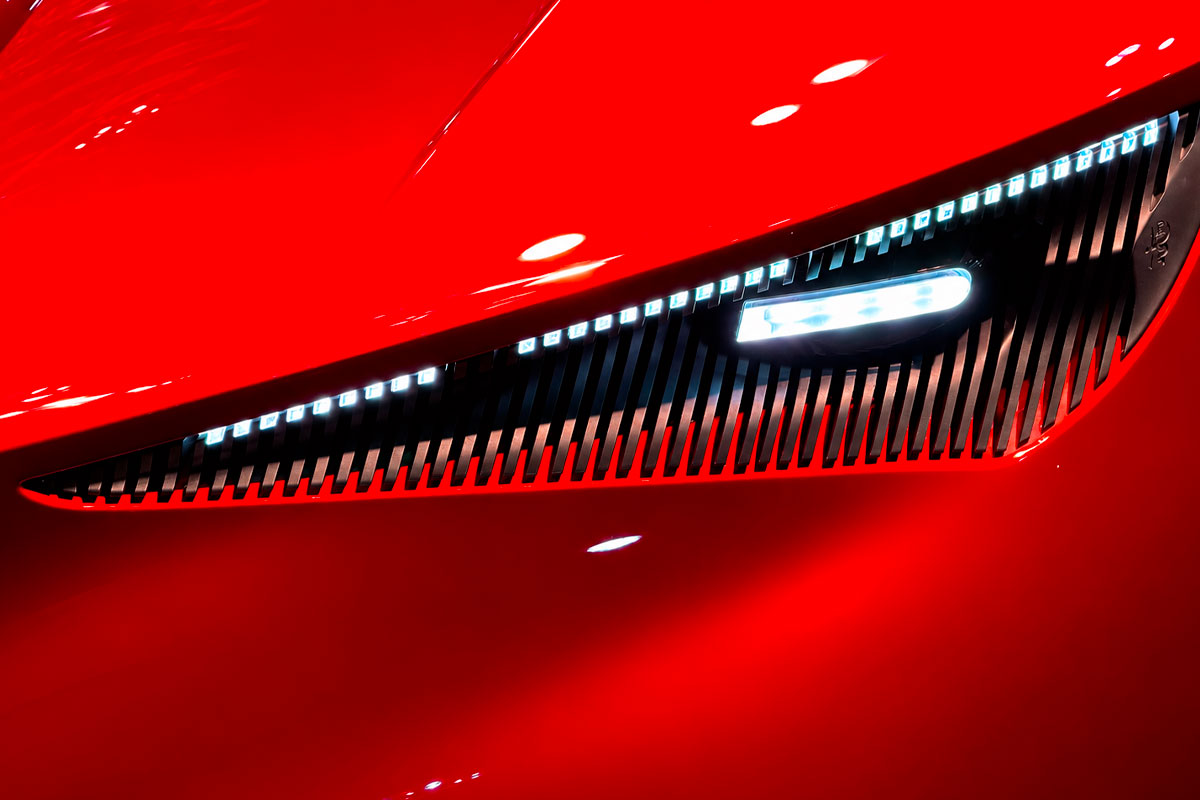
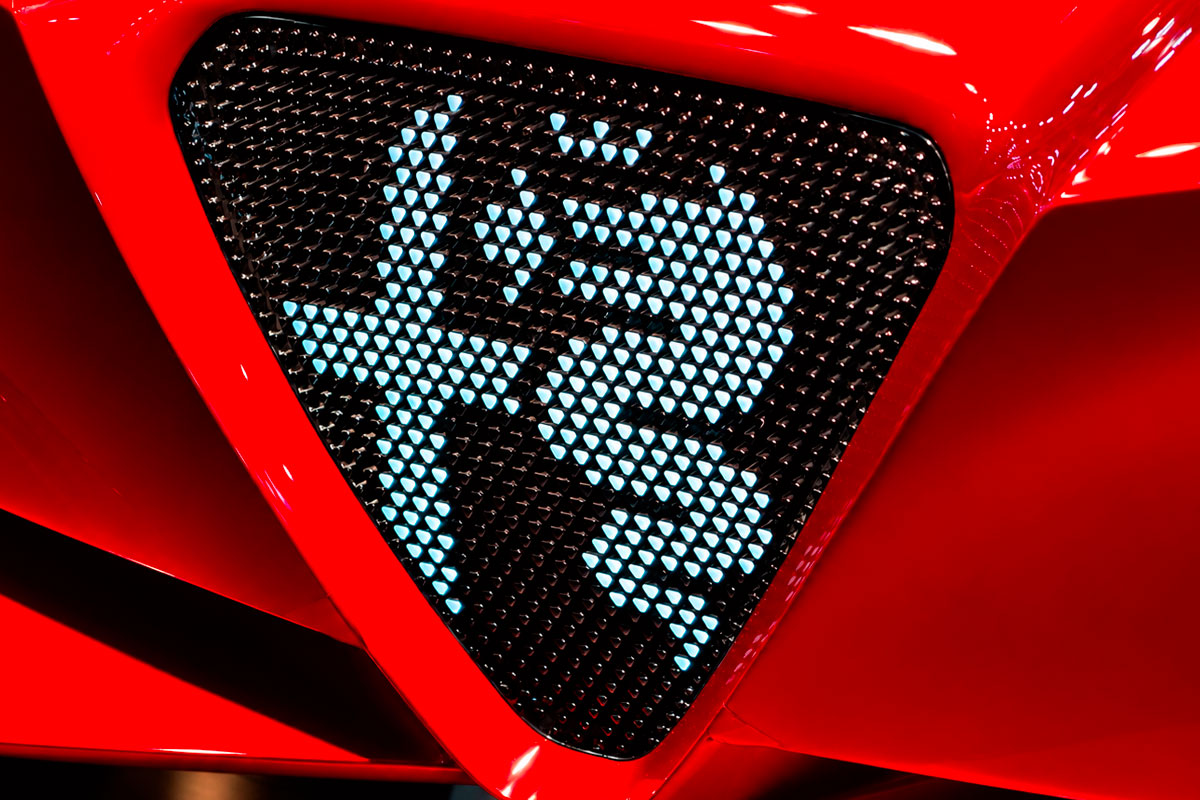
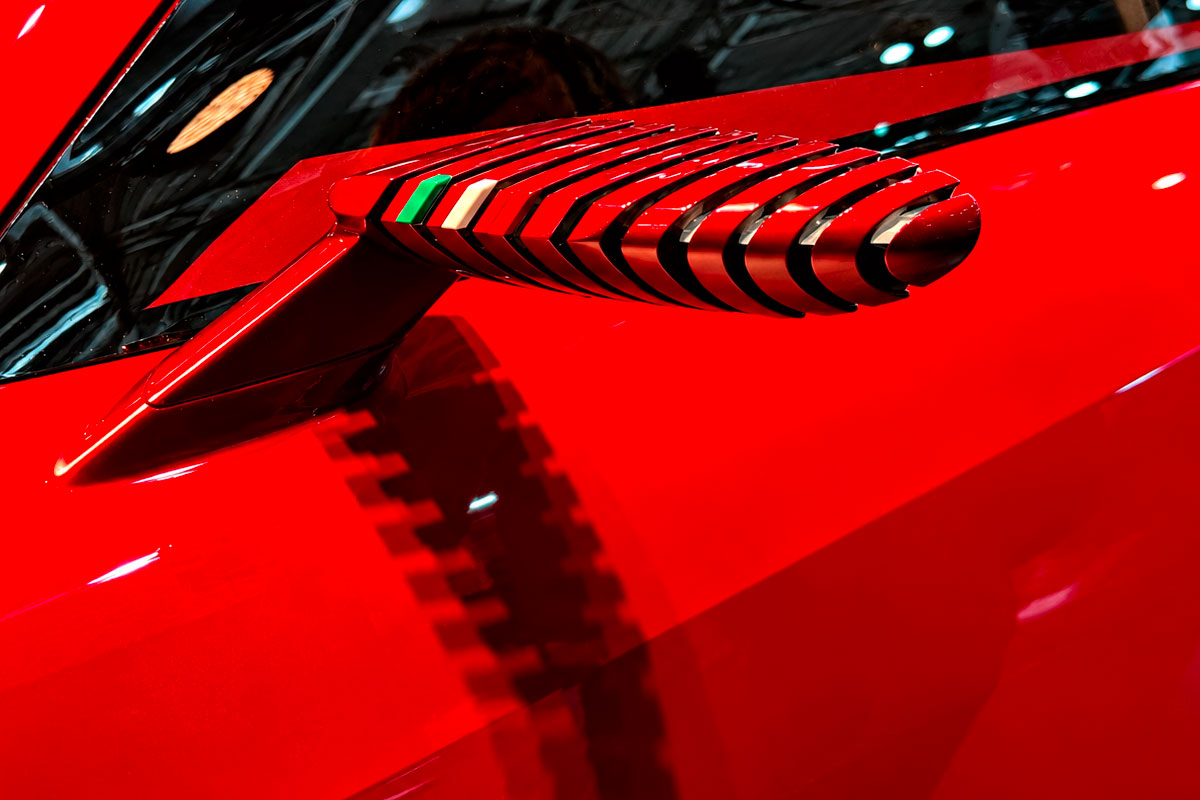
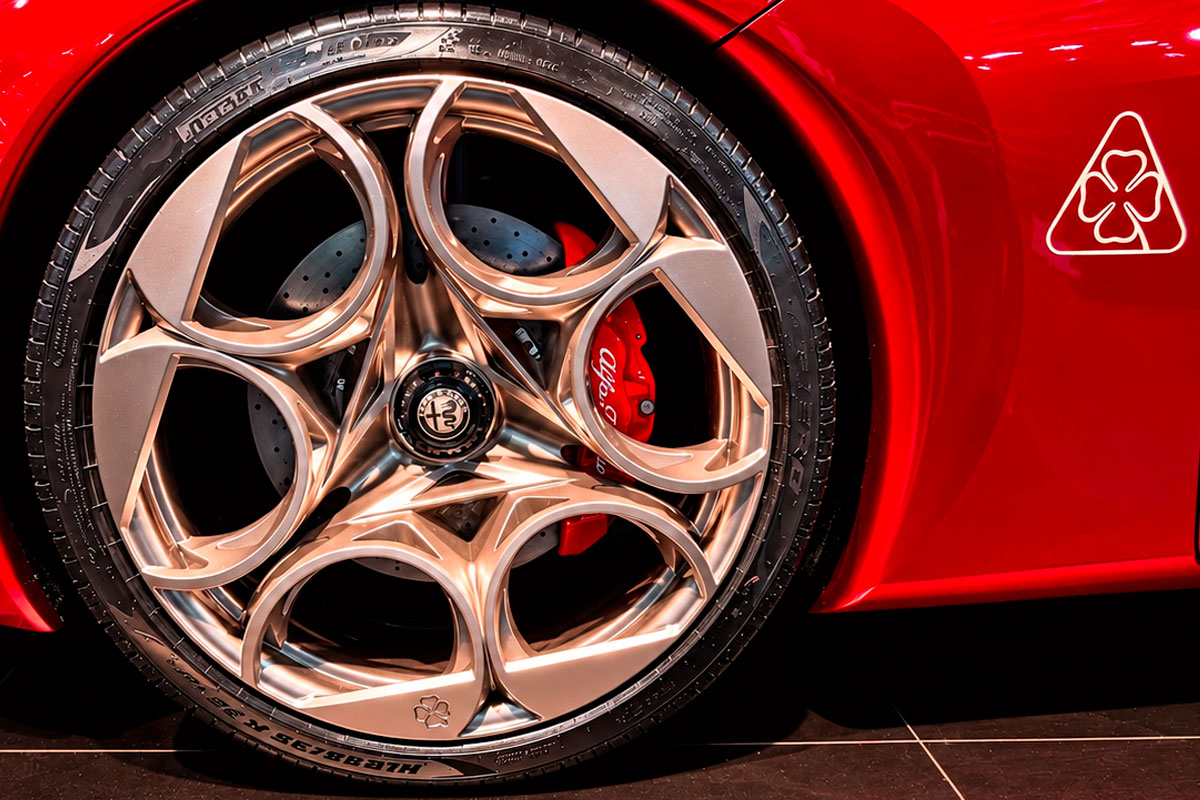
A few days ago, Stellantis unveiled a series of concept cars in a presentation of unprecedented scale, according to several company executives. Among them, one model in particular caught our attention here at Italpassion: the Alfa Romeo Cuorerosso. Behind this spectacular four-seat coupe—whose images quickly went viral online—lies a much more concrete vision of the Italian brand’s future. While there, we had the opportunity to speak with Daniele Chiari, Head of Products Alfa Romeo, who provided us with several exclusive details about future Alfa Romeo models, their platforms, and, most importantly, their V6 hybrid powertrains.
A concept created in six months to reinvent Alfa Romeo
Stellantis executives were in attendance at the presentation, including Antonio Filosa (Stellantis CEO), Emanuele Cappellano (Stellantis Europe COO), Gilles Vidal (Stellantis Europe Design Director), Alejandro Mesonero-Romanos (Alfa Romeo Design Director), and Santo Ficili (CEO of Alfa Romeo). It was the perfect opportunity to understand why Alfa Romeo had decided to unveil the Cuorerosso now—and, above all, what it actually signaled.
According to Daniele Chiari, it all began about six months ago, when Stellantis unveiled its Fastlane 2030 product plan. At that time, we saw, among other things, a first rendering of what could become the future Giulietta. It was also then that the teams were given a mission: to showcase Alfa Romeo’s new vision.
Why now, and not two or three years ago? Because Alfa Romeo realized the need to set itself apart, particularly from Chinese automakers. It was necessary to reinforce what makes the brand unique, assert its identity, and plan for its future. Cuorerosso was thus born out of this thinking, in just six months. In fact, the Centro Stile spent only one to two weeks on the initial sketches before moving directly to 3D modeling, using an almost sculptural approach.
Under the body, a Giorgio platform and a hybrid V6 engine
Cuorerosso isn't just a stylistic exercise. This 2+2 coupe, measuring 4.70 meters long, 1.98 meters wide, and just 1.33 meters tall, has a stated weight of 1,750 kg and a drag coefficient of 0.28. It is indeed based on the Giorgio platform, an architecture familiar from the Giulia, Stelvio, and Maserati GranTurismo, among others. But Daniele Chiari clarified an important point: this in no way means that a future Alfa Romeo inspired by the Cuorerosso will use this same platform.
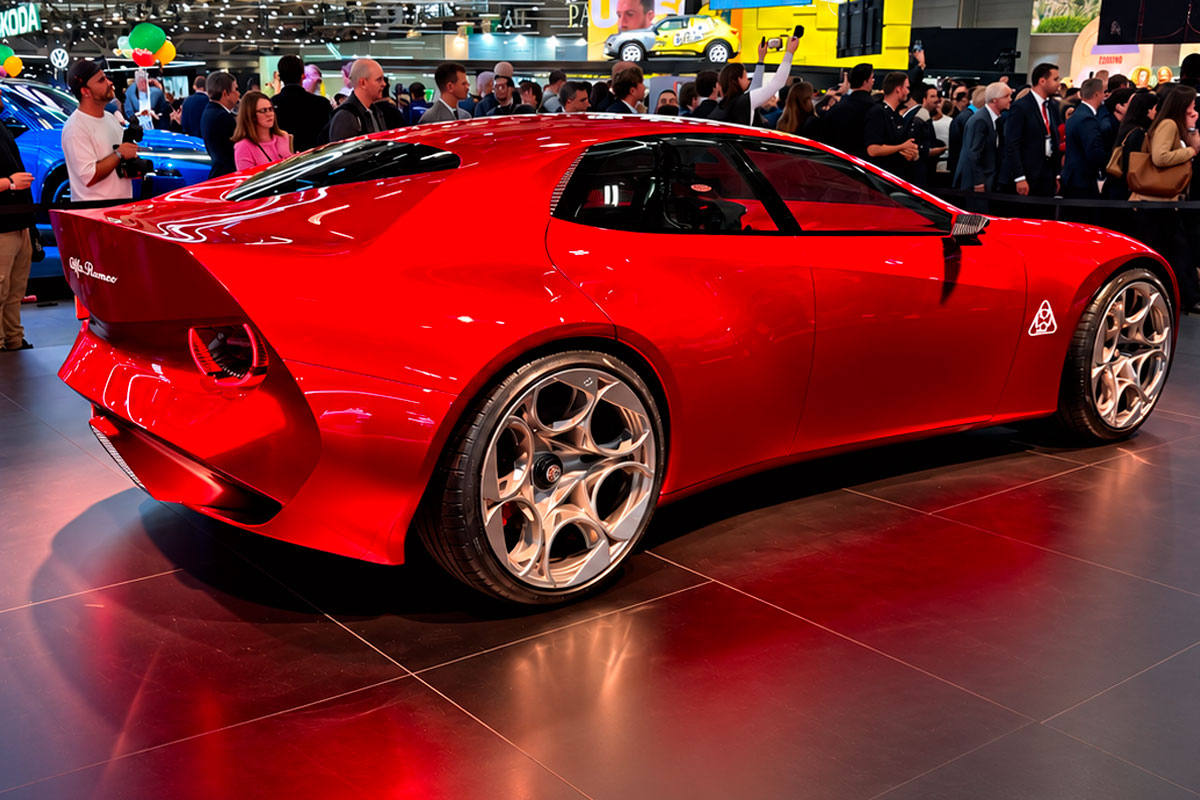
The other piece of information concerns its powertrain. Under the hood, Alfa Romeo has opted for a 2.9-liter V6 Full Hybrid engine, paired with Q4 all-wheel drive and a carbon fiber driveshaft. According to Daniele Chiari, this hybrid solution was chosen to offer the best balance between weight, torque, and power. However, don’t expect to see this hybrid V6 in an Alfa Romeo built on the STLA One platform. It’s clearly not in the plans (and probably not even possible). We’ll likely see it in a Maserati soon.
The next-generation Giulietta will carry on the Cuorerosso legacy
But which future Alfa Romeo models will actually feature this new design language? Let’s start with the upcoming compact SUV, expected in late 2027 for a 2028 launch. This model, which we’re calling the «new Tonale» for now, is set to replace both the Tonale and the Stelvio. Since its design has been finalized for some time, it won’t directly incorporate the Cuorerosso design language. We’ll revisit this topic in a future article.
The situation is different for the upcoming Giulietta. Daniele Chiari confirmed to us that the illustration unveiled as part of the Fastlane 2030 plan does indeed depict this future model, even though its official name has yet to be confirmed. Another interesting detail: it will not be a traditional compact sedan, nor a true SUV, but a crossover—in other words, a slightly raised compact car. And this time, several styling elements from the Cuorerosso will indeed be incorporated.
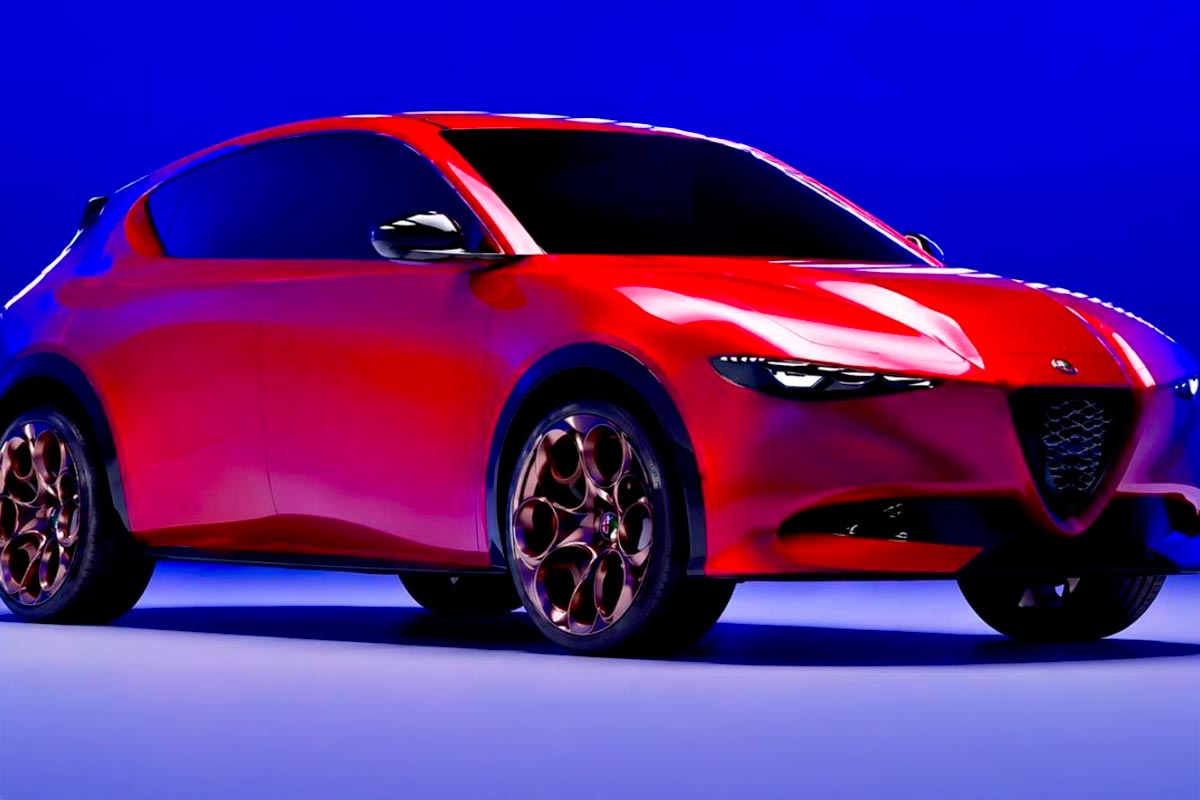
Alfa Romeo’s «Bellezza Necessaria» philosophy—which involves stripping away the superfluous to emphasize proportions (a term we’ve heard before in reference to the Alfa Romeo 33 Stradale), functionality, and quality—will guide this new generation. Alfa Romeo also plans to offer a multi-energy lineup, featuring electric, plug-in hybrid, mild-hybrid, and full-hybrid powertrains.
The D-segment—the true successor to the concept and the only contender for the V6 hybrid?
One key question remains. With the Junior, the new Tonale, and the upcoming Giulietta, what room will there be left for an Alfa Romeo in the D-segment? On this point, Daniele Chiari has been particularly clear: the D-segment embodies the spirit of Alfa Romeo, without compromise. It will be the brand’s «halo car»—in other words, its flagship model, the one that best embodies its expertise and ambitions.
The project is still under consideration, but one thing is becoming clear: this future Alfa Romeo will not be based on the STLA One platform. Will it be the Giorgio, STLA Large, or another architecture? Several possibilities remain on the table. For our part, we have a feeling that the fate of this D-segment Alfa Romeo could be closely tied to that of future Maseratis. This is, of course, a hypothesis that remains to be confirmed.
However, Daniele Chiari has confirmed a major piece of news: this upcoming Alfa Romeo in the D-segment will indeed feature a hybrid V6. This gives Alfa Romeo enthusiasts some reason for hope: despite electrification and platform consolidation, Alfa Romeo clearly has no intention of abandoning the V6. Now we just have to wait and see what form this much-anticipated D-segment Alfa Romeo will take… and when! In our opinion, if you’re looking to replace your Alfa Romeo Giulia Quadrofiglio, you’ll have to wait until 2030.
 English
  French
  Italian
  Spanish
  German
  Japanese
  Dutch
Dutch
This Alfa Romeo CuoreRosso concept car is absolutely stunning. But when I read in the article that the hybrid V6 and the Giorgio platform won’t necessarily be used in a smaller Alfa Romeo—and that the platform will actually be STLA One—I’m disappointed.
A successful design like this concept car is great, but it remains to be seen how much of it will carry over into future Alfa Romeo models.
I think it’s a real shame that, for the only model in the lineup that won’t be an SUV, they want to turn it into a crossover. Yet that’s the only way to cater to people who don’t want an SUV (and there are still quite a few of them). Besides, compact crossovers don’t sell that well… There was the GLA, and that’s about it. Even the Infiniti QX30 didn’t really take off. Everyone wants a Giulietta—a true compact, elegant, and stylish car.
I think it's because of battery constraints, but it might not be a big deal. The Renault R5 is slightly raised, and it works just fine.