

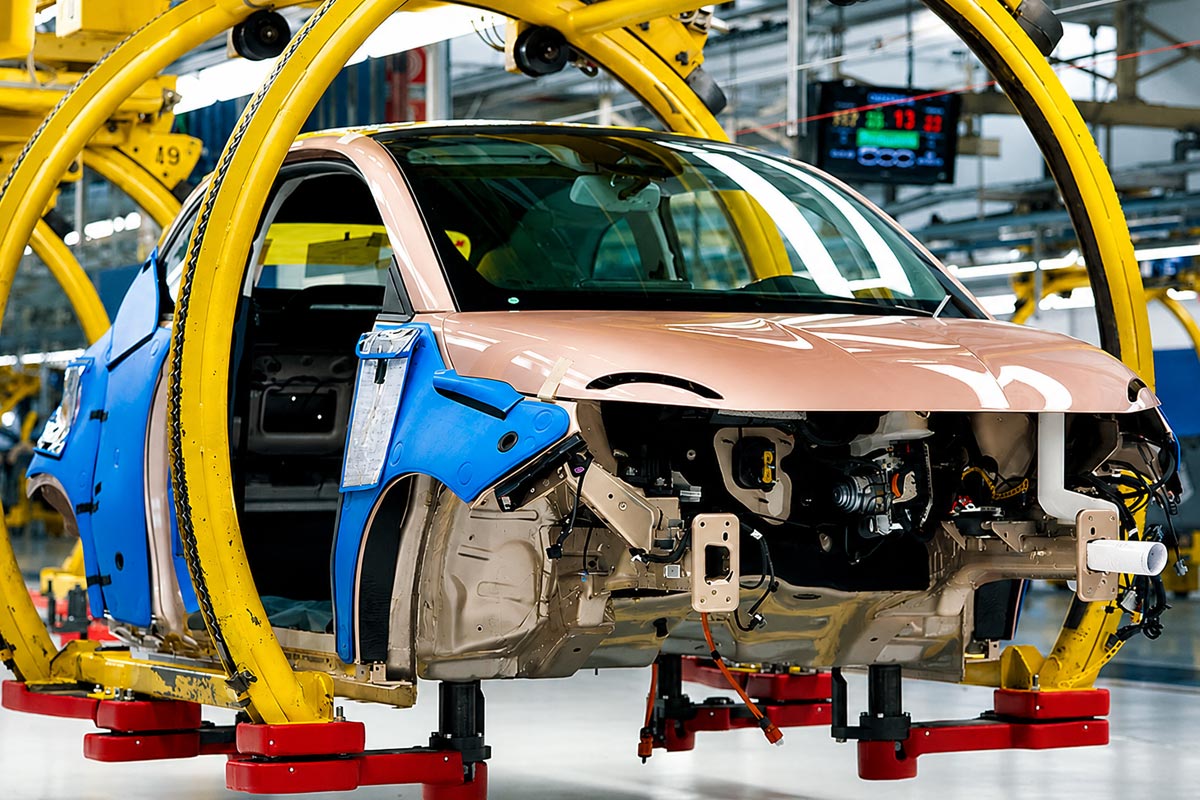
At Mirafiori, the weeks go by and production stoppages are piling up. After a four-week shutdown in August and 8 days off in September, Fiat's historic plant in Turin could now face four more weeks of short-time work by the end of the year. Two weeks have already been officially announced for October, but according to new information from Milano Finanza, with two more scheduled for November and December. A situation that is becoming increasingly difficult to understand, given that Stellantis continues to highlight the doubling of production at Mirafiori in 2026.
After August and September, another four weeks off?
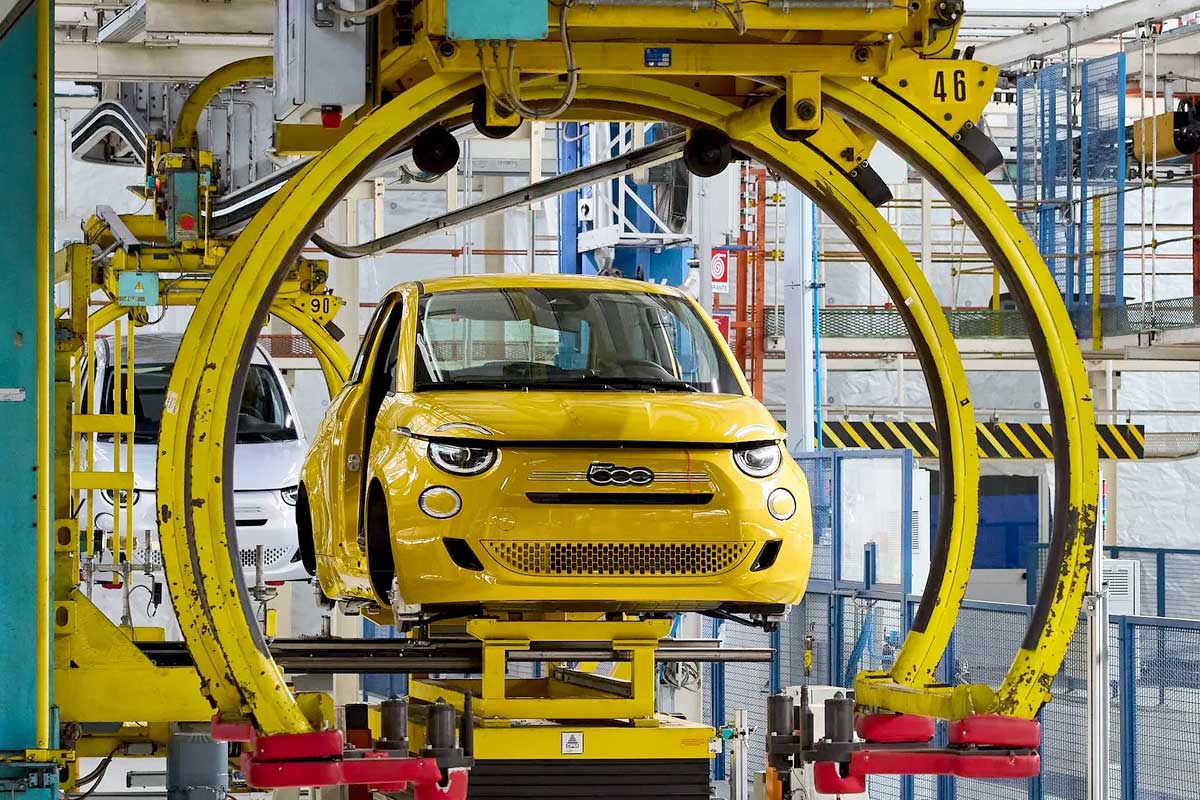
The schedule is starting to get particularly busy. In August, Mirafiori employees had already endured four weeks of summer shutdown, compared with the two originally planned. No sooner had they returned than they faced a series of further work stoppages: three days in early September, then six, seven and finally eight days with no production for the entire month. And October doesn't look any better. On September 22, Stellantis officially announced that it would implement short-time work from October 19 to 30 on the Fiat 500 hybrid and electric production lines—an additional two weeks.
But according to information published in late September by Milano Finanza, citing sources close to production, Stellantis has reportedly also added a one-week plant shutdown in late November and another in early December. These two new periods—whose dates may still change—have not been officially confirmed by the automaker. If this schedule materializes, Mirafiori will have been closed for one month in August, experienced more than a week of downtime in September, and faced another four weeks of short-time work between October and December. It’s hard to imagine such a scenario when the Fiat 500 Hybrid was supposed to be the very model that would bring about a sustainable revival of the plant.
First the engines, then the European market
Since early September, Stellantis’s explanations have shifted somewhat. The initial production stoppages were attributed to a shortage of engine components, primarily related to capacity constraints at the Teksid plant in Carmagnola. The automaker explained at the time that demand for hybrid cars exceeded the production capacity of certain suppliers.
More recently, to explain the short-time work implemented in October, Stellantis also cited production issues, the weakness of the European market, competition from non-European automakers, and energy costs in Italy. At the same time, Emanuele Cappellano, head of Stellantis Europe, emphasized that production at Mirafiori is expected to double by 2026. The automaker even reported that it produced more cars in the first half of 2026 than it did in all of 2025.
But as we explained in our previous articles, it all depends on the point of comparison. The initial targets were around 100,000 to 120,000 Fiat 500s per year. Gradually, the projections were scaled back to 90,000, then 80,000, and now stand at around 60,000 units. With all these new disruptions, can we even be sure that Mirafiori will still reach this latest figure?

Could the price of the Fiat 500 be the real problem?
For several weeks now, the unions have doubted that supply issues alone account for this series of production stoppages. The issue of orders has now returned to the forefront, particularly for the Fiat 500 hybrid, which is expected to boost production at the plant following weak sales of the electric version.
At Italpassion, we’re also wondering about the Fiat 500’s market positioning. Can we really expect to see significant sales volumes with an A-segment city car, approximately 3.60 meters long, priced around €20,000, and equipped with a hybrid powertrain producing just 65 ch? And what about the electric version, which can cost around €30,000, with a range that remains limited compared to some competitors?
Find more cool stats: https://t.co/vOoxLf8A3L pic.twitter.com/yrWN9j2kHf
— Car Industry Analysis (@lovecarindustry) September 23, 2026
In our opinion, these prices are a real obstacle to sales. The Fiat 500 obviously retains its charm and image, but is that enough to win over enough buyers? Once again, Fiat’s marketing choices and pricing strategy raise questions. An Italian-made Fiat 500 hybrid could be priced the same as the Fiat Grizzly produced in Morocco. We’ll also be analyzing the sales figures for the first three quarters of 2026 on Italpassion soon. These figures will provide a clearer picture of the actual demand for the hybrid and electric Fiat 500s.
More than 400 employees have been hired—what's next?
Behind these closures lies, above all, a concern for the workers. More than 400 temporary workers had been hired to support the launch of the second production shift. Today, the Fim-Cisl is demanding guarantees regarding their future, while the Fiom continues to call for a second model to be assigned to Mirafiori.
On September 25, six labor unions also requested a meeting with Stellantis management to discuss production volumes, industrial prospects, and employment at the Italian plants. According to Milano Finanza, this request had still not been answered as of September 30. For the workers, the risk now is that the furlough program will be extended, and that some contracts may not be renewed. No layoff plan has been announced at this point, but concerns are very much present.
 English
  French
  Italian
  Spanish
  German
  Japanese
  Dutch
Dutch