

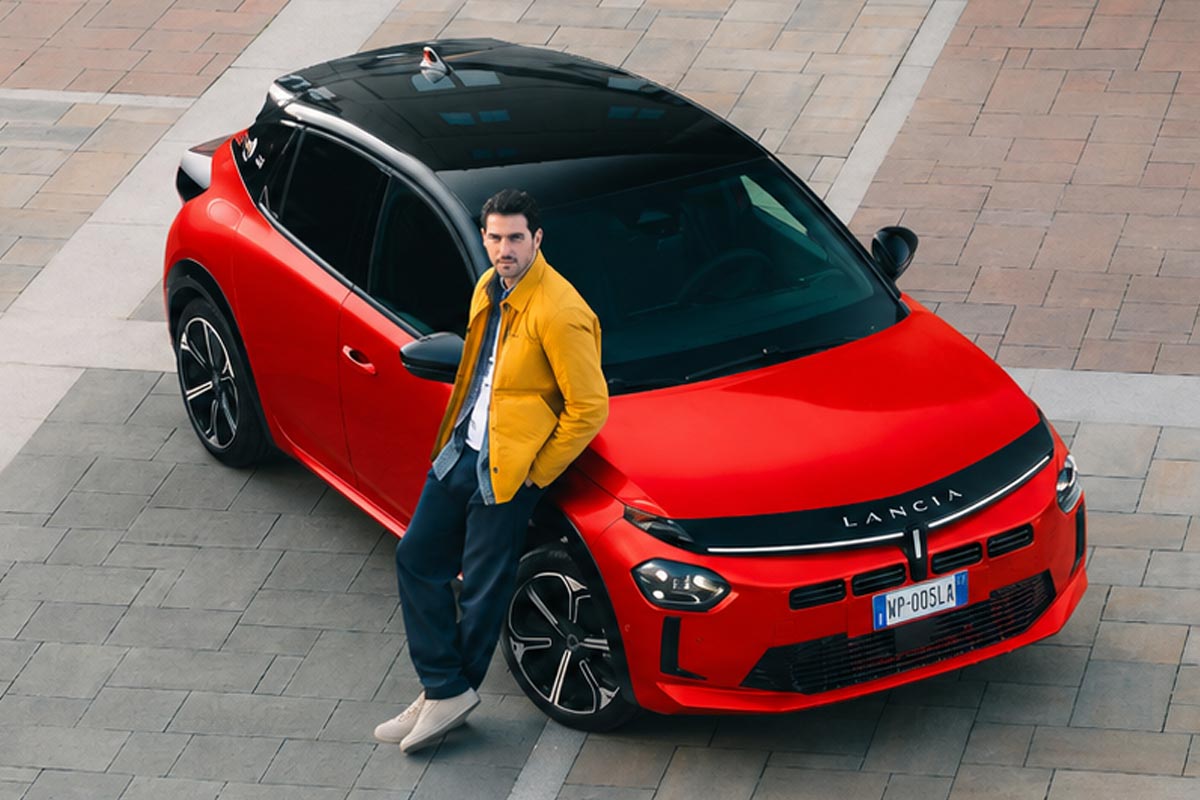
Nearly two years after its launch, the new Lancia Ypsilon continues to shoulder alone the ambitions for the revival of Lancia in Europe. A situation that won't last much longer, since the Lancia Gamma SUV is set to join the lineup soon. In the meantime, all eyes remain on the Italian city car, whose sales performance serves as a barometer of the brand’s true health.
After a rocky start, Lancia tried to turn things around. The brand ramped up promotions at the end of 2025 before launching a new, more affordable version equipped with a 100-horsepower engine and a manual transmission, priced around €22,000. A strategy designed to broaden the potential customer base and make the Ypsilon more competitive. So, are these efforts starting to pay off?
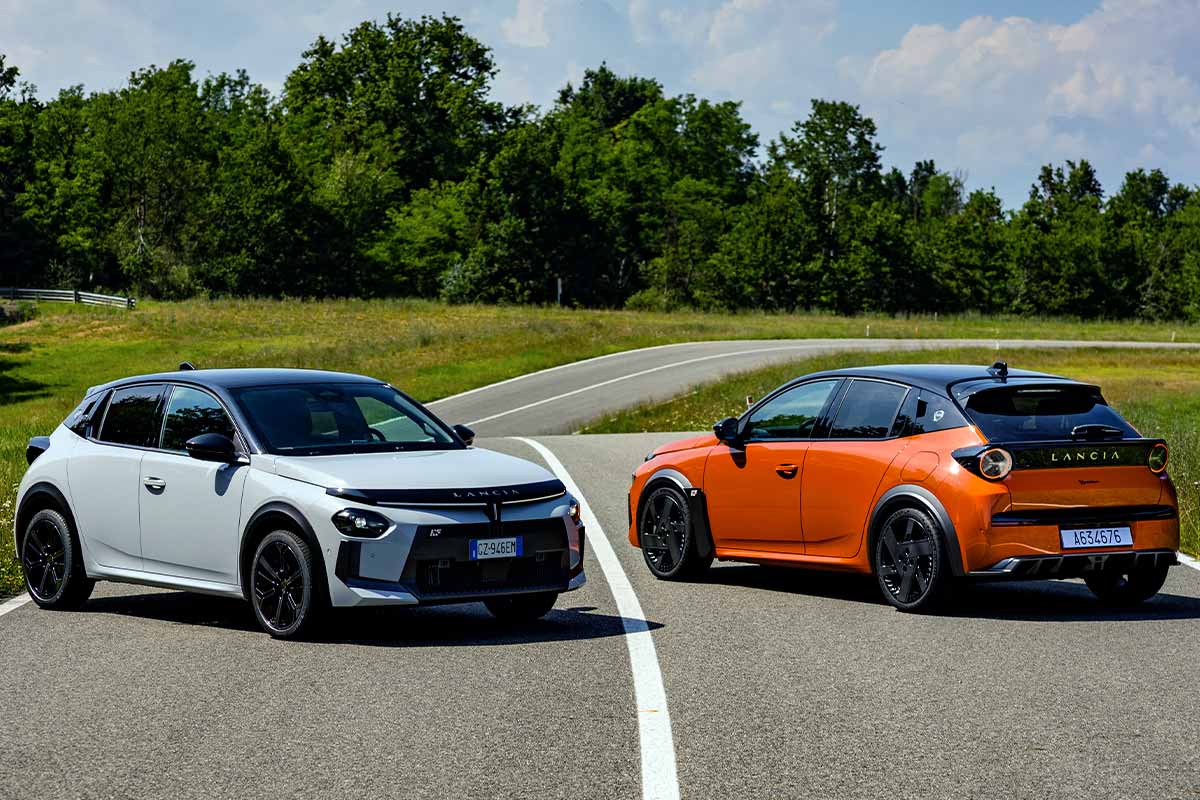
In Italy, the situation remains a cause for concern
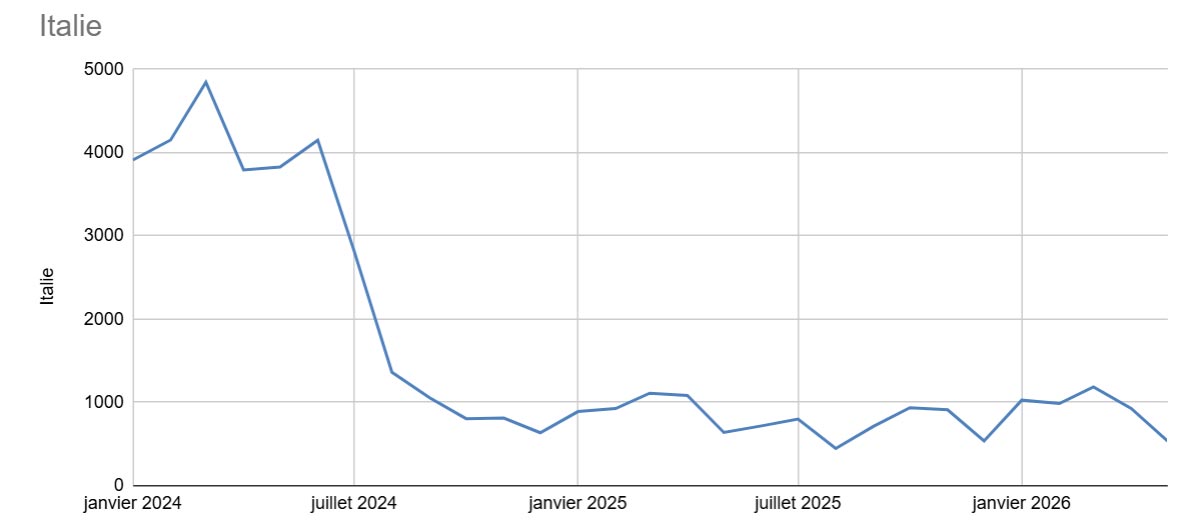
Italy remains by far Lancia’s largest market. Historically, the old Ypsilon held a special place there. Small, elegant, and relatively affordable, it perfectly met the expectations of an urban Italian clientele. The new generation has adopted a different philosophy. Larger—moving from the A-segment to the B-segment—more technologically advanced, and better equipped, it is also significantly more expensive, with a starting price approximately €5,000 higher than that of its predecessor.
The results speak for themselves. In the first five months of 2026, the Lancia Ypsilon recorded 4,463 registrations in Italy, compared to 4,649 a year earlier. The figures appear stable, but they mask a much less flattering reality: in 2024, during the same period, the previous generation still recorded 20,527 registrations.
Even more telling is the fact that the Ypsilon now ranks only 49th in Italian sales for the first five months of the year. Gone are the days when it competed with models like the Audi A1 or the Suzuki Swift. Worse still for the brand: in May 2026, it dropped out of the Italian Top 50.
So it can’t really be called a commercial success. For a brand that relies entirely on a single model, seeing that model drop out of the top 50 best-selling cars in its domestic market is not a very reassuring sign.
France is making progress, but volumes remain modest
Outside of Italy, Lancia has to practically start from scratch after many years of absence. France is one of the markets where the brand appears to be gradually regaining visibility. Between January and May 2026, 609 Lancias were registered, compared to 379 during the same period in 2025.
The growth is significant, with an increase of more than 60% from Q1 to Q3, even though volumes remain modest. It’s hard to call this a true commercial breakthrough, but at least the trend is positive.
Spain: A Surprising Result
Spain is a special case, as the new Ypsilon is manufactured at the Zaragoza plant. One might therefore have expected stronger sales performance in the local market. However, the figures tell a different story. Between January and May 2026, only 406 units were registered, compared to 377 a year earlier. While there has been some growth, it remains limited. This raises the question: do Spaniards not buy locally?
Belgium, a surprisingly dynamic market
Belgium is one of the few European countries selected for Lancia’s commercial comeback. This choice may come as a surprise. At Lancia Europe, the decision was made to establish a presence in Belgium or the Netherlands, but not in Germany, the continent’s largest automotive market. Why? The brand has never really explained this decision.
That said, Belgium is showing promising growth, with 103 registrations in the first five months of the year, compared to 79 in 2025. Volumes remain low, but the country continues to make progress. By way of comparison, Belgium achieves in five months what France or Spain can sometimes accomplish in a single month.
The Netherlands, the only market to see a decline
The last European market currently served by Lancia is the Netherlands. It is also the only country where sales are declining. Between January and May 2026, only 49 cars were registered, compared to 69 a year earlier—a 28% decline. The figure remains insignificant on a European scale, but it shows that the brand is still struggling to find its footing in certain markets.
An Italian brand that has become rarer than Ferrari
In total, the five markets currently served by Lancia accounted for 5,745 registrations between January and May 2026. That’s not much. In fact, it’s very little for a mainstream brand belonging to a group like Stellantis.
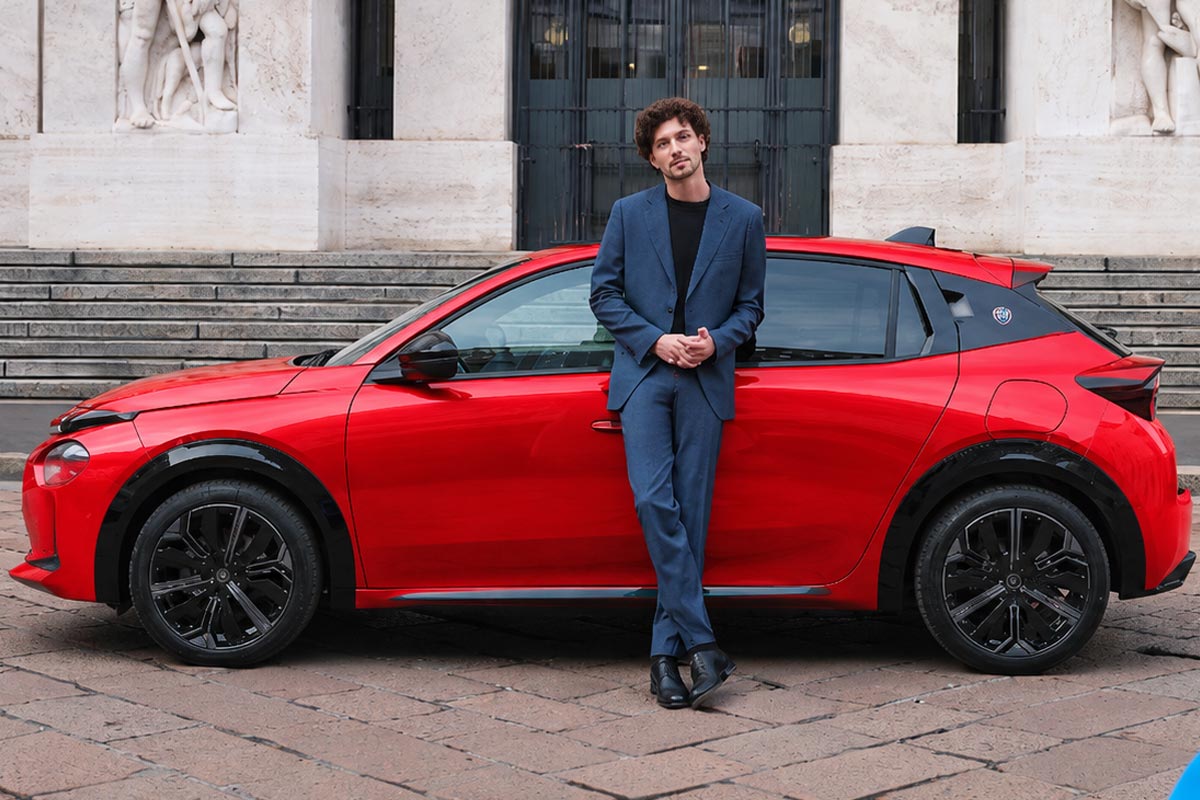
The statement might raise a smile, but it accurately reflects the current situation: Lancia is probably one of the few Italian brands capable of selling fewer cars than Ferrari, or even Lamborghini. Of course, the comparison has its limits. Ferrari and Lamborghini operate in the luxury segment, while Lancia targets the mass market. But when a historic brand registers only a few thousand vehicles across five countries in five months, it becomes hard to ignore the reality. If you’re looking for an Italian car as exclusive as a Ferrari—one that turns heads wherever it goes—the Lancia Ypsilon might be just the thing!
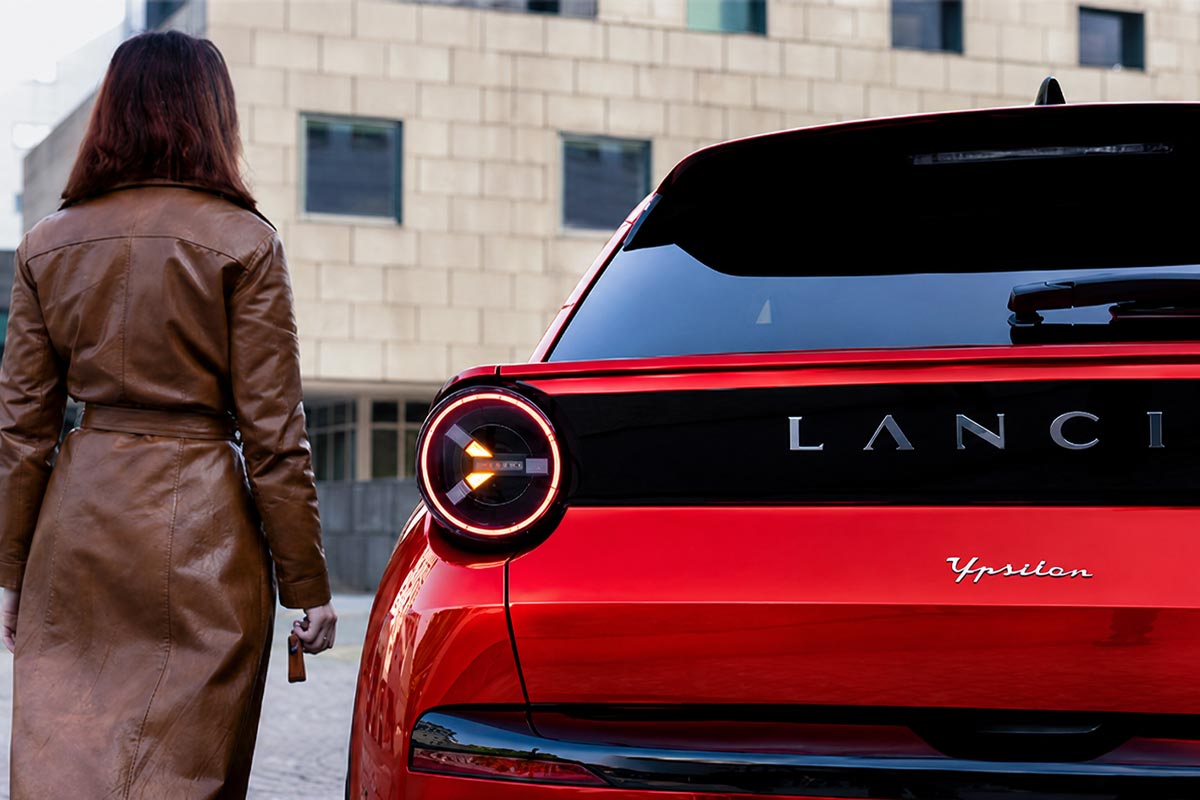
Can the Lancia Gamma be a game-changer?
In the short term, the goal seems clear: to maintain Ypsilon sales at their current level, or even build on the growth seen in certain countries such as France. All hopes now rest on the launch of the Gamma. This SUV is expected to drive additional sales and enable Lancia to move away from relying exclusively on a single model.
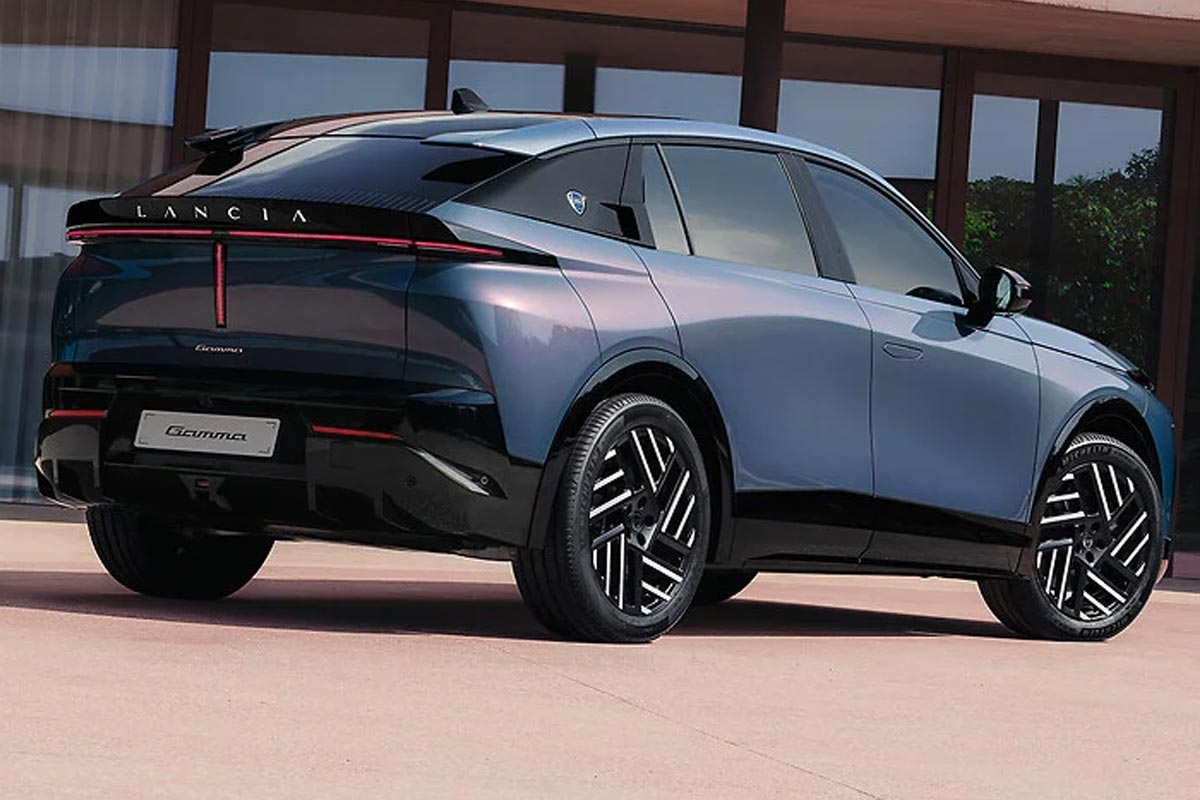
One key question remains: its pricing strategy. The model will undoubtedly be technically impressive, but in an increasingly competitive European market—especially when up against Chinese models—price is likely to be a decisive factor once again.
In the medium term, there are even more questions. We now know that Lancia's management is closely linked to that of Fiat. So, what does the future hold for the upcoming Delta? Will the project move forward? Or will we see a more pragmatic approach, with a revamped version of the Fiat Grande Panda—given a sleeker, more premium look—under the Lancia brand?
For now, the answers are still unclear. One thing is certain: with fewer than 6,000 cars sold in five months across all its European markets, Lancia doesn’t have much room for error. The launch of the Gamma SUV could well be one of the most important milestones in its recent history.
If you're interested in the Lancia Ypsilon, you can read our reviews:
| Country | january - may 2026 | Evolution |
|---|---|---|
| Italy | 4663 | 0 |
| France | 609 | 60 % |
| Spain | 321 | 7 % |
| Belgium | 103 | 30 % |
| Netherlands | 49 | -28 % |
 English
  French
  Italian
  Spanish
  German
  Japanese
  Dutch
Dutch
They’re selling fewer Ypsilons than the previous generation, but the profit per car sold may actually be much higher in the B segment than in the A segment. That’s what matters too, and we don’t have that information.
The front ends of these new Lancias aren't great, and they'd be better off with Italian engines… What's the point of buying a Lancia, Alfa, or Fiat if it's just to get a French car with a new body? Personally, I can't stand that, and I drive Italian cars.
Hello,
Exactly—you shouldn't treat people like idiots.
I've always been a Peugeot and Lancia fan—I'd never spend a penny on a Peugeot that looks like a Lancia….
And on top of that, their reputation. !!!!
The last Lancia I bought was in 2011… unfortunately.
They're going to give the Gamma a shot…. They won't lose too much money, since it's a shared platform—just two or three logos on the interior. And just like that…..
Winds will remain negligible
They're going to try to pull the wool over our eyes!!!
If you guys at Stellantis need any advice, give me a call 😁.
The previous Ypsilon was focused on Italy; it’s risky to remain a «single-market» vehicle, given the risk of market erosion, and with the new model, we’re moving into a different category. The new Ypsilon doesn’t target the same audience and is trying to expand into other markets. Sharing the Small platform—including engines and, soon, the One model—has become «mandatory.».
Business is business. Money is money.
Whether it was just one market or nearly 50,000 Ypsilons sold, I’d call that a huge success—despite its age—and it’s been profitable for years.
Not only is it no longer profitable, but sales are disastrous, and I don't think Lancia has experienced such a failure in ages.
FCA should have bought PSA.
Right? Why did FCA—or rather, FIAT—choose the ready-made solution by adopting PSA’s engines and platforms? It’s up to FCA’s executives to take responsibility.
You’re reversing the roles, because it was PSA and the French government who orchestrated this chaotic merger in the first place to rid themselves of a significant financial burden—and, like many French people, you’re forgetting that Tavares was thethe driving force behind imposing those dreadful engines—whose problems have become legendary internationally—and forcing PSA platforms on the company… So no, the ones who must take responsibility for this bottomless pit are indeed France and, on the Italian side, the notoriously incompetent Elkhan (who’s no better than Tavares).
What Stellantis is missing is a boss like Montezemolo.
Is buying a Lancia now more exclusive than driving a Ferrari??? – only if you ignore all the sales figures – the most recent European figures we have….
Lancia: Jan–Apr: 5,253
Ferrari: Jan–Apr: 1,822
Please, this title is a joke—I’m just trying to be funny because the numbers aren’t very high.
1 The front end was a mess; you could see a Lancia coming—the grille was instantly recognizable and couldn't be mistaken for any other.
Second mistake: the Puretoc engines……
3rd mistake: just like with Alfa, where are the dealers? I'm not going to drive 50 km or more just to look at a car.
The Gamma will do the same—we won't be seeing any of those anytime soon
I disagree with point 1; the front panel is original and actually quite attractive.
On the other hand, finding a Lancia dealership is complicated—it makes you wonder if Stellantis is trying to limit sales in France. If I wanted to buy a Ypsilon, I’d have to go a long way, which is a deterrent.
As for the PureTech, I totally agree.
Thanks for this information. I suppose it's impossible to know the sales figures for the HF version?
From what I understand, it's practically zero.
No way, there has to be at least one—mine……
And I'm really happy with it—it's a lot of fun to drive and performs great
That’s nonsense. The old Y was a lower-end model, not just in terms of exterior dimensions but also in terms of platform. It’s like saying that someone selling cell phones for 100 euros is richer than Apple, whose prices start at 700… sales figures are relative. But then people ignore the fact that it’s selling more than the Audi A1… in a market in the midst of a full-blown crisis. We need realism and common sense. In Italy, they’re bashing it just because it’s made in Spain. But cars made in Poland and Spain actually have fewer problems—we need to face reality. .
With a full product line, sales should improve.
Ideally, we should have at least three models.
On profitability: if it's a clone of the 208, it quickly becomes profitable.
If it really is different, then it's a true Italian car and a true Lancia.
But we're willing to bring together contradictory ideas just to criticize.
You'll never really understand—whether it's Lancia or Citroën—that if you don't go all out like Toyota did with Lexus, it's a lost cause from the start.
Compared to others, it's not the PSA platforms that bother me, but the fact that they aren't suited to the target audience. 🤷🏻♂️
It’s actually not profitable at all, neither for Citroën nor for Lancia, and they—like the American brands—need to seriously consider using the STLlarge and the Giorgio with a 2.0 Turbo GME hybrid on the Grecale, which is expected to be transferred to Lancia and serve as the basis for a new Citroën (as for the name, I’ll let you choose).
It’s fine for Stellantis—for Abarth, Fiat, Peugeot, and Opel/Vauxhall—to use PSA’s foundations for the platform with an Italian engine, but Alfa, Citroën, Lancia, and Maserati need to have their own separate entity distinct from mass-market products, and that’s where things will really take off.
No, it's not a real Lancia, just like those aren't real Citroëns. We need to stop mixing mass-market and premium brands.
I appreciate the effort you put into these articles, but in this case, I'm wondering why you didn't include Luxembourg, since it's the only other market where Lancia is sold?
According to another website, Lancia sales totaled 68 cars from January through May +143%, which is more than the number sold in the much, much larger Dutch market!
Okay, next time it’ll be Luxembourg—just for fun… but that won’t make much of a difference to the overall numbers.
I'm listing the Netherlands because I get more visitors to my site from the Netherlands than from Luxembourg.
The Lancia Ypsilon is a great car; it’s just a shame that the selection of internal combustion engines is so limited and uninspiring (PureTech), and that the two electric versions have a range that isn’t great.
But it's a pleasure to drive at a leisurely pace (except for the HF version, which is high-performance), with beautiful materials and a very attractive design.
In France, the sales network is extremely limited, which makes no sense (in the past, Lancia was available at all FCA dealerships).
None of this surprises me at all. Hasn't anyone noticed that the new Lancia design is absolutely hideous? First of all, it looks like a frog's face, and second, it doesn't look like a Lancia. I used to own a Delta 3 and was always looking forward to new cars. But a French compact car with a frog face isn’t a Lancia to me. Until Stellantis finds its way back to the classic Lancia grille, there’s no chance of a Lancia comeback. What a shame!
It looks really beautiful in red in the photo. Is that color part of the configuration?
I came across two of them recently—blue ones, probably from the Cassina edition. I think this Ypsilon is pretty.
But we absolutely have to expand the network. Where I live, I have to drive 50 km to find a Lancia dealership—and even then, it’s hidden behind a hedge. Other than the sign you pass by, you’d never guess it’s there!
We'd also need some TV ads, and the price should be lowered a bit more. And where are those classic two-tone versions?
No, it doesn't actually come in red—that's a photo I edited to reference Ferrari.
What's more, the 100ch version with a manual transmission has just arrived. So it's possible that the numbers will increase later this year.
Seriously… the previous Ypsilon was small and inexpensive, based on the Panda, so it was absolutely perfect for Italy. Hoping to sell a much more expensive Corsa/208 clone—which drove away the Italian customer base—was sheer idiocy. As for exports… without a captive customer base and without a distribution network, what’s there to say? The poor Gamma is headed for the same disaster.
I live in the Paris area, and I haven't had the chance to see one on the roads yet.
I've driven quite a few Lancias, and my favorite was the Lybra LX station wagon with a 2.4 JTD 5-cylinder engine—that car was pure joy.
Pure joy that was completely unexpected, because we were expecting a much more conventional design and performance—and even though I love the Lybra SW, that just doesn't cut it.
The Ypsilon HF should have some limited-edition models, similar to what Abarth did previously with the 595 or 695. For example, an HF Evo, Rallye, or Pininfarina. Dark blue, Italian striping, tan-brown Alcantara. A concept with RWD or 4WD. Roll bar optional. I really like the current rally racing successes. Maximize the commercial benefits.
I’m from Liège, and I sometimes see them on the roads—a blue Cassina Edition, a gold one, and a green one. They’re really elegant; I love them. With a decent engine, I think I would have gone for a white HF Line, but if it means driving a «Turbo 100,» no thanks.
I've seen this car several times in Milan and Palermo and was also able to take a close look at the interior. Bottom line: I like it quite a bit—much better than the Alfa Junior, which is also still rare. I'm not convinced by the engines, though.
So why not in Germany, too? Any major Fiat dealer could sell it; there’s still a need for a stylish option in the Punto class. The Grande Panda is aimed at a different customer base; the 600 is larger.
I've asked Lancia several times, but they currently have no plans to expand into Germany. I don't know the reason why…
I’ve had a Ypsilon Hybrid LX for a few weeks now. MY 2024, Oro—I bought it new because nobody else wanted it. Very elegant, well-equipped, and comfortable. And surprisingly good driving performance. The exterior and interior design are thoroughly “Made in Italy.” It’s baffling how a conglomerate like Stellantis could have made these mistakes: in Italy, the name suggests it’s the successor to the small, affordable Y—which it isn’t. The European market launch has failed. The Gamma will likely face a similar fate; moreover, as an SUV, it lacks elegance. Why would anyone buy it? It doesn’t seem to have much of a future.
Hi Bernhard,
Do you live in Germany and import the model here? I'm asking because I'm eagerly awaiting Lancia's return myself and am considering doing the same. And I'd really appreciate hearing about your experience!
Hi Marius, I live in Italy. Here, the Y is getting absolutely torn apart in countless online chats: awful design, a notoriously unreliable engine, too high a price, no diesel option… I can’t really understand any of that, though it did take me a while to appreciate the design. The interior is brilliant, with meticulous attention to detail. And the performance is really good (yes, the three-cylinder engine can be a bit rough around the edges at times, but we’re talking about the B-segment here). Overall, it’s cool, and the price is fair compared to all the run-of-the-mill cars out there. Here in Italy, the COC certificate comes included, so you shouldn’t have any trouble importing it.
Hi Bernhard, yeah, I can’t figure it out either. I was on vacation in Italy and got to sit in a Ypsilon—it had this gorgeous orange upholstery. I think it’s absolutely fantastic, and just like you said, it’s different from all those run-of-the-mill cars. It has soul and character, and I’m planning to make it my first electric car. I’m still debating whether I really dare to take the plunge. Spare parts and service apparently aren’t a problem, but I can’t yet assess how to diagnose and fix electronic issues. In any case, thank you very much for your reply 🙂
Online comments opposing the letter Y are ubiquitous, exaggerated, aggressive, and nonsensical—so much so that they raise suspicions… they are very reminiscent of the famous Chinese «50-cent agents.».
The car has a beautiful, sporty, and aerodynamic design, but these days people prefer to drive clunky little trucks, also known as SUVs.
Finally, it would be a good idea for Stellantis to also list the new turbo gasoline engine on the websites of its official dealerships, because if it’s not even in the catalog, how are they supposed to sell it?
I've been driving a Lancia for 30 years
Lancia has now pulled out of the Swiss market. So I drive a BMW…
Many Lancia customers in the mid-1990s decided to switch to Lexus, which is understandable since Lexus’s lineup was exactly what people expected from Lancia back then—and still do today.
Shouldn't this Ypsilon have been called Delta?
Shouldn't the previous Ypsilon have been kept in production through an update, just like the FIAT Panda was?
Why couldn't the current Gamma be based on the Alfa Romeo Giulia platform?
So why not turn to Maserati for a top-of-the-line flagship?
I don't get the logic behind it. But still, if I were to buy a new car right now, it would be a Lancia Ypsilon Turbo 100. In black. Because I do think the Ypsilon is beautiful, unique, and cool!
In my opinion, it should have been called Delta… it’s the same size as the first-generation Delta models, and it wins rallies… doesn’t that remind you of anything?!
I agree that the lineup positioning and naming don't work. The new Ypsilon would have been an insult to the Delta name and history, but it is clearly not an Ypsilon in terms of size or price. It confuses customers right from the start.
There isn’t a true mini-car to replace the Ypsilon, but with 40,000 units sold per year, they could have come up with a solution. They could have used the Panda platform with a new design. Maybe they thought it would compete with the Fiat 500.
Either way, this Ypsilon doesn't seem likely to be a long-term success. (And I'll never see it in the UK!)
A Lancia with a Puretoc engine… it's a bit like being happy you've caught tuberculosis.
They will need to enter more markets, such as Germany, Austria, Switzerland, Portugal, Greece, and so on… Scandinavia… to be successful.
If they don't, Lancia will probably be gone within 12 to 18 months.