

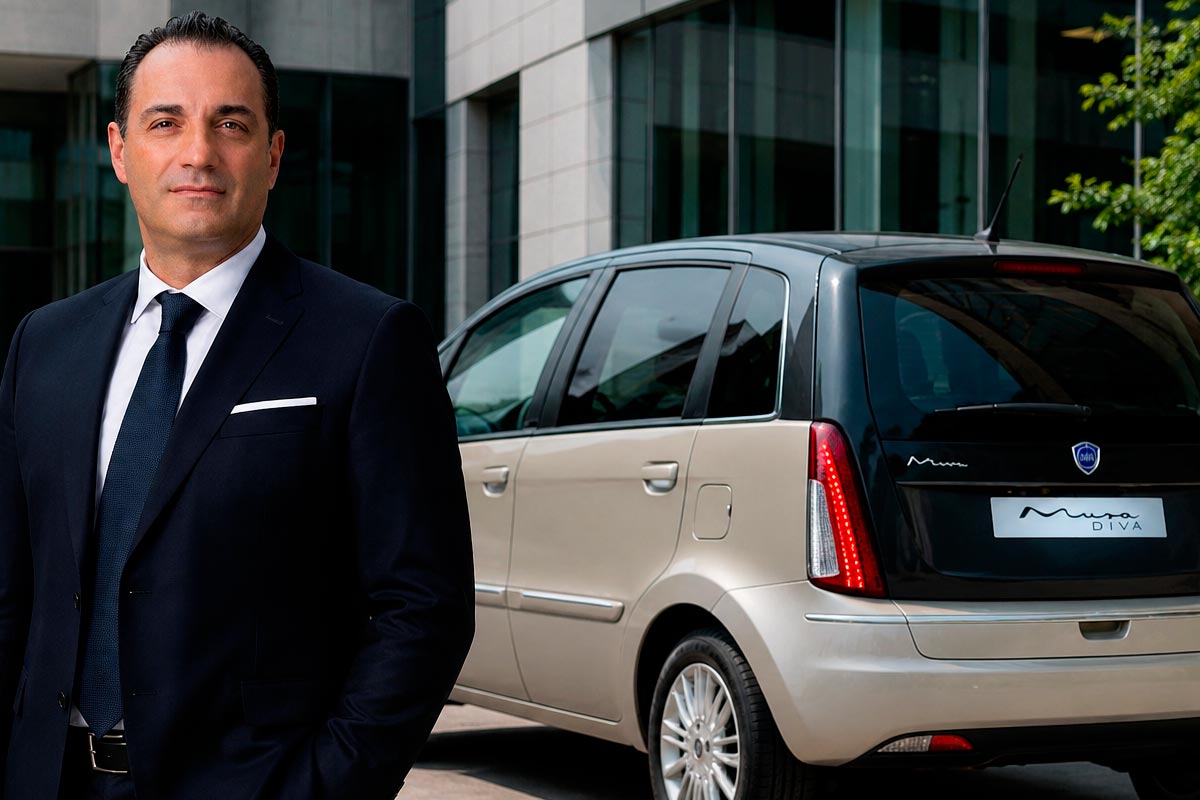
At the presentation of his new strategic plan «FaSTLAne 2030», the new boss of Stellantis, Antonio Filosa, detailed his vision for the Group's next five years to BFM Business. Between electrification, Chinese partnerships, industrial reorganization and the future of global brands, the future of Lancia seemed particularly vague. But a recent statement by the CEO particularly caught our attention: Fiat and Lancia will work together again, «as in the splendid days of Lancia».
This sentence, uttered almost naturally by Antonio Filosa, is not insignificant. In fact, it gives a fairly clear idea of the Group's future strategy for two historic brands that have long shared much more than just platforms.
An assertive return to a recipe from the past
When asked about the future of the Group's brands, Antonio Filosa reassured us that none of them would disappear. Neither DS nor Lancia. But rather than talk of downsizing or mergers, the CEO spoke of a new organization based on intelligent synergies. He used the example of Fiat and Lancia to explain his vision. According to him, the two brands will once again operate as a single team, just as they did in the years when Lancia enjoyed its greatest commercial successes.
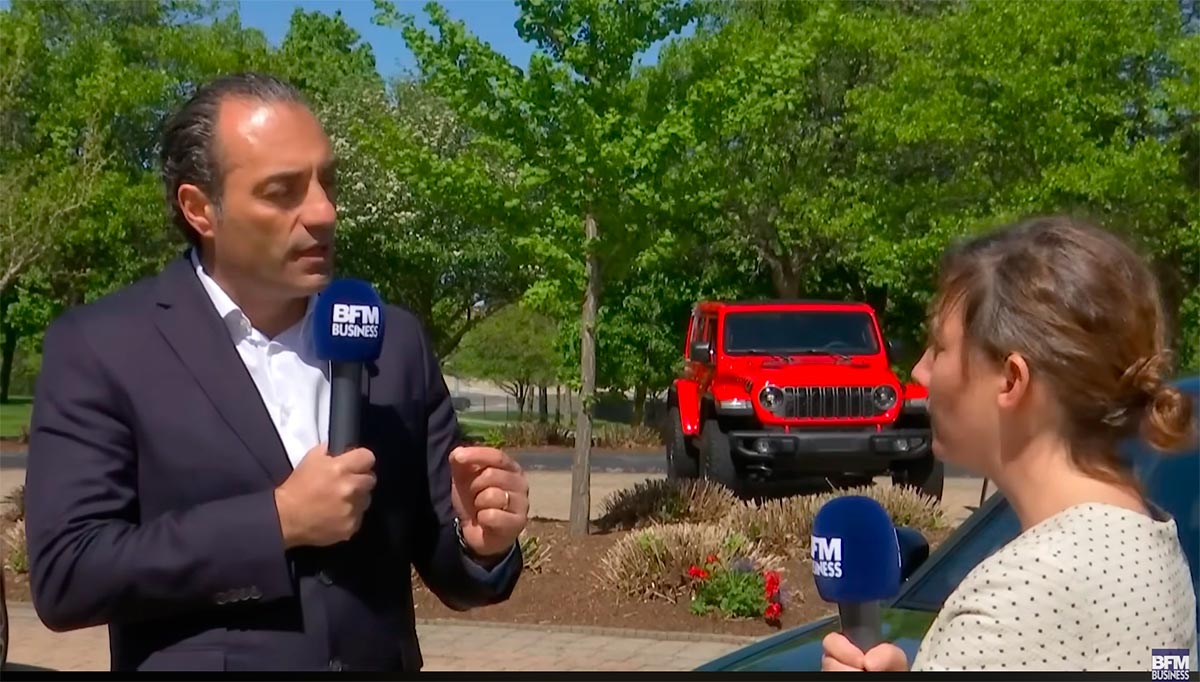
Antonio Filosa recalls several emblematic duos of this era: the Fiat Idea and the Lancia Musa, the Fiat Ulysse and Lancia Phedra, or the Fiat Tempra and Lancia Phedra. Lancia Dedra. Technically similar models, but designed for different customer groups, with distinct identities.
«This means that Fiat and Lancia will be working together as one team. And that's exactly how it was before, in Lancia's heyday. Back then, Fiat launched the Fiat Idea, while Lancia offered the Lancia Musa. Fiat launched the Fiat Ulysse and Lancia was present with the Lancia Phedra. Fiat launched the Fiat Tempra and Lancia offered the Lancia Dedra, with many features in common but a distinctive offering aimed at a particular clientele.»
Antonio Filosa, CEO of Stellantis
A strategy inspired by the DS / Citroën model
Antonio Filosa also cites the example of DS and Citroën. According to him, DS was historically Citroën's top-of-the-range arm, and Stellantis would like to return to this type of logic. In this scheme, Fiat could retain its role as a popular generalist brand, while Lancia would offer a more refined, premium and emotional interpretation of the same technical foundations.
For us, this statement is all the more surprising given that the latest Lancia models launched by Stellantis have mainly been perceived as Peugeot cousins. The new Lancia Ypsilon is largely based on the Peugeot 208, while the future Lancia Gamma will be technically very close to the Peugeot 3008. So far, Stellantis« strategy has given the impression of a Lancia integrated into the Group's »French" division. Antonio Filosa's comments, however, seem to point to a different development for the future. Referring explicitly to the old Fiat/Lancia associations of the 1990s and 2000s, the Stellantis CEO hints that future Fiat models could serve as the basis for more elegant, premium variants under the Lancia label.
In the final analysis, the question is perhaps mainly a marketing one. A Lancia technically close to an Italian Fiat would probably be better accepted by some customers than a Lancia perceived as a mere offshoot of a Peugeot. Stellantis seems to have perfectly understood that, for Lancia, image and identity count almost as much as technology itself.
A new identity for Lancia?
It now remains to be seen what Lancia will actually become in this new organization. For several years now, the Italian brand has been seeking to rebuild itself after a long period of near-disappearance. With the new Lancia Ypsilon, then the future Lancia Gamma, Stellantis clearly wants to restore Lancia's place in Europe. Now there's the question of the future Lancia Delta.
And if we want to be a bit of a tease, we could almost extrapolate the group's future strategy: imagine a future Fiat compact developed with technologies from Stellantis' Chinese partnerships, why not around Leapmotor, then declined in a more chic, more status-oriented version under the Lancia badge. After all, Antonio Filosa has just explained that this was already the recipe of the past. We'll have to wait and see.
 English
  French
  Italian
  Spanish
  German
  Japanese
  Dutch
Dutch
The examples he cites are far from success stories! If the proximity between the Ypsilon and 208 bothers you, you can say that it's a cousin of the Fiat 600 - that works too.
Why not a Lancia Musa version of the Fiat 600 with the chic design and interior of the Ypsilon ????
Absolutely! A chic, stylish SUV could be fun and, above all, useful for sales...
But the 600 is already 2.5 years old and doesn't seem likely to be renewed at Fiat, given the slide on the 2030 range.... So, is it possible for Lancia to start from this base?
These are far from success stories. But how many were sold? Compared to last year's 11,700 Ypsilons...
No it doesn't, because the 600 is also a Peugeot (2008).
It's not a Peugeot, it's a PSA, that's just the way it is and there's nothing we can do about it, so let's be positive and wait for what comes next, and then we can make some criticisms.
Sono state a tutti gli effetti automobili molto apprezzate e ampiamente acquistate.
He's quick to forget the days of the Thema, Delta, Hyena and Dedra. Sharing existed, of course, but only for the platform, since the Lampredi was almost exclusively offered by Lancia, and the 4WDs should have stayed with Lancia (and now Citroën/DS/Chrysler, if he had any brain cells).
He wants to make Lancia a luxury brand for Fiat... pathetic because that's exactly what destroyed the brand!!!!
You know, I'm 38 years old and for me, Lancia means the beautiful cars of the 2000s: Ypsilon, Lybra, Musa, Delta 3...
It speaks to me much more than the old Dedra and Delta that some people cling to. I understand that, but at 38 I'm already not hung up on the Lancias of the 80s.... So imagine today's youth or those who know nothing about cars and who are far more representative of the market...
I've got 10 more, and for us Lancia means the Delta, the Thema, the Dedra, and the Hyena coupe (even though it's not from Lancia). When you know this generation, you immediately understand why Lancia is premium and Alfa a sports brand.
Dopo l’ acquisizione da parte della FIAT, Lancia è diventata il marchio delle auto prestigiose del gruppo FIAT stesso; senza la Ritmo e la sua base meccanica non avremmo avuto la Delta prima serie, solo per fare un esempio, ma anche le ultime Lancia di grande successo commerciale, derivate direttamente da modelli FIAT come Delta terza serie e Musa, altro non erano che versioni «stile Lancia» di auto FIAT. Serve solo crederci, la strada industriale da seguire è possibile.
I'm giving up anyway, I'll be looking at the «REAL» French and German Italians until 2020. For the news, I'll only be watching Japan 🇯🇵 because it's all gone to shit and I don't live in the 3rd dimension.
This notion of «the real thing» borders on purism. But every brand has to evolve in an overwhelming economic context that you don't seem to want to see, especially in view of low sales figures and a shrinking cake for everyone!
When I see the sales figures for the old Ypsilon and the new one, it contradicts your theory, which already doesn't hold water.
You're forgetting that people buy this kind of product for an identity, a story, a concept, a passion, a specific desire.
I'm in constant contact with the business world and the kind of customers who buy these products, so I'm probably more aware than you are.
I was right to mention this interview in one of my previous comments, I feel!
Seriously, it's distressing, it makes you want to weep at such automotive ignorance 😭
It's funny to criticize the French origins of the new Lancia while believing that a Fiat origin (which amounts to exactly the same thing, since the platforms and equipment are the same) will go down better.
I have the impression that we're going to return to brand names rather than brands. DS for better-built Citroëns, Abarth for «sports cars» and Lancia for top-of-the-range Fiat. For the end customer, I wonder where the real interest lies if the cars are identical. Wouldn't it be better to go to the cheaper competitor, rather than splash out on a Lancia that isn't really a Lancia anymore?
It's not the platform that bothers me, but the mechanical elements, and you can see that there's plenty to be afraid of.
Yes, but what else does the Volkswagen Group do?
Audi is a luxury VW, while Skoda and Seat are more down-market. But these are the same chassis, the same engines, what's different is the trim and finish.
Even some Lamborghinis are redesigned Audis (Urus - RS Q8).
Lexus is a luxury Toyota.
So why can't Lancia be a luxury Fiat?
I think it's a good idea, especially as this was the case in the past.
The brand seems to have a future. We can imagine a new Ypsilon, based on the future 500e (still on the drawing board?), much less pretentious in terms of pricing than the current, slightly too large, Ypsilon.
What's next? The Grizzly has just been launched. Will it be available from Lancia under the Musa name?
Filosa prefers to keep 3 premium brands afloat (and 4 generalists) rather than invest more heavily in its top performers.
That doesn't sound very ambitious... unless the unofficial reason is to make the DS and Lancia brands disappear in the long term and transform them into simple finishings.
Marken wie Lancia haben eine lange historische Vergangenheit und das ist ein klarerer Vorteil den chinesische Hersteller nicht haben. Aus meiner Sicht als Lancia noch schöne Autos produzierte fällt mir die Fulvia, der Stratos, der 037, Beta Monte Carlo, Beta Coupé und HPE, das Gamma Coupé, der Thema inkl. Kombi, der Delta und der Dedra etc. ein. Alle hatten ein ansprechendes Design und darauf sollte sich Lancia unbedingt zukünftig zurückbesinnen. Lancia kann nur Erfolg haben wenn sie sich endlich von ihren aktuellen Designer trennen und welche einstellen die schöne Autos entwerfen die der Historie gerecht werden und somit potentielle Käufer ansprechen.
What's more, everyone here has forgotten that the Ypsilon is basically not a Lancia at all, but an Autobianchi, and had no business being part of the brand in the first place.
No, that's not true. Autobianchi was a specific Fiat brand (the Primula was used as a technical lab, for example) and in the 80s the Y10 came out. The first Lancia Y was based on the Punto 1... and was a true Lancia in terms of finish and comfort.
In reality, there's only one brand,
A platform, engines and numerous technological building blocks with the maximum in common, not to mention factories
It's just visual and marketing sprinkling.
They launch pseudo-polemics and we're bathed in it.