

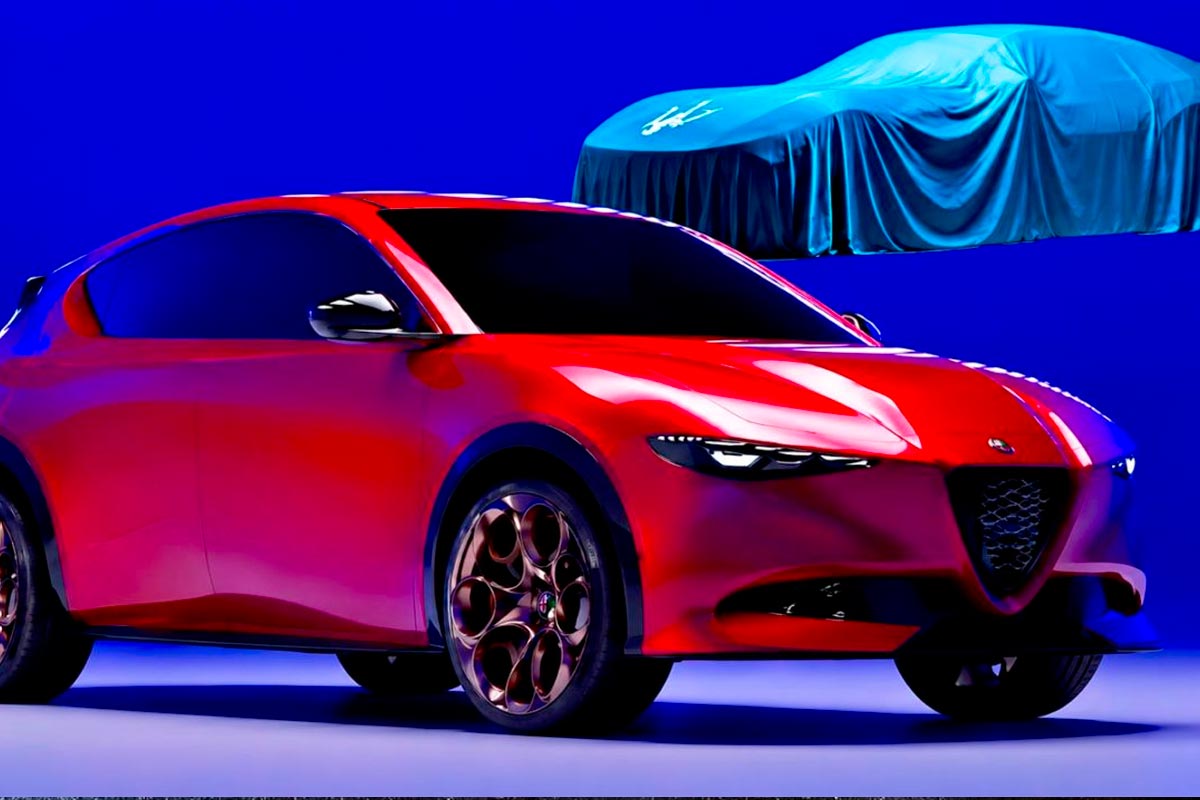
A few days ago, we explained how the future Alfa Romeo range now seemed much more coherent than was the case just a few years ago, with a refocusing on the most important segments of the European market. But while the brand has confirmed the broad outlines of its product plan, many grey areas remain concerning future powertrains, platforms and even certain models.
In order to get a clearer picture, we need only look at what is happening elsewhere in the Stellantis Group. For today, the most interesting clues to Alfa Romeo's future don't necessarily come from Turin or Arese, but rather from Peugeot... and perhaps a little from Maserati. An analysis that extends our recent thoughts on the brand's future strategy.
The Junior could have the same future as the Peugeot 2008
Since its launch in 2024, the Alfa Romeo Junior has become the brand's commercial mainstay. And there's every indication that it could remain so for much longer than expected.
The reason is simple: the Junior is based on the same CMP technology as the Peugeot 2008, a model whose future has recently been clarified. Initially scheduled to be replaced by a new generation based on the STLA Small platform, the French SUV will continue its career longer than expected. Stellantis seems to have decided to extend several existing models rather than accelerate the switch to entirely new platforms. In fact, Peugeot is said to have opted to extend the life of the combustion model on the CMP platform, and to launch the new generation 100 % electric on STLA One at the same time. If the Peugeot 2008 on the CMP platform goes ahead, there's a good chance that the Junior will also benefit from an extended career.
The future restyling of the 2008 (the 3rd generation) could provide valuable clues as to the evolution of the small Italian SUV. Peugeot recently hinted that a new non-rechargeable full-hybrid powertrain was in the pipeline, with operation similar to Toyota or Renault systems. Is this an evolution of the current 1.2-liter engine, or of the new 1.6-liter hybrid developed by Stellantis for the American market?
For the moment, nobody knows the answer. But if this technology arrives on the Peugeot 2008, it would be logical that it should also end up under the hood of the Junior during a restyling that could take place around 2028, by which time it will have had a 4-year career. In this scenario, the little Italian SUV could continue its career well beyond 2030.
To understand the future Giulietta, you need to look no further than Peugeot.
The return of an Alfa Romeo compact to the C-segment is now a foregone conclusion. Even if its name has not yet been confirmed, we can already imagine the return of the Giulietta. Here again, Peugeot could provide several answers even before Alfa Romeo unveils its model.
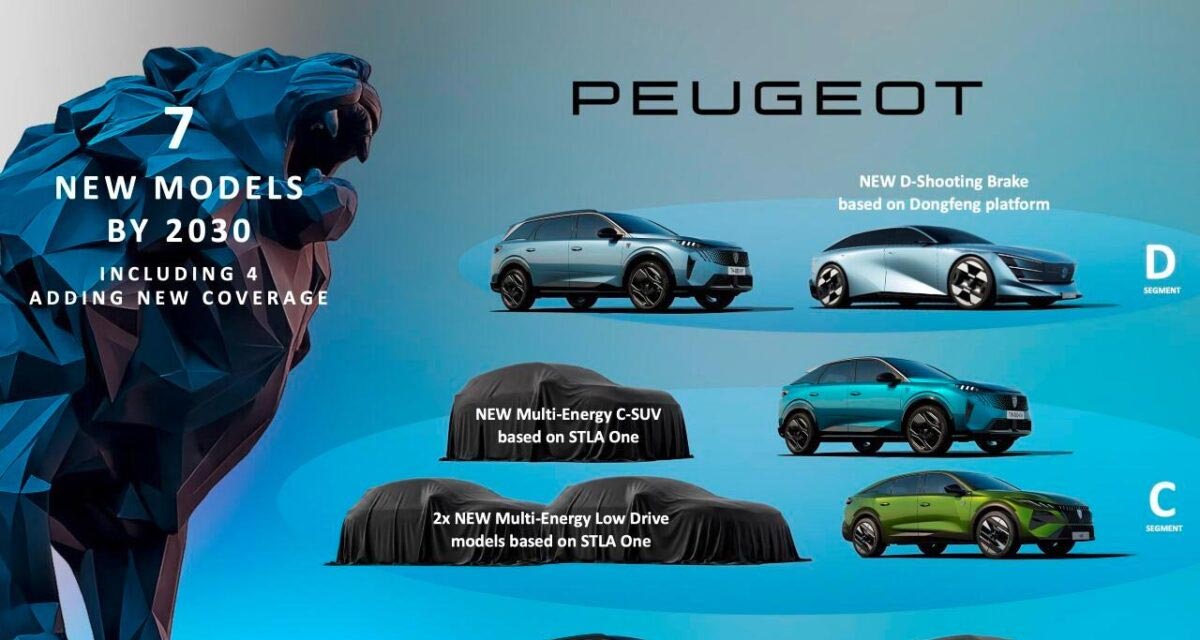
The future Italian compact car will be based on the new STLA One architecture for C-segment models. Peugeot has already announced the launch of seven new models between now and 2030, including several in this segment. It seems unlikely that the future Alfa Romeo Giulietta will share much with the current Peugeot 308 or DS 4, whose developments date back to a previous generation of platforms. The real clues are to be found in Peugeot's future STLA One models.
The first illustrations published by the French brand reveal two non-SUV vehicles that strongly resemble a future 308 and a 308 SW version. Could this be a harbinger of a possible Giulietta Sportwagon? Why not! For now, the mere return of a Giulietta would already be excellent news for enthusiasts.
Alfa Romeo's future SUV is already a foregone conclusion
Alfa Romeo's future compact SUV, known as the A4U project, is paradoxically the model about which we know perhaps the most today. Contrary to what you might think, it will not be based on STLA One, but on the STLA Medium platform. Development is already well advanced, and production is scheduled to start at the Melfi plant in Italy.
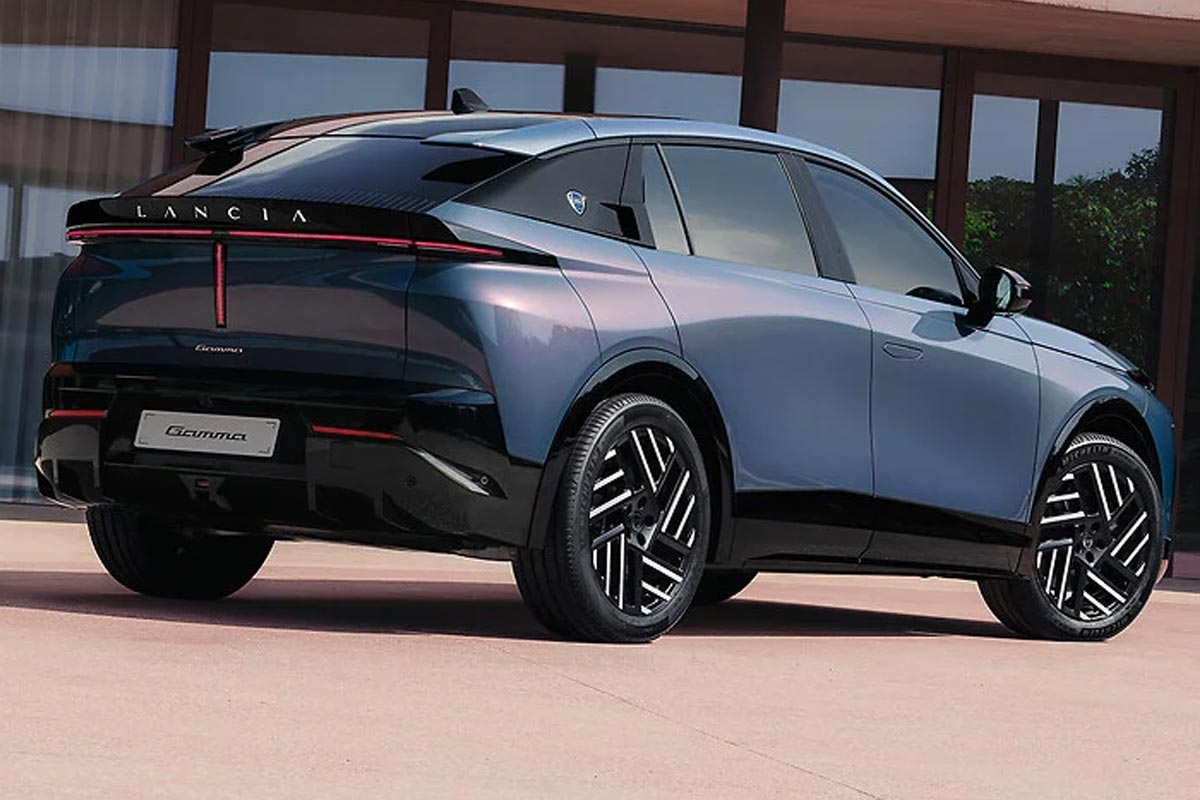
To imagine this future model, just look at the vehicles that will share its technical base: the future Lancia Gamma and the future DS N°7. Dimensions, general architecture, batteries, on-board technologies: much of its technical specification should be close to these models.
However, there could be a major difference under the hood. According to our information, a debate has taken place internally to avoid the use of the 1.2-liter engine on this future Alfa Romeo SUV, contrary to what is available for certain cousin models such as the Peugeot 3008, the DS N°7 and the DS N°2. Lancia Gamma. If this direction is confirmed, the offer could start directly with the 1.6-liter hybrid engine, thus better justifying the premium positioning sought by the brand.
Giulia and Stelvio: the further we go, the less we know
Ironically, Alfa Romeo's two iconic models are also the ones that remain the most mysterious. The story is now known: the future Alfa Romeo Giulia and Alfa Romeo Stelvio were initially to be developed on the STLA Large LP3 platform, with a strategy strongly oriented towards the 100 % electric.
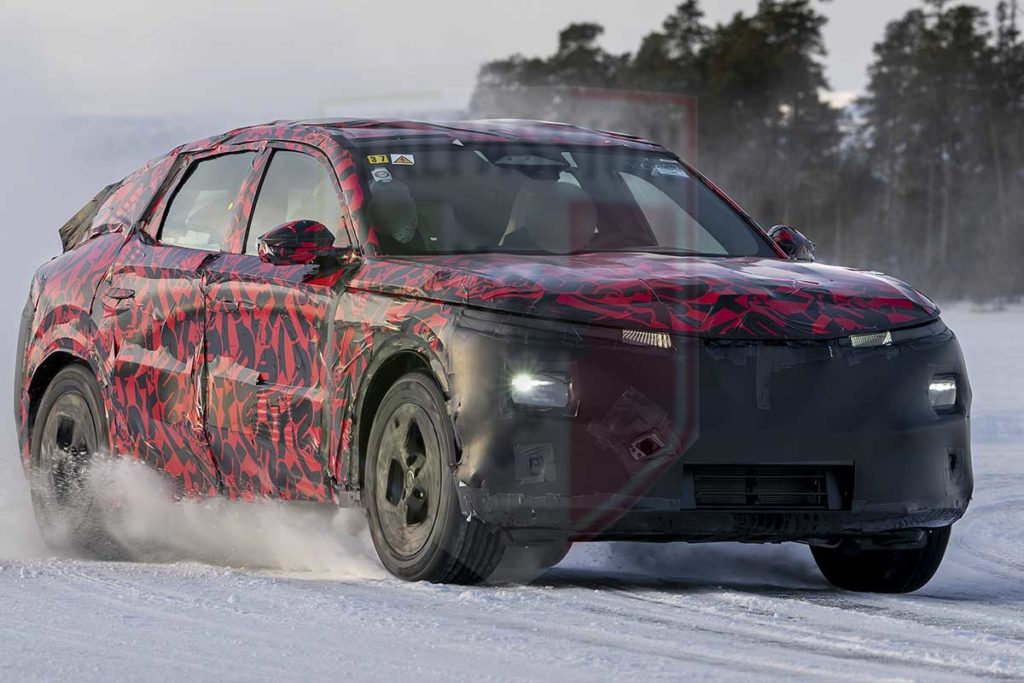
Then the postponements began to pile up. Today, even Alfa Romeo publicly acknowledges that several options are still on the table. Staying with STLA Large? That would make the Giulia and Stelvio the only European models to use this platform. Switch to STLA One? This solution would hardly be compatible with the dynamic demands of a true Alfa Romeo. Wait for a future platform shared with Maserati? Why not, but even the technical future of future Maseratis is not yet totally set.
This is where the Trident brand becomes a key element in the equation. The future Maserati Quattroporte and Maserati Levante may finally provide the best clues as to what will become of the Giulia and Stelvio. It's easy to imagine a Giulia based on the philosophy of a more compact Quattroporte, and a Stelvio derived from a shortened Levante. On paper, the idea seems attractive and consistent with the positioning Alfa Romeo wishes to regain. But at this stage, there's nothing to say for sure.
Peugeot for the short term, Maserati for the long term
In the end, following Alfa Romeo's future is almost like looking at two different Stellantis Group brands. To understand what lies ahead for the Junior, the future Giulietta or the A4U SUV, we need to look at Peugeot and the group's future European platforms.
To guess what will become of the next Giulia and Stelvio, we'd better keep an eye on Maserati, whose technological choices could strongly influence future top-of-the-range Alfa Romeos. While Alfa Romeo's overall roadmap is now clearer than it was a few years ago, the technical details continue to evolve. And today, it's perhaps the French and Modenese cousins who are giving us the best clues as to what the Alfa Romeos of the next decade will look like.
 English
  French
  Italian
  Spanish
  German
  Japanese
  Dutch
Dutch
The truth is Stellantis does not have technology for Alfa and Maserati. Six years of not investing in R&D have leaved Stellantis incapable of managing those brands. Nothing that was developed for DS Dodge and Jeep can be used by Maserati and Alfa. It will take bilions of investments to re develop presence in premium and luxury segment. Bilions that Stellantis is not willing to invest.
I don't think they're even capable of developing a high-end product anymore.
They even closed the super advanced Modena Innovation Lab, and fired 800 of the 1100 engineers working there.
They would use it if they really wanted to relaunch Alfa Romeo and Maserati.
This title... 😭
«Switching to STLA One? The solution would hardly seem compatible with the dynamic demands of a true Alfa Romeo.»
So everyone agrees that the Junior, the future red-painted 308 and the future red-painted 3008 are not real Alfa Romeos.
Stellantis wants STLA One on all its European segment models, B, C, D, so Alfa Romeo will have no exceptions... except perhaps for the Giulia and Stelvio, hence the headache.
Wer sind alle? Hört doch endlich mit diesem negativen Geschwurbel auf! Alfa kann bringen was sie wollen ihr kauft sowieso nicht! Den Fokus muss man halt in die Zukunft und deren Möglichkeiten richten und nicht rückwärtsgewandt in der Vergangenheit stehen bleiben! Ich habe einen elektrischen Junior, für mich ist dieses Auto Alfa genug und ich bin damit sehr zufrieden. Mit diesen dauernden negativen Aussagen wird Alfa schlussendlich mehr geschadet als genutzt.
In other words, the design will remain for future Alfa Romeo models, with a few specific adjustments.
Not very exciting.
The Giorgio Evo platform can also be expected for the new Giulia and Stelvio.
Do you believe in specific settings? That's a real question. When I see the Gamma, for example, I doubt very much that there are any differences with the DS7...
In any case, the Junior Veloce has specific settings. The other Junior models have little or none.
Die einzige Konstante bei Alfa: Ein ständiges Hin und Her.
I'll leave the future Alfa to you... I'm off to the Japanese competition.
If it has 800v, specific settings like the junior, a gear selector that looks more like a ferrari luce than that horror they've been lugging around for years, and a screen that's not too big, then I'm a customer.
It's the best possible thing we can do to save Alfa from the catastrophic results of FCA's plans!
FCA plans, that gave us the Giorgio platform, Alfa Romeo Giulia, Stelvio, 4c, and other planned models cancelled by Manley and Tavares that were more ambitious than anything developed by PSA?
Tavares gave us the Junior, which is ruining the image of the brand, and sells way below its planned figures, and an outdated and unattractive Stelvio that would cause hundreds of millions € of losses if it went into production.
@Łukasz
Always in your imaginary world.
FCA left us Alfa Romeo Giulia, Stelvio, 4C, unsellable since 2019!
By 2021, only the Tonale, a Jeep derivative, was in the pipeline.
Alfa's Junior has been saving the day for over two years!
I'm in the real world, not in the heads of the enlightened.
Keep criticizing Junior and you'll hurt the Alfa brand!
Giulia and Stelvio sales numbers were not bad, before PSA managers came and showed their incompetence at managing premium/luxury brands, by raising their prices, and removing customisation and engine options. The 4C was made to raise the image of the brand, it wasn't designed with sales numbers in mind.
As I've said before, after Sergio's death some planned models were cancelled, others moved to Maserati.
Junior has no imput in Alfa's survival, as sales numbers aren't important. Profits are.
Łukasz, Archi FAUX!
The figures prove it.
The reason for the merger was that things were going very badly at FCA... There was nothing left for the continuation of the old models or the recent ones, which were commercial flops... EXCEPT for the 500.
You weren't on Earth during the 2010s... Everyone was talking about it.
You're living in a totally abstract world, totally out of touch with reality, because not only did the 4C sell better than the RCZ, which flopped as announced by Tavares, the 4C sells for the same original price or even more, and to say that the Giulia and Stelvio are unsellable is not only totally untrue, but they're certainly selling better than the disasters that were the 407 and 508.
Scudric
Do you want to look like a fool?
Circulation: 67,000 copies… And Tavares canceled it even though it was still selling very well.
To streamline the process.
4C: 9,000 copies… And they really emphasized the time factor! The FCA method, in fact.
407: nearly 900,000 units… but for a Peugeot, that’s terrible, isn’t it!
Giulia: sales have remained BELOW 200,000 units so far over the past 11 years.
It’s up to each person to decide…
But keep making us laugh! 😉
The Junior saves nothing, because in terms of profits, the 33 brings more, the Giulia/Stelvio in terms of image, and it's only the Tonale that screwed up and would have been better off releasing the Dodge version in the EU.... In short, your real world is completely distorted because of your compulsive blindness to PSA, which, let's not forget, is a catastrophic disaster when it comes to engines!!!!
Apart from sinking Citroën and making a huge flop with DS... Niente!!!!
Scudric
None of your arguments are credible.
Stellantis is facing major difficulties because of Tavares, but that doesn’t change the fact that FCA is in dire straits in 2021.
Because without Tavares’s blunders, the recovery would have been faster… Nevertheless, the global situation in the automotive industry has been dire since 2020; we shouldn’t expect miracles, even with good management.
The «catastrophic result» is a platform, engines, ergonomics and styling that bear no comparison with the rest of PSA's production. A Giulia still turns heads, a 508 not so much.
No Peugeot turns heads. This brand could disappear, which would leave everyone indifferent.
Fredo
The 508 no longer exists.
The Giulia and the 508 have a lot in common: remarkable cars that can't be sold!
Even with remarkable cars, the results in 2021 will still be catastrophic... That's the reality, and I'm sorry if it hurts your feelings.
With new, better-targeted models, they can continue to climb the slope!
Giulia is not selling anymore, because ex-PSA managers aren't able to manage premium brands. They treat them like mainstream ones, by removing engine and customisation options.
Łukasz, Giulia and Stelvio sales collapsed two years before the merger!
Nonsense, and we can look at the sales of the Stelvio, which say exactly the opposite of what you're saying, but before the merger, PSA was already in the hole with its infamous engines that will make everyone laugh, not to mention the unsaleable models that Tavares quickly had discontinued, and there were a bunch of them, not to mention the DS hecatomb, which is the biggest flop in history.
Already, the Giulia and Stelvio are more saleable than the 508 and 407, which nobody wanted and brought nothing but chronic reliability problems, just like the dreadful 607.
We can see how hard it is for you to admit that Alfa is at a level that is totally accessible to PSA and its low-end bodies, and less reliable than any Lada.
Seriously!?
You actually think it's just the Giulia and the Stelvio?!
… Ah, it’s nice to dream! As early as 2018, people were already calling it a commercial failure!
In 2019, 10 times as many BMW 3 Series cars were sold on the Belgian market as Alfa Giulia cars.
You guys are funny… your naivety is kind of endearing.
The 508 no longer exists because it was a complete flop (and the 408 will follow the same fate). Peugeot is unable to sell in the D segment.
Fredo, don't rush into taking shortcuts.
This is a relatively recent development in Peugeot's history, as the opposite has been the norm for decades.
But just look at the sales figures for the 3008 and 5008… they more than make up for the sluggish sales of the 508 and 408.
When you sell an SUV for more than €50,000, it’s hard to sell that same person a sedan.
For the moment, the only screw-ups are coming from PSA and Stellantis.
FCA used to sell without a hitch, and now it's in freefall, so no, Stellantis isn't the solution, but the main problem, especially with these screwed-up platforms and engines that are a disgrace to the automotive industry.
«FCA used to sell without any problem.
... apart from the 500.
Does the Coué method work, or what are you taking?
You don't need a substance, but you must use it:
Abarth sold 10 times more cars before Stellantis (the figures prove it).
Lancia sold a lot more with one model than DS and its whole lousy range.
Dodge and Jeep sales were at their zenith.
Fiat was well ahead of the rest of PSA (and still is today).
PSA have discontinued their unsaleable vehicles (almost the entire range).
PSA takes taxpayers' and Donfgeng's money for its umpteenth survival!
We know the story and your versions are utopian.
Over a six-year period, PSA had acquired 95% of Dongfeng's shares
«PSA Group repurchases 10 million of its own shares from Dongfeng Motor Group (DFG) and approves an amendment to the share repurchase agreement entered into with DFG»
PRESS RELEASES
Sept. 23, 2020
I’m not making ANY of this up—it’s all verifiable; spouting nonsense is your stock in trade, and you’re known for it, even elsewhere.
«Sales are down, but its popularity remains intact… We must save Alfa Romeo"
»Respected for its Giulia, Stelvio, and Giulietta models, the Italian automaker is nevertheless struggling financially. The merger between Fiat-Chrysler and PSA could be its lifeline."
The World
Published on November 19, 2019, at 12:49 p.m., updated on November 20, 2019
Scudric
There was a leading automotive analyst who told us that sales volumes for entry-level models weren't significant!?
It wasn't you, by any chance?
High volume at low cost and razor-thin margins!
Let's talk a little about the European figures!
Lysander, I admire your determination to defend Tavares, PSA, Peugeot—well, everything French at Stellantis—tooth and nail; it’s a credit to you. But you have to admit, my friend, even if it hurts to admit it, that the whole PSA thing is a total fiasco, and please, stop comparing the 508 to a Giulia—they’re like night and day in terms of handling, chassis, engines, and styling, if you know what I mean. Yeah, I know you’re going to tell me that the Giulia is a commercial flop and the 508 a success! 😊
Amoroso, thank you.
I’m not trying to defend Tavares, who’s made some huge mistakes… BUT, let’s be realistic—not all of his decisions have been bad!
The proof: what’s been going well at Stellantis over the past six months across three-quarters of its brands are decisions made under his leadership… NOT Filosa’s! Even though I have high hopes for his future decisions, I still have my doubts.
The 508 and the Giulia are in the same class… One is sportier at heart thanks to its rear-wheel drive… but the other, with its front-wheel drive, holds its own!
Above all, they are in the same price range.
But I’m aware of the differences, and I’m not the one who brought them up in the first place! … You know what I mean. 😉
«Yeah, I know, you're going to tell me that the Giulia is a commercial flop and the 508 is a hit!»
Absolutely NOT… You don't know me very well!
As for me, I tell it like it is and I don't just go along with the Alfa fanboys…
It’s a brand I love and respect, but to go so far as to spout nonsense… no.
The 508 is a commercial flop… but, sorry to state the obvious, the Giulia isn’t much better!