

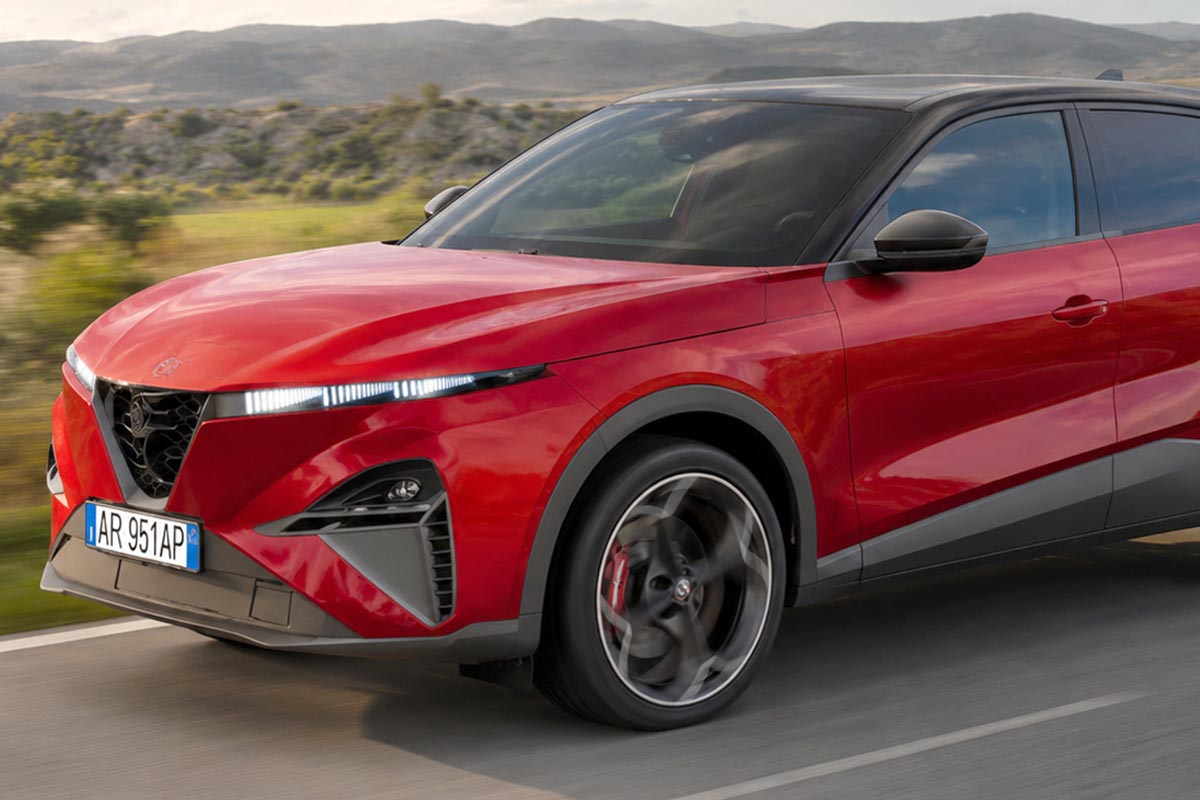
Over the past few weeks, one announcement after another has been made about the new industrial plan for Stellantis, called «FaSTLane 2030». At Alfa Romeo, Several projects have now been clearly identified. The future C-SUV A4U will be based on the STLA Medium platform and produced at Melfi, alongside future Lancia Gamma and DS models. A new Giulietta is also planned for the brand-new STLA One platform, designed for the compact segment.
But when it comes to the Italian brand's future top-of-the-range models, in particular the forthcoming Giulia and Stelvio, it's all a blur.
STLA One, STLA Large... or something else?
During the our analysis of the STLA One platform, At the time, we pointed out that this architecture was intended to cover the B, C and D segments. Theoretically, it could therefore serve as the basis for the future Alfa Romeo Giulia and Stelvio. Yet these two models occupy a very special place in the brand's strategy. They are Alfa Romeo's technological and sporting showcases. The cars that must continue to carry the Biscione's dynamic DNA, with high-performance engines and genuine sportiness.
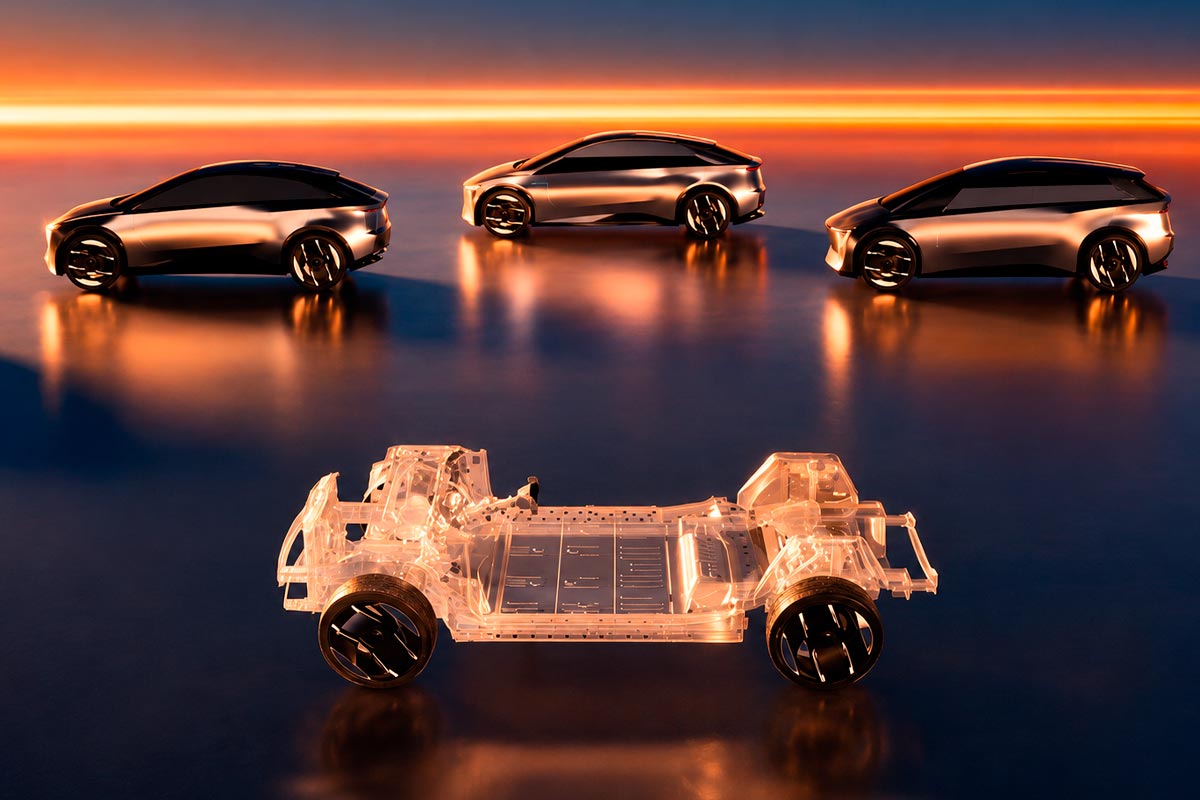
Until recently, however, Stellantis had made it clear that future Giulias and Stelvio would become electric 100 % models based on the STLA Large platform... before giving up and postponing the models. Remember that at the beginning of 2026, we also mentioned the possibility of using the Giorgio Evo platform used by Maserati. In the meantime, the new industrial plan presented by Antonio Filosa contains a disturbing detail: the STLA Large platform is no longer mentioned.
A decision still open at Stellantis
This uncertainty was confirmed by Emanuele Cappellano, Director of European Operations at Stellantis, during a press conference in Paris. The executive acknowledged that several solutions were currently being studied for future large Alfa Romeo models. «There are several possibilities. We can do things on our own or via partnerships», he declared, without giving further details of the discussions underway. In other words: Stellantis still hasn't decided on its technical strategy for the future Giulia and Stelvio. But the word «partnership» obviously raises questions!
Otherwise, the Group confirms its intention to renew the entire Alfa Romeo range as part of the FaSTLane 2030 plan, including the top-of-the-range models. But the platform on which these cars will be based is still under evaluation.
Giorgio Evo, STLA Large revisited... or a Chinese solution?
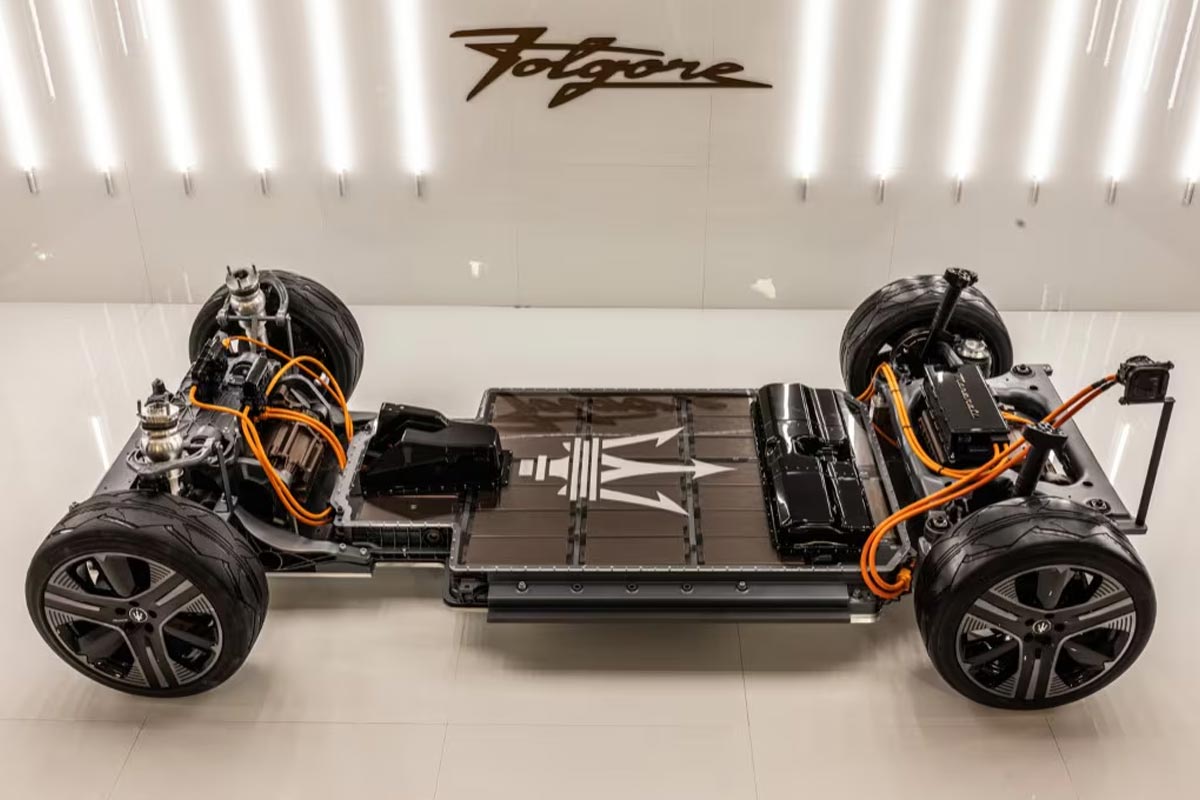
Several scenarios are now conceivable. The first would be an evolution of the Giorgio platform, already used at Maserati for the Granturismo and the Grecale SUV. The «Giorgio Evo» is already capable of accommodating a variety of engines and preserving the sporty character of Alfa Romeo.
Another hypothesis would be an evolution of STLA Large LP3 to make it compatible with hybrid or electrified internal combustion engines, as is the case in the USA with Jeep and Dodge models.
But there is also a third, much more sensitive, avenue: that of an external technological partnership. This idea is no longer totally taboo at Stellantis. Recently, there was a rumour that a future Maserati based on a platform from Chinese manufacturer JAC Motor. A rumor that Maserati had not really denied, simply explaining that «all options» were being studied.
Emanuele Cappellano's statements today reinforce this impression: Stellantis seems ready to consider technological alliances for its future top-of-the-range models.
Electrics complicate the equation
The economic context also explains these hesitations. According to Cappellano, Europe is currently «the most difficult market in the world» for automakers. Between changing regulations, electric vehicle development costs and shrinking margins, automakers are looking to limit risky investments.
In particular, he pointed out that a 100 % electric vehicle today generates less margin than a combustion model, prompting automotive groups to review certain strategies decided a few years ago in a very different context.
And this is precisely why Stellantis is still hesitating about the future Alfa Romeo Giulia and Stelvio. For these models will not only have to be profitable, but also remain true to Alfa Romeo's sporty, premium image. A balance that is much harder to strike today than it was when the group promised an all-electric range. Stay tuned!
 English
  French
  Italian
  Spanish
  German
  Japanese
  Dutch
Dutch
So, a very Italian design, according to Gilles Vidal, but under the skin of certain models, Chinese chassis and models with Puretech engines that will still be produced! How exciting! 🙄
The pill will always be passed on to some, who don't understand that they're squandering the very essence of what makes an Alfa Romeo/Maserati.
The very fact of declaring that it's a question of changing the dress to dress the same model, with the same technical specifications from A to Z, should alert everyone. So, yes, let's give Vidal a little chance. In any case, it'll be hard to do worse than Ploué. But Stellantis seems to have learned nothing...
For the time being, no Puretechs (which no longer exist) are planned for the Giulia/Stelvio. .
«It's not enough to change the name of a cheese for its smell to go away.» 😌
Potté.
May 28, 2026.
The most sensible decision would obviously be to prove their know-how with the use of the Giorgio Evo, so they're going for the Chinese partnership.
And yes, I vote for the Giorgio !!!
Everyone votes for Giorgio.
Except the pro-PSA folks who think that a 208 CMP is better suited to a Stelvio and Quattroporte, of course. But that's their right, and none of our business.
Any resemblance to an existing person is purely coincidental.
And I'm keeping my giulia!
If only to inherit a Franco-Chinese car with a Hyundai-style design!
Might as well buy a Renault 😀.
Another thing: nothing!
A solution repeatedly adopted by FCA
lol bien vu
Yes, exactly.
But the advantage for FCA in 2020... They arrived for the merger with an excellent and extremely flattering financial balance sheet that had strictly nothing to do with future potential for the 2020s... just like the success of the Tonale and the 500 strictly that EV. 🤔
Insofar as we imagine that the STLA One will be a front-wheel-drive platform (with the possibility of 4WD for electrics), it's hard to see a Guilia and a Stelvio on it.
Especially as the cars are theoretically already ready on STLA L3, all that was needed was to finish the conversion for the hybrid.
I believe that salvation will come from the United States, where the STLA Large evolved platform is used to equip high-performance vehicles.
But there's no mention of powertrains. What about full or plug-in hybridization or electric (we can say goodbye to internal combustion...)? Still in the US, they've got what it takes.
It's safe to say that we're not about to see a new Alfa. The suv will be a Lancia ds clone.
The logical choice would be to use the platform used in the United States.
Suicide will be to take Chinese platforms
Who says the Suv will be a Lancia clone? ????
You can see into a crystal ball!
in reality, it's more the C-SUV that will be a cousin of the Lancia Gamma, not the future Stelvio. And as for the C-SUV, I'm told it doesn't look like anything I've seen before... so I hope there's been a real effort to differentiate it.