
For the past year, a strange feeling has been building up around Stellantis. Almost every new week, a Chinese manufacturer appears in the Group's news: Leapmotor, BYD, Dongfeng, JAC Motors... Announcements, rumors, partnerships and discussions follow one another at an unprecedented pace. So much so, that one question emerges: is Stellantis getting closer to China... or is it China that is courting Stellantis?
For behind this succession of deals, a pattern seems to be emerging. Under-utilized European factories, Chinese electrical technologies, struggling European brands, the need to cut costs and accelerate development: all these factors are gradually transforming Stellantis into a potentially very attractive partner for Chinese groups. And perhaps also a player deliberately seeking to make itself indispensable.
Leapmotor: the start of a new philosophy
The real turning point probably came with the partnership with Leapmotor. At the time, many people saw it primarily as a commercial agreement to sell Chinese electric cars via the Stellantis network in Europe. But in recent months, the project has taken on a whole new dimension.
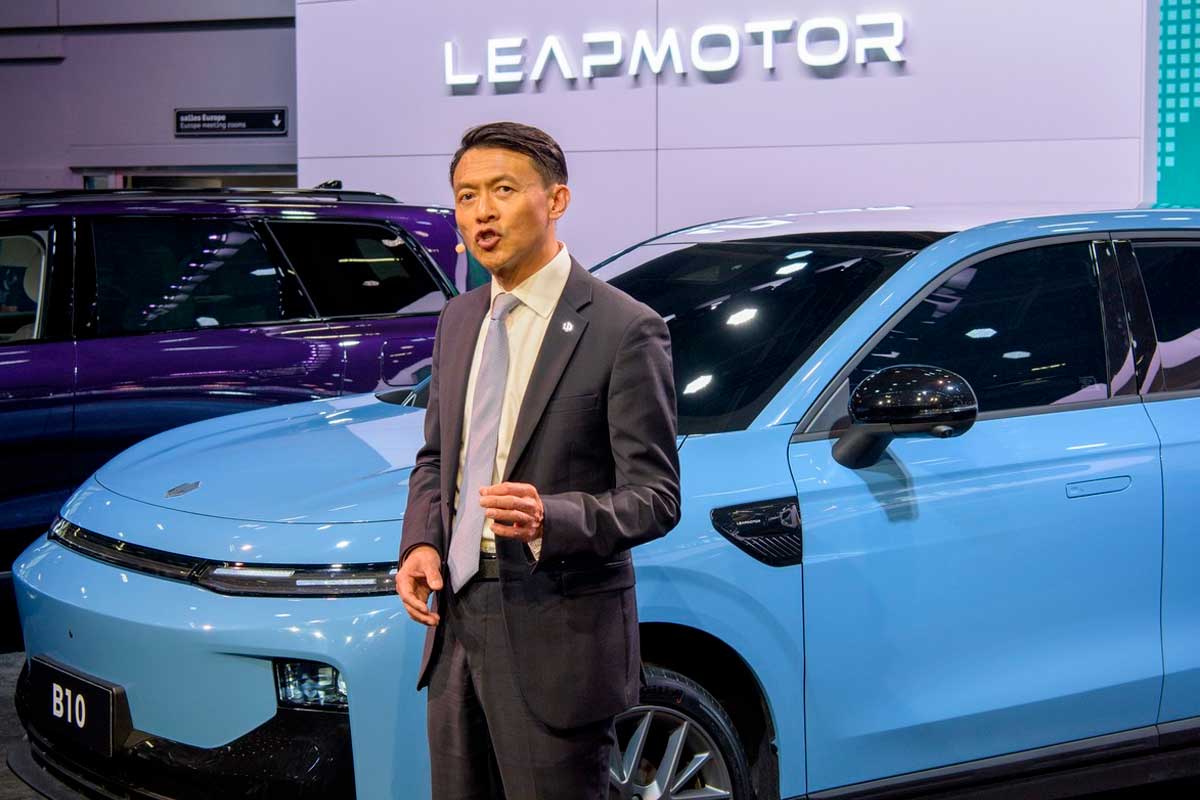
The group headed by Antonio Filosa is no longer just talking about distribution. It's now talking about European factories, Chinese technical platforms and even future Opel models developed with Leapmotor technologies. The most striking example is the Villaverde plant in Spain. Stellantis is studying the possibility of transferring ownership of the site to the Spanish subsidiary of Leapmotor International. A symbolically enormous decision for a European manufacturer historically attached to its industrial sites. Meanwhile, Opel has confirmed that it is working on a future electric SUV based largely on Leapmotor's architecture and batteries. Officially, the model will be designed in Germany. But the technological base will be Chinese.
Even five years ago, such an announcement would probably have triggered an industrial and political earthquake. Today, Stellantis presents it as a logical evolution to accelerate the development of less expensive electric vehicles.
Dongfeng: the return of a long-standing partner
A few days later, Dongfeng Motor returned to the forefront with a much more structured official announcement.
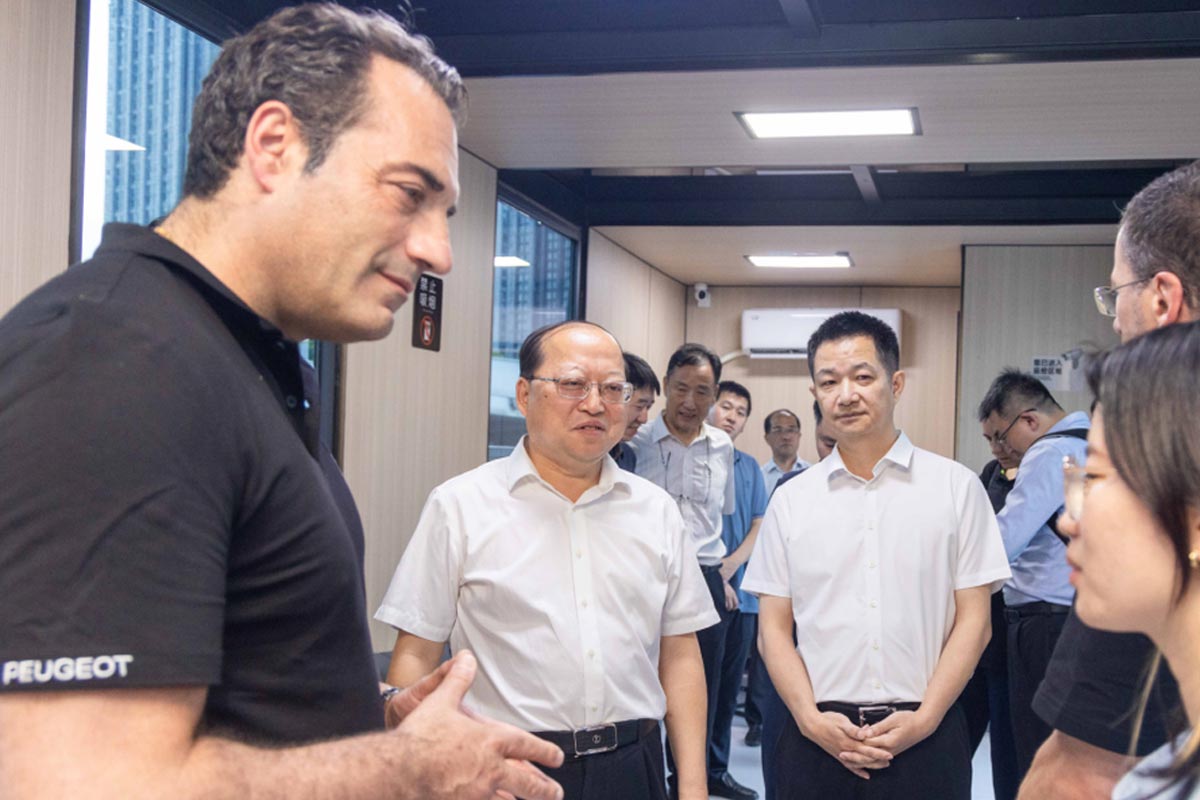
The historic partnership between Stellantis and Dongfeng enters a new phase. The two groups will produce new Peugeot and Jeep models in China for the Chinese market... and for export worldwide. The agreement includes the production of two new Peugeot electric vehicles at the Wuhan plant from 2027, as well as two electric Jeeps for global markets. This time, we're not just talking about a local presence in China. We're talking about a Chinese manufacturer becoming an industrial link in the global strategy of iconic Western brands.
And behind this announcement lies another reality: the Cassino plant in Italy is regularly mentioned in discussions about possible cooperation with Dongfeng. The site is going through an extremely difficult period, with sharply declining volumes and an uncertain future.
BYD now looks to Stellantis factories
Then came the statement that has probably left the biggest impression on observers in recent days.
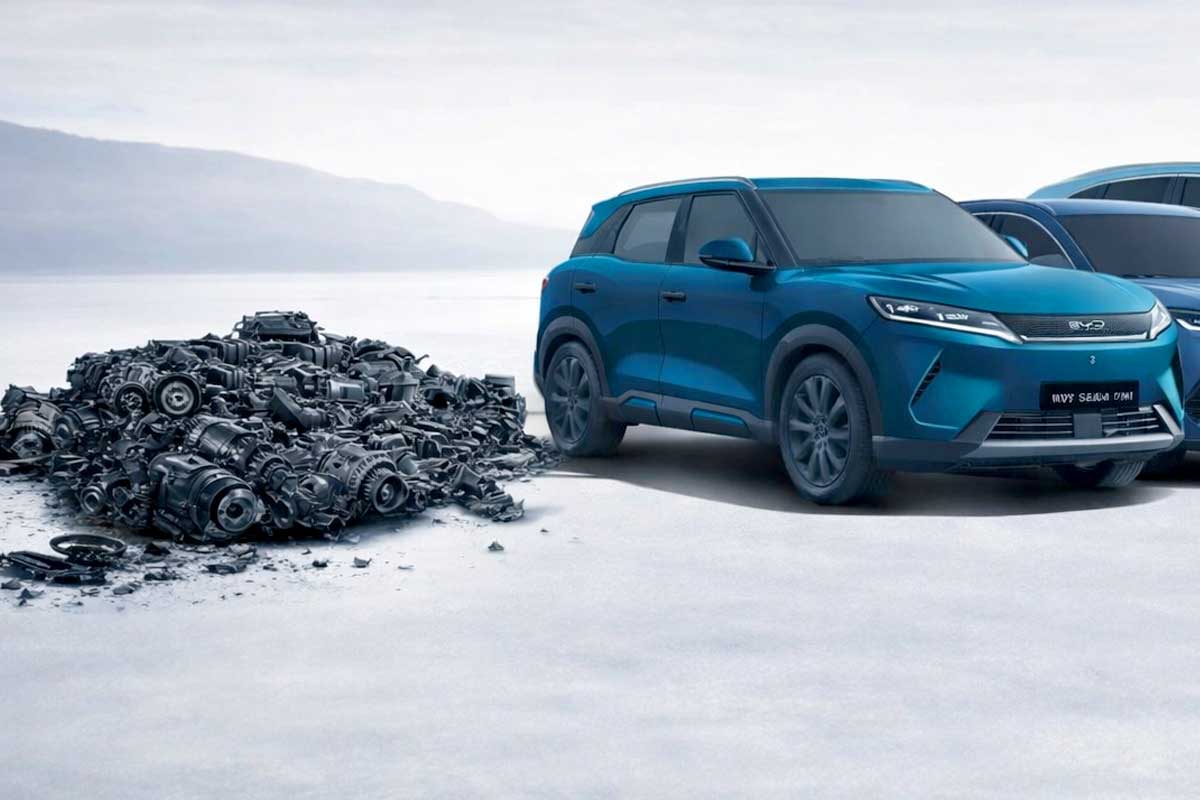
At a Financial Times conference in London, BYD made it clear that it was looking for available industrial capacity in Europe. And when Executive Vice President Stella Li mentioned discussions with several groups, the name Stellantis immediately came up in all the analyses.
This is no coincidence. Italy is now home to several of the Group's most vulnerable sites: Cassino, Mirafiori, and even certain assets linked to Maserati and Alfa Romeo. Against a backdrop of European industrial overcapacity, these plants become potential opportunities for Chinese automakers wishing to produce locally in order to avoid European customs barriers.
BYD remains deliberately vague about its real intentions, but the signals are strong enough to worry Italian trade unions and politicians. Above all, it reinforces the strange impression that Stellantis has become a particularly attractive industrial playground for Chinese groups.
Maserati and JAC: the rumour that sums it all up
But perhaps the most spectacular rumor is the one involving JAC Motors, Huawei and Maserati.
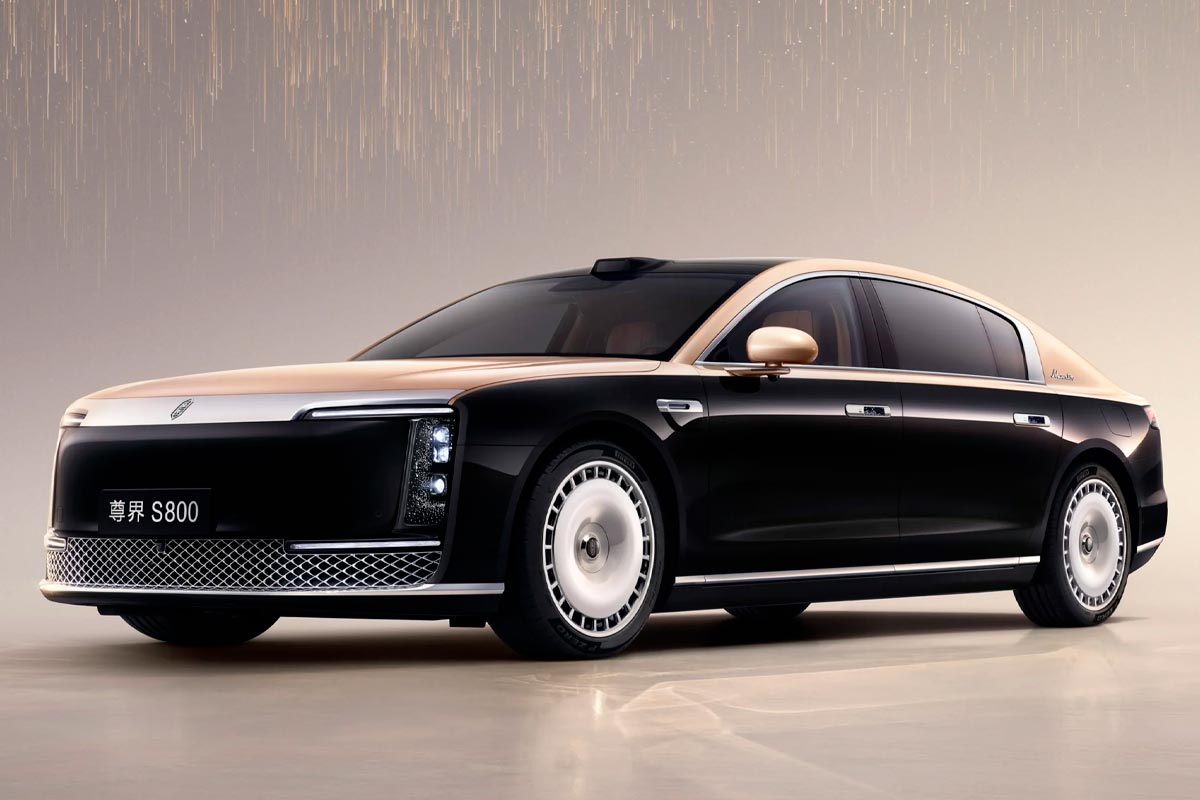
According to several Chinese media outlets, discussions have been taking place around of a future large electric luxury sedan using Huawei technologies, a JAC industrial base and the Maserati badge for international use. On paper, the project seems almost unreal: an electric Maserati developed in China to compete with Rolls-Royce and Mercedes-Maybach.
But this rumour perfectly illustrates the current period. Even a brand as symbolic as Maserati, the epitome of Italian automotive luxury, now seems to be integrated into this logic of technological rapprochement with China. The problem, of course, is as much cultural as industrial. Maserati sells an Italian history, a mechanical emotion, an identity linked to Modena and motorsport. Imagining a model based on a Chinese platform inevitably raises the question of the brand's very identity.
And yet, economically, the idea is not absurd. Maserati has virtually collapsed in China in recent years, from around 15,000 annual sales to just a few thousand. To return to this now ultra-technological market, a local partnership could appear to be a pragmatic solution.
Is Stellantis deliberately playing the Chinese card?
In the end, what is most striking is the simultaneous multiplication of files.
Leapmotor for electric platforms and European plants. Dongfeng to produce Peugeots and Jeeps for the rest of the world. BYD to look at unused industrial capacity. JAC and Huawei associated with a possible Chinese electric Maserati.
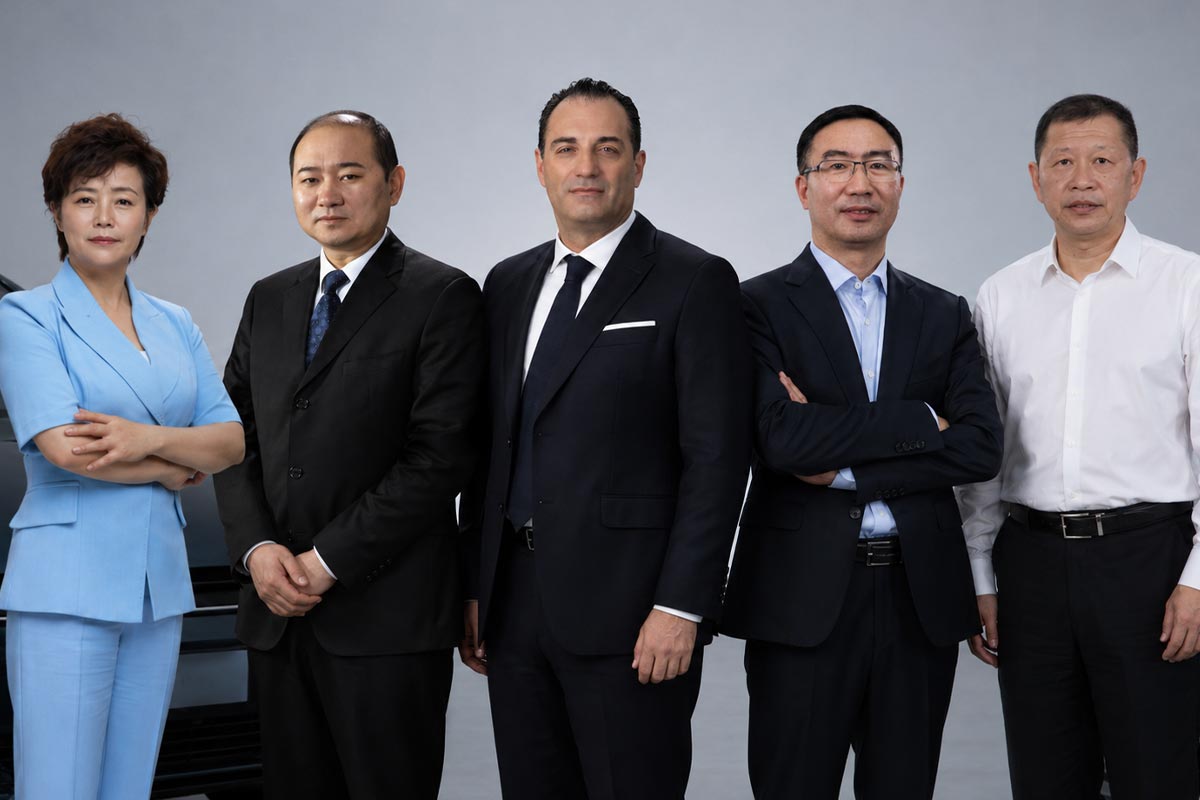
Taken separately, each case can be rationally explained. But taken together, they give the impression that Stellantis may also be trying to send out a message. That of a group open to partnerships, flexible, able to offer strong brands, European factories, distribution networks and historic industrial know-how. In short: an extremely attractive partner for Chinese giants looking to accelerate their global presence.
And in a fast-changing automotive industry, where European automakers are desperately seeking to cut costs in the electric sector, Stellantis seems to have chosen a very pragmatic path: building more bridges with China rather than trying to resist it head-on.
 English
  French
  Italian
  Spanish
  German
  Japanese
  Dutch
Dutch
Here we are, and this is only the beginning of all these «chinoiseries». Carlos TAVARES had warned us, and on this point, he was right!
Yes well it's largely his fault so it's normal that he saw it coming, he prepared the ground 😂
Tavares is the man who did everything to destroy the Italian brands. So he can keep his lessons and predictions to himself. Stellantis is a disaster, and this PSA-FCA alliance, all to put itself in the hands of Leapmotor and other Chinese manufacturers, is a disgrace.
Stanislas says: «has done everything to destroy Italian brands.»
He's the Junior that saves Alfa, he's the hybrid in the Fiat 500, he's the G.Panda that saves Fiat, and so on.
Yes, he's done some stupid things, but you can't pin everything on him! 😉
Personally, I'd say that the deal with Leapmotor that will probably save Stellantis in terms of CO2 credits and electric platforms, where the group is at a loss, is his doing. After all, the Junior's success is relative (in a parallel world, we don't know what Alfa Romeo would have done without PSA), he's the one who didn't want to launch the 500 as a hybrid from the start (just like the 600), and he's also responsible for the production delays on the Fiat Grande Panda, where the smart car platform was poorly developed in India. That's my point of view.
«I don't want to give too many figures that would go to the competition», Tavares stressed, «but the cost of the platform in the Citroën C3 (and therefore in the Fiat Grande Panda - Editor's note) is half the cost of the 500e».
Source motor1
I'm not surprised, but that doesn't solve the problem. The development cost was undoubtedly twice as low, but during press tests, it was often said off the record that the delay in production of the Fiat Grande Panda was due to numerous development problems, which also affected the Citroën e-C3. Repeating what Carlos Tavares said about a platform half the cost of the 500e is not particularly glorious. All in all, I think the Smart Car platform will probably be replaced one day by Leapmotor's.
For the record:
The «smart car» platform is a simplified evolution of the PSA CMP, then redesigned to meet European standards.
What's left of Indian!
The aim was indeed to have a low-cost CMP developed in India. I don't have the technical details.
You're right that Tavares' development was rushed, and that's why he raised prices without having anything better to show for it.
But there's more to his period than meets the eye...
Junior saved Alfa Romeo?? It barely reaches 50% of its yearly sales goal, and the numbers are already collapsing. He was the one who refused to make the 500 hybrid until the situation got terrible for 500e.
Grande Panda has big quality issues.
Luc, that's simply impossible.
The release of the 500e dates from 2020, so it's a pure product of FCA, which designed it exclusively as an EV.
It was Tavares who wanted the hybrid when he took over after 2021!
I'm sorry, but I'm hearing a different story from Fiat's head of product. I interviewed him directly, on the roof of Fiat's lingotto. The platform was originally designed for electric and hybrid vehicles. But they decided to launch it in electric only. It wasn't until the spring of 2024 that they decided to relaunch it as a hybrid.
You must know more than I do, of course.
But I'm surprised to hear. «And the collapse in sales of the Fiat 500 as early as 2023 ... And therefore the particularly long latency to bring out a hybrid model that's rather mediocre in performance to boot, which looks like a quick DIY in a hurry.
Mr Filosa made a Citroën Maserati sm cabrio, a new legend that will appeal to Americans. For Peugeot, a pickup based on Ram since in the US they have Peugeot van bases. Before a Chinese takes over brands, thank you.
The ProMaster and ProMaster Rapid are based on Fiat (Ducato and Brazilian Fiorino), as are some of RAM's products. And making a Peugeot pick-up on the basis of a big, gluttonous pick-up sold in Europe would be nonsense.
Alexandre, when I read that title, I get the impression that you're preparing people for the worst, so that when something does happen (we hope not), we'll wallow in what we've got left... 🤔
A Jeep produced in China and sold worldwide, an Opel designed in China and produced in Spain, rumors for Maserati, BYD officially saying it's interested in factories in Italy... I think we have to be prepared for stellantis to be Italian, French, American and Chinese.
I hope that in 3 days Filosa will have the honesty to be transparent...
For my part, I think it's going to be a definitive abandonment of Italian brands... I'm a bit fed up ^^ We're slowly but surely heading towards a philosophy that doesn't suit me, I'll just have to dive back into my history books and dream of the glorious past (and possibly an ancestor one day!).
My next one will certainly be Japanese.
I'm fed up too... for Fiat I'm pretty confident. I'm fed up with Alfa Romeo and Maserati. For Lancia, I'm very doubtful. For Abarth, let's forget it.
To think that 20 years ago, even if not as clearly as 40 years ago, Fiat was at the top of Europe ... what's left of it?
If the brands of the Stellantis group come to be run by Chinese companies, I'll be out of a job. It's already catastrophic, I had to wait 7 and a half months for my new Avenger to be repaired, after 7 cars from the group (6 Citroëns and a jeep), I'll have to look elsewhere, either Renault or Japanese.
It's the dismantling of the group. Nothing else is being announced. They're testing public opinion, which is already depressed, not reacting and will be even more so than it already is. We're in fatalism, we're in denial.
Met andere woorden: « If you can't beat them, join them ». Stellantis producten hebben een slechte naam gekregen door matige kwaliteit en een rampzalige motor de 1.2 driecylinder ‘pure tech’ (‘pure pech’ in de volksmond. De ‘heritage’ is echter interessant voor de Chinezen dus ik verwacht in de nabije toekomst veel samenwerkingen en ‘mergers’. Overigens eten de Chinese merken ook elkaar op in China zelf.