
While in Europe, the partnership between Stellantis and Leapmotor is often presented as a “win-win” strategic alliance, the view from China is far more nuanced. Between admiration, mistrust and a feeling of industrial revenge, Chinese comments about this cooperation actually tell a deeper story: the tilting of the world's automotive center of gravity.
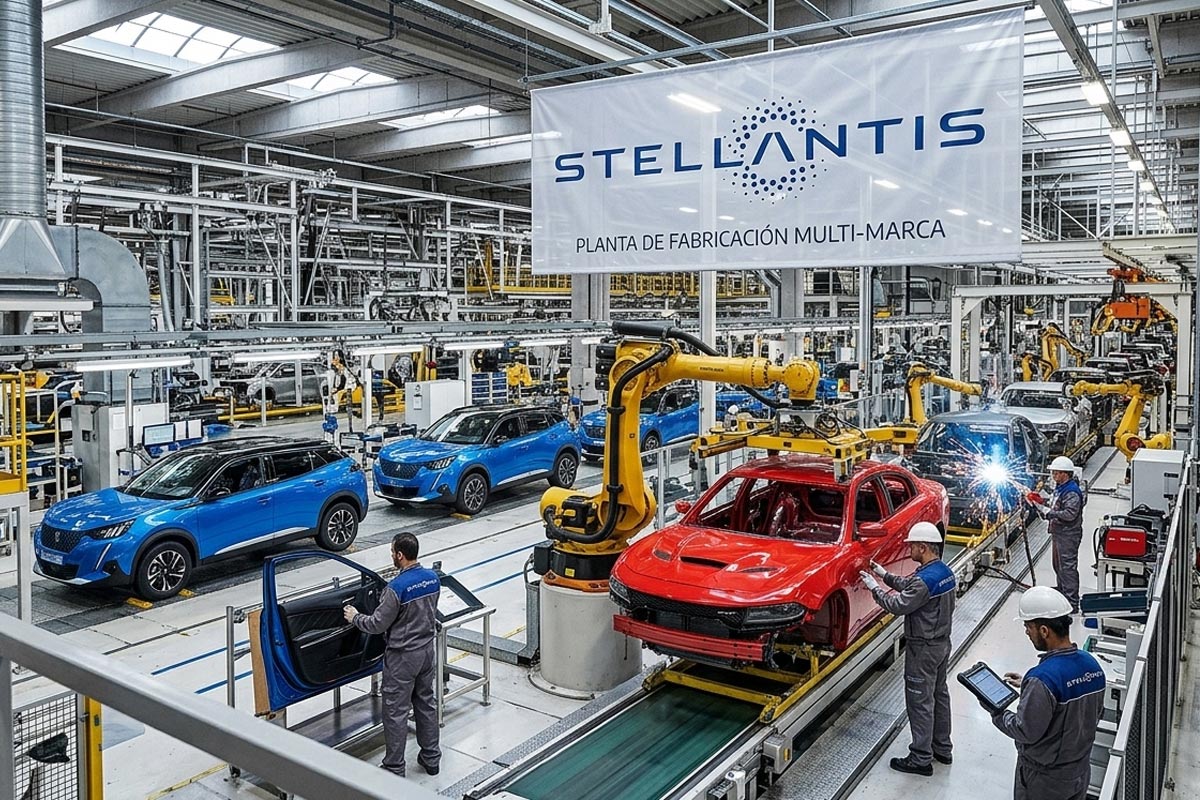
It all started with an official announcement from Stellantis. The European automotive group wants to go much further with Leapmotor. After simply distributing Chinese models in Europe, the two companies are now preparing joint developments, local production in Spain and further integration of supply chains. In other words, it's no longer just a matter of selling Chinese cars in Europe, but of manufacturing European cars... with a Chinese technological base.
«The center of the world's motor show will be Chinese».»
In China, many have remembered a phrase from Zhu Jiangming, founder of Leapmotor: «Today, Chinese automakers occupy the center of Chinese auto shows. In a few years» time, they will occupy the center of the world's auto shows."
This statement perfectly sums up the current state of mind of part of the Chinese automotive industry. Long considered outsiders, Chinese automakers now believe they have the technological edge in electric vehicles. And the partnership with Stellantis is seen as further proof that even the major Western groups now need China to remain competitive.
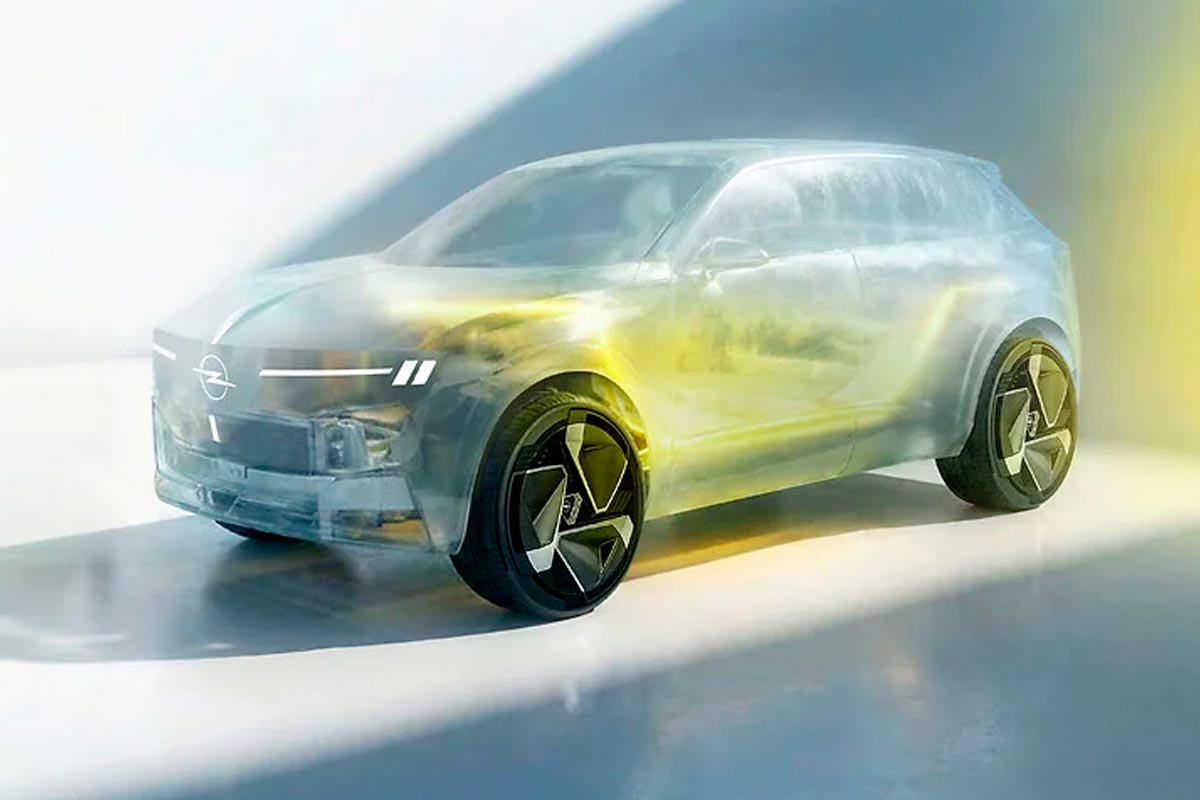
The future Opel electric SUV codenamed “O3U”, jointly developed by Chinese and German teams, symbolizes this new reality. Leapmotor will supply the electric platform and batteries, while Opel will take care of design, chassis tuning and the model's European identity. An almost historic reversal of roles. For decades, European automakers brought their (outdated) technology to China. Now, it's European engineers who come to China for their electrical know-how.
In China, Stellantis worries more than it reassures
But while many see this alliance as a Chinese industrial victory, opinions about Stellantis are particularly harsh. On social networks and in the Chinese media, the group is regularly described as an “empire in trouble”, plagued by internal problems.
Complicated governance, internal rivalries between the French and Italian clans, a lag in the electric sector, brands losing ground... Some Internet users have gone so far as to dub Stellantis “the alliance of losers”. It has to be said that the figures support this view. In 2025, Stellantis recorded a colossal net loss of 22.3 billion euros. European factories are idling, with utilization rates well below the standards considered profitable in the automotive industry.
For many Chinese commentators, Stellantis no longer has much choice: the group must quickly recover competitive electrical technologies, and Leapmotor represents a quick and relatively inexpensive solution.
«Either one will absorb the other, or one will disappear».»
But behind the official rhetoric of cooperation, some Chinese comments show a real distrust in the long term. One bluntly sums up this fear: «Over time, this is bound to create tensions. Either one company will absorb the other, or one of them will disappear.»
This sentence, widely relayed and approved on Chinese forums, reveals a paradoxical concern. Many fear that Leapmotor will reproduce, in reverse, what Western groups have long done in China: use a partnership to recover technology before gradually marginalizing their partner.
Many Internet users draw parallels with the former Chinese joint ventures with Volkswagen, PSA or General Motors. Back then, Western brands contributed their technology while retaining control of strong brands and value. Today, some fear that Europe is trying to do exactly the same thing with Chinese manufacturers.
Others, on the contrary, believe that Leapmotor is playing it smart. Thanks to Stellantis, the Chinese brand immediately obtains factories, a European distribution network, local production that bypasses customs duties, and faster credibility on the Old Continent. For them, it's a brilliant operation: using the European infrastructure to accelerate a global expansion that Leapmotor would have found much harder to finance on its own.
Europe becomes dependent on Chinese technology
This partnership is also seen in China as the symbol of a historic change: automotive Europe, once dominant, is beginning to depend on Chinese technologies. Several Chinese media outlets point out that this is probably the first time a major Western automaker has opened its own European plants to a Chinese brand to produce its vehicles locally. A huge symbolic step.
In the comments, some Internet users go even further: «Opel on the outside, Leapmotor on the inside», ironizes a user based in Germany. Perhaps most strikingly, Stellantis doesn't seem to be stopping there. Chinese media report that Xiaomi and XPeng are also in talks with Stellantis. At the same time, the group is also strengthening its ties with Dongfeng Motor (as a reminder Stellantis management has visited Dongfeng's factories on numerous occasions). Seen from China, this looks like a clear strategy: European groups are now looking to integrate Chinese technology into their own structures to survive the electric transition.
A decisive three- to five-year window
For Leapmotor, the stakes go far beyond current sales volumes. Zhu Jiangming dreams of a truly global manufacturer, with 60 % of production eventually taking place outside China. His ambition is not simply to export Chinese cars, but to transform Leapmotor into an international automotive player.
But Chinese observers also point out that the hard part starts now. Producing in Europe is just one step. Sustainably managing European factories, trade unions, local suppliers and an international brand image is another challenge altogether. That's why many believe that the next three to five years will be decisive. If the cooperation works, Leapmotor could become one of China's first truly global automakers. If it fails, it could also become yet another example of the difficulties of transcontinental automotive alliances.
 English
  French
  Italian
  Spanish
  German
  Japanese
  Dutch
Dutch
What good news with Stellantis! It gives us hope for the future 😍
So you're in favor of Chinese hegemony Potté!?
Does it make you come?
It was ironic...
As a pragmatist, I can see that all Western automotive groups have been doing poorly since 2020.
When I see the VW, Renault, Ford groups, and Mercedes« agreements with the Chinese to »do" well, the situation isn't all that different!
Stellantis has duplicate platforms, the synergy is not total and they only have 5 years to rationalize 14 brands.
The strategic alliance is still “win-win” so far... Leapmotor was struggling in China with a saturated market.
Stellantis took 21 %s from Leapmotor, who are remarkably competitive in EVs (as are most Chinese).
For the moment, interests are divided.
Stellantis should make two «sub-groups»;
One for North and South America, with Chrysler, Dodge and Ram in the north, with v6s and v8s. Very greedy, for the aud Fiat and its proven diesel.
A group for Eurasia; selling only EVs based on Chinese technology (for the moment) that will equip Alfa Romeo, Lancia and Maseratti, and Leap. Period. So, in Europe, Stellantis could develop its supercharger reason dito Tesla and position itself as THE European EV group.
With the pretentious Filosa, anything is possible. But Stellantis is clearly mismanaged and the Chinese realize it. It's simple: break up the group and leave FCA alone. .
I'm waiting for Filosa's «improvements».
Since the end of 2025, sales figures have improved, but this is still the result of measures taken under the Tavares era.
Filosa's are not very visible. Putting combustion engines back on the market is OK, but it's electrics that are making the most progress!
The alliance with Leapmotor makes perfect sense.
After being put under military and then digital tutelage by the United States, Europe's industry is now being taken over by China, especially the automotive industry.
Stellantis is the weak link. It remains to be seen whether the United States will accept Stellantis' American part. Perhaps the end of Stellantis?
The alliance with Leapmotor is controlled, unless I'm mistaken!
The Chinese are everywhere in every other group, AND not always so controlled.
After that, if the future is 100 % Leapmotors in all future models, Chinese hegemony will have won.
Stellantis is the group with the most brands and the most brands in difficulty.
Stellantis has developed platforms for all the new models in the range. With the use of Chinese platforms, what happens to them? The American government won't let a Chinese company buy an American flagship. At the time, PSA had to abandon its business in Iran because GM had a stake in PSA.
I agree with you, Alexis.m.
Nevertheless there are still many «holes» in the Stellantis brands with the new Stellantis platforms, AND Filosa deliberately delayed many models that were too exclusively 100 % VE!?
I have the impression that Stellantis has his ass between two chairs, between two contradictory policies!?
Filosa seems to be clearly in favor of VT, ok, that's good ... Except that EVs are going up and up fast right now!?
The Chinese (alliances) make it possible to take fewer financial risks.
The manufacturers who succeed in making «good» and «optimized» electric cars have platforms dedicated to this energy, like the Chinese manufacturers, Tesla and certain European manufacturers like Wolkswagen and Renault. This explains the cost of investment.
Stellantis is trying out a mix of combustion, hybrid, plug-in hybrid and electric vehicles. They're bound to be a step behind, being average in each of these technologies. Hence the call for help, and the Chinese are on the lookout.
A DS N°8 is efficient on the freeway, consuming just 22.8 kWh/100 km, while a Renault Scenic consumes 25.3 kWh/100 km and an Alpine A390 GT consumes 26.8 kWh/100 km.
With the DS, driving 470 km on the freeway is not a problem, but recharging is slow, like all 400 V architectures.
The example of renault: they've been concentrating on platforms dedicated to electric cars for a long time, and others to full hybrids. combustion engines will remain marginal. The Zoe and then the electric Megane are examples of this. Renault is not renewing the combustion-powered Megane. They're not behind Stellantis, and Renault can also leverage and pool its investments with Nissan and Mitsubishi. Renault has acquired real experience in electric vehicles.
The same can't be said for Stellantis« micro-hybrids, from the Citroën C3 to the »new" fiat 500 hybrid and the new dependence on leepmotor for electrics.