

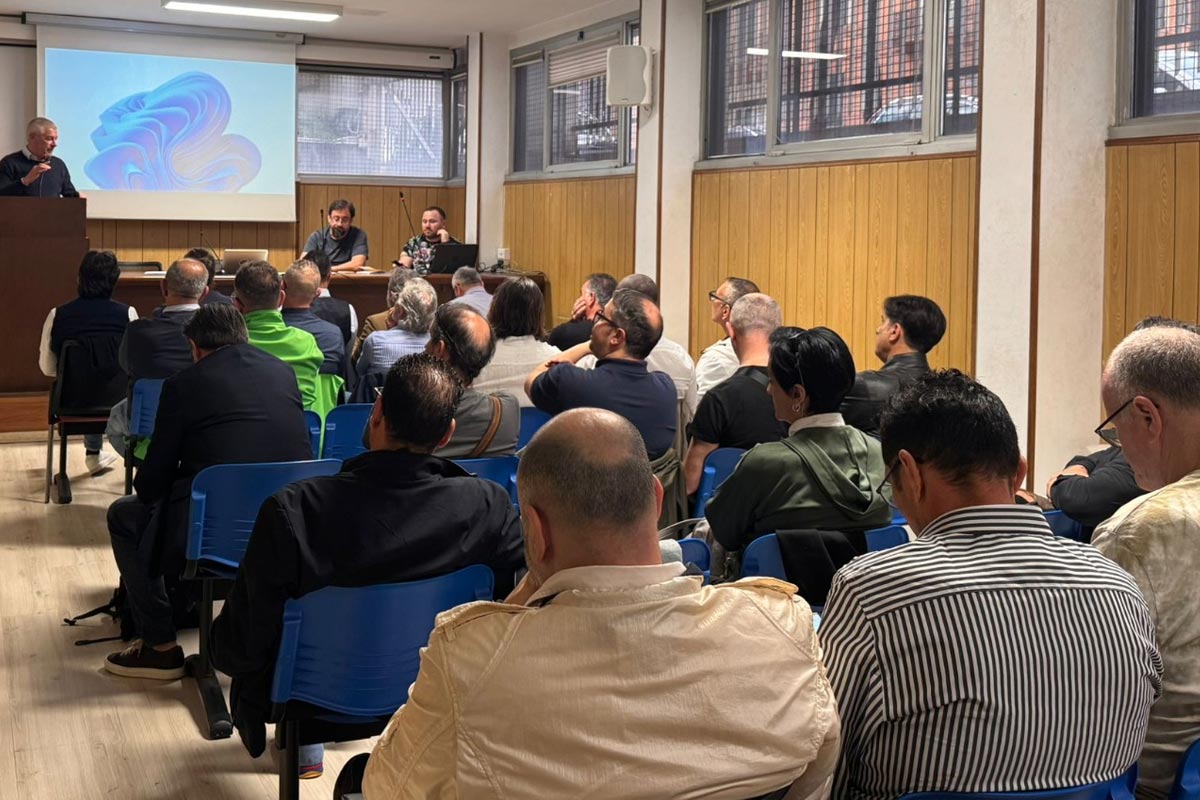
Just a few days away from Investor Day 2026 at Stellantis, scheduled for May 21 in Detroit, pressure is mounting in Italy. Meeting in Rome, the Fim-Cisl union sent a particularly firm message to the management of the group headed by Antonio Filosa: plant closures and layoffs in Italy are out of the question.
In a lengthy document adopted unanimously by its national coordinating body, Fim-Cisl calls for a genuine industrial turnaround for Italy. The union believes that several of the group's sites, as well as a significant part of the Italian automotive subcontracting sector, are going through a critical period. Behind the words used, it is above all the fear of a slow industrial weakening that shines through.
Fear of Italian industrial decline
For several months now, unions have been watching with concern the decline in production volumes at several Stellantis plants in Italy (as a reminder, in 2025...), Italy produced fewer cars than in 1955). Discussions about possible partnerships with Chinese manufacturers to occupy certain under-utilized sites are also fuelling tensions.
Fim-Cisl is therefore seeking clear commitments before the presentation of the new industrial plan. The union explicitly asks Stellantis to guarantee the maintenance of all Italian sites, not only production activities, but also research and engineering centers. The document also insists on the refusal of «unilateral workforce reductions».
For the union, Italy must continue to play a central role in the Group's strategy. This means maintaining the development of Italian brands such as Alfa Romeo, Maserati, Lancia and Fiat, but also allocating new powertrains and confirming the European production of Jeep models in Italy.
Mirafiori, a symbol of concern
If there's one site where tensions are running high, it's Mirafiori. The historic Turin plant remains at the heart of union concerns.
Fim-Cisl is asking for confirmation of production of the Fiat 500e and future 500 hybrid MHEV, but this is no longer enough. The union is now calling for a second high-volume model to secure the site's industrial future. It even raises the possibility of producing small electric and hybrid cars for the European market. Another strong demand is to accelerate the future 500 model announced for 2030. For union representatives, waiting several more years without a real ramp-up would be too risky for jobs.
Mirafiori is also home to strategic activities such as the Battery Technology Center, the Circular Economy Hub and a research center. Here too, Fim-Cisl wants guarantees on investment, training and recruitment in the fields of artificial intelligence, electrification and digitalization.
Cassino, Melfi, Pomigliano: factories await answers
The climate is also tense at Cassino, often cited as one of the Group's most fragile sites. The union is asking Stellantis to clearly confirm its «premium» vocation, with future generations of the Alfa Romeo Stelvio and Alfa Romeo Giulia, expected in both hybrid and electric versions.
Production of the Maserati Grecale is also to be secured, as are future replacements for the old Maserati Levante and Maserati Quattroporte. Behind these announcements, the union is seeking above all to avoid a long period of under-activity before the arrival of the new models.
In Melfi, Fim-Cisl is asking for confirmation of the future models already announced, including the new Jeep Compass, the Lancia Gamma and the DS 8. But the union also wants to know as soon as possible the identity of the future model promised for 2028, deemed essential to maintain sufficient volumes.
The same concerns apply to Pomigliano d'Arco, where the union is hoping to secure the future of the future Pandina and the Alfa Romeo Tonale, while securing the arrival of two new compact models on the STLA Small platform.
Italy's automotive industry faces the European challenge
In addition to the Stellantis case, Fim-Cisl is extending the debate to the entire European automotive sector. The union openly criticizes the current all-electric strategy and calls for an approach based on «technological neutrality».
The document also calls for more public aid, lower energy costs and specific measures to protect Italian equipment manufacturers and subcontractors. Behind all the rhetoric about the transition to electricity, the industrial reality remains stark: in Italy, many factories are currently operating well below capacity.
The Investor Day on May 21 will therefore be particularly closely watched. For the Italian trade unions, it will not simply be a strategic presentation to investors, but a decisive moment for the industrial future of an entire country.
 English
  French
  Italian
  Spanish
  German
  Japanese
  Dutch
Dutch