

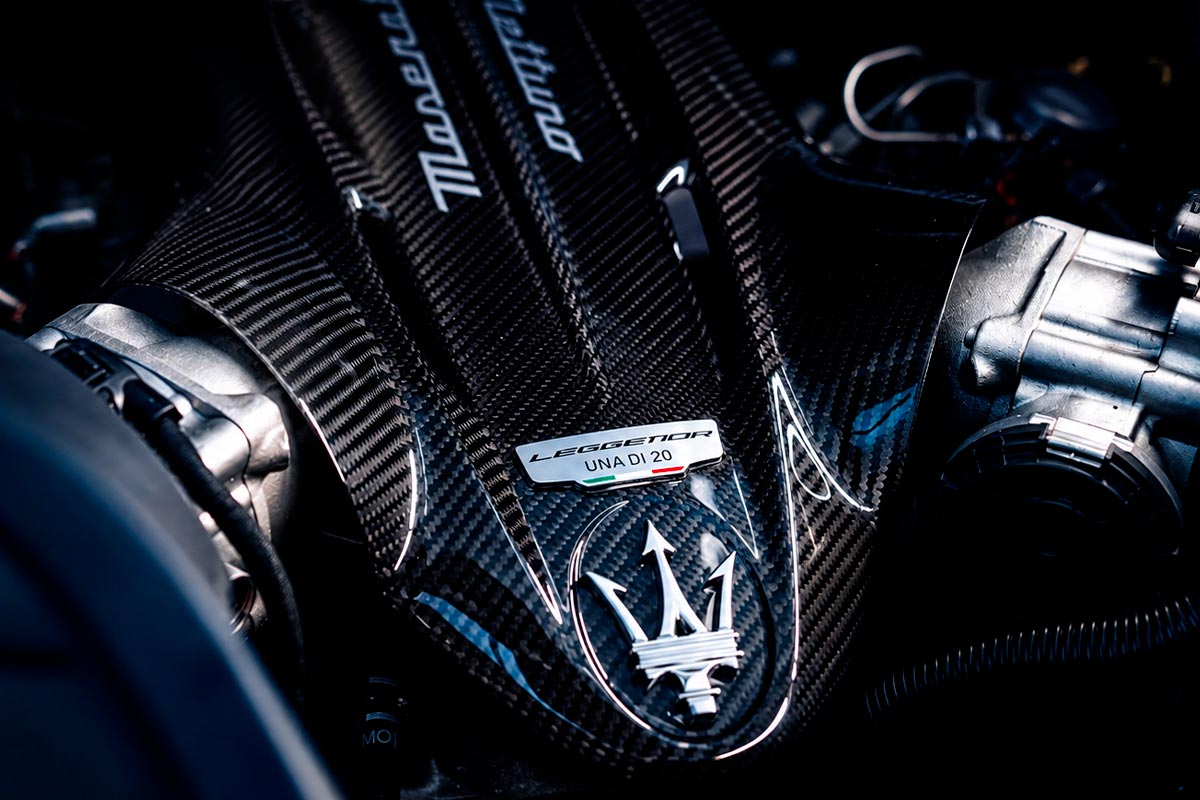
On the occasion of the presentation of its new GranTurismo, GranCabrio, and Grecale lineup, Maserati didn’t just unveil an evolution of its models. The Italian brand also sent a very clear message about its future in terms of powertrains: the Nettuno V6 engine will remain at the heart of the Trident’s strategy for many years to come. And even though sales continue to decline and electric vehicles are struggling to win over some customers, Maserati now appears to be making the Nettuno engine one of its main selling points.
«I'm personally in love with this engine»
The statements made by executives during the unveiling of the 2027 models leave little room for doubt. Santo Ficili, COO of Maserati and CEO of Alfa Romeo, was particularly blunt: «I am personally in love with this engine.» Launched in 2020 with the MC20, the 3.0-liter twin-turbo V6 “Nettuno” was Maserati’s first engine developed entirely in-house in over twenty years (an evolution of the Alfa Romeo 2.9L V6, to be transparent). Six years later, it now powers the MCPura, the GranTurismo, the GranCabrio, and even the Grecale SUV.
«Today, we have one of the best V6 engines in the world, if not the best. It’s our Nettuno. The team is working on developing this engine, with an evolution that we also envision in a hybrid configuration. […] «I’m personally in love with this engine. It can deliver power ranging from 390 ch in the Grecale to over 700 ch in the MCXtrema.»
Santo Ficili, COO of Maserati
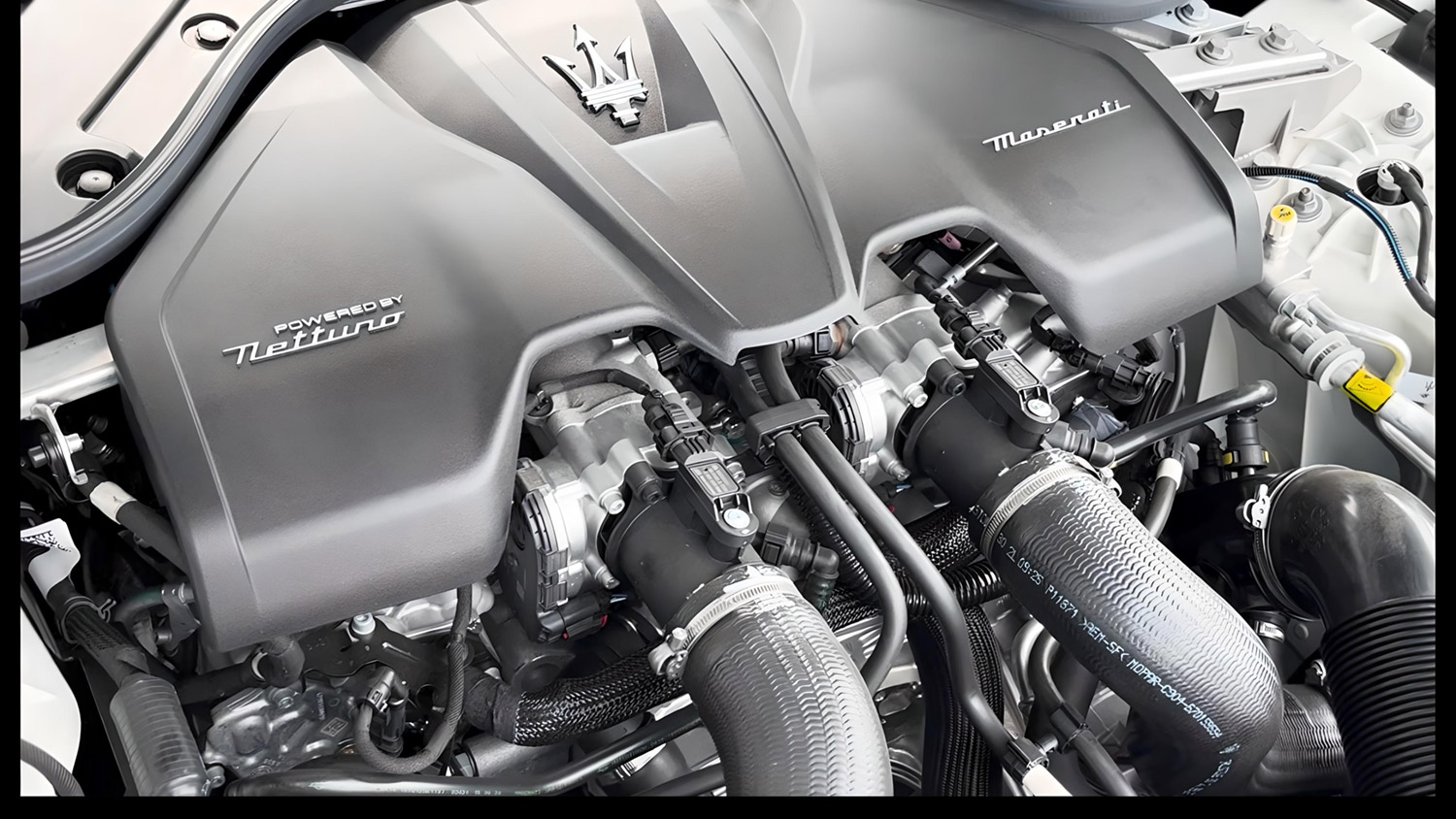
And above all, it continues to evolve. The new GranTurismo and GranCabrio Trofeo now deliver 590 ch, while the MCPura produces 630 ch. As for the radical MCXtrema, designed exclusively for the track, it pushes the V6 to 740 ch.
Hybridization for Improved Performance
Maserati has now confirmed that it is working on an electrified version of the Nettuno. Cristiano Fiorio, the brand’s marketing director, explains that hybridization will deliver «a new level of performance» while providing added value to customers.
The brand emphasizes one point, however: this will not be a plug-in hybrid powertrain. Maserati believes that customers who want to drive electric vehicles already have the Folgore models to choose from. Future Maserati hybrids are therefore expected to adopt a lightweight solution, featuring either a 48-volt hybrid system or a more compact high-voltage system. The goal is twofold: to improve performance while meeting future emissions standards without the weight and complexity constraints of plug-in systems.
«The big advantage of this technology is that we’ll still be able to meet future emissions standards without losing power. Many other engines tend to lose power when they’re updated to meet new standards. With the Nettuno, we can maintain the same level of performance—or even improve it. […] We see a hybrid future for the Nettuno, because it represents another level of performance we can achieve, while delivering additional value to the customer.»
Davide Danesin, Chief Technical Officer at Maserati
The best V6 on the market?
Internally, Maserati seems particularly confident about its engine. It must be said that the Nettuno remains a very unique powerplant with its pre-chamber combustion system. Compared to the competition, the Italian V6 holds its own exceptionally well. The 3.0-liter engine in the Ferrari 296 produces 663 ch without electric assistance and 700 ch in the Speciale version. The McLaren Artura’s V6 produces 585 ch without a hybrid system. Even the spectacular 1.6-liter V6 derived from the Mercedes-AMG One’s Formula 1 engine produces 575 ch.
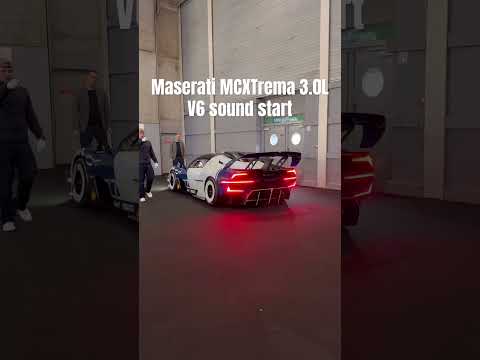
Only the Ferrari F80 operates in a different league. Its hybrid V6 alone already produces 900 ch, while the system’s total output reaches 1,200 ch thanks to the electric motors. Setting the Ferrari F80 aside, the Maserati MCXtrema’s 740 ch already make the Nettuno one of the most powerful V6s ever produced by an Italian automaker.
A future Maserati with more than 700 ch?
Although Maserati has not released any figures, the planned strategy strongly resembles Ferrari’s approach with the F80: an extremely high-performance internal combustion engine paired with a compact electric motor designed primarily to boost performance.
Such a solution could enable a future hybrid MCPura to exceed 700 ch, while the Trofeo versions of the GranTurismo and Grecale could also reach new heights. It remains to be seen whether this will be enough to sufficiently reduce CO2 emissions…
 English
  French
  Italian
  Spanish
  German
  Japanese
  Dutch
Dutch
The problem with Maserati is that they have the best V6 in the world… but no sedan to put it in! 🤔
Unfortunately, you're right, because aside from the wonderful Grecale… there's nothing, and it's urgent because the customers are grumbling and getting seriously impatient!
It's clear that the two best on the market are the Nettuno and the 2.9, but I'm crying 😭 because the third one—which is Japanese—disappeared along with the NSX...
Six cylinders can be a lot of fun, even in a V-configuration. We should leave the “inline-six” craze to BMW and the like; it’s totally overrated there.
Technology of the past… So Maserati will soon be a thing of the past too 🤣
For now, French technology is a thing of the past—or even prehistory—and to top it all off, it’s not even reliable! 😂🤣
It's the past, but not the one we think it is—as the head of Toyota so aptly puts it!😁
It really wouldn't be too much to ask to translate these articles manually.
CH? That's either KW or PS, not CH….
I have to admit, it's a great engine.
ABER: The electric craze will soon swallow him up too, whether it fits the car or not. And then there’ll be a little brownout, and no one will be able to charge their cars properly… Sigh.
Yet another PSA fanboy ranting about his PureTech that's leaking oil ^^
On one hand, a state-of-the-art V6—a masterpiece; on the other, an L3 that’s been unreliable for 13 years. If this were prehistoric times, one would have mastered fire, while the other would still be trying to make sparks.
What a wonderful comparison—my compliments, Potté.
Santo Ficili is right—the Italians know how to build the best engines in the world, especially V6s. The problem is that the marketing isn't keeping up, whether it's for Maserati or Alfa Romeo.
We hope to see the Nettuno V6 in future Alfa Romeo models, and that they’ll finally do away with the PureTech engine, even in entry-level models like the Junior.
The same goes for Lancia: there's no point in trying to revive the brand if it doesn't have engines or dealerships.
It's futile.
They'll keep using PureToc; in fact, they'll continue to install it wherever possible.
I totally agree, but the French are happy because they think their piece of junk is the 7th wonder of the world, just like the THP! 🤣😂
No doubt the French are happy with a "déplacoir.".
I’ve been renting a Fiat 600 Hybrid with a 110 ch engine for the past few months, and then a Peugeot 208 with the same engine. For a relaxed drive, it’s not so bad. No sportiness whatsoever, but that depends on what you’re looking for. These are cars for getting from point A to point B. But an Alfa Romeo or even a Lancia deserves better than the PureTech.
The general trend among many automakers is toward 3-cylinder engines (including BMW), and drivers are probably happy with that.
Having driven 700 km in Mallorca in a Peugeot 600, I came to the same conclusion. The engine is «utility-oriented»—it lacks any real power—but it gets the job done when it comes to getting from point A to point B. On the other hand, it’s incomprehensible to put that under the hood of an Alfa Romeo—especially a «compact» SUV; it’s not a city car!
An Abarth 600 makes no sense without a viable internal combustion engine, and right now that's not the case—which is probably why we see 500x models everywhere.
A further development of the Ferrari engine in the Alfa. If you look at the construction of that engine, you’ll drool as a techie. In terms of wear and tear, they’ve done everything possible to ensure it lasts at least 300,000 km. And maximum power doesn’t mean much; it’s the power curve and torque delivery that matter. A fantastic engine. The BMW M3 engine is fun and raw! The Netuno is refined in a way that only Italians know how to do.
I’d like to return to my earlier comment about the 90-degree V6. The ignition intervals are uneven, which is why the exhaust note is tuned accordingly. Maserati needs a prestige engine—that is, a V8 with a 4-liter displacement. The production machinery for the 90-degree V-angle is already in place. It would also be the right engine for the next-generation Quattroporte and Levante.