

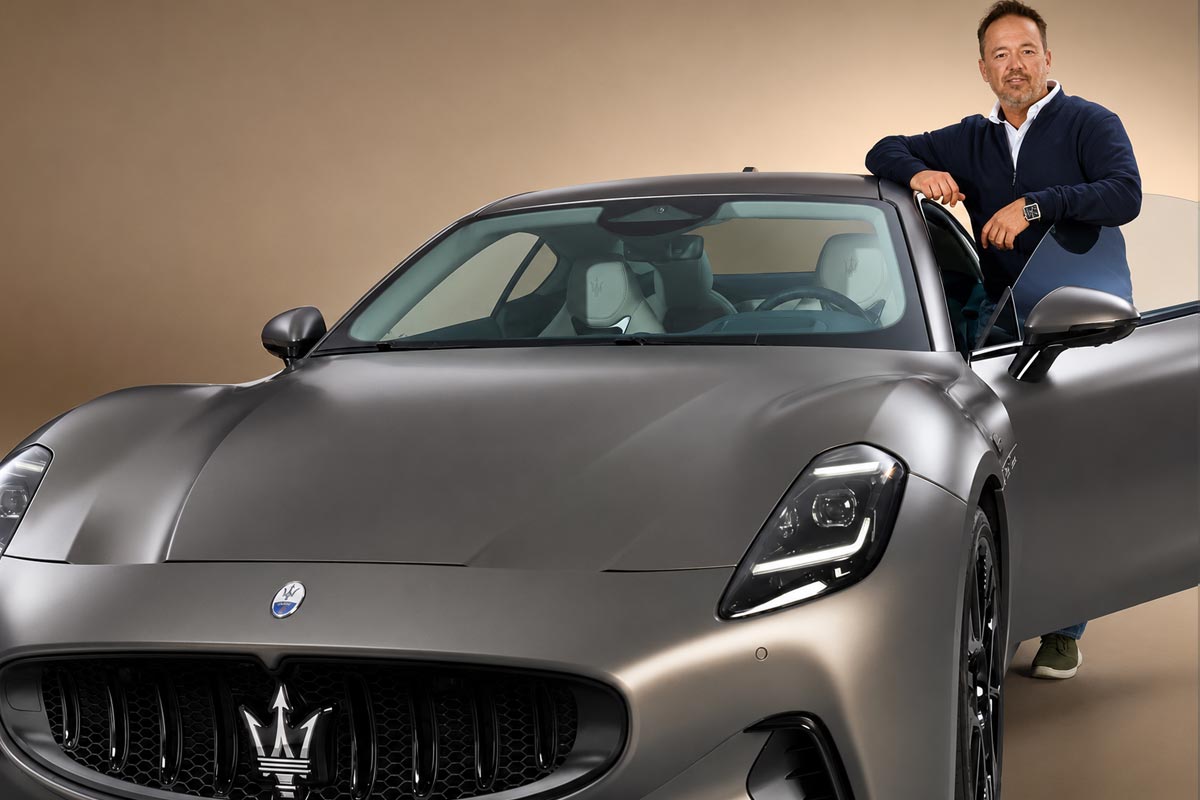
While Ferrari, Lamborghini, and Porsche are increasingly turning to plug-in hybrids for their high-performance models, Maserati seems to want to take a different path. A few weeks after confirming that Its Nettuno V6 may well have an electrified future, the Italian automaker is now making it clear where it refuses to go. And the message is particularly clear.
«These cars don't really represent progress.»
At the Goodwood Festival of Speed, Davide Danesin, Maserati’s technical director, outlined the brand’s vision for electrification. While the engineer confirmed that a hybrid version of the V6 Nettuno is indeed in the works, he openly ruled out plug-in hybrid technology. His main argument is both technical and societal. According to him, the high-capacity batteries required by plug-in hybrids add about 300 kg to the vehicle—extra weight that is difficult to justify in a sports car. But that’s not all.
«Ultimately, from a societal perspective, these cars don’t really represent progress,» he says, explaining that numerous studies show that many owners of plug-in hybrids simply never charge their vehicles. For Maserati, carrying a heavy battery that functions mostly as dead weight is therefore of little value.
A hybrid, yes… but without a plug
This announcement fits perfectly with the strategy Maserati unveiled a few weeks ago. The brand had already explained that the future of the Nettuno V6 would involve mild electrification or a more compact high-voltage hybrid system that does not require external charging. The goal is twofold: to maintain the performance for which the engine is renowned while complying with future emissions standards. Davide Danesin believes that a smaller battery allows drivers to take advantage of the instant torque of electric motors without compromising dynamic handling.
The Nettuno V6, considered internally to be «one of the best V6 engines in the world,» would thus continue to evolve without losing its identity. This philosophy was already mentioned during the presentation of the 2027 Maserati lineup, when executives confirmed they were working on a new, even higher-performance version of the engine.
SUVs Before Sports Cars
That said, Maserati isn’t completely ruling out the possibility of hybridizing its lineup. Quite the contrary. According to Davide Danesin, a Grecale Trofeo Hybrid would fit perfectly into the lineup. On the other hand, the idea of a hybrid MCPura or even a hybrid GranTurismo remains much more challenging.
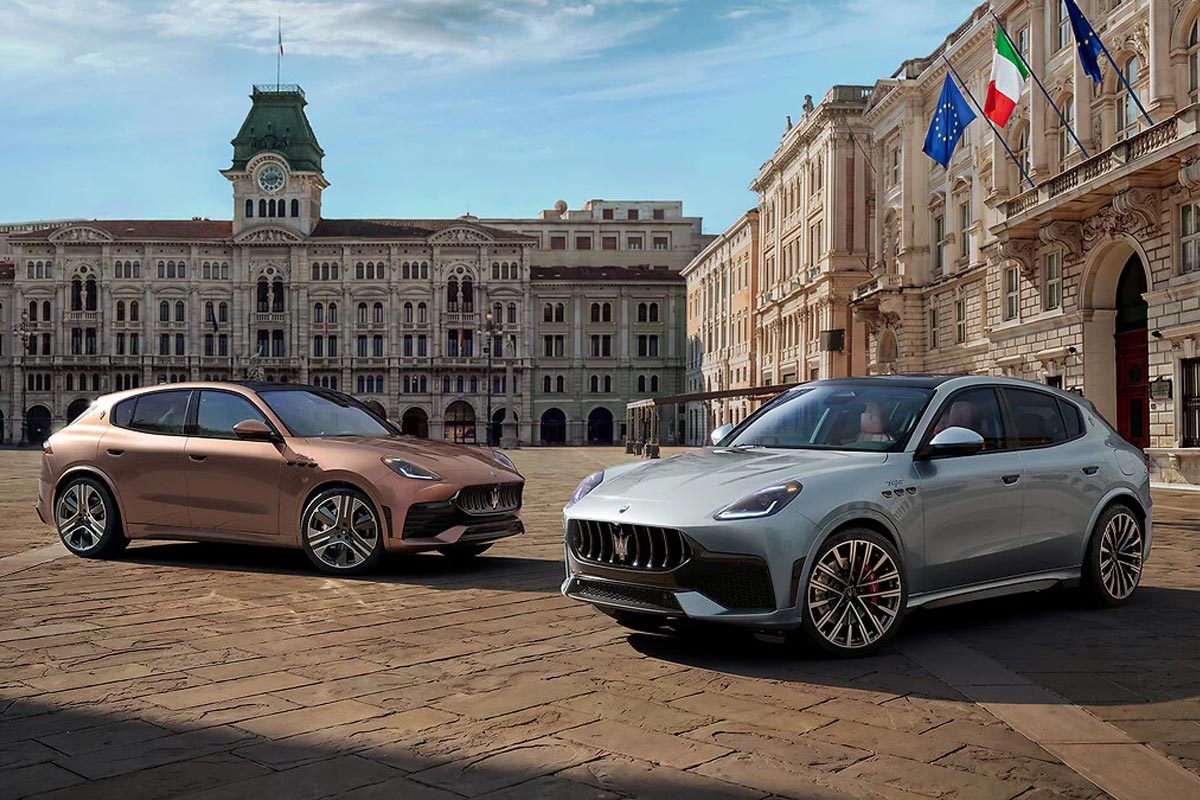
Customers who buy a true Maserati sports car are looking above all for «a certain level of purity» in internal combustion engines, the engineer explains. For this type of customer, hybridization does not necessarily add value. He does, however, suggest that certain models could eventually offer both a gasoline-powered version and a hybrid variant, depending on the markets and changes in regulations.
A vision that’s the opposite of Lamborghini’s
This stance stands in stark contrast to that of Lamborghini. The Sant’Agata Bolognese-based automaker, on the other hand, maintains that plug-in hybrids are currently the best solution for improving the performance of its models. Revuelto, Temerario, Urus SE, and even The brand's future fourth model will be based on this architecture.
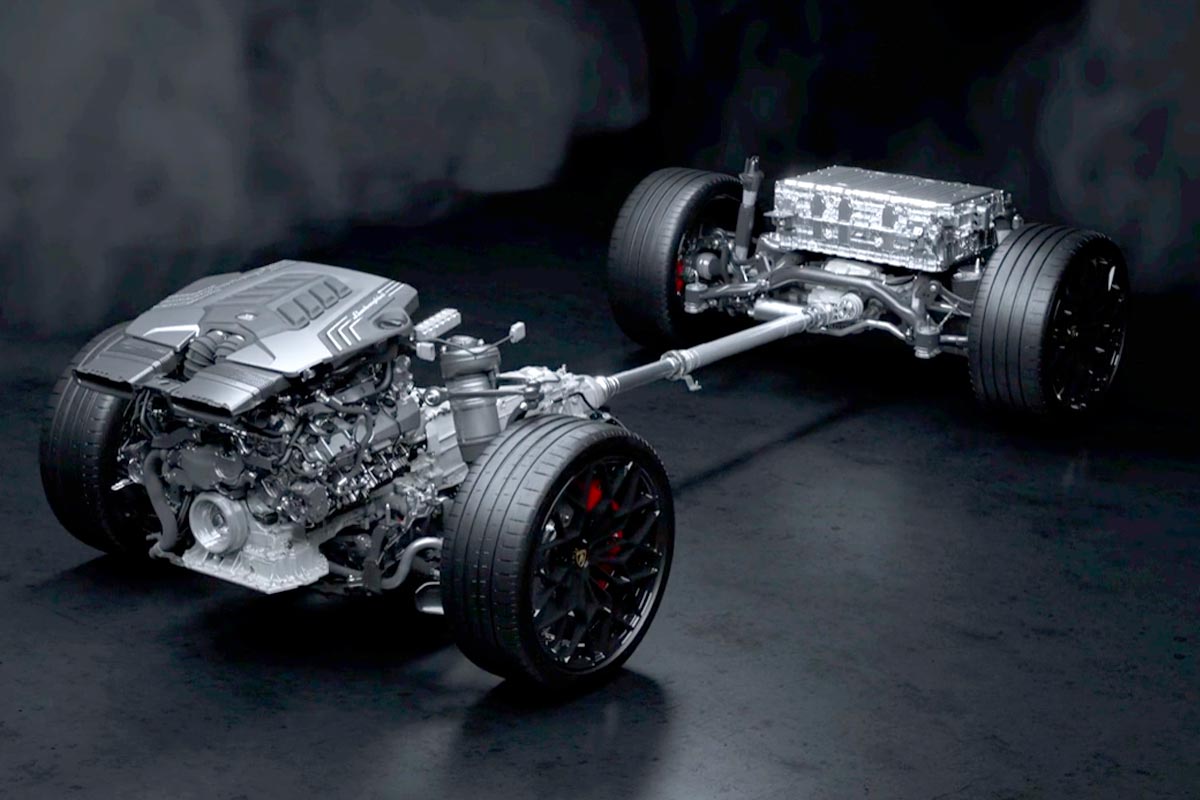
Maserati is therefore taking a different approach. The brand believes that its Folgore models already meet the needs of customers who want to drive electric vehicles. Between the all-electric 100 % versions and plug-in-free hybrid engines, it is seeking a middle ground that would preserve the character of the Nettuno V6 without the compromises associated with heavy rechargeable batteries.
At Italpassion, this strategy is strongly reminiscent of Maserati’s messaging at the launch of the Ghibli Hybrid and Levante Hybrid. Even back then, the brand touted the benefits of a mild-hybrid system designed to preserve driving pleasure while reducing emissions. In reality, the increase in power was limited, as was the reduction in CO₂, and these models never achieved the commercial success that had been hoped for. It’s hard not to see a parallel with the current narrative. Our impression, above all, is that Stellantis seems to be gradually moving away from plug-in hybrid (PHEV) technology, leaving Maserati without access to this solution—one that has been widely adopted by Ferrari, Lamborghini, and Porsche. It remains to be seen whether this different strategy will truly allow the Trident to remain competitive against rivals who are banking on far more high-performance hybrids.
 English
  French
  Italian
  Spanish
  German
  Japanese
  Dutch
Dutch
He's right, and that's especially true when it comes to sports cars.
I suggest a two-liter V8 with two electrically driven hybrid turbos.
The «unrestricted» hybrid is definitely an advantage in terms of performance in cars restricted by emissions regulations… in F1, I don't think it's that bad.
As for the plug-in issue, I doubt that Maserati’s target audience would start charging the car after moving it just once or twice, or start driving around looking for a charging station, so they’re absolutely right.
General comment on plug-ins: anyone who doesn't load them should be penalized with a super tax or something similar.
I have a plug-in hybrid with a Mercedes 250e powertrain; seeing the difference in performance between before and after the facelift is disheartening—that's what I mean by «limited.».
Plug-in hybrids are heavier, and it’s true that some PHEV owners don’t always charge them. As a result, their benefits are debatable, and the reduction in CO2 emissions is misleading.
Music to my ears. Maserati buyers are the ones who want to feel excitement. I really like the direction Maserati is taking, and the 2027 models are great. I’m really impressed with the Modena and Trofeo Nettunos. This is what Alfa should have done: a compact V6 to compete with the M340i.
I used to own a BMW X1 plug-in hybrid (35 km on electric power); now I drive a Volvo XC60 plug-in hybrid with a range of 75 km on electric power. I charge it almost every night in my garage at a low cost, and for the Rome-Tivoli route—which I drive almost every day—I think it’s the perfect car (it produces no emissions and is inexpensive to run). As for performance, I don’t think it’s any worse than a gasoline- or diesel-powered sports car.
Maserati? A brand as successful as that should, of course, provide support to other automakers…
Maserati, a brand on the brink of yet another bankruptcy that’s giving advice to others 🤣🤣🤣
I agree that it doesn’t represent progress, but people who buy cars like that don’t fully understand the point of it. If a car is designed to be rechargeable, recharging it should be a priority. I think that—whether out of laziness or ignorance—people don’t do it, since there’s always the gas engine.