

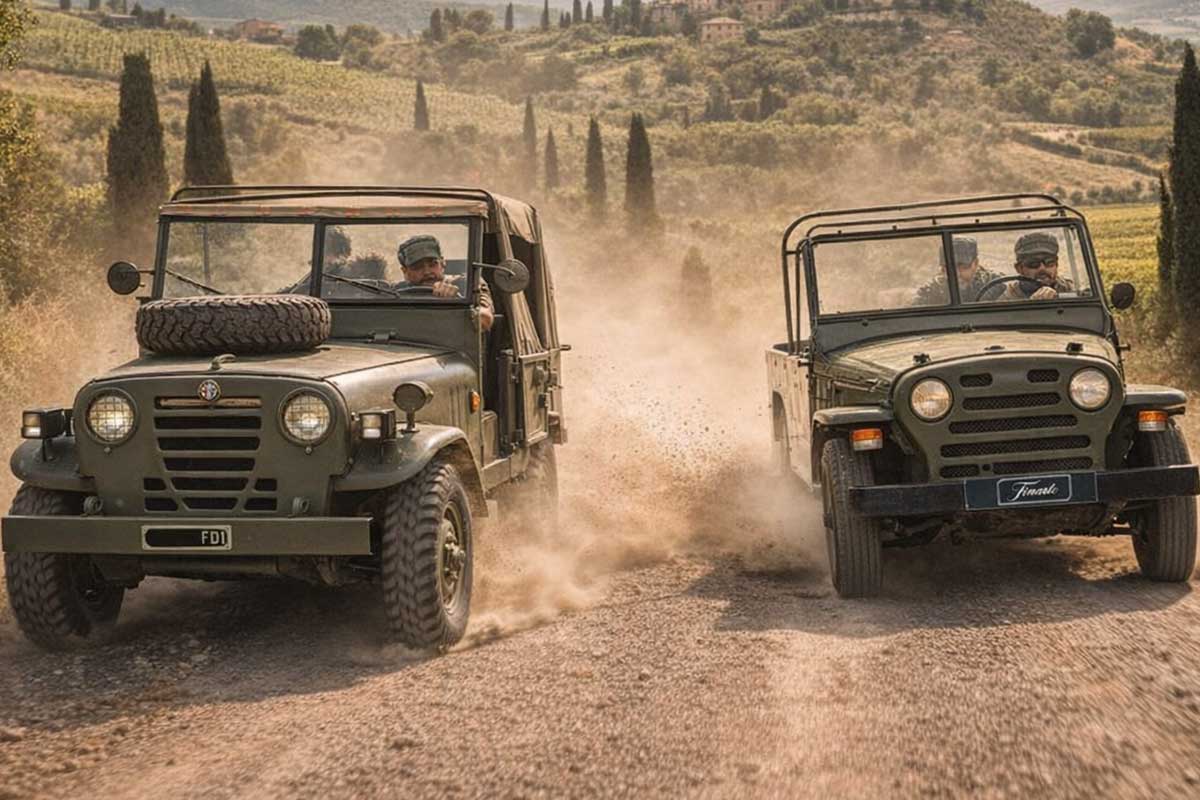
In the aftermath of the Second World War, Alfa Romeo is licking its wounds like much of Northern Italy's industry, which was ravaged by German looting and Allied bombing, such as the historic Portello factory, largely destroyed by air raids in 1943-1944.
In 1950, Alfa Romeo's revival was underway: the brand presented the 1900 monocoque sedan and triumphed in F1 with the Alfetta 158/159. But car production was still limited and semi-artisanal. To survive, Alfa Romeo even started selling stoves! The Milanese manufacturer had another ace up its sleeve, the Veicoli Industrali division, which had been producing buses, trolleybuses and trucks since the early 1930s, many of which served in the Italian army and the Wehrmacht.
A Land Rover as a guinea pig
The country is authorized to rearm as a as an ally of the United States in the new context of the Cold War. In 1950, Alfa Romeo decided to respond to the Italian Ministry of Defense's call for tenders to replace the old American Jeeps with a light all-terrain reconnaissance vehicle, the Autoveicoloda Ricognizione., which will give the initials AR to identify the model. The great Turin rival FIAT had a head start and was contacted first. When the project was revealed to the public, FIAT was already well advanced in the design, but Alfa Romeo followed suit, despite its total inexperience in this type of vehicle.
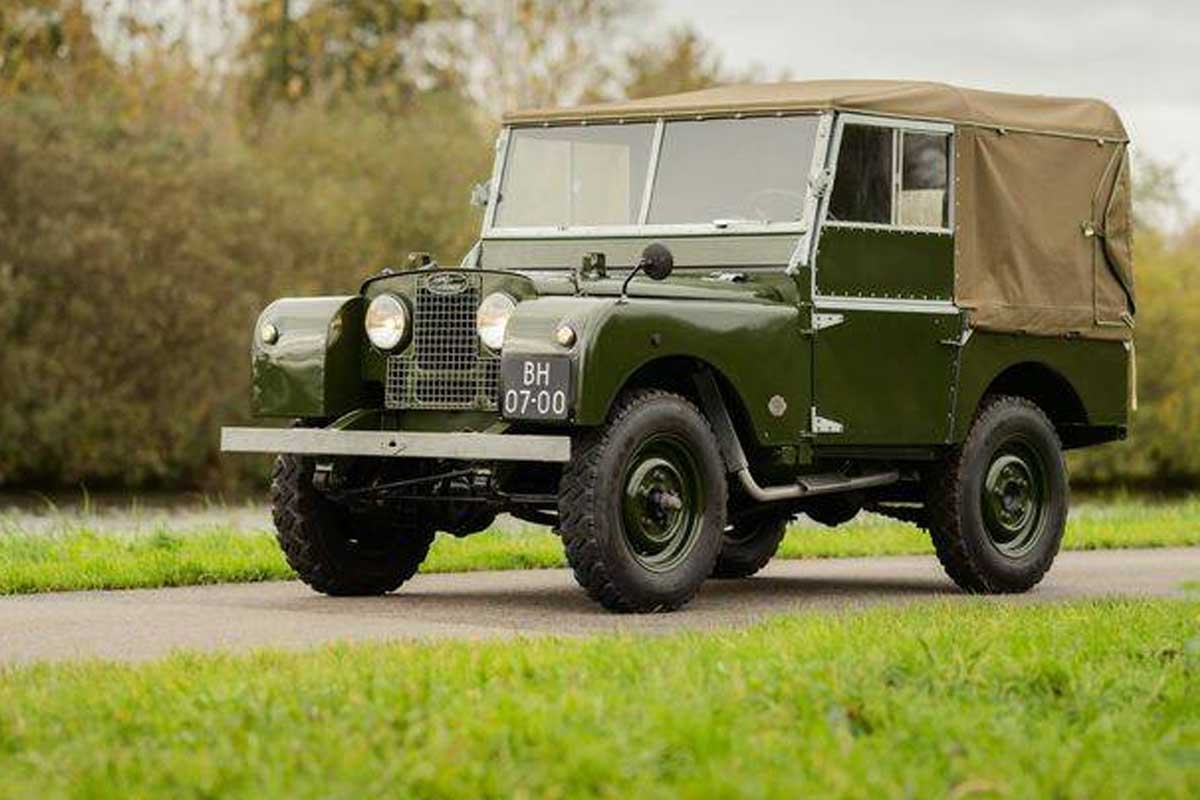
No problem, a Land Rover 80 was acquired in Switzerland, stripped down and studied from every angle by the technical team under the tutelage of Giuseppe Busso, a great engineer whose fame would be earned in the 50s and 60s by the design of the famous Bialbero and V6 Busso engines for Alfa Romeo sports cars.
Sophisticated and agile
The project is initially called M for " Militare " and 1900, as the chassis is equipped with a fine engine, a 1900cm3 4-cylinder, light-alloy double camshaft, with aluminum cylinder head, which equips the magnificent Alfa Romeo 1900 sedan. This noble engine, incongruous for a military vehicle with a rustic vocation, has been redesigned for 4×4 use with a compression ratio reduced from 7.5:1 to 7:1 to use lower octane fuel, via a modification of the cam profile to increase low-end torque. It produces 65 bhp (instead of 90 bhp on the sedan) at 4400 rpm, with new timing to deliver the maximum torque of 12.5 kgm at just 2500 rpm.
The chassis, whose wheelbase is 20cm longer than that of the Land Rover, is classic steel, with side members and crossmembers, but let's not forget that this military 4×4 is designed in part by engineers who compete in motor racing. As a result, it receives a number of technical refinements: it supports an independent front suspension, with deformable wishbones and longitudinal torsion bars, and a rigid axle rear suspension, with leaf springs. The shock absorbers can be adjusted by simply changing the nozzle, an operation that takes just a few minutes. A thermostat maintains adjustment despite oil temperature variations.
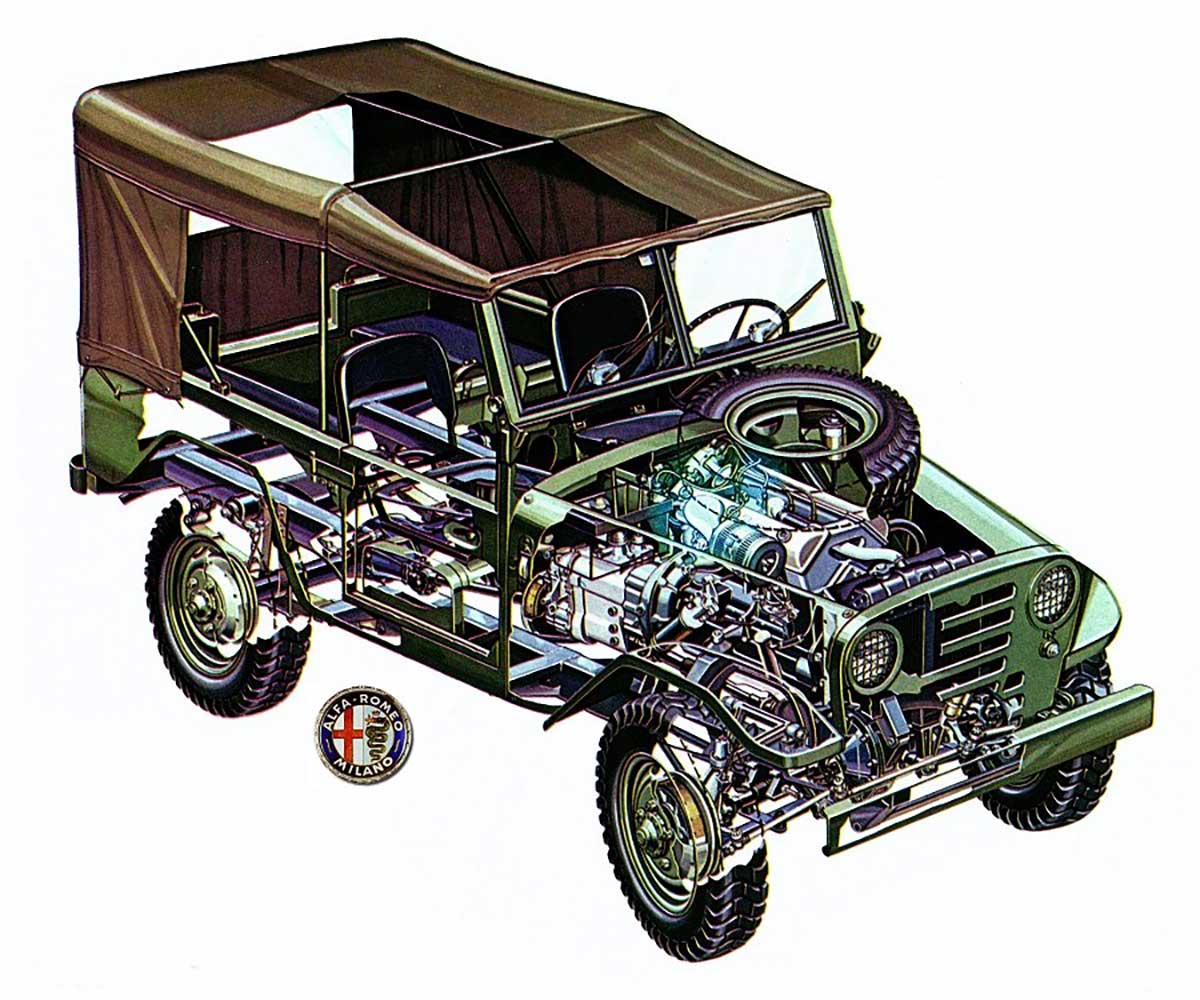
The all-wheel drive system includes a four-speed manual gearbox with a reduction gearbox and manual control for engaging front-wheel drive. The originality of the Alfa Romeo 4×4 lies in the fact that it is equipped with a differential lock on the rear wheels, whereas the Land Rover didn't yet have one, which enhances handling and stability on slippery terrain. Thanks to this system, it boasts excellent cross-country performance, capable of negotiating a maximum gradient of 120% (50°), with a fording capacity of 70 cm. Despite its 65 hp, its dynamic engine enables the vehicle to reach 105 km/h, while consuming 15 liters of petrol per 100 kms.
The Alfa Romeo signature in design
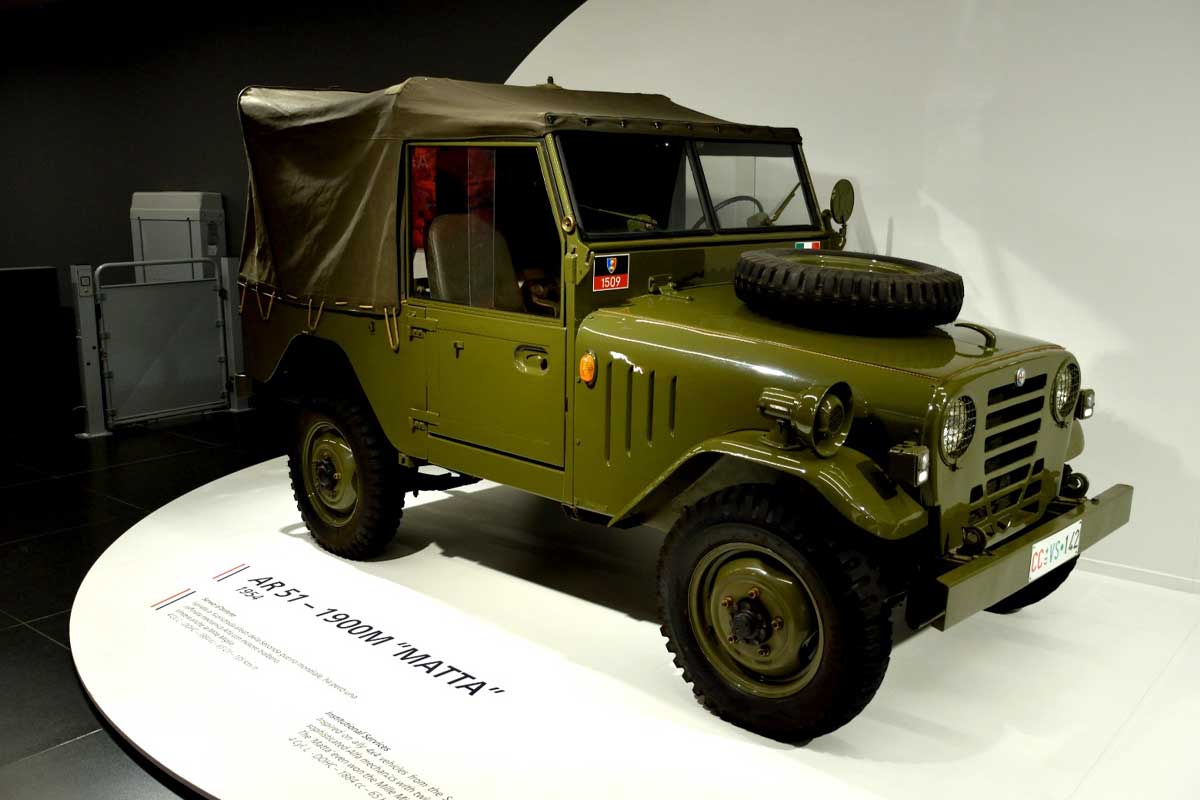
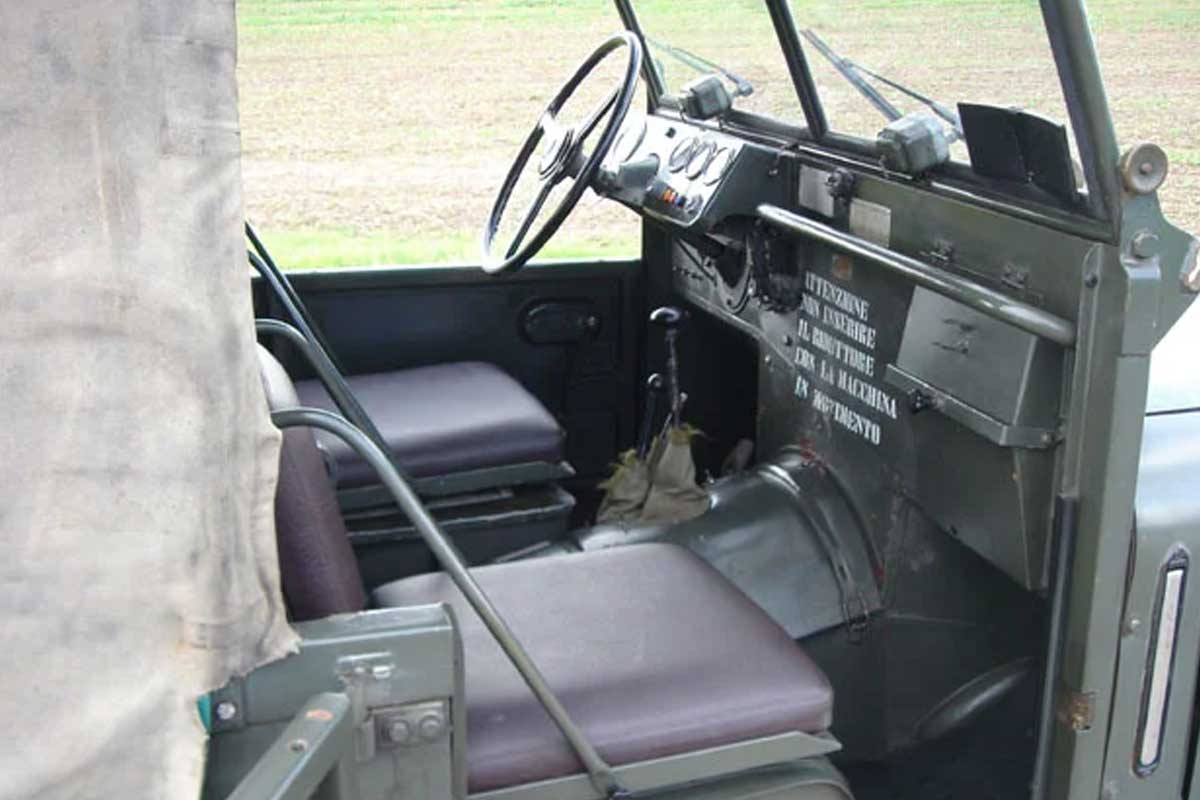
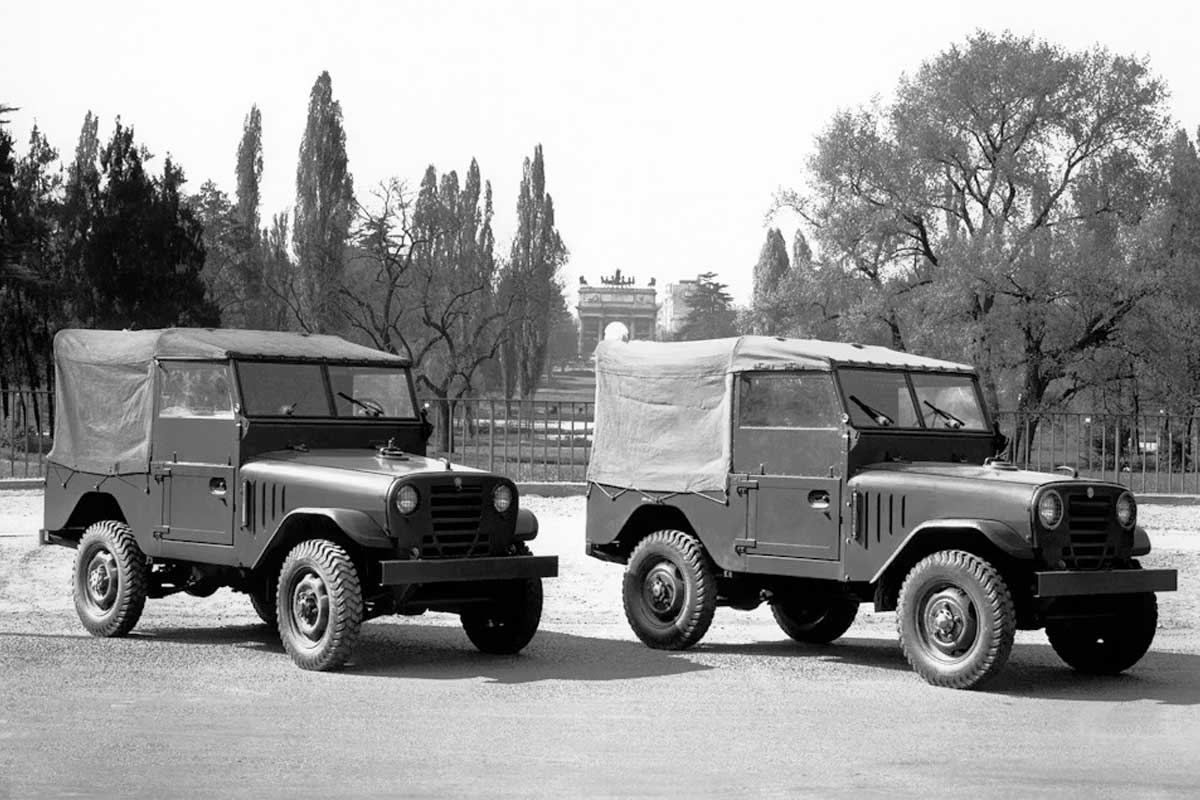
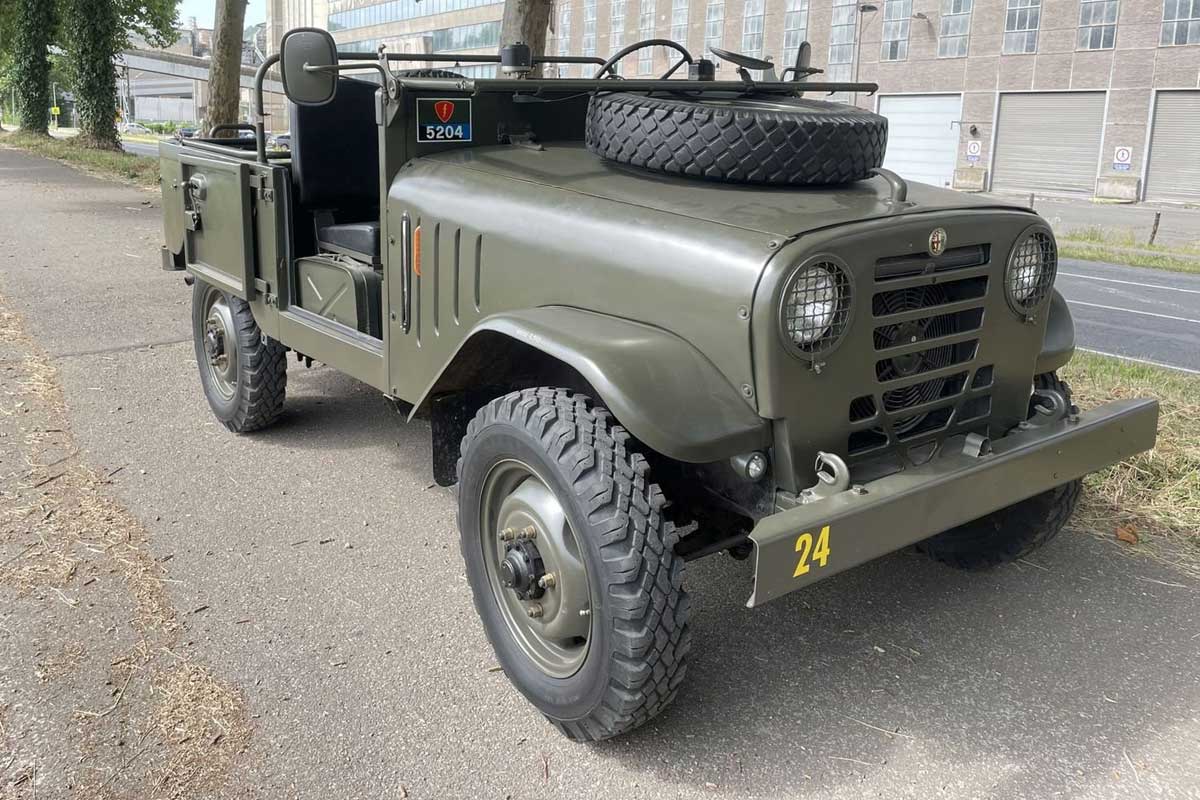
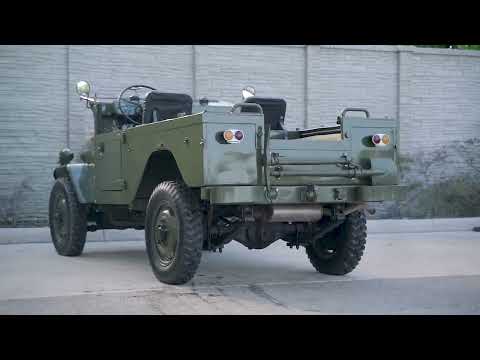
Ivo Covucci's design evolved significantly, with recessed headlamps on either side of the grille and simplified fenders, giving it a more elegant, modern look. The steel bodywork is completely open, but can be covered with curtains, and features a fold-down windshield, hinged doors, and a spare wheel well on the hood or behind the seats. At the front, the grille takes the shape of Alfa Romeo's famous Scudetto shield. In front of the doors are rod indicators and hot-air ventilation grilles, while a pick and shovel are positioned at the rear. The cabin seats 6 on the two front seats and two rear bench seats, all covered in vinyl. The very simple instrument panel, grouped behind the three-spoke steering wheel, is in black bakelite and features a few circular instruments, with the larger speedometer/odometer on the left and the fuel level gauge, oil pressure gauge and smaller ones on the right.
FIAT wins prize
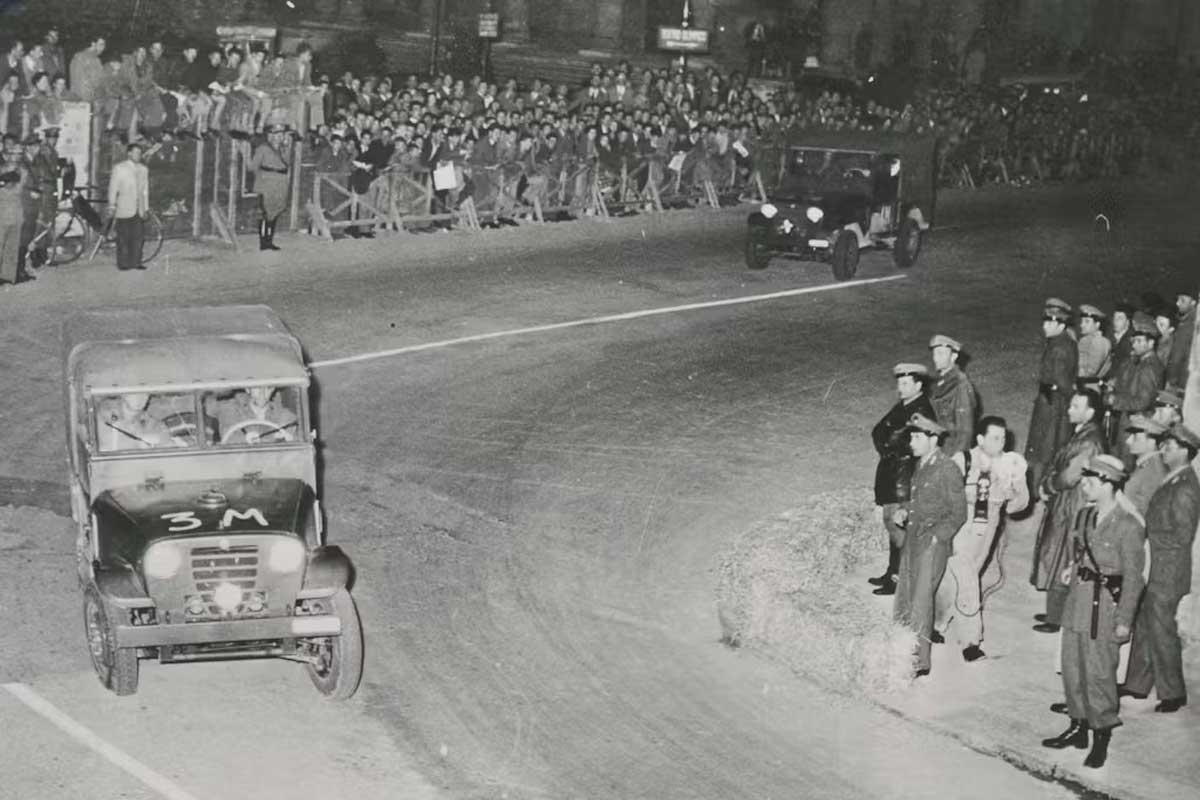
The Fiat and Alfa prototypes were put through their paces in the army's qualification tests, which began in May 1951 with a comparative test with the Willys MB. These initial tests rectified a number of shortcomings, with shortened gear ratios and the adoption of dry sump lubrication with a separate oil tank to ensure lubrication even on steep inclines. Involved in the race with FIAT, which was fine-tuning its “Campagnola”, Alfa Romeo presented one of the prototypes to the public at the Italian Grand Prix, with F1 world champion Nino Farina at the wheel. It was at this point that the AR51 1900 took on the nickname «Matta» - mad in Italian - thanks to a clever advertising campaign orchestrated to seduce potential buyers: an Alfa Romeo AR51 climbed improbable places, such as the steps leading to the Basilica of Assisi or Milan's «Monte Stella», the famous hill created from the rubble of the American bombing raids on the city at the end of the Second World War.
The Matta is superior to the Fiat Campagnola in many respects. Its chassis is more sophisticated and its engine, despite reduced power, retains its sporty character. But FIAT has other advantages: greater experience of series production, lower fuel consumption and, unlike Alfa Romeo which started from scratch, the Turin-based giant has been able to draw on the organ bank of its innumerable parts stocks and models. Sophistication also means higher maintenance costs and less reliability. The result: the Fiat Campagnola costs just 700,000 lira, compared with 1.9 million lira for the Matta! Unsurprisingly, Fiat won the contract, but on the strength of its performance, the Matta still received a consolation prize (let's not forget that Alfa Romeo belonged to the state-owned IRI at the time, making it a public company): 1,281 for the army, 457 for the police, 29 for the navy, 11 for the air force and a few dozen for various other state bodies.
A civilian version, but no more success
Production of the new model began in the spring of 1952, and was completed at two different Alfa Romeo plants: the engine was built in Portello, while final assembly took place in Pomigliano d'Arco, where aircraft engines were still being built after the war. Nevertheless, these public orders were not enough to recoup research costs, prompting Alfa Romeo to develop a civilian version, the AR/52, with modifications. Comfort was improved, the color changed to beige and the equipment evolved.
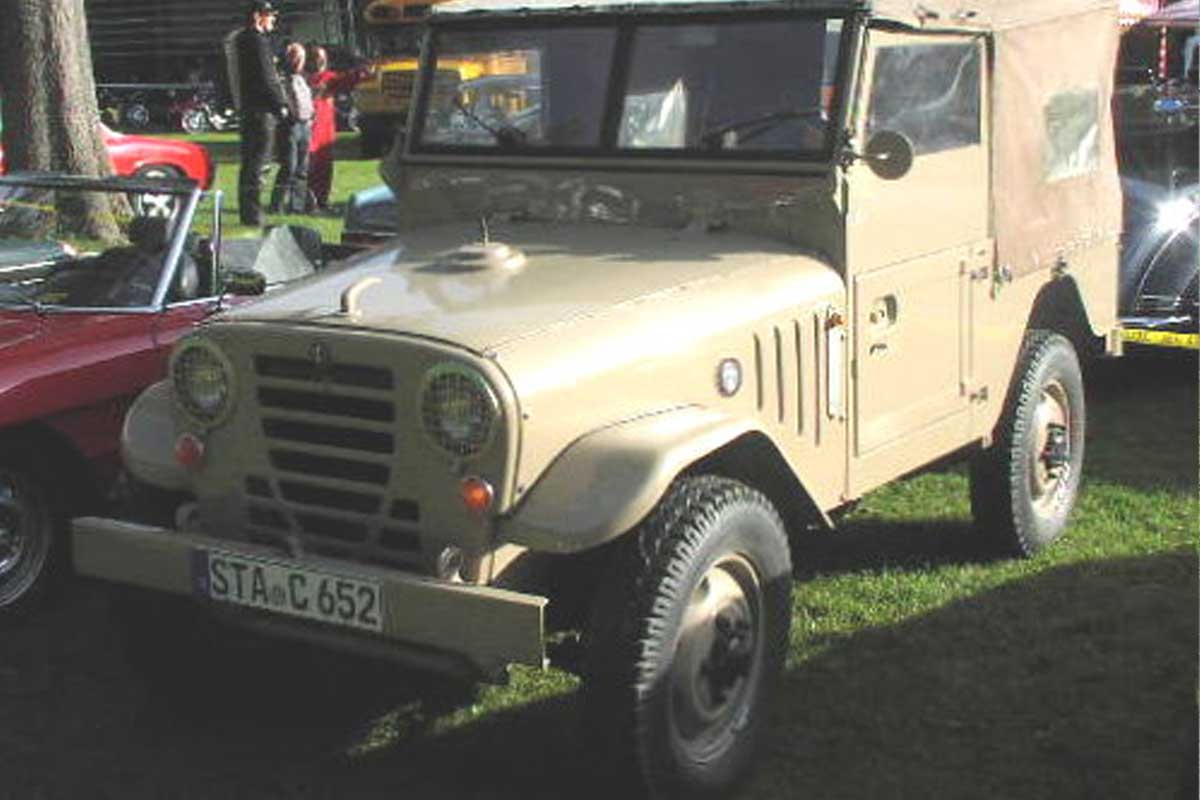
A diesel-powered prototype, «all-steel» Matta station wagons and Matta snow ploughs for local authorities were also studied, as was an Ambulance version bodied by Fissore between 1953 and 1955. After selling just 2,059 units (compared with over 39,000 for FIAT's Campagnola) and failing with private customers, Alfa Romeo stopped production in 1955. In the 1980s, Alfa Romeo tried the 4×4 trick again with an AR148 prototype, but the integration of the then financially troubled manufacturer, sold by the State and integrated into the FIAT Group in 1986, put paid to this project.
Racing is in the blood!
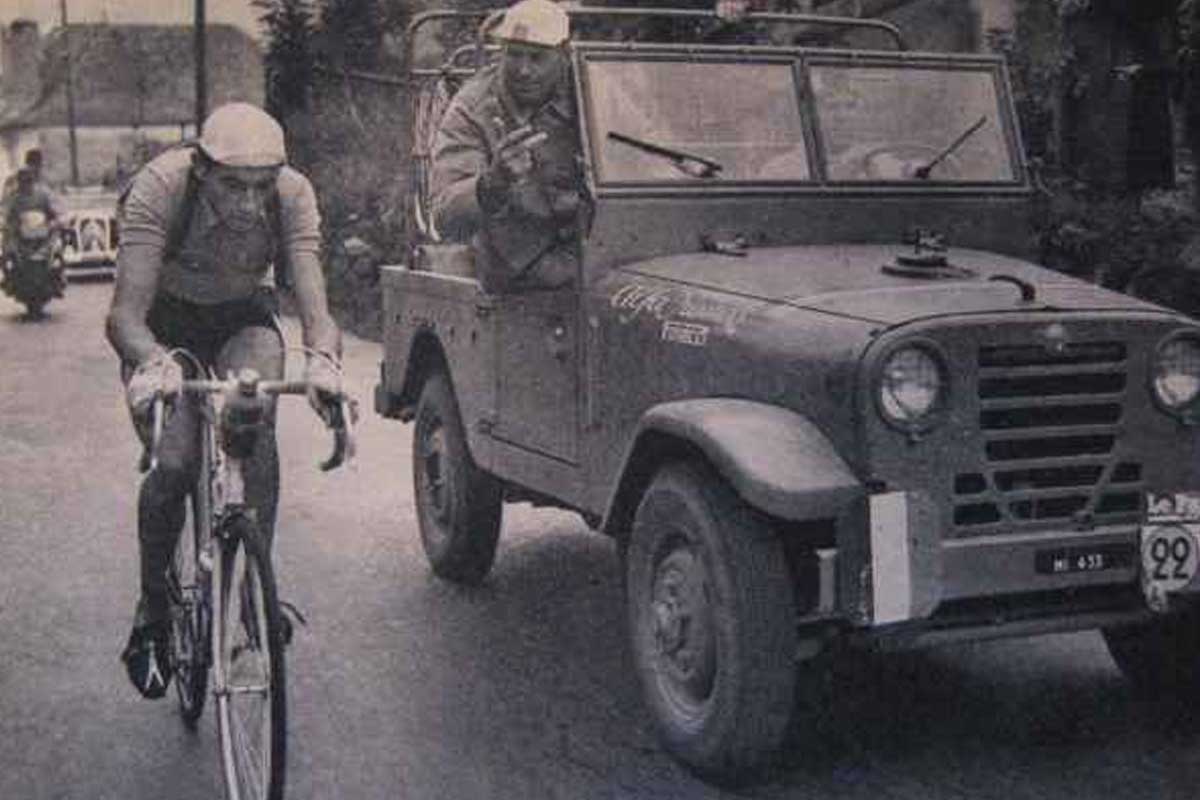
For a long time, it was unthinkable that a new Alfa Romeo model would not have a sports program. Well, the Matta was no exception! In the absence of commercial success, the AR/52 prototype gained a certain notoriety for sport and adventure! It has taken part in several raids in Eurasia, the Arctic and the Andes. Used as an official vehicle by Fausto Coppi's team during the victorious Tour de France in 1952, the Matta above all did not betray its Alfa Romeo roots and DNA, distinguishing itself in motor racing!
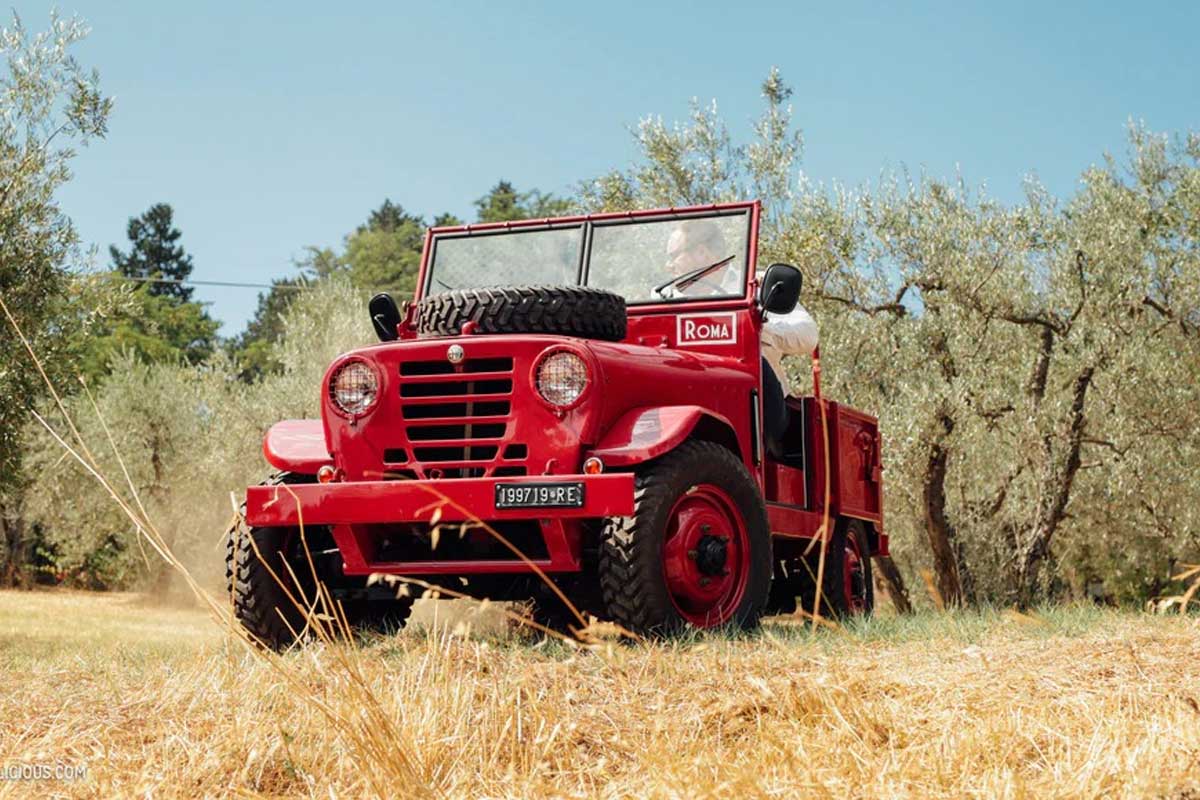
The AR51 Matta was entered in the 1952 Mille Miglia, Northern Italy's famous road race, for which a military car category was established. The Ministry of Defense entered a total of four AR 51s, two Fiat Campagnolas and two Alfa Romeo 1900 M «Mattas». It's fair to say that the Biscione enjoyed a resounding victory over its Turin-based rival. The class was won in 114th place overall by the «Matta» piloted by Captain Antonio Costa and Lieutenant Francesco Verga, crossing the finish line in Brescia in less than 17 hours, 41 minutes ahead of the 1st Campagnola and 1 hour and 52 minutes ahead of the second Campagnola. 42 years later, the 155 and 33 inaugurated the Q4 system, bringing unprecedented comfort to Milan's sedans.
 English
  French
  Italian
  Spanish
  German
  Japanese
  Dutch
Dutch
Unknown, just like you learn something new every day.
I always thought it was a rebadged FIAT, but I didn't know it was an intrinsic ALFA ROMEO model.
Magnificent interpretation of the specifications!