

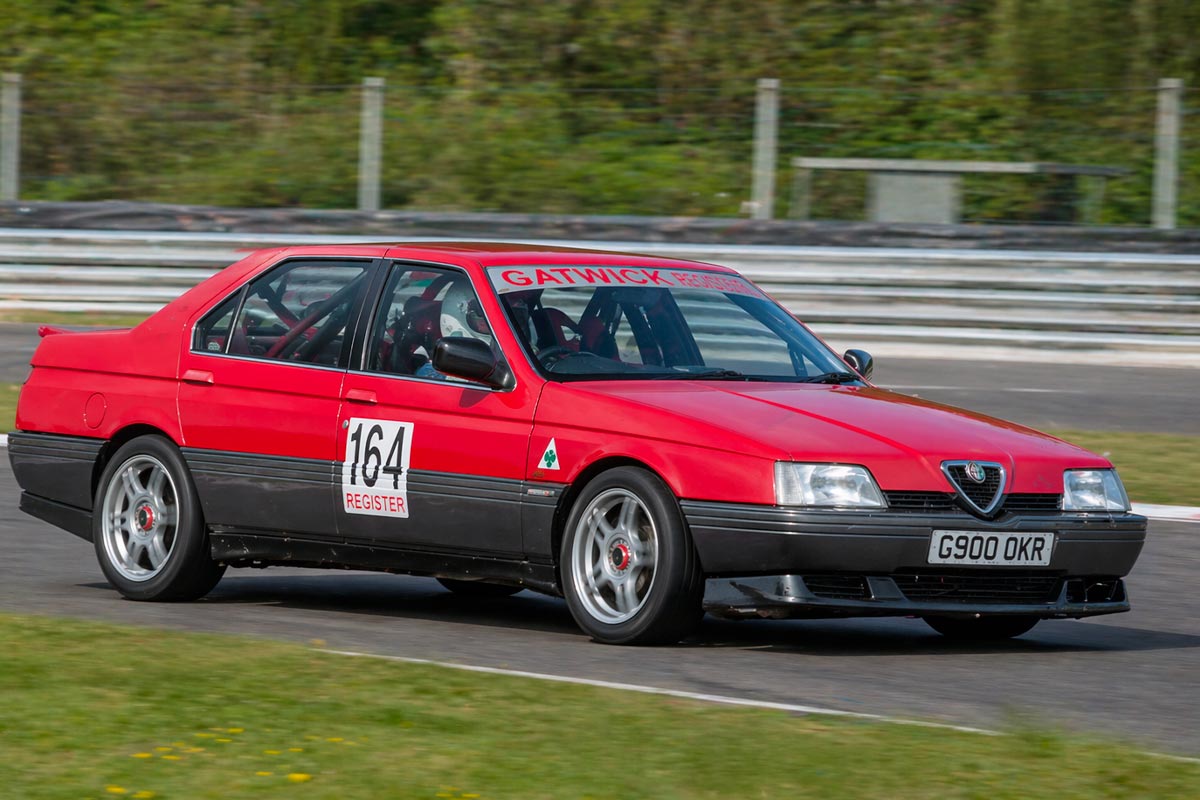
In the wake of the revolution introduced by Audi with the Quattro system, manufacturers are perfecting their all-wheel drive systems, such as Lancia with the Delta. More than thirty years after the Matta, Alfa Romeo started in 1984 with the 33 4×4, and in 1992 the Q4 name was officially adopted by all models. 33, 155 and 164.
But others are imagining more extreme solutions. Such is the case of Mike Buckler, a British tuner whom we interviewed with its 164 V6 and diesel engines in the British Alfa Romeo and Intermarques Championship. The same guy developed one of the most extravagant Alfa Romeos ever built: the Alfa Romeo 164 Bimotore.
Historical precedents
The concept is not totally unprecedented in the brand's history. As far back as the 1930s, Alfa Romeo experimented with the “Bimotore” principle.” on the 1935 16C, by fitting two engines (one at the front and one at the rear) to a competition car designed to break speed records. At the turn of the 70s and 80s, Wainer had designed a prototype with an identical philosophy, with a Alfasud Bimotore. Mike Buckler takes this extreme philosophy and applies it to the large 164 sedan, transforming an elegant front-wheel drive into a true racing prototype.
Busso's double ration
His idea was as simple as it was outrageous: to install two Busso V6 engines in a single Alfa 164, one at the front, the other at the rear, in order to obtain a home-made all-wheel drive system and much greater power than the original model.
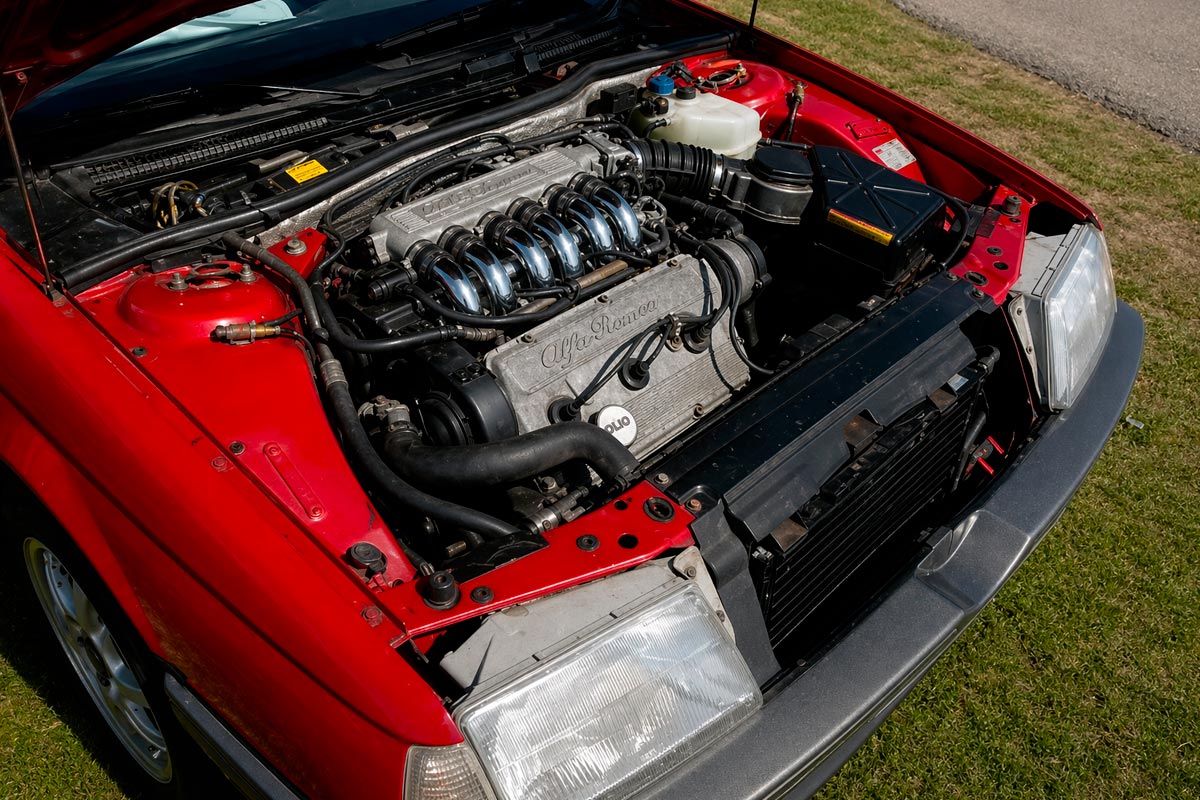
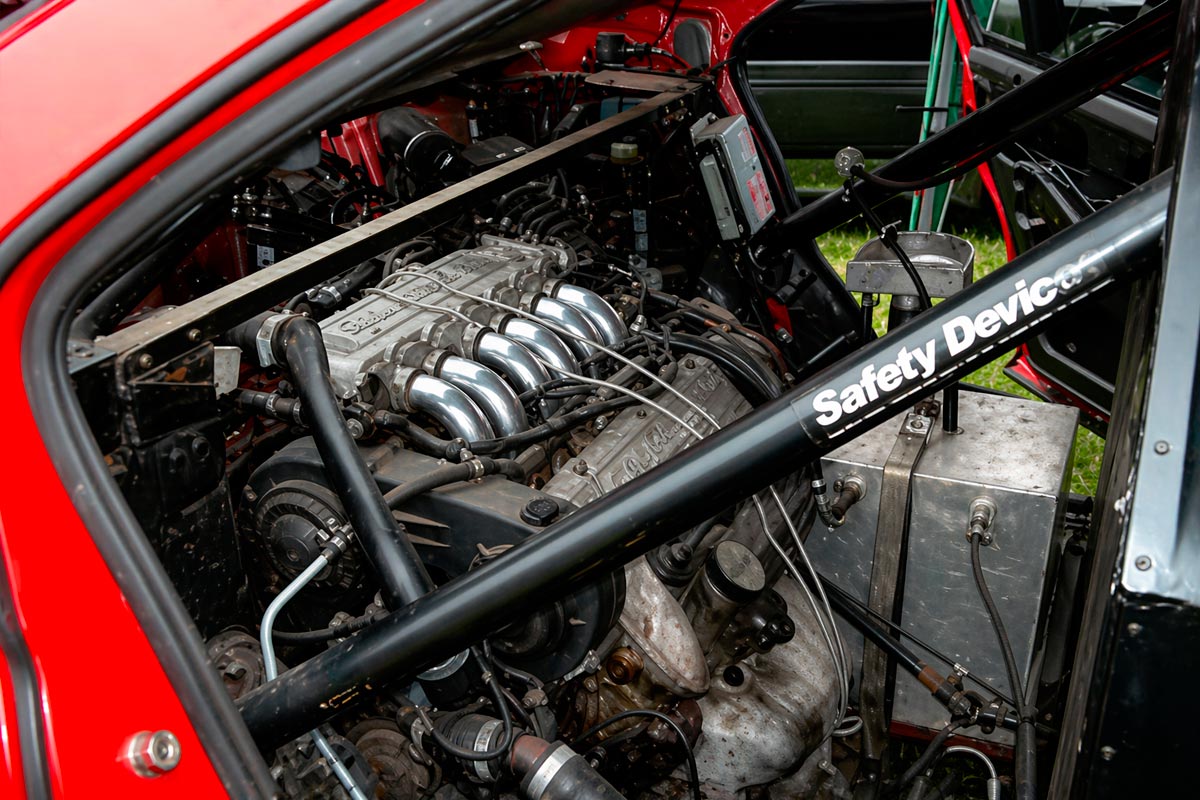
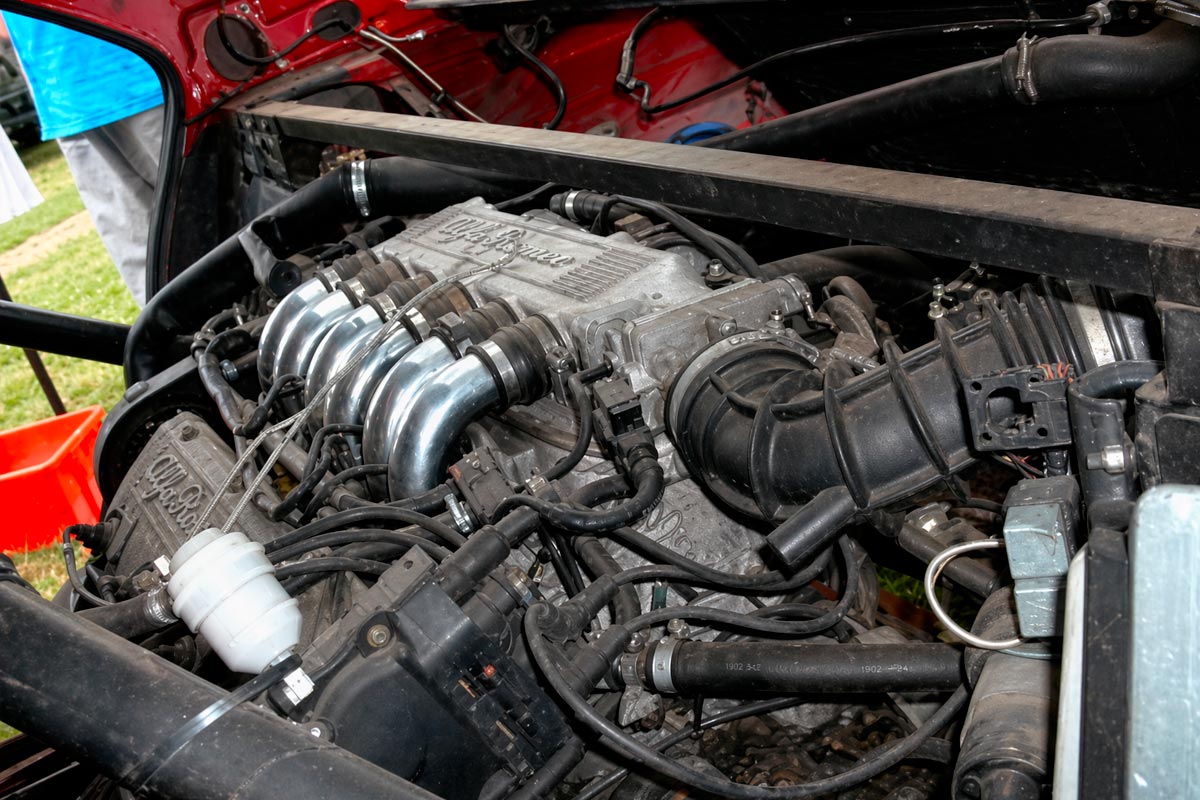
The chosen base is the Alfa Romeo 164 V6, equipped with the Busso 3.0-liter V6 engine, emblematic for its sound and character. On the Bimotore version, a first V6 remains in its original place, driving the front wheels, while a second identical block is installed at the rear, in place of the trunk and bench seat. Each engine has its own gearbox, cooling system and electronic management.
A complex system
This architecture gives rise to a form of all-wheel drive without a central mechanical link: the front engine drives the front axle, the rear engine drives the rear axle. The whole system works by synchronizing throttle and transmission controls, so that two powertrains cohabit in a single shell.
The gas pedals are clamped together, as are the clutches. The gearboxes are linked by a linkage that can be split by removing a pin holding them together, allowing Mike to revert to a single engine, front-wheel drive only. To handle the cooling of the second engine, a radiator and fan are installed in the trunk, with appropriate vents cut into the lid. All this extra equipment left little room for the fuel tank, so a bespoke unit was placed between the front passenger seats, but this meant the car had limited range.
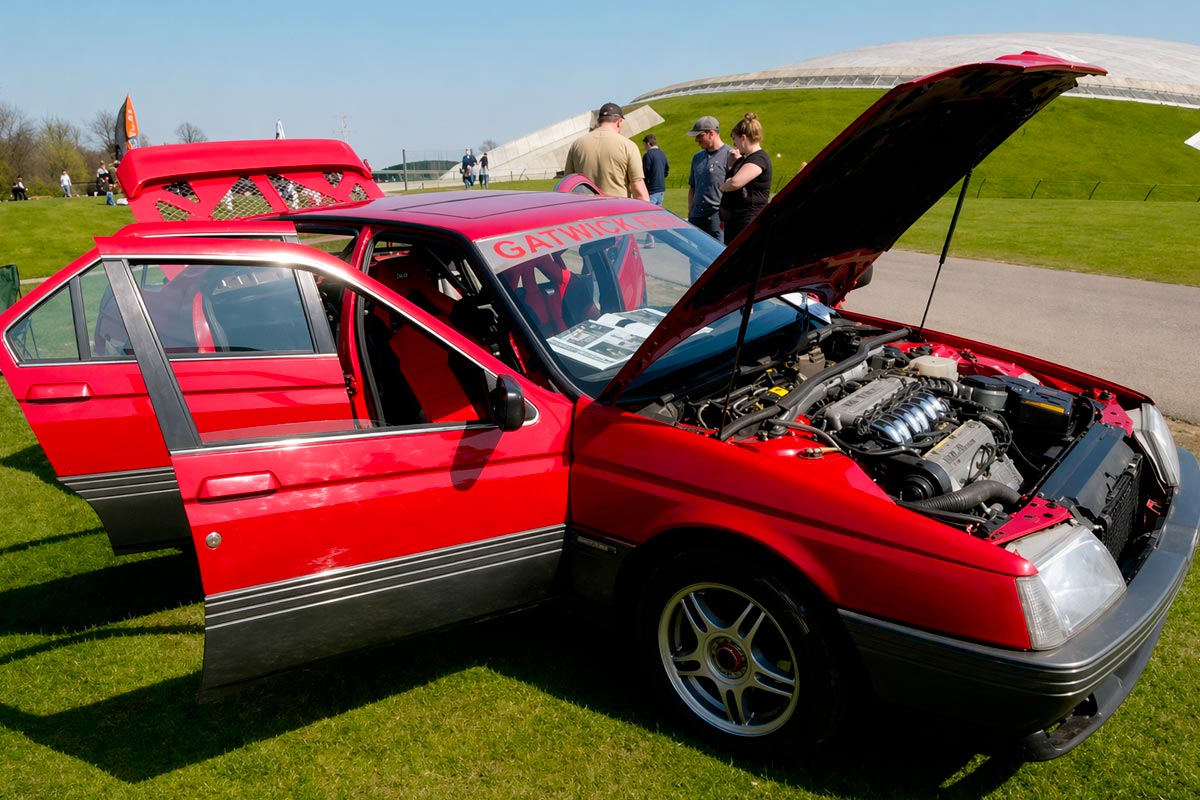
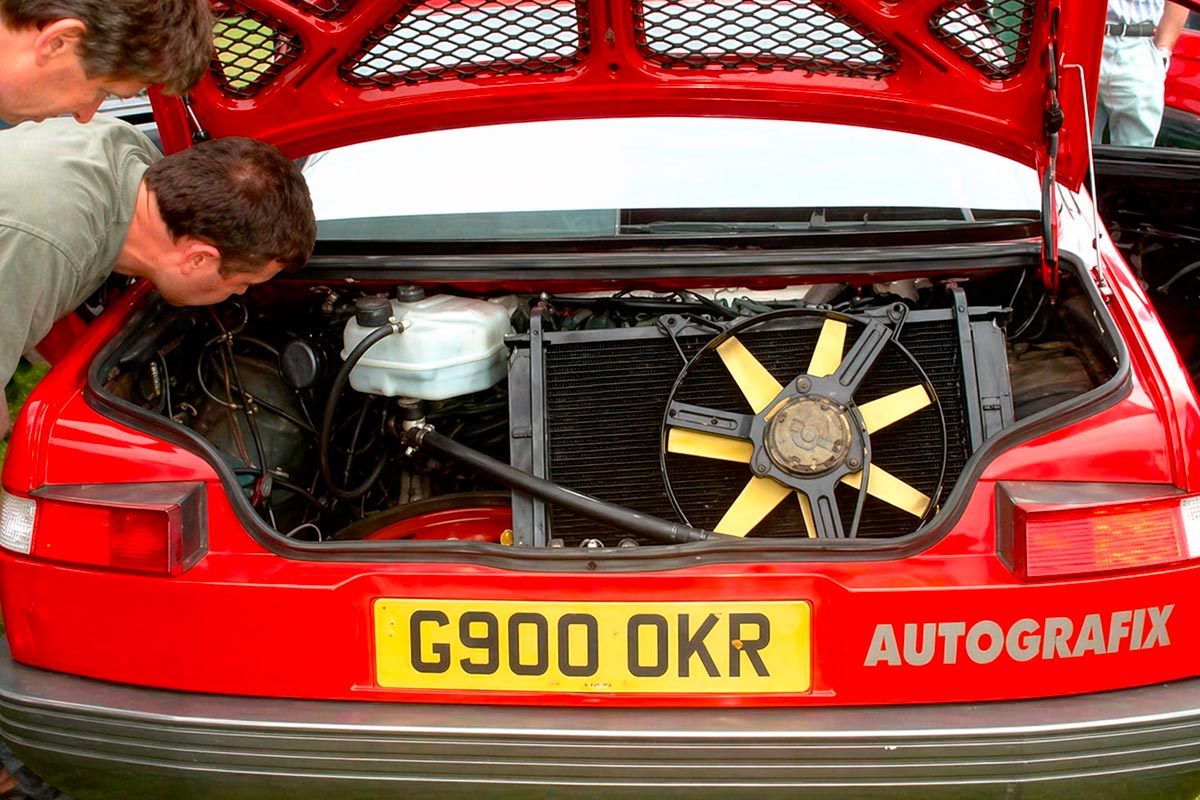
The main challenge, however, lies in mechanical synchronization. Operating two engines, two clutches and two gearboxes simultaneously requires extremely delicate tuning. The slightest difference in rpm between the front and rear gears can put enormous strain on the transmission and upset the balance of the car. This system remains difficult to make reliable and very costly to operate in competition.
A lot of horses, but also a lot of kilos
Total power was estimated at between 380 and 420 hp, double that of a standard Alfa Romeo 164 V6. Estimates suggest a 0 to 100 km/h time of less than 5 seconds and a top speed in excess of 250 km/h, figures worthy of the prestigious sports cars of the time. But all this power comes at a price. The installation of the second engine necessitated far-reaching modifications: elimination of the rear cabin, structural reinforcements, adapted suspension and complex thermal management. Unsurprisingly, weight climbs to around 1,600 to 1,700 kg, reducing part of the gain achieved by the extra power. This, of course, is the inevitable headache of a two-engine solution! Already, the 164 wasn't exactly renowned for its front-wheel drive...
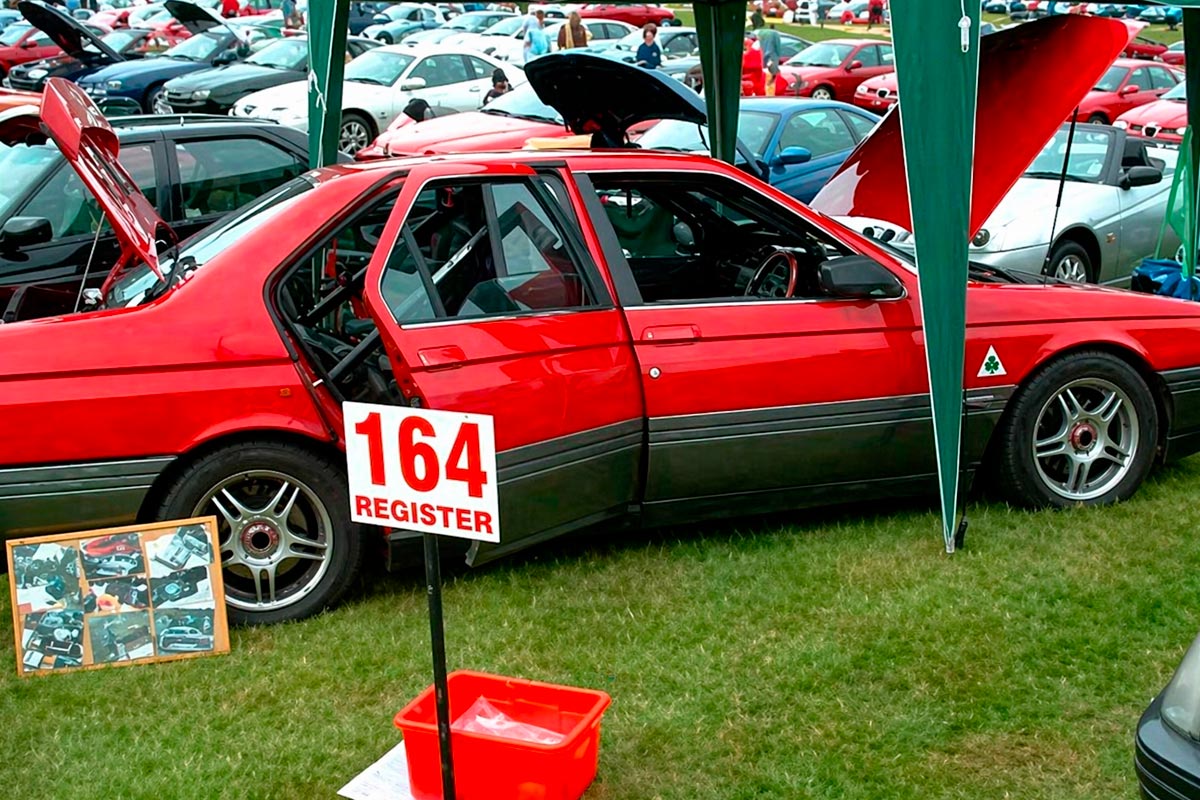
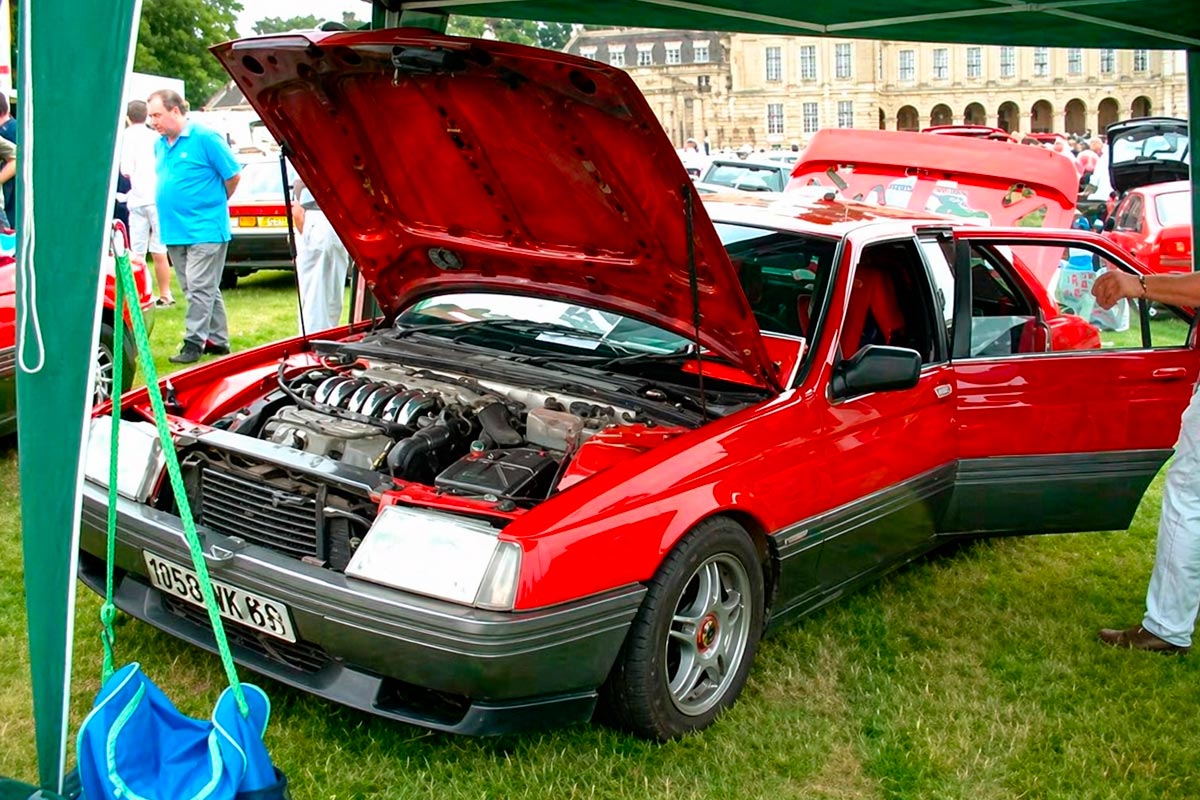
The 164 Bimotore obviously attracted a lot of attention at rallies and in the paddock at ARIIC championship events. Here's what some of the passengers who had the opportunity to climb aboard for a demonstration had to say at a later rally: «We climbed aboard the 6.0-liter Bimotore 164 piloted by Mark Tozer. My 21-year-old son, Darren, was the first person to get into the passenger side of the bucket seat, and after about 10 miles, he came out laughing but also turned around, as white as a ghost, and shocked... We told him that this car had done 0-100 in less than four seconds. Richard Kerr was next, speechless...”
 English
  French
  Italian
  Spanish
  German
  Japanese
  Dutch
Dutch
Ah the 164, last Alfa sedan of the E segment having been a success in spite of the traction and a Fiat base, reworked however, my father had one of it of color blue night with you opening, rims delta mics, bequet, with an exhaust zebring, it was one Twin spark 148 cv bought new in 1990, people turned over with its oassage, what memories 😊
I had the good fortune a few years ago to drive a 164 V6 Busso and today I have a 166 2.4 JTD, an excellent car. Sometimes I hear people say that Alfa cars are just Fiat cars, to which I reply that Fiat knows how to make damn good cars.
Grappig
Stefan van squadra tuning deed dit jaren geleden al met een gtv in nederland
It wasn't Audi that democratized 4WD, but Subaru, and it was after a trip to Japan that Pïech was inspired.