

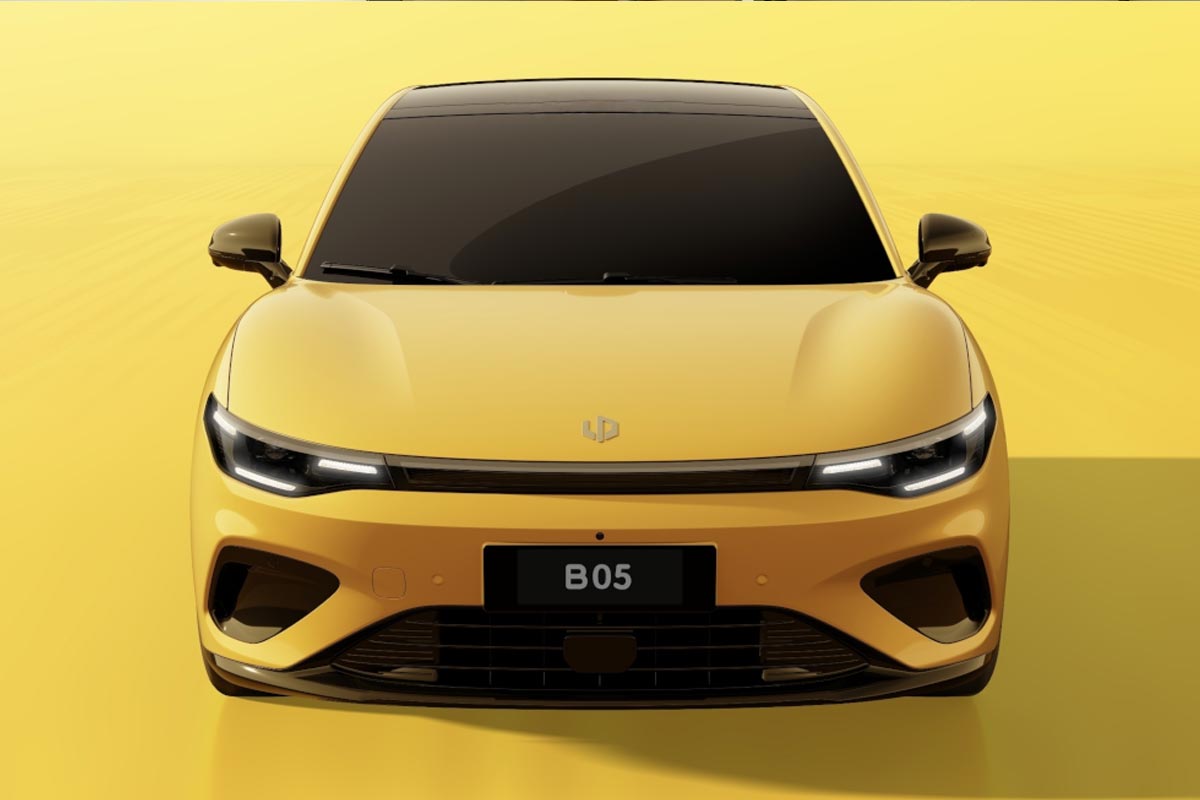
What was just a rumor a few months ago is now taking on a whole new dimension. After having considered the occasional use of a rebadged Leapmotor model, Stellantis is now thinking of going much further: directly using the Chinese manufacturer's technology for its future mass-market electric cars in Europe. In other words, tomorrow, certain Fiat, Peugeot or Opel models could be based on Chinese technology.
A cooperation that could change in nature
According to the latest information reported by Bloomberg, Stellantis is seriously considering expanding the scope of its joint venture with Leapmotor. The objective would be clear: access to more advanced and, above all, less expensive batteries and electric powertrains.
Up to now, cooperation has mainly taken the form of distribution of Leapmotor models such as the C10 SUV via the Stellantis network in Europe. But current discussions would go far beyond simple marketing. The group is now considering the direct integration of Chinese technologies into its own vehicles for the European market. If this becomes a reality, it would be a historic first: never before has a major Western automaker used the platforms and software of a Chinese manufacturer to design its models for sale in Europe.
A response to cost pressures and Chinese competition
This project comes at a delicate time for Stellantis. The group is currently seeking to reduce its development costs while remaining competitive in the face of increasingly aggressive rivals such as BYD.
The Chinese industry enjoys a major advantage: its speed of development. Where European manufacturers often take several years to design a new model, Chinese brands are able to go twice as fast. For Stellantis, access to this technology represents a strategic industrial shortcut.
This reflection also comes at a time when the Group has recently announced more than 22 billion euros in write-downs and charges, a sign of a profound readjustment of its electric strategy. At the same time, it is reintroducing hybrid and even diesel powertrains in Europe, proof that the transition to all-electric is more complex than expected. Against this backdrop, Leapmotor is seen as a lever for relaunching a competitive, low-cost electric offering.
A logical evolution after the first projects
This new step directly echoes the projects discussed in recent months around of a Leapmotor model potentially rebadged as a Fiat. The B05 electric compact, for example, had already been identified as a credible candidate for European adaptation, or even local production at the Zaragoza plant in Spain.
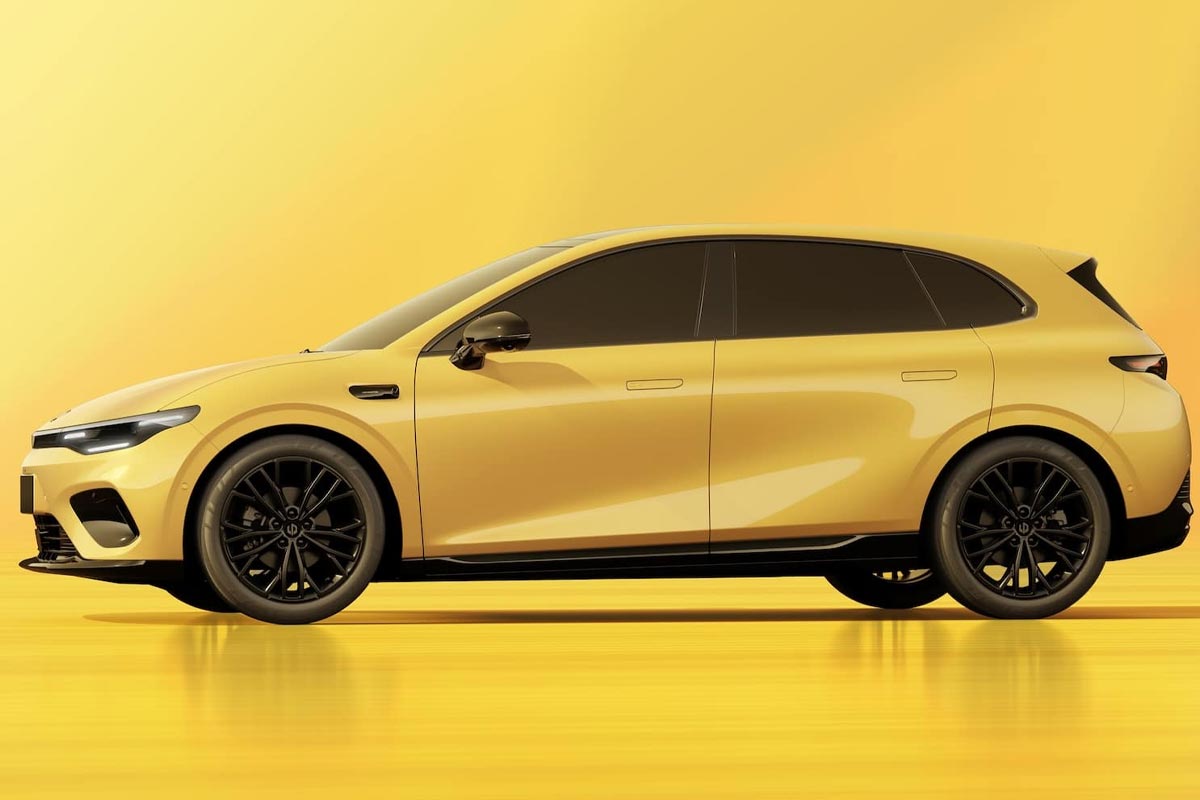
But what's in the offing today goes beyond simple rebadging. Stellantis is no longer simply seeking to sell Chinese models under its brands, but to use their technical architecture to design its own vehicles. A Fiat, a Peugeot or an Opel could thus be designed in Europe... but based on Chinese technology.
Between industrial opportunity and political stakes
However, such an agreement has not yet been finalized. Discussions are at an early stage, and several obstacles remain. The issue of data protection is particularly sensitive, not least because vehicles are becoming increasingly connected. In the USA, regulations will come into force as early as 2027 to prohibit the sale of vehicles using certain technologies linked to China or Russia. Despite these challenges, Stellantis and Leapmotor are aiming for an agreement by the end of the year.
If successful, this strategy would mark a profound transformation of European industry. The days when a Fiat had to be entirely Italian, or a Peugeot entirely French, seem to be over. The modern automobile is becoming a global product, where design, engineering, production and technology can come from different continents.
Tomorrow, a Fiat city car could be designed in Europe, produced in Spain and powered by Hangzhou-born technology. A development which may shock purists... but which could also enable European brands to stay in the race against China's new industrial power.
 English
  French
  Italian
  Spanish
  German
  Japanese
  Dutch
Dutch
Above all, it's an admission of failure for Stellantis' electrification. And, in my opinion, it won't stop with just a few models here and there.
Carrying the e-208/ e-Corsa e-2008 and eC4 and eC3, Grande Panda, Junior... and even the e-3008 and e-5008 work well!?
But in Europe we produce at too high a price! For the future!?
So why should we base ourselves on Leapmotor's technologies?
For the price!
AND for the lower end.
And to reach its C02 targets quickly.
Stellantis is done, they bankrupted the company in 5 years. Maserati is dead, Alfa is dead, Lancia is dead, DS is dead, Abarth is dead, Chrysler is dead. The rest of the brands are barely alive.
Because it was better in 2021?
Maserati's downfall happened BEFORE Stellantis!
Have you seen the others?
Stellantis has no EV ony platform only multienergy and and it's a disaster. Grecale EV and Grandturismo EV are a disaster, only -2-3% of the sold Maseratis are electric. You have to separate Electric platforms ande ICE platforms. Same goes to Alfa romeo. Multienerdy cars are terrible EV and terrible ICE.
You've seen DS N°8 with 750 km WLTP.
On the comparisons, Stellantis EVs consume less than Renault EVs, which are 100 % EVs.
It's true that the 208 is based on a 2019 model.
This Long range version utilizing 97,2 kWh battery pack has real life range of around 460km - 21kWh/100km
DS8 is 400kg heavier than tesla Y and has less room for passengers. Slower charging and slower acceleration.
Michael.
Tesla is the benchmark, but it comes from Musk or even the Chinese!
They tested N°8 on the freeway, 500 km at 130 km/h.
Rear-seat space is good.
It's already a huge step forward.
In less than 6 years, I hope they'll switch to 800 V architecture.
The most costly issue for Stellantis is shareholding. Less than two years ago, N. Knight declared that the Group wanted to «focus on capital efficiency and promote high returns for shareholders». Now is the time, however, to invest heavily in the electrification of ranges, particularly in battery production, and in mastering hardware and software to retain value within the Group, as VAG is doing.
The shareholder is a parasite, who feeds on every last drop before moving on.
Concerning Chinese technology: there will finally be reliable Peugeots...
Shareholders also finance new projects!
Das ist der Punkt: Dividende vor Substanz. Der Umstieg auf die Leapmotor-Basis ist der ‚einfache Weg‘, der die Taschen der Aktionäre füllt, aber die Marke Stellantis entkernt. Dass ein Konzern dieser Größe seine technologische Zukunft an chinesische Plattformen delegiert, ist kein nachhaltiger Ansatz, sondern Kapitulation vor der Renditeerwartung. Ein historischer Fehler, getrieben von einer Aktionärsstruktur, die kurzfristigen Profit über europäische Ingenieurskunst stellt.
Era ora! Ottima mossa per abbandonare I fallimentari 3 cilindri pure tech, che prenderanno una batosta sul mercato dell usato, la vendi chi può!
Exakt. Hier wird Dividende vor Substanz gestellt. Der Umstieg auf die Leapmotor-Basis ist der vermeintlich ‚einfache Weg‘, der kurzfristig Bilanzen schönt, aber Stellantis entkernt. Dass ein europäischer Weltkonzern seine technologische Zukunft an chinesische Plattformen delegiert, ist kein nachhaltiger Ansatz, sondern eine Kapitulation vor der Renditeerwartung der Großaktionäre. Man opfert die eigene Ingenieurshoheit für schnellere Zyklen und Kosteneffizienz. Ein historischer strategischer Fehler.
Warum sollte man von diesem Konzern ein Auto kaufen. Kann man doch gleich einen Chinesisches Model kaufen. Außerdem wird der Konzern sowieso noch in diesem Jahrzehnt von dem Chinesischen Autobauer aufgekauft. Die Manager kriegen Europa schon kaputt. Hauptsache fette Vorstandsgehälter und den Konzern vor die Wand fahren.
Rüdiger Drüke
It's a question of the group's industrial survival.
At least Stellentis controls Leapmotor sales and makes money.
How can you blame Stellantis for not taking advantage of this opportunity when, quite rightly, it's the EU and the Germans who don't want unfair competition from the Chinese!
It's only fair!
You should have closed the borders beforehand, and you don't change the rules of the game as you go along!