

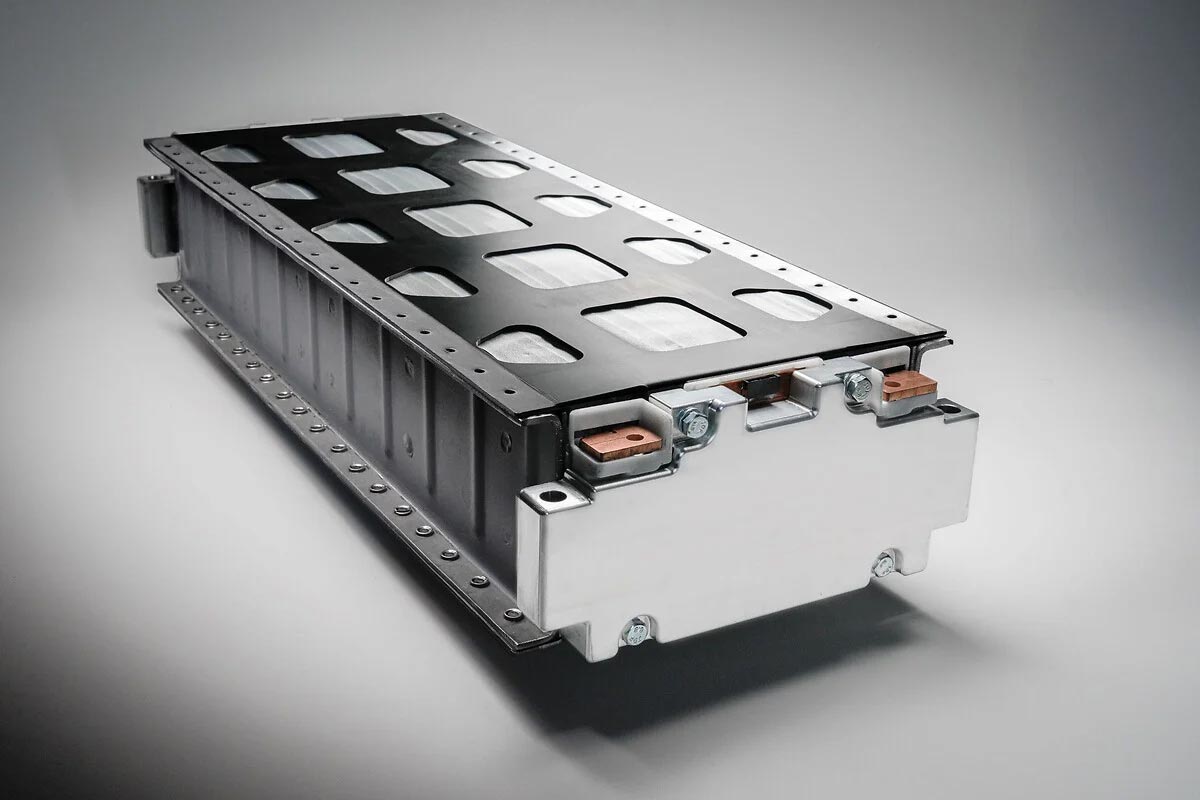
For several years now, Stellantis is betting on a technology that could well be a game-changer for electric cars: solid-state batteries. After an initial investment of $75 million in the American startup Factorial Energy in 2021, followed by the announcement of full-scale tests With plans set for 2026, the automaker is now taking the next step. According to documents filed with U.S. financial authorities, Stellantis now holds a 9.5 % stake in Factorial Energy and is further strengthening its ties with the company.
This equity investment comes at a pivotal moment, as the first batteries jointly developed by the two companies have just entered the road-testing phase.
A Collaboration That's Gaining Momentum
When Stellantis announced its partnership with Factorial in 2021, the goal was already ambitious: to accelerate the development of solid-state batteries capable of outperforming current lithium-ion batteries. Since then, progress has been rapid. In 2024, the group confirmed to test this technology on vehicles based on the STLA Large platform, intended in particular for future electric Alfa Romeo, Maserati, Dodge, and Jeep models (since that announcement, only Jeep and Dodge models have been equipped with this platform). Then, in April 2025, Stellantis announced that it had validated its first solid-electrolyte cells for automotive use.
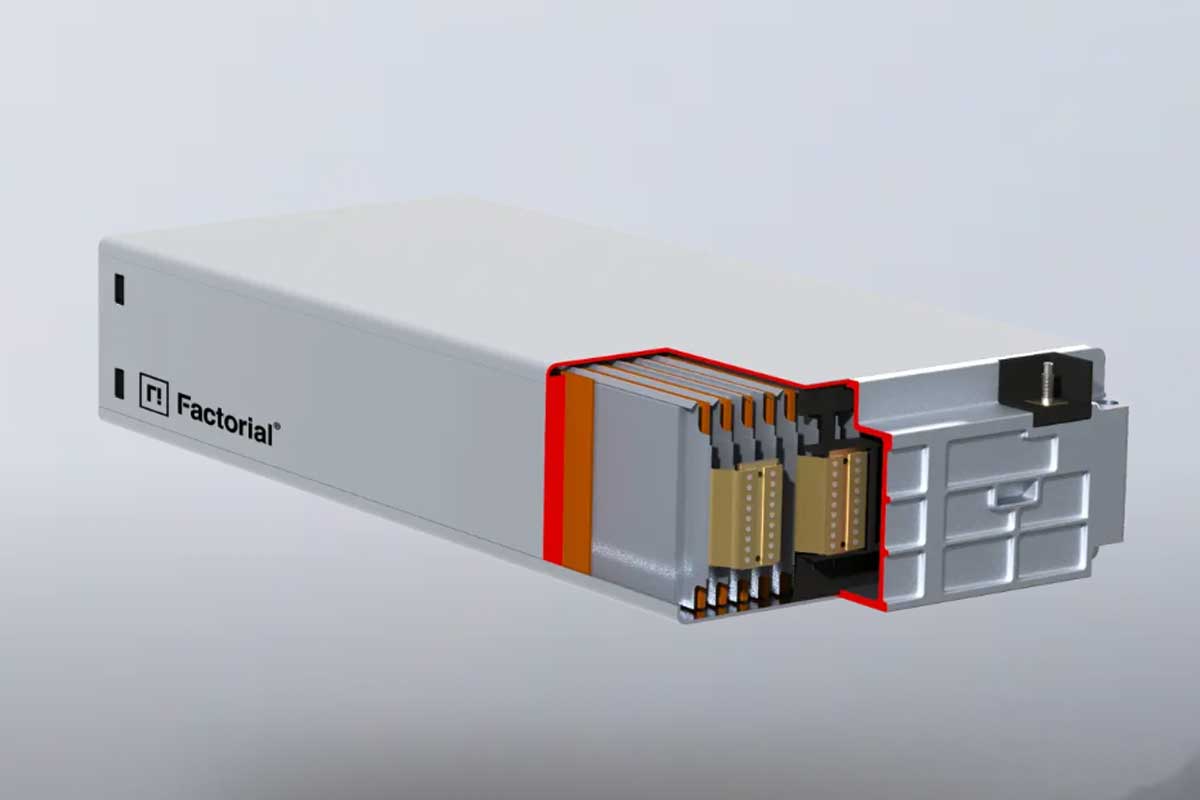
Today, the relationship between the two companies goes far beyond a simple technology partnership. Stellantis now owns 8.67 million shares of Factorial Energy, representing approximately 9.5 % of the U.S. company’s equity. Better yet, Jon Nelson, CEO of Stellantis Financial Services, is joining Factorial’s board of directors—further evidence of the strategic importance attached to this technology.
The first road tests have begun
This increase in equity comes just a few days after a major announcement. On June 11, 2026, Stellantis and Factorial officially launched the first real-world road tests of their solid-state batteries.
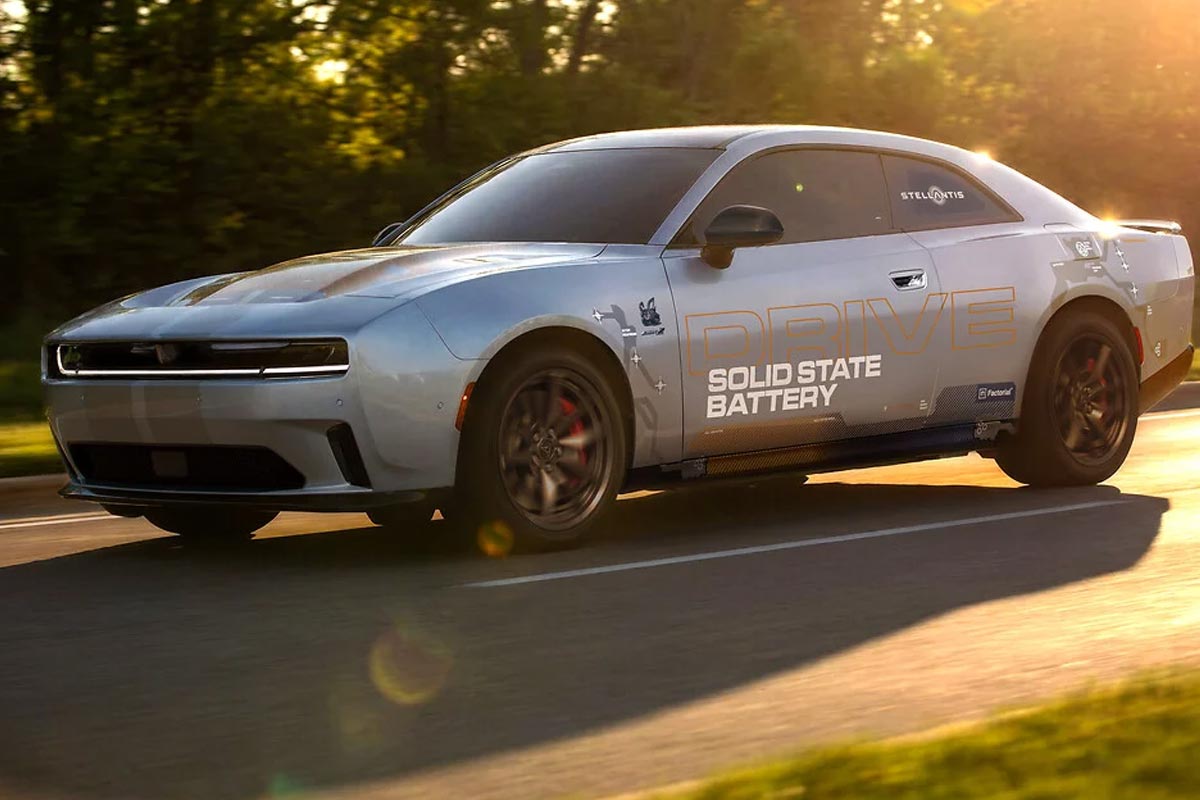
For the first time, the FEST (Factorial Electrolyte System Technology) cells developed by Factorial have been integrated into a prototype Dodge Charger Daytona currently on the roads in North America. The goal now is to test this technology’s performance outside the lab: performance, thermal management, safety, endurance, and long-term reliability will be closely monitored before any potential large-scale production. Many automakers have been talking about solid-state batteries for several years, but few have managed to integrate them into road-ready vehicles.
Why is Stellantis investing so heavily in this technology?
The reason Stellantis is now strengthening its position at Factorial is that the potential of this technology remains particularly appealing. The cells currently being tested have an energy density of 375 Wh/kg, significantly higher than that of conventional lithium-ion batteries. In practical terms, this means more energy can be packed into a more compact and lighter battery pack.
There are many advantages. A car equipped with such batteries could offer greater range while reducing its weight, a factor that is particularly important for sports models. Charging is also a major selling point. Data released so far indicates that the battery can go from 15 % to 90 % in about 18 minutes. Added to this are improved resistance to extreme temperatures and potentially higher safety levels thanks to the elimination of the liquid electrolyte used in current batteries.
A Strategic Bet for the Post-2030 Era
Behind this investment lies a long-term vision. As global competition intensifies in the battery sector, Stellantis is seeking to secure privileged access to a technology that could become essential over the next decade. In financial documents filed in the United States, the group describes its stake in Factorial as an «attractive and strategic investment.» Stellantis also notes that it may increase its stake in the future depending on market developments and the results achieved.
For the automotive group led by Antonio Filosa, the success of solid-state batteries could represent a major competitive advantage. Increased range, faster charging, enhanced safety, and potentially lower costs in the medium term are all factors that could accelerate the adoption of electric vehicles. It remains to be seen whether the road tests launched this year will confirm all the promises that have been on the horizon for several years.
The true test of battery performance takes place on the road.
— Factorial (@FactorialEnergy) June 16, 2026
With @Stellantis, road testing is now underway to further verify the battery pack's performance, reliability, and vehicle safety under real-world driving and charging conditions.
Learn more: https://t.co/HeWmSsrMSQ pic.twitter.com/6O2vfhRLE4
 English
  French
  Italian
  Spanish
  German
  Japanese
  Dutch
Dutch
Are billions going to be wasted again after a year or two?
With Toyota, they could have been revolutionary once again with hydrogen—and with Enni as a partner to boot—but no, it was too good to last!!!!
For now, hydrogen isn't the solution—as evidenced by the fact that the Mirai, priced at 73,000 euros, isn't selling. For now, automakers prefer to invest in electric vehicles.
For now, electric vehicles are a pipe dream that nobody wants, and we all know how that turned out. A fiasco and billions lost!!!!!
As usual, Scudric's arguments are totally off the mark!
The debt of more than 3,300 billion began right after the first oil crisis… What a coincidence!?
Scudric, do you have an oil well in your backyard?
Year-over-year change in electric car sales for the period from January to May 2026:
Italy: +75 %
France: +55 %
Germany: +40 %
Source: LCI
Once again, Lysandre's arguments are lies that only she believes.
«Electric Cars: Europe’s Admission of Failure» (T&E).
I don't have an oil well in my backyard, but I have no financial problem buying one?!
In life, there are those who live their dreams (me) and those who dream their lives away (you).
It's as simple as that.
Just so you know, Scudric, I never lie and I never make anything up!
I provide my sources—which are completely verifiable—MYSELF!
You're absolutely wrong to try to play this little game with me!
People are laughing at your arguments… Do you remember Wizz?
«lies that only she believes.»
Trolls love to turn the tables, don't they!?
Please try to think of people who don't necessarily have the same standard of living as you.
So far, your arguments are so absurd and baseless, but you’re forgetting one thing that the Chinese have explained so well.
It took them 25 years of hard work to create the perfect electric cars… A QUARTER OF A CENTURY and hundreds of thousands of failures!!!!
So who can believe that in 10 years we'll be at the top??
It's like asking a donkey to become a racehorse 🐎 overnight!!
Think about it for a second—it's impossible, and everyone knows it.
No, I'm not twisting anything—it's just that you believe in crazy ideas that even the manufacturers wouldn't dare to consider!
Even Ferrari just got the slap in the face of a lifetime with their EV thingamajig!
Be honest for once and admit that either he’ll have to go through the Chinese or stop causing trouble… through the EU!
Just ask all those who had to throw their cars in the trash because of the tainted diesel and the billions that went down the drain!
Scudric
My arguments are so absurd and baseless. … OK
I base everything on reality and I never make ANYTHING up
Your explanations are all over the place!
The Chinese now have an incredible lead… It’s a fact that actually saddens me.
Leapmotor makes excellent EVs in terms of value for money … which Stellantis engineers could improve upon.
Nearly one out of every two Alfa Romeo orders has been for an electric 100 % model since the beginning of April.
This 100 % electricity rate even reaches 65 % for residential customers.
Complete nonsense! Internal combustion engines are essentially rolling heaters (the correct term is “combined heat and power unit”) with low efficiency. Sure, they can be a lot of fun, and they won’t disappear completely anytime soon. But from a technical standpoint—especially in terms of energy efficiency—electric vehicles are the better alternative. Just give them a try!
@Kersten John
You summed it up perfectly.
Logically, the EV outperforms the internal combustion engine vehicle… except perhaps for sports cars or for driving 1,000 km with just one stop!
But in the long run (10 years), as they say: it's a done deal!
Thank you for your input.
In less than 10 years, VT students will be in the minority.
The development cycles for customized platforms and research into next-generation batteries often far exceed five years.
So Stellantis is preparing for the future, and it’s not people with the mindset of a 12-year-old or ideas from the ’60s or ’70s who are making the decisions… Thankfully 😏
That's strange, because Toyota and others say the opposite—and prove it!
Speaking of Toyota, did you know it took them 15 years of relentless effort to develop the hybrid???
How can you possibly believe that we'll pull it off in the blink of an eye?
You can't be serious, sorry:
P.S.: Who is Wiz?????
Stellantis: Closure of One Production Line at Melfi (formerly FCA)?
on Blogauto
Yes, it's people like you who, as Potté says, are just like Tavares and others—who either think they're better than everyone else or have managed the unthinkable by scrapping all the profitable products to churn out one fiasco after another.
A mindset so pathetic that even with a 12-year-old’s mindset and a 1990s outlook, we’ve all seen the result… FIASCO (PSA’s trademark)!
Are Scudric and Potté really two different people!?
»It's just like Fabrice Éboué's sketch—'The Ancestor of Social Media.'" 😄