

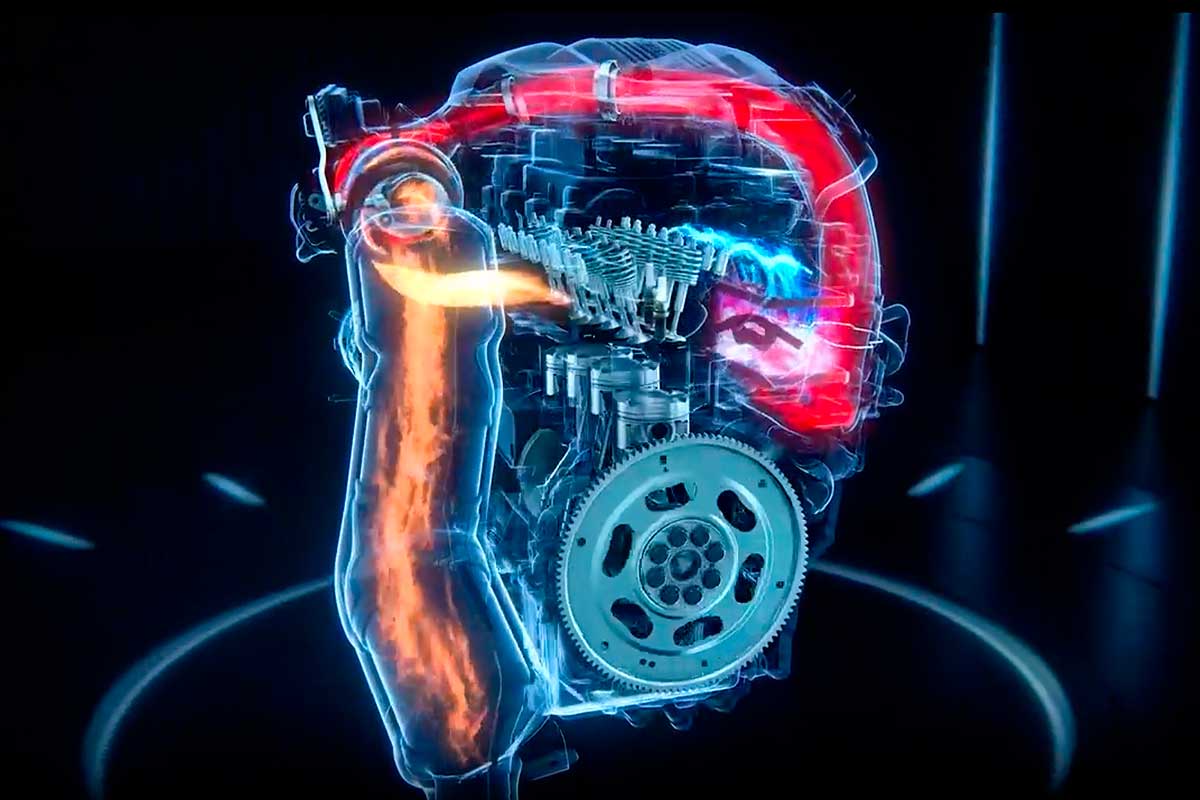
Unveiled in autumn 2025, the new 2.0L Hurricane 4 Turbo engine from Stellantis was not just another technical announcement in the usual stream of industry releases. At the time, the group promised a more powerful four-cylinder petrol engine, more efficient and, above all, more technologically sophisticated, with the added bonus of a clear F1 connection. Several months later, in April 2026, this engine is no longer a promise: it is now starting to take its place under the hoods of real models. And while the USA is already enjoying the benefits, Europe remains on the sidelines.
An engine born in 2025, but just beginning its career
When Stellantis presented this new evolution of its 2.0-liter gasoline engine at the end of 2025, the announcement came as something of a surprise. Behind the Hurricane 4 Turbo name lay much more than a calibration update or a simple increase in power. The Group was talking about an all-new engine capable of developing 324 hp and 450 Nm of torque, with a parallel reduction in fuel consumption of 10 %.
At first glance, this might seem a logical evolution of the 2.0L GME already widely known in the Stellantis galaxy. In fact, this engine is already used in numerous variants, from 200 or 280 hp versions to the more muscular variants found in certain Jeeps and Maseratis. But the real novelty lay elsewhere: in its combustion.
F1 technology from Maserati
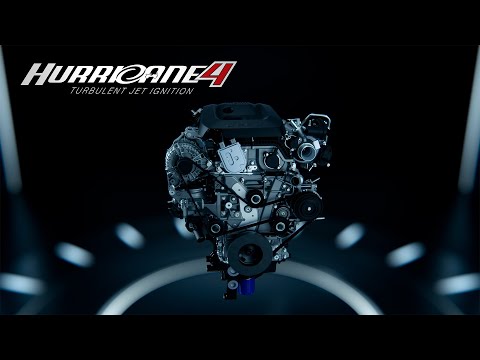
This new gasoline engine is not just more powerful. Its real innovation lies in its combustion, with the adoption of TJI technology, for Turbulent Jet Ignition. Behind this technical name lies a principle directly inspired by the world of motor racing, and often compared to Formula 1: the combustion pre-chamber.
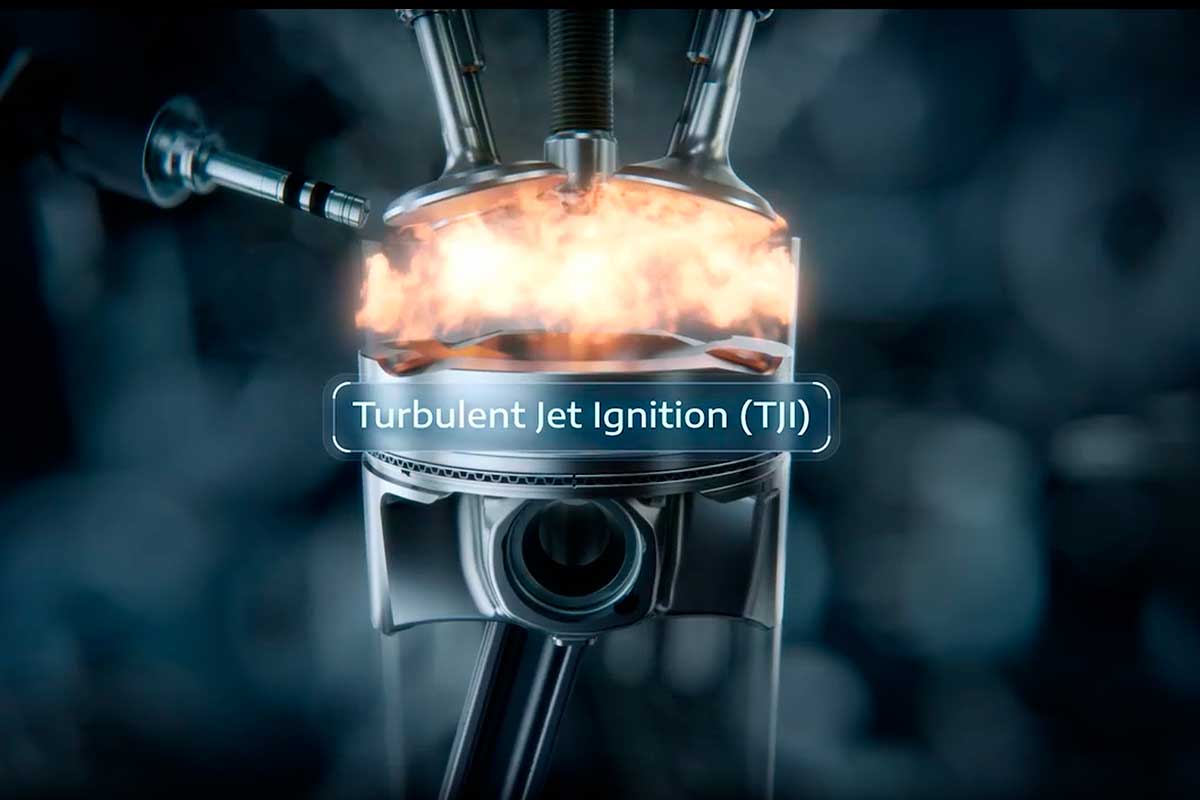
It works in a more sophisticated way than a conventional gasoline engine. A small chamber above the cylinder initiates initial combustion, before spreading the explosion into the main chamber via turbulent jets. The benefits are manifold: combustion is faster, more precise and more complete, resulting in greater power and improved efficiency.
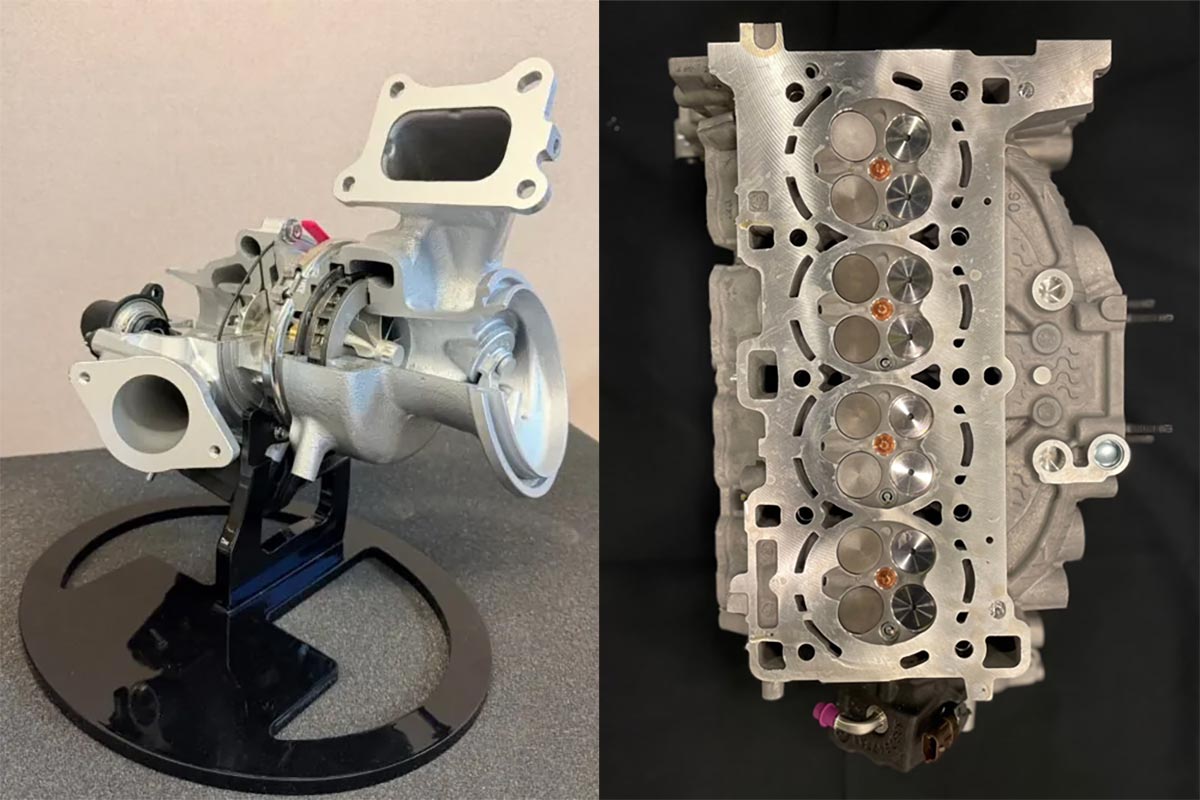
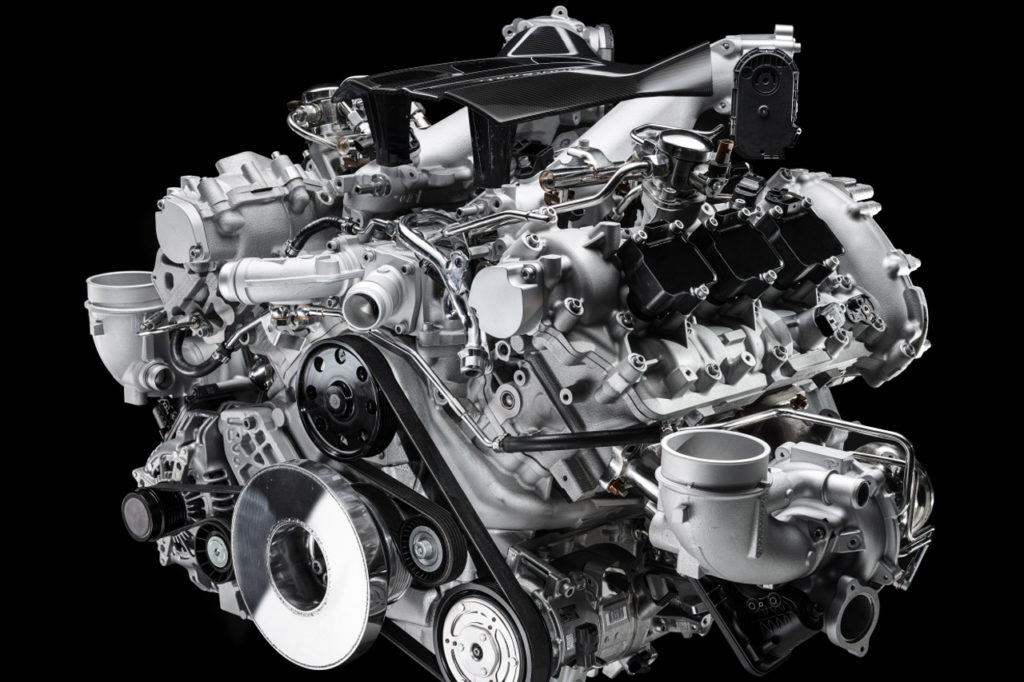
At Stellantis, this technology doesn't come from nowhere. It has already found a prestigious showcase in Maserati's Nettuno V6, launched on the MC20 and subsequently used on other Maserati models. The new four-cylinder Hurricane 4 Turbo takes up its spirit, but in a much broader application, designed for mass-market vehicles.
The Jeep Grand Cherokee 2026 is already adopting it
What was only a promise in October 2025 is now an industrial reality. The first iconic model to receive this engine is the Jeep Grand Cherokee 2026. Jeep makes no secret of the fact: its SUV now relies on this new 2.0L Hurricane 4 Turbo to improve its performance on internal combustion versions.
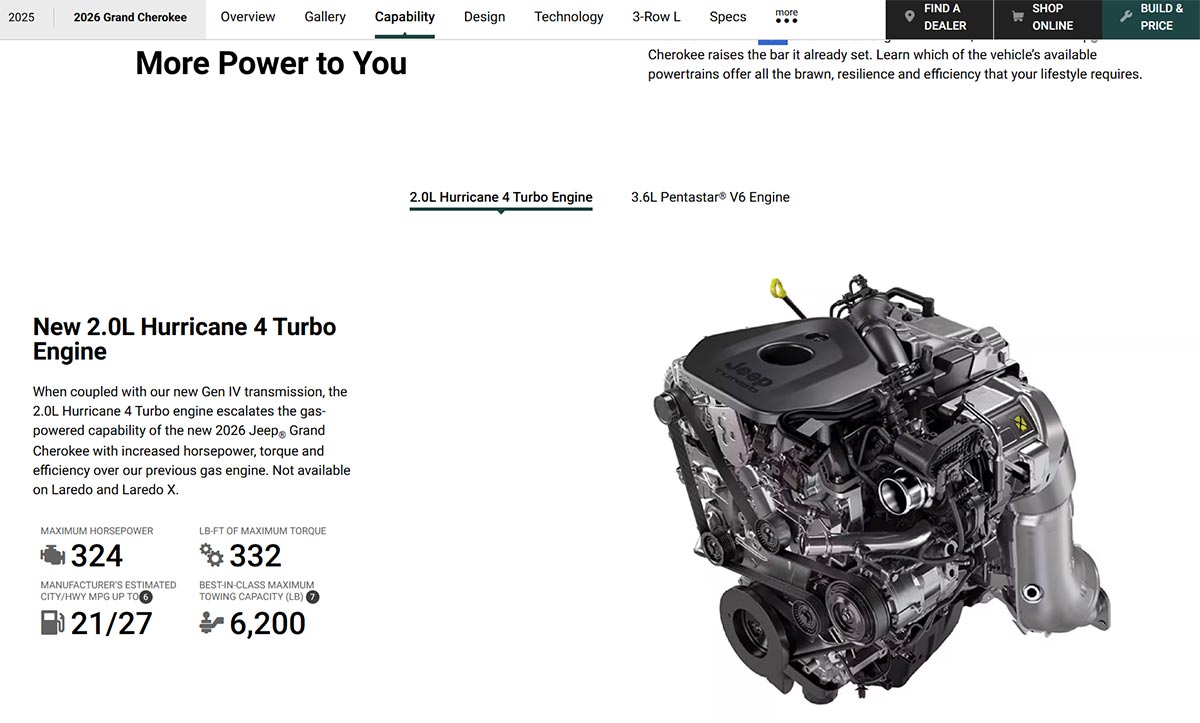
On the official Grand Cherokee 2026 page, the brand clearly highlights this new turbocharged petrol engine, combined with a new-generation transmission. The numbers speak for themselves: 324 hp, 332 lb-ft of torque, or around 450 Nm. The message is crystal-clear: this engine has to do better than the old naturally-aspirated V6 in almost every respect, with more vigor, greater efficiency and a more modern image.

Initial tests confirm that Stellantis has done more than simply inflate the technical specifications. Road & Track, which was able to take in hand a Jeep Grand Cherokee L 2026 equipped with this engine, describes it as more lively than the old Pentastar V6. This four-cylinder engine is more energetic, better served by its automatic gearbox, and brings a real boost of responsiveness to the large American SUV. Not everything is perfect, notably a slight response time at low revs, but the overall conclusion is clear: this new engine really improves the Grand Cherokee's driving pleasure.
Ram Rampage also benefits, with a different version
Interestingly, the Jeep Grand Cherokee is not alone. The Ram Rampage also offers a 2.0L Hurricane 4 Turbo petrol engine. On the model's official website, Ram announces 272 hp and 400 Nm of torque on the R/T version, with a 0 to 100 km/h time of 6.9 seconds and a top speed of 220 km/h.
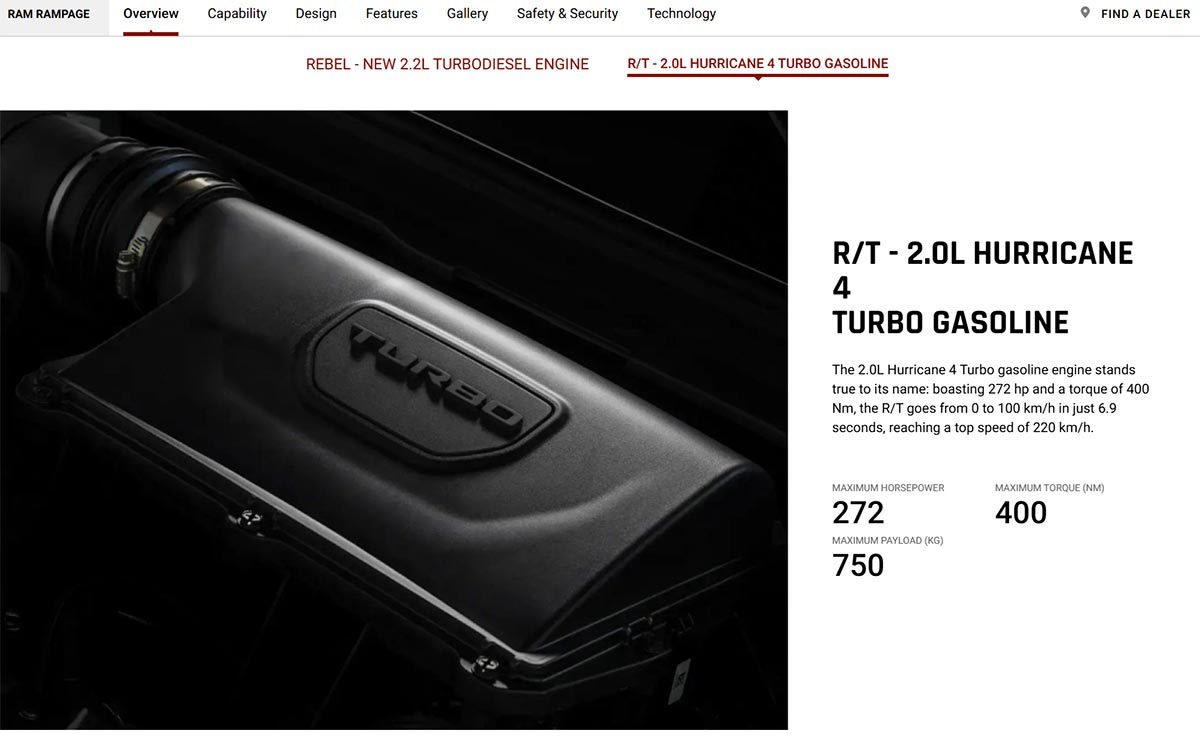
This shows that Stellantis is not reserving this engine for a single application. It's already starting to distribute it on several vehicles, with different calibrations for different markets and uses. In the case of the Grand Cherokee, the aim is to gradually replace an aging V6 in a family SUV with status. In the case of the Rampage, the aim is to offer a more dynamic pick-up, capable of high performance while remaining compatible with local constraints.
An American engine... but with an Italian soul
That's the paradox of this machine. On the one hand, it is produced in the USA, notably in Dundee, Michigan, with components also coming from Kokomo in Indiana. It is therefore primarily designed for the North American market, where Stellantis still needs powerful, profitable combustion engines for its Jeep and Ram models.
On the other hand, its media and technical interest stems largely from its link with Italy. Without Maserati and the Nettuno V6, this new four-cylinder would probably not have attracted so much attention. The pre-combustion chamber technology used here is a direct reference to the work carried out around Maserati.
Europe looks the other way... or rather waits
Although this engine is starting to take root in the Jeep and Ram ranges, no official announcement has yet been made to suggest that it will soon be arriving in Europe. That's quite something. The claimed technology draws part of its inspiration from Maserati, and thus from Stellantis' Italian engineering, but it's the American markets that are reaping the first benefits today. In the meantime, the Old Continent has seen nothing.
This absence inevitably raises questions. Yet such an engine could make sense on several of the Group's future hybrid or top-of-the-range models. Alfa Romeo, for example, will have to continue reconciling performance, electrification and regulatory constraints.
But for now, this scenario remains hypothetical. In April 2026, the reality is much simpler: the new Hurricane 4 Turbo petrol engine begins its commercial career far from the European continent.
 English
  French
  Italian
  Spanish
  German
  Japanese
  Dutch
Dutch
FCA technology is quite different from PSA's unreliable pepper mills...
When you consider the 2.0 GME's preparation power and reliability, you get the impression that you're dealing with a Japanese 4-cylinder capable of taking on any power or torque without flinching, as in the days of Toyota's 3SGTE, which produced 550bhp from a 2.1 in the 90s on the Toyota MR2 SW20 2000GT and put the nail in the coffin of anything running F40 included.
Well, I don't want to give away any spoilers, but I've got an article in stock about it that'll be published later this week. Unheard of.
Can't wait to discover it 😁
Can't wait to see it
That's for sure
Too bad Peugeot didn't modernize the TU XU XUD.
The focus on 3-cylinders and small ashes is a total failure, partly due to a European policy decided by people who are technically and economically irresponsible.
A real shipwreck
For once, the 3-cylinder problem isn't confined to Peugeot, but has also affected Honda (which quickly stopped its costs) and Ford (which got tangled up like PSA).
The problem with the French and their engine is that they've been asleep on their laurels for a long time.
The solution was simple: either the French continued to buy powerful engines from abroad, as they had done for years with Chrysler and others, or they designed real engines that deserved an Evo every year, because when you make an extraordinary chassis like the 406 coupé, which is the holy grail at PSA, but you find good engines under a 106.... It's no joy. 😖
Marchionne should have launched the Duetto on the 124/MX5 pairing with this 200 to 280 hp engine... it would have been a guaranteed success, and many people (including myself) blamed him for cancelling the project because the platform was «supposedly» not of a high enough standard, whereas there was no better platform for this type of sports car anywhere in the world (apart from the S2000, but more produced).
Yet another powerful internal combustion engine of no interest except to American polluters. Not even a hybrid. Stellantus is always one war behind.
It will come to Europe, but in a hybrid version to comply with European standards, for Alfa on future Giulia/Stelvio models, and perhaps for Maserati and Jeep Grand Cherokee models.
Not interested in hybrids or EV'S mate. We love are American Hemi's engines!
It's strange because the automotive world is saying the exact opposite of what you're saying, as more and more brands are going back to combustion engines.
Why, Mr. Pro-German, are Mercedes and Porsche returning to combustion engines after seeing their sales plummet?
A quando una bella lancia Delta integrale con questo bel motorino? Sarebbe la rivincita della Lancia
Chinese engineers encourage Stellantis and the Europeans to persevere with the development of 4-cylinders based on the old Maserati 6-cylinders. Especially since Europe, as we all know, is full of oil! They also encourage Stellantis to wait and do nothing in Europe. At least not until they've taken 80% out of the European car market...
I can think of 3 brands that should absolutely have this engine.
Alfa, Citroën and Lancia.
The sports brand and the group's 2 «REAL» premium brands.
This 2.0 L Hurricane engine, with hybridization to reduce the malus, would look great in future Alfa Romeo models.
Enough of these 3-cylinder PSA engines that don't belong in Alfa Romeos.
PSA is all about accounting, and by dint of counting, we've lost sight of what's essential: the car and the pleasure of driving. We've forgotten the 504 and 505 that defied the miles and the savannah.
It was the best in terms of reliability and robustness. After that, it was a case of short-sightedness, under-investment and penny-pinching until we got to the 1.2 puretech...
Now Stellantis wants to leave his factories to Chinese manufacturers after having emptied them by relocating them.
No more.