
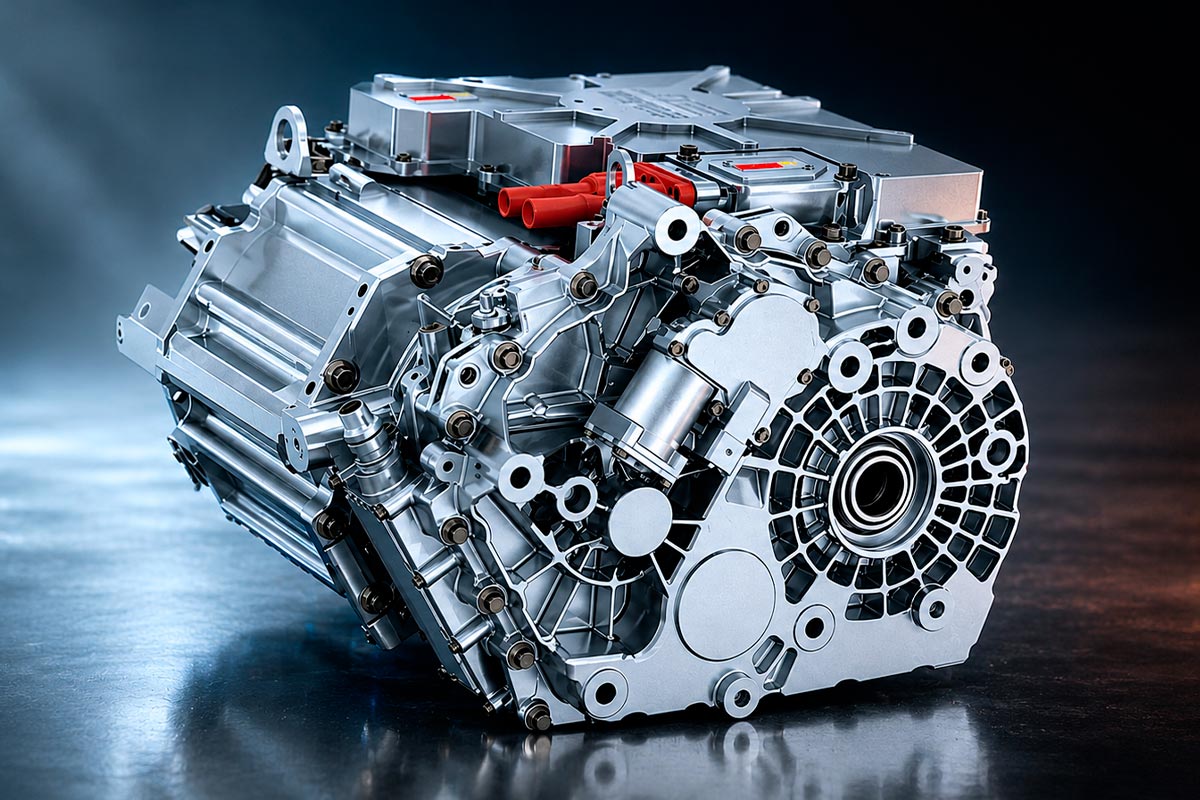
When Stellantis officially presented its new STLA One platform a few days ago, one question remained unanswered: which electric motor would power the first models based on this architecture, destined to become the Group's industrial mainstay? Back in 2024, we reported that there was still some mystery surrounding the powertrains on the STLA Small platform, now renamed STLA One.
The answer may just have been provided by information revealed by Les Echos. And it may come as a surprise: the first car based on the STLA One, the future electric Peugeot 208 due in the second half of 2027, will be launched with a Chinese engine supplied by Jing-Jin Electric Technologies (JJE). A name we're not unfamiliar with...
Chinese engine to inaugurate Stellantis' largest platform
According to the business daily, the future electric Peugeot 208 will not immediately receive a powertrain developed by Emotors, the joint venture between Stellantis and Nidec. During the first months of sales, Jing-Jin Electric Technologies will supply the turnkey electric motor. From around mid-2028, Emotors will take over with a motor whose rotor and stator will be produced in Trémery, before final assembly in Hungary at the Szentgotthard site.
This choice may seem paradoxical. For several years now, Stellantis has been investing heavily in its own electric motor production capacity in Europe, notably with Emotors. Yet, for the launch of its first car on the STLA One platform, the group will have to rely on Chinese supplier Jing-Jin Electric. How strange!
A supplier already present at Maserati
For readers of Italpassion, the name Jing-Jin Electric is nothing new. As long ago as 2024, when we investigated Stellantis electric motor strategy, we identified JJE as one of the Group's key partners. At the time, the Chinese manufacturer was already supplying the electric motors for the Maserati Grecale Folgore, each developing 205 kW. Maserati's electric SUV thus used technology from outside the Stellantis group, even though future STLA platforms were expected to progressively incorporate in-house-developed powertrains.
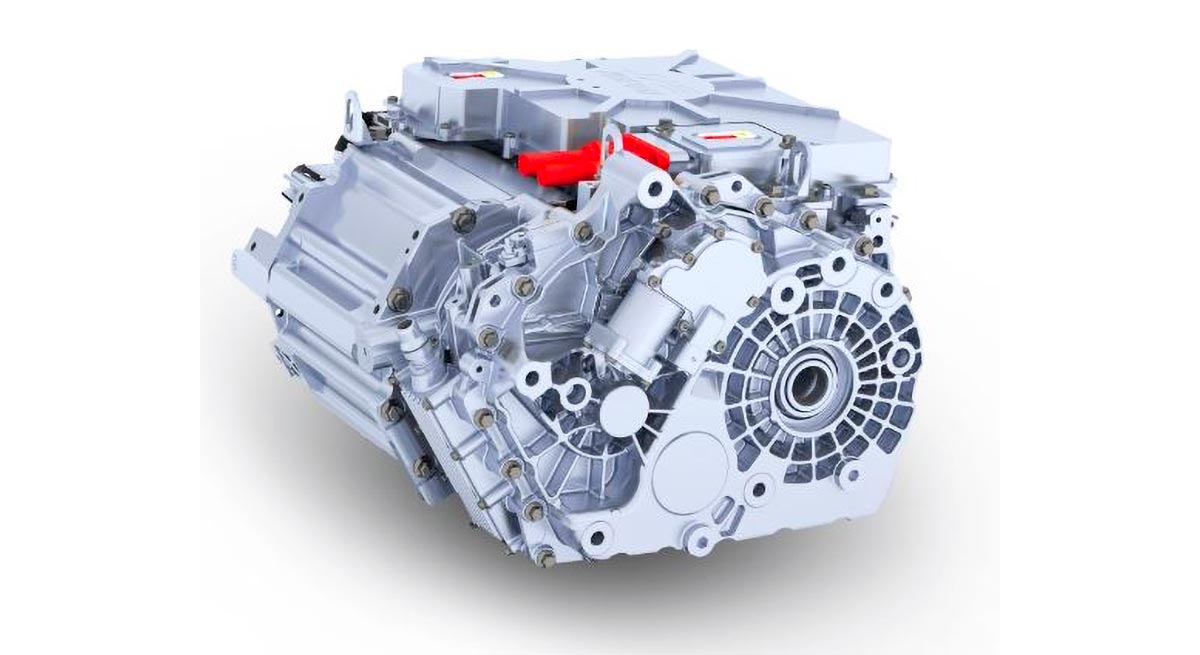
With the future Peugeot 208, history seems to be repeating itself. Only this time, it's no longer a niche model produced in a few thousand units, but a car destined to become one of the Group's biggest sellers in Europe. In the end, JJE's choice for the 208 seems almost like an a posteriori validation of the strategy already tried and tested at Maserati.
A confirmed hypothesis
When we analyzed Stellantis' various electric motors at the end of 2024, one point drew particular attention: the group communicated abundantly on powertrains for the STLA Medium, STLA Large or STLA Frame platforms, but remained surprisingly discreet on those for STLA Small.
At the time, we wrote that a «mystery remained» concerning the future low-power motors intended for the Group's new generation of electric city cars. Several hypotheses were put forward, including that of a future M1-type Emotors motor.
Two years later, we finally discover that the first response from Stellantis will initially be... Chinese. This does not mean, however, that JJE will become STLA One's permanent supplier. On the contrary, the business media reports that this is a transitional solution, until the European industrial chain is fully operational.
STLA One, the platform that will change everything
The stakes go far beyond the future Peugeot 208. As we recently explained, STLA One probably represents Stellantis' most important industrial transformation since its creation. This single platform will progressively replace several of the Group's original architectures, and serve as the basis for more than 30 models between 2027 and 2035.
The future 208 will be the first model to inaugurate it, but it will soon be followed by other Peugeot, Opel and Alfa Romeo vehicles. The Group's future compact models, including some produced at Mulhouse, will also be based on this architecture.
The fact that the very first STLA One vehicle is being launched with a Chinese engine shows just how much Stellantis is now in a transitional phase (or still seems to be a few years behind schedule...). On the one hand, the group is investing in its own technologies and European plants. On the other, it still has to rely on external partners to meet its launch schedule.
 English
  French
  Italian
  Spanish
  German
  Japanese
  Dutch
Dutch
Stellantis is done. They will bankrupt in 2-3 years and be forced to split and sell brands they own.