

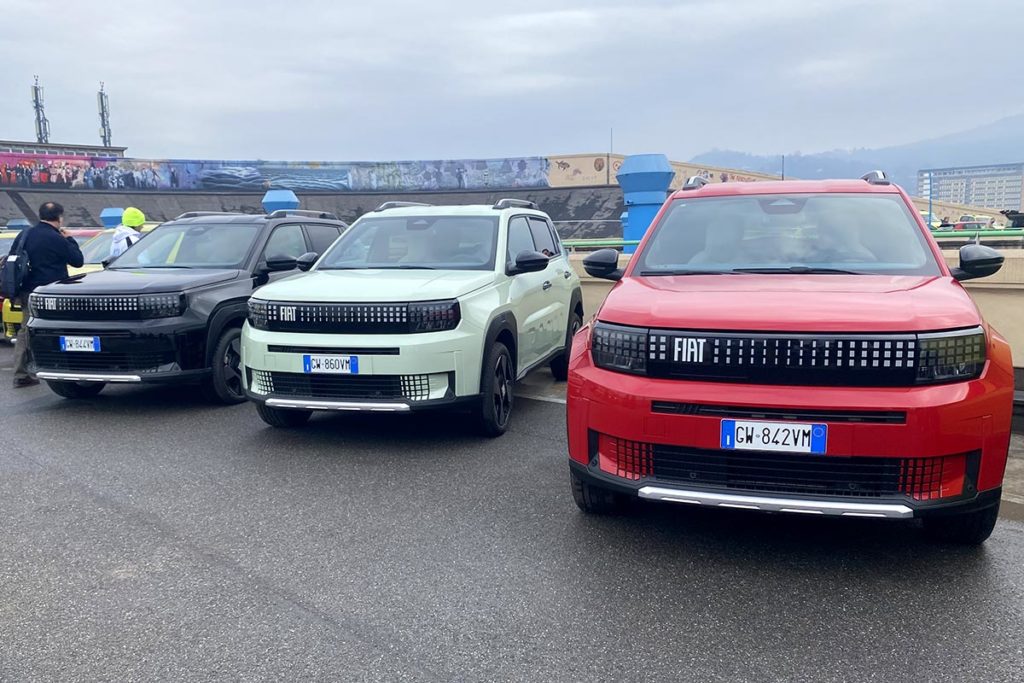
Just a few months ago, the Stellantis in Kragujevac, Serbia, symbolized the difficulties in launching the new Fiat Grande Panda. By the end of 2025, the Serbian site was one of the weak links in the industrial strategy of Fiat.
Today, the rhetoric has changed. According to the latest information relayed by the media and local union representatives, the plant is now running at close to maximum production levels. This increase in output is beginning to have a real impact on the Serbian economy, despite the complicated situation facing the European automotive industry.
From a pressurized plant to a near-peak site
The contrast with the situation described just a few months ago is striking. In December 2025, several reports described a plant in the throes of reorganization, unable to meet the targets set for the Fiat Grande Panda. Stellantis had to mobilize Italian employees from Pomigliano, Melfi and Mirafiori to support local production.
The tone is now much more optimistic. Ivan Ristić, president of the FCA Srbija trade union, says that demand is up sharply and production is finally keeping pace with expectations. «Daily production varies, but I can say that we are close to maximum production,» he explains, without releasing precise figures due to the confidentiality of industrial data.
This improvement is based in particular on an organization now broken down into three operational teams. And Stellantis is already preparing a new stage: the introduction of weekend shifts from June onwards, to further increase volumes.
The Fiat Grande Panda petrol dominates the channels by a wide margin
Contrary to the very electric image that Stellantis sometimes wishes to give to its new models, the industrial reality in Kragujevac shows above all the weight of combustion engines. We learn that the most popular model currently produced is the Fiat Grande Panda petrol, equipped with a 1.2-liter engine and manual gearbox. This version is particularly popular thanks to its more affordable price.
Next come hybrid versions of the Grande Panda, followed by the Citroën C3, also produced at the Serbian plant. Electric 100 % variants remain a minority in the industrial mix, even if volumes change according to market demand. This hierarchy illustrates a trend observed in several European countries: despite massive investment in electric vehicles, combustion and hybrid models continue to account for a large proportion of sales.
A plant that has become important for the Serbian economy
The ramp-up of the Kragujevac site is good news for the Serbian economy. At a time when several European automotive plants are reducing production rates or cutting jobs, Stellantis is increasing its workforce requirements.
According to union estimates, the site's total workforce should now exceed 3,500, despite high employee turnover. And with future weekend shifts, an additional 700-800 workers could be needed. These new shifts would operate on a particular model: 12-hour days on Saturdays and Sundays only, with a lower wage than that of conventional three-shift employees. A formula that the Serbian trade union openly criticizes, preferring more traditional full-time contracts.
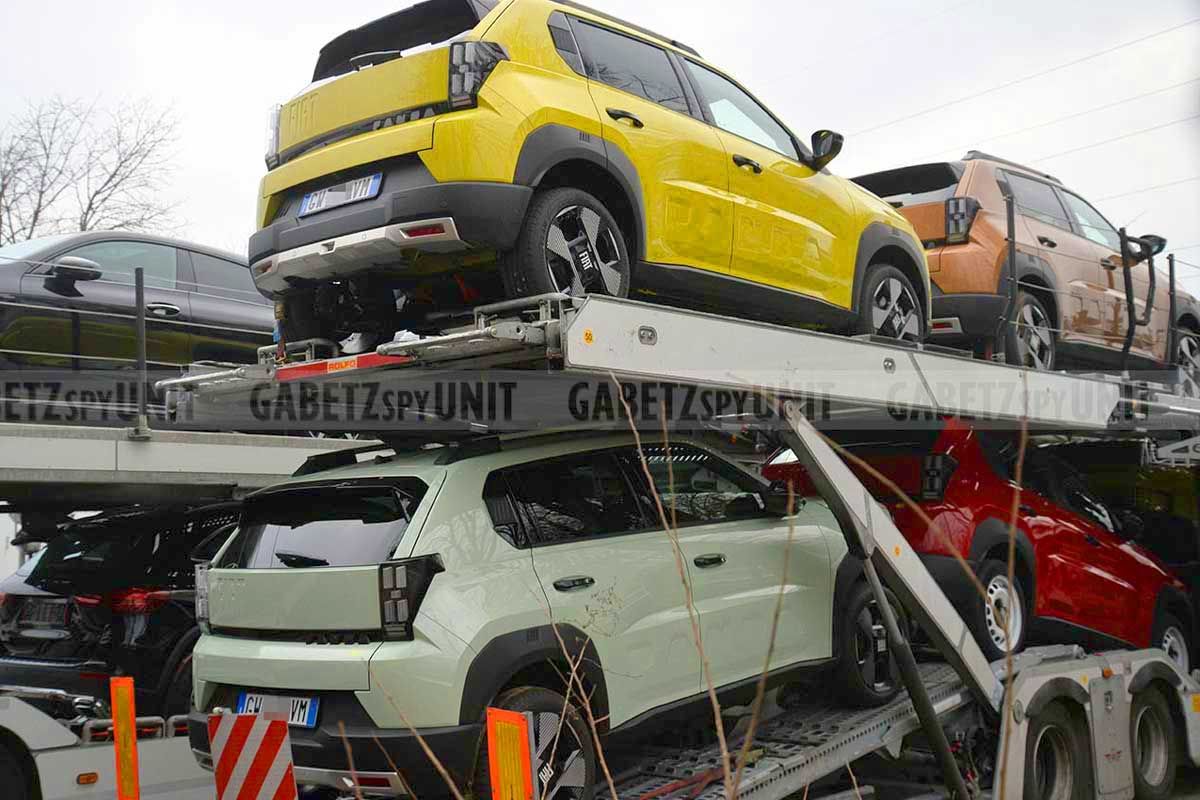
Despite these social reservations, the site's activity directly benefits the local economy. Exports to Italy, France, Germany and other European countries are steadily increasing. All vehicles leave Serbia via the port of Bar, Montenegro, before being distributed to the various European markets. The plant doesn't just produce complete cars. It also manufactures parts for other Stellantis plants, including body components for the Citroën C3, which are sent to Slovakia.
Symbol of an industrial turnaround for Stellantis
However, this improvement comes at a particularly difficult time for Stellantis. The group is going through a period of financial turbulence after recording losses of over 22 billion euros, largely linked to its electrical strategy. Recent financial results have led to a spectacular fall in the share price.
In Serbia, the consequences were immediate: the plant's employees lost their April bonus. Stellantis' new CEO, Antonio Filosa, has himself pointed the finger at the strategic choices made by his predecessor, Carlos Tavares, who is accused of having placed too much emphasis on electric vehicles without sufficiently anticipating the real evolution of the market.
The gradual success of the Fiat Grande Panda in Serbia is taking on an important strategic dimension. After a chaotic start, the Kragujevac plant finally seems to be finding its feet. And for Stellantis, which is now seeking to regain industrial and financial stability, this ramp-up probably comes at just the right time.
 English
  French
  Italian
  Spanish
  German
  Japanese
  Dutch
Dutch
So at Stellantis when the workers work harder, they earn less, but when the executives sink the company, they walk away with bonuses in the millions. Interesting... 🤔
That's what the trade unionist regrets. It's a factory that's been struggling for 1 year with production, and now that it's running at full speed, given that Stellantis has made a loss, there's no bonus... an exception could have been made locally...
Let's hope it boosts sales in our market... This little car is really fun, much more so than the sad and ugly C3 🤷🏻♂️
Stéphane, taste is subjective.
You think the G. Panda very fun and the C3 ugly with so much resemblance!!!? You're doing great!
Sorry but the C3 is prettier than the big Panda sorry but really disgusting
Nico, I have a slight preference for the Fiat... Well, the two are extremely close.
I don't understand how anyone could love one and hate the other!
The debate will soon become sterile?
And I don't know if good faith is going to talk 😉
That's good. There are factories in Italy and France that are under-used and threatened.
They were going to make more value-added, premium models. Clearly, the mayonnaise doesn't seem to be taking. No investment in new technologies, just outdated models.
It's not just a technical problem: when Citroën wants to renew its C5 Aircross, its reflex is to design a model 1.93m wide (without mirrors) and 4.65m long. Previous owners can't find their way around, and there's no continuity in the models (as with Fiat, for that matter).
We're not capable of the hybrid of that name.
Automakers are doing it. Toyota has managed to make a plant in France profitable, producing small models that are far more efficient full hybrids than the Stellantis micro hybrid.
Just goes to show, if you have the will, you'll find your way.
I totally agree with you. And the Chinese are coming, BYD with the Dolphin g and Omoda with the 2 or Jaecoo the 3. If the 1st one is going to be made in Hungary, let's cross our fingers for a French production in one of our vacant factories for the Chery 🤞
Plant running at 500 units a day...That's not crazy yet...Well, for Stellantis, that's quite a score, isn't it? Let's hope that the Pandas produced won't be botched! According to some tuners in the F network, this isn't «high quality» after all. Slovenian C3s are better assembled. All this while other plants in the group are twiddling their thumbs. ...
Otherwise, it's true that the Gpanda is much nicer than the C3, although the trunk is too high!
«the very electric image that Stellantis»
A.Filluzeau, please, nevertheless, are the Group's EVs a success or not?
EVs in Europe are on the order of 20 to 28 %, how many at Stellantis?
Do you have any figures?.
Also, perhaps the situation has changed significantly in the last 2 and a half months?
I had already looked at the figures for Lancia Ypsilon, Alfa Romeo Junior and Fiat 600 electric cars for another article. I can't remember the figures, but it's less than 20 %s, and that's thanks to France.
Thank you!
This is the low end of V sales in Europe.
They need to lower prices and consider 800 V architecture for future large models.
With high turnover, underpaid employees who are not rewarded for their efforts (no bonuses), and 12-hour working days, production quality will suffer. Assuming it doesn't come to a halt because of a strike in a context marked by high food price inflation. In fact, the people who should be removed are at the head of the company, and are clearly incompetent.
It's all about short-term profit, when there's a human being behind a worker or technician.
There's going to be a lot of turnover, and wages are going to go up, as they have in Poland and other countries. I've got nothing against profit, but there has to be fairness, and a worker shouldn't be treated like an accounting line.