
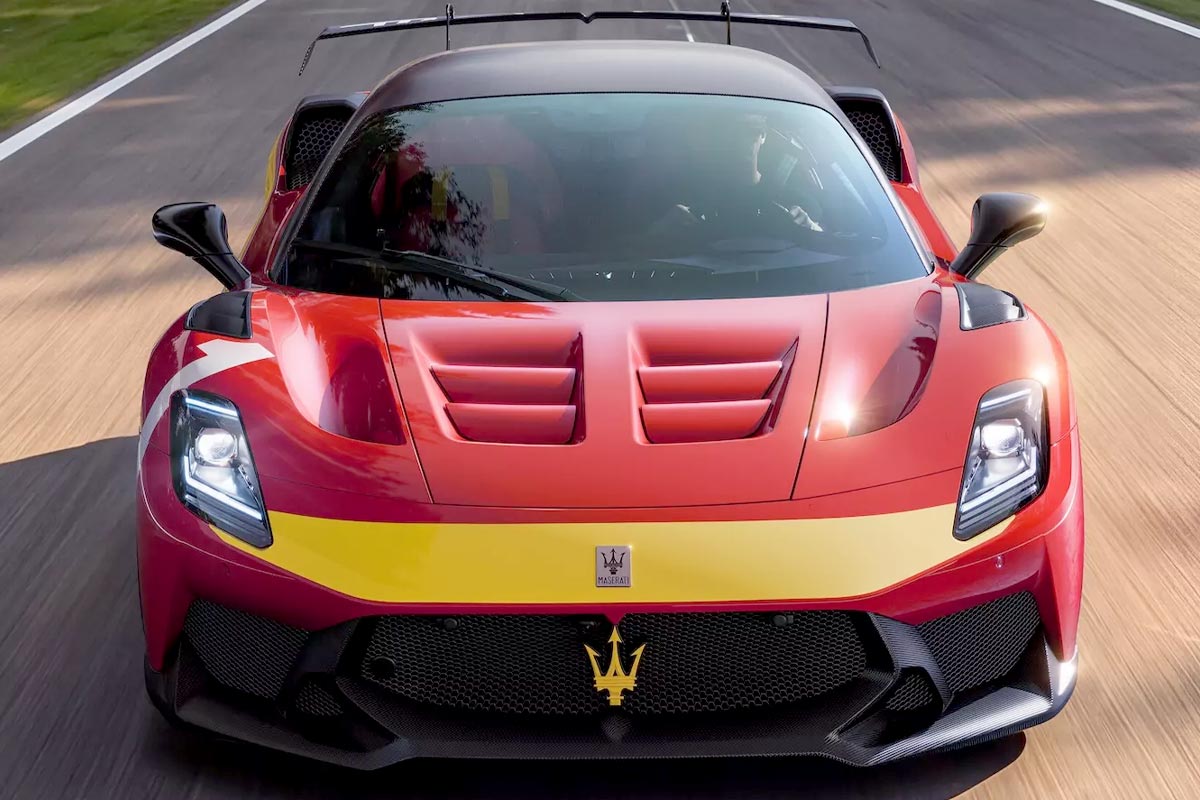
For several weeks now, a rumor has been making the rounds in the international media: Chinese giant BYD is interested in buying Maserati. Re-launched at the beginning of June by several European publications, this hypothesis continues to fuel speculation about the future of the brand with the Trident, whose commercial difficulties are now well known. However, the message from Stellantis today is unambiguous: Maserati is not for sale.
A statement from BYD to get the ball rolling again
The origin of this new wave of speculation goes back to a statement by Stella Li, BYD's Executive Vice President. Questioned in mid-May about the Chinese automaker's European ambitions, she described Maserati as a «very interesting» brand, while specifying that no concrete steps had yet been taken. This was all it took for takeover scenarios to resurface. Several media were quick to imagine what Maserati could represent for BYD: a European luxury brand with century-old prestige, a network already established in the main Western markets and an industrial tool enabling the Chinese group to strengthen its presence in Europe.
As recently as June 4, a leading Dutch automotive media outlet devoted an entire article to this hypothesis, explaining why a takeover of Maserati could make sense for BYD, in particular to accelerate its move upmarket and strengthen its image outside China.
Stellantis: «Maserati is not for sale»
Faced with these new speculations, we directly questioned a top manager at Stellantis to find out if there was any truth to the rumors. The answer was immediate and particularly clear:
«Absolutely. The only real news is what our CEO, Antonio Filosa, said. Maserati is not for sale, quite the contrary: there is a dedicated strategy. And a dedicated investor day.»
In other words, for Stellantis, there are no current plans to sell Maserati. On the contrary, the group claims to be working on a specific strategy for the brand, and is even planning an Investor Day dedicated entirely to Maserati before the end of 2026. Our interlocutor also adds that this rumour is based on old information:
«This news is two weeks old. Read Antonio Filosa's statement. Investor day for Maserati expected by December.»
And concludes with a hint of annoyance:
«Journalists are free to say what they want... the facts will speak for themselves, and credibility will be on the side of those who have told the truth.»
Antonio Filosa has already mapped out the roadmap
This denial is perfectly in line with the recent communication from Stellantis' new CEO, Antonio Filosa. At the Investor Day on May 21, he made a point of mentioning Maserati despite the difficult context. Above all, he confirmed the arrival of two major new models: the future Quattroporte and the future Levante.
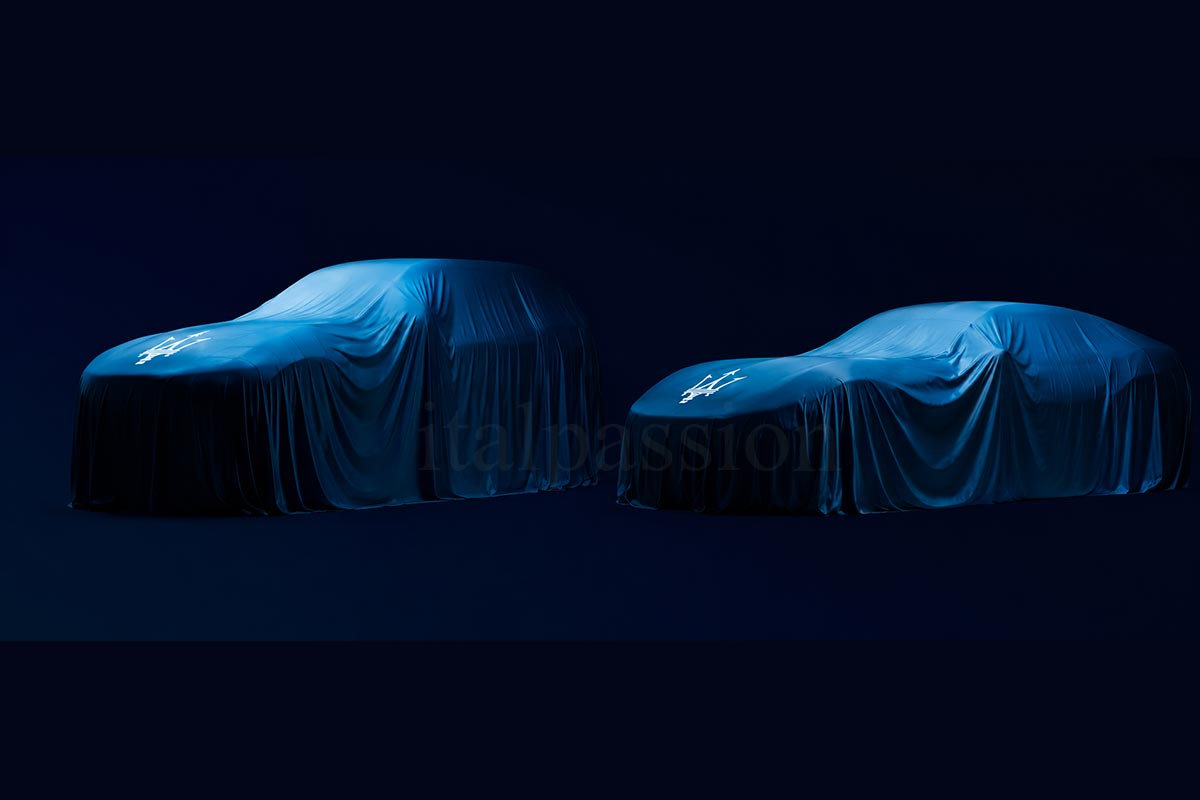
This announcement was far from insignificant. For several years, rumors of cancellation or postponement had been multiplying around these projects. By officially validating their development, Antonio Filosa was already sending out a strong signal: Stellantis is continuing to invest in Maserati. The organization of an Investor Day specifically dedicated to the brand is a second indication in the same direction.
Why does this rumor keep coming back?
If the BYD-Maserati scenario continues to circulate, it's because it's based on a reality that's hard to ignore: Maserati is going through one of the most complicated periods in its recent history. After just 7,800 worldwide sales in 2025, figures for the first quarter of 2026 show a further decline of 41 % in the main markets monitored by Italpassion. The United States, long the brand's driving force, fell back sharply. Italy, Germany and Japan followed the same trajectory.
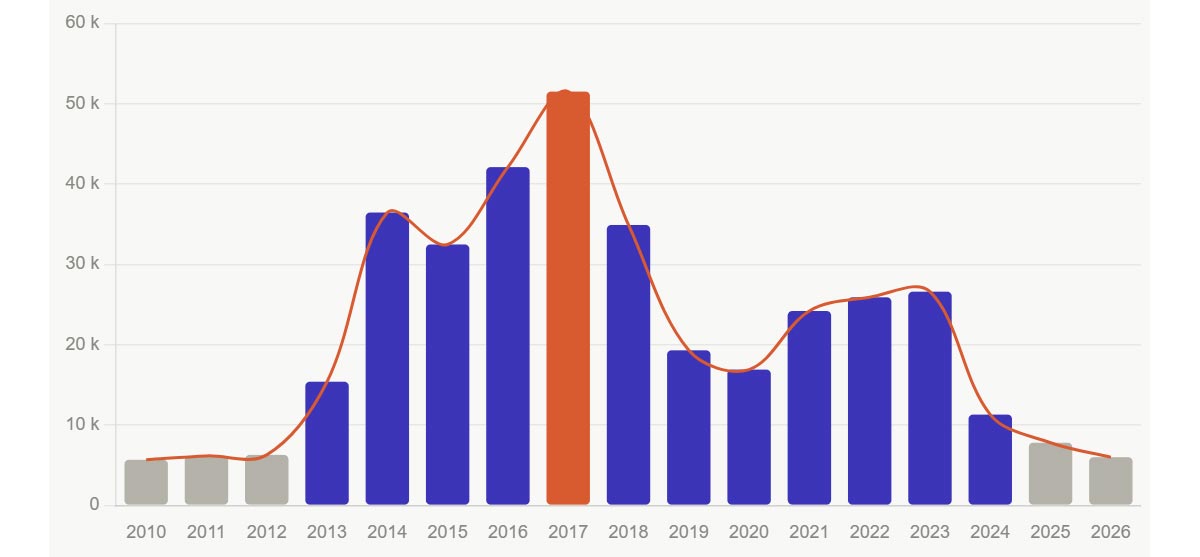
At this rate, Maserati could end the year with between 5,000 and 6,000 vehicles, a level comparable to that of the early 2010s. A situation that naturally fuels speculation about its future. For some observers, a Chinese manufacturer with substantial financial resources could be tempted to acquire such a prestigious brand in order to accelerate its credibility in the luxury market.
A struggling brand, but still at the heart of Stellantis' plans
In the end, the real issue lies elsewhere. The question is no longer whether Maserati is in crisis. The figures speak for themselves. The real question is what strategy Stellantis intends to implement to revive the Trident in the long term.
For several months now, the signals sent out by the new management team have been pointing in the direction of a thorough overhaul. Jean-Philippe Imparato is now overseeing the brand's turnaround, while Santo Ficili regularly repeats that Maserati still has considerable potential.
The abandonment of the exclusively electric approach, the reflections on future powertrains and the confirmation of new models show that the group is above all seeking to rebuild a coherent vision for Maserati. This is precisely what the Investor Day announced before the end of the year should clarify.
 English
  French
  Italian
  Spanish
  German
  Japanese
  Dutch
Dutch
«Jean-Philippe Imparato is now overseeing the brand's turnaround.»
😄😄😄
Everything to do with the old PSA and Tavares has always been the champion of the worst in the car business, so we can't expect anything but red-white-and-blue wheeling and dealing. It's a good thing no one wants to buy their product any more, and that they're a disgrace in the WEC!
Given the incompetence of the entire PSA team, we can only expect the worst, as we've never seen such Olympic incompetence in the automotive world:
«Do worse?! It's feasible because impossible isn't French!»🤣
Given Filosa's incompetence (let's just say that for the moment he's the champion of empty blabla) in 5 years Maserati will be no more. .
«-Why not leave Ferrari unloaded?»
«-Because since the useless merger with a lame French duck with mediocre products and derisory reliability that nobody wanted (and rightly so), thanks to their chronic incompetence, we've learned how to shoot down brands faster than our own shadow, so why deprive ourselves?!»
In short, I hope it lasts!
The ideal solution would be to pass the hot potato on to Ferrari, but do they have the will to do so, and there's nothing to say that Ferrari will be a taker...even if the 2 brands belong to the same group (Exor)!
«We have a very bright future ahead for Maserati. New Peugeot-based disposable cars that will finally ruin the reputation of this once-glorious name. We’ve done it before with AR and Lancia. Why not do it again with Maserati?»