

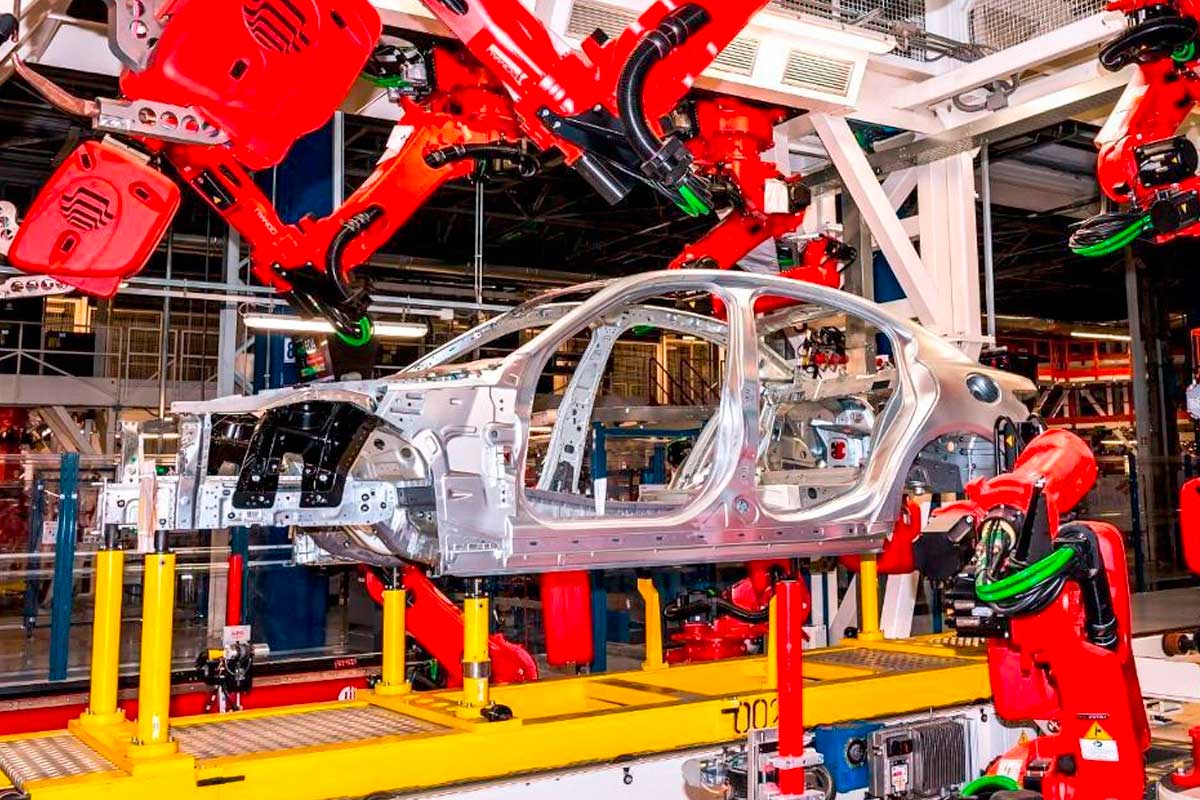
One month after a month of near stoppage in January, the situation at the Stellantis Cassino is not improving. On paper, production is scheduled to resume on April 7, 2026. But in reality, no one - neither the employees nor the unions - seems to believe in a real restart on that date.
According to several local and union sources, activity may not actually resume until mid-April. Until then, the plant will remain officially shut down until April 3, prolonging the paralysis that has lasted for several months. This discrepancy between official communication and industrial reality is fuelling an increasingly tense climate at the site.
Cassino, symbol of a deepening crisis
This latest episode confirms an already worrying trend. January 2026, the plant had only been in operation for four days. And by the end of February, no real recovery had been initiated.
Cassino, which produces the Alfa Romeo Giulia, Stelvio and Maserati Grecale, has gradually become a symbol of Stellantis' industrial difficulties in Italy. One production stoppage follows another, volumes fall, and the plant now seems to operate intermittently. Against this backdrop, the prospect of another month of shutdowns in April reinforces the idea of a site in a state of disarray, hanging on decisions that are slow in coming.
Concern extends beyond factory walls
On site, tensions are mounting. Gennaro D'Avino, General Secretary of Frosinone's Uilm, describes an increasingly serious situation, marked by a total lack of visibility.
The March 20 demonstration, which brought together employees and industry players, showed the extent of the concern. But for many, it could go unanswered. For the problem does not only concern the plant's employees. The entire industrial ecosystem around Cassino has been weakened. Each production stoppage has an immediate impact on subcontractors, families and the local economy. As the weeks go by, the feeling of a lasting crisis grows.
A factory waiting to happen...
What the unions are denouncing today is not just the cessation of production, but the total absence of a clear strategy. Between vague announcements, successive postponements and repeated silences, Cassino seems to be evolving without any real roadmap. The question of future models and powertrains remains central. The integration of hybrid versions, considered essential to accompany the transition, is particularly expected to restore the industrial meaning of the site. But for the moment, nothing concrete has been confirmed.
May 21 as the last hope
In this uncertain climate, all eyes are now on a key date: May 21, 2026. At the Investor Day, new CEO Antonio Filosa is due to present the post-Tavares industrial plan.
For Cassino, the stakes are high. The unions are waiting for precise commitments, with guaranteed production volumes, new models and concrete investments. After months of stoppages, postponements and uncertainties, the plant is no longer entitled to a new, vague plan. In the meantime, one thing is certain: after a month of near stoppage in January, April could follow suit. And in Cassino, the impression of a never-ending crisis continues to take hold.
 English
  French
  Italian
  Spanish
  German
  Japanese
  Dutch
Dutch
Elkann let Tavares completely wreck Italian industry. The necessary measures must be taken.
Elkann had already let Merchione kill off the Fiat group in Italy! When the merger took place 5 years ago, there were already no plans for Cassino apart from a future electric range. CT just carried on as well inspired as Elkann was.
Alfa Romeo Giulia sales are prior to 2021, during the Tavares and Stellantis era.
Why haven't SW and hybrid versions been available since the beginning?
And yes, phase 2 of the Giulia/Stelvio should have benefited from the hybrid system of the Grecale, which has the same base and which seems incomprehensible on the part of Tavares/Imparato, who swore by electric-only news and we see the result today: launch postponed and customers lost. .
Is there a hybrid version of the Grecale?
As far as I know, PSA and FCA have only made PHEVs, which are not very successful overall. .
And yes, the Maserati Grecale does have a 330 hp 2.0 l Gme Hybrid version of the Ghibli and Levante which are no longer produced. .
Alfa and Grecale are from FCA basic engineering
And the latest Stellantis PHEVs have doubled their range in full electric mode, which is already a big improvement.
But it can't be easy to make good hybrids on old, unsuitable bases!
You should have sold ALFA 10 years ago to the VW group...
Instead, they launched CUPRA with the success we all know... CUPRA already sells more cars than alfa and lancia and ds put together.
To have a VW base... Honestly, it's a love-killer!
You're not an enthusiast.
Take a look at LAMBORGHINI's profits and you might understand... The same goes for BENTLEY (Vw) ROLLS (Bmw)... Thank you German brands 🙂
If you only look at the business side... OK, Xavier.
But the soul of the brand!?
You're obviously not interested?
You have VW shares, it's your right!?
When there are few or no orders, there are bound to be production stoppages.
Lack of long-term vision, major errors under Tavares, absence of hybridization for the Giulia and Stelvio, resulting in the outright disappearance of petrol engines (except for the Quadrifoglio) from the catalog in certain markets due to dissuasive malus.
One wonders how Ferrari can understand the market so well, and Stellantis' Italian brands so badly. But how is Stellantis useful to Italian brands?
we'd also have liked a «station wagon» version of the Giulia, not everyone is a fan of SUVs (especially when I see how many BMW or AUDI «station wagons» I come across).
Yes, it's true, Fca made a big mistake launching the Giulia as a sedan when 159 sold more station wagons than sedans. .
It's not the production, solely the product development and marketing. And leadership lagging at extreme level.