

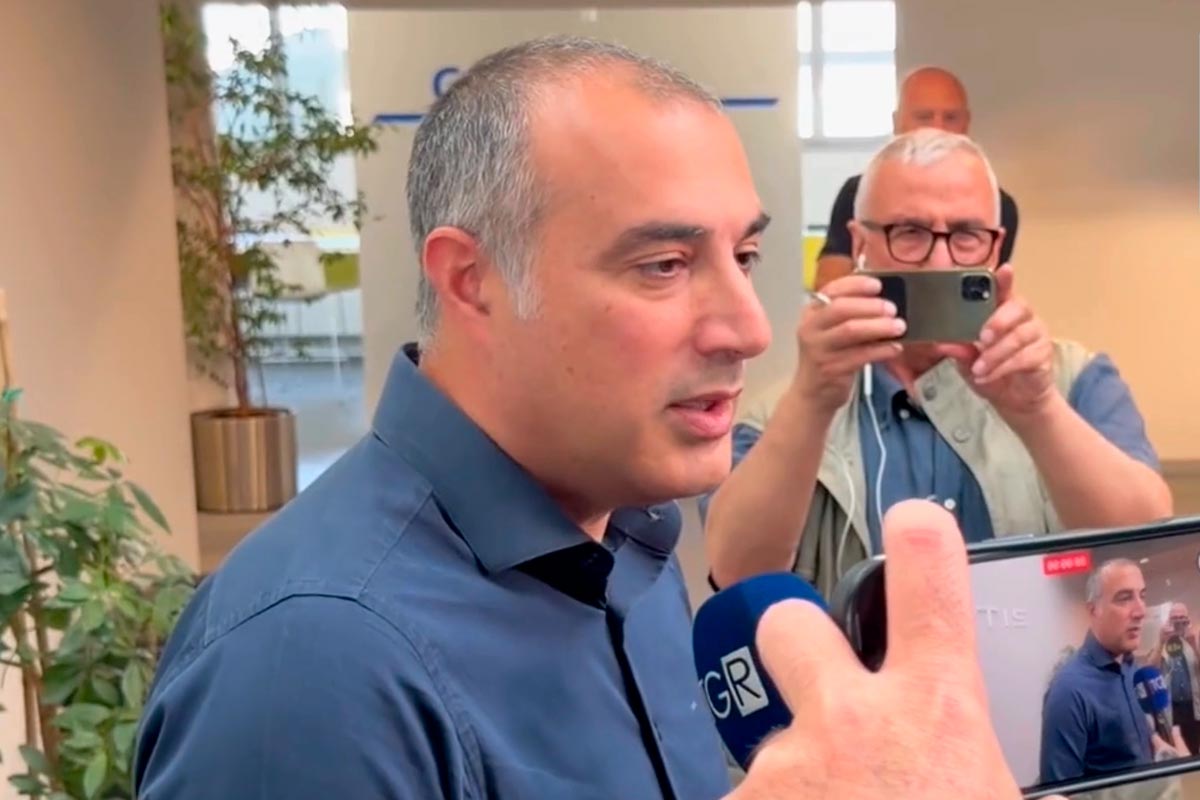
A few weeks ago, we spoke here about the growing gap between the stated ambitions for Mirafiori and the reality of production figures. The cadence of the Fiat 500 hybrid, although up, was still well short of the promised 120,000 annual units. On Friday May 29, Emanuele Cappellano, Director of Operations for Stellantis for an enlarged Europe, spoke from Turin. And his words did little to allay concerns.
«I don't know if we'll reach 100,000».»
In front of the press, the manager dropped a line that sounded like a confession: «I don't know if we'll reach 100,000 units». It's hard to put it more bluntly. The goal of producing 100,000 Fiat 500 hybrids a year at Mirafiori, which was the cornerstone of the Turin plant's turnaround, is now being presented as uncertain. To justify this slowdown, Cappellano pointed to the law of the market: the 15,000 units produced in the first quarter of 2026 «correspond to orders received». In other words, the plant runs according to demand, not according to an industrial plan.
It's not a total surprise: Italian trade union sources and business media had anticipated as early as February that the target of 100,000 hybrids would be difficult to meet. Fiom, the metalworkers' union close to CGIL, went even further, estimating that initial forecasts would have to be revised downwards by around 40 %. If we apply this correction to the 120,000 units initially envisaged for all versions combined, we're looking at just under 70,000 cars a year, in the best-case scenario.
Mirafiori absent from global industrial plan
What makes the situation even more delicate is the context in which these statements were made. The previous week, Stellantis CEO Antonio Filosa had presented the group's strategic plan from Detroit. A dense, ambitious document, announcing the launch of sixty new models by 2030. Mirafiori was not mentioned once. Not one model, not one line, not one prospect of growth for the Agnelli family's historic plant.
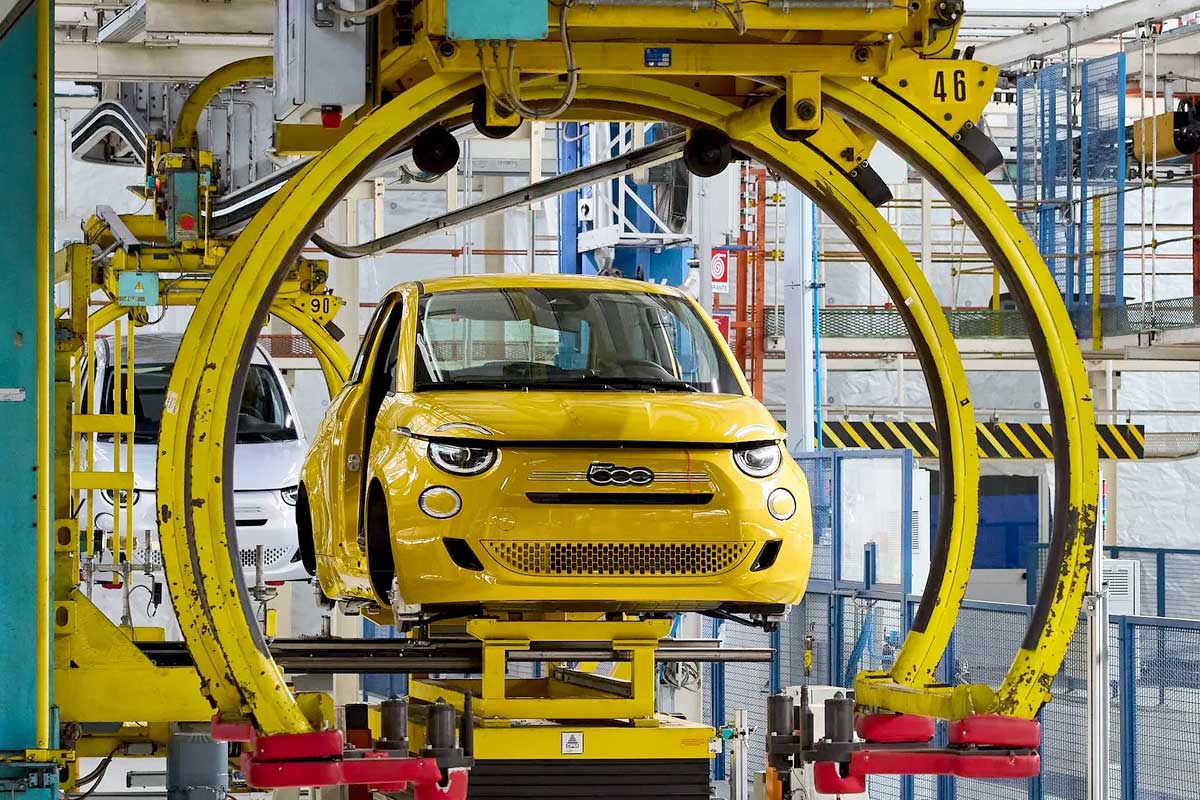
Cappellano came the following Friday to try to fill this narrative void. He confirmed that the capacity cuts announced for Europe - 800,000 fewer vehicles - would not affect Italy. He insisted that the €2 billion «Piano Italia» would not only be maintained, but reinforced. And he described Mirafiori as a «multifunctional technology hub», integrating a Battery Technology Center, circular economy activities and an e-DCT gearbox line for Europe.
But for the unions and the 400 new employees, many of whom are coming to the end of their contracts, these announcements sound more like a make-up than a credible industrial strategy. «We're not surprised by Cappellano's words,» reacted Edi Lazzi and Gianni Mannori of Fiom Cgil. «They confirm that for Mirafiori, there is nothing.» Fim Cisl, more moderate in tone, acknowledged that the 100,000-vehicle target «had always been linked to a rather optimistic expectation».
Rendezvous mid-June
The next step will be on June 15, when Stellantis management will meet the unions in Rome. Two days later, on June 17, Antonio Filosa will be heard by parliamentary committees in Montecitorio. This is an opportunity for Italian elected representatives to obtain concrete guarantees on the future of a site that employs thousands of people and structures an entire industrial basin.
The unions have already laid down their conditions: two models produced at Mirafiori to guarantee sufficient volume, and the return of decision-making power anchored in Turin rather than in Amsterdam or Detroit. «If we don't get concrete answers, we'll respond with new mobilizations,» warned Luigi Paone of Uilm Turin.
For the time being, the Fiat 500 hybrid remains the only model to keep a plant that was once one of the largest in Europe going. It fulfils its role as a transitional model, while awaiting a renewed electric and a new battery chemistry promised for 2027. But one car, on one line, in a market that's not doing as well as hoped - that's a fragile position. And Cappellano's statements, as reassuring in form as they were in substance, haven't really changed this reality.
 English
  French
  Italian
  Spanish
  German
  Japanese
  Dutch
Dutch
FIAT manufactures the GRANDE PANDA in Serbia, the 600 in Poland, its future SUVs in Morocco....
No wonder his Italian factories aren't running...
It's true that after presenting the new Fiat 500 1.0 l Firefly 65 hp with manual gearbox, which should have had an automatic version accompanied by a more powerful engine of at least 80 hp minimum. People prefer the Grande Panda 1.2 l 100hp manual gearbox, not much more expensive.
Helemaal mee eens. Automatische bak en meer pk's. Anders gaan ze het niet redden.
Seriously ... did anyone at Stell really think that a hybrid with such poor performance would be a success? And it's a good thing there's still the Italian market.
Wir der Fist 500e zur Zeit gar nicht mehr gebaut?
Im ersten Quartal wurden 15.000 Fiat 500 produziert, darunter auch Hybrid- und Elektroversionen.
Decisión mala (hibrido 65cv) tras decisión mala (eléctrico carísimo en el mundo de los chinos baratos), suena a autoboicot no? o una mala excusa para destruir aún mas la industria Europea. Suena a teoría del FMI