

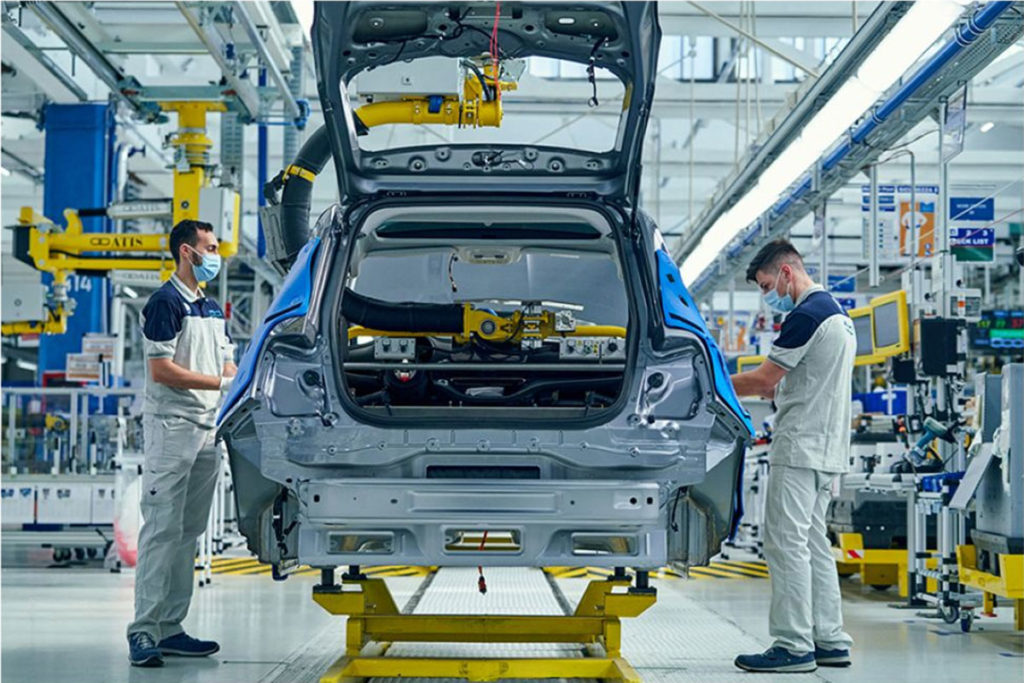
The Fiat 500 was to be one of the pillars of Stellantis' industrial turnaround in Europe. With the return of a hybrid version produced at Mirafiori, the objective was clear: to rapidly boost volumes, while awaiting a more competitive electric model. But a few months after the relaunch, the figures are questionable. Momentum is certainly positive... but still a long way from the initial ambitions.
Strong growth in production... but still limited
In the first quarter of 2026, the Mirafiori plant posted impressive growth: +42.4 %, with 14,040 Fiat 500s produced, including hybrid and electric versions. An encouraging sign after years of chronic under-activity. The Turin plant is back in operation, recruiting and gradually ramping up production. On paper, the industrial renaissance is well under way.
But behind this increase, absolute volume remains modest. At this rate, annual production would be around 60,000 units. Even accelerating over the coming months, reaching 80,000 cars by 2026 already seems an optimistic scenario. We're still a long way from the industrial standards expected of a model that is supposed to account for a large part of the site's activity.
Initial ambitions hard to meet
The original plan was far more ambitious. The stated aim was to produce 120,000 Fiat 500s a year at Mirafiori, including around 100,000 hybrid and 20,000 electric versions. A symbolic milestone, meant to embody the site's true rebirth. By way of comparison, when the 500 was produced in Poland, volumes could reach up to 180,000 units a year.
In reality, the trajectory is more complex. It will take time to ramp up production, between integrating new employees and restarting a long-underused line. Until a few weeks ago, a volume of between 80,000 and 85,000 units already seemed a solid performance for 2026. All the more so as the unions point out a structural constraint: even under optimal conditions, the current line cannot exceed around 120,000 vehicles a year.
However, the latest figures temper these projections. With 14,040 cars produced in the first quarter of 2026, the current rate is rather at the low end of estimates.
But it would be an exaggeration to see this as a failure. The situation is more nuanced. After several very difficult years, Mirafiori's growth of over 40 % is already an encouraging sign. The Fiat 500 hybrid is fulfilling its role as a transitional model, while awaiting a more competitive electric version, thanks in particular to the future battery expected in 2027.
The fact remains, however, that the ramp-up is slower than expected, and initial ambitions will no doubt have to be adjusted. The Fiat 500 hybrid was supposed to be an obvious solution, but today it seems more like a compromise between industrial imperatives and regulatory constraints.
 English
  French
  Italian
  Spanish
  German
  Japanese
  Dutch
Dutch
And yes, the FIREFLY engine isn't everything! 😮
...and that he's Italian, either!
En vindt men dit vreemd 🤬🤬
Dan lanceren ze de hybrid in het moderne jasje en dan enkel met een handbak. Buiten Italië zitten daar weinig mensen op te wachten.
In its current definition, the 500 is technically totally outdated!
We need a 1.0 l Firefly hybrid turbo gearbox version with at least 90 hp for the 500 to be credible. For the moment, we're still on our guard, and what's more, the Abarth thermal version is missing. .
Il Firefly turbo da 120 CV esiste, equipaggiava la Renegade
When fiat fails, it's the French factories that are closed, but not the Italian ones, so as not to offend Melonie (unlike Macron, who couldn't care less).
Het zegt meer over de organisatie dan de auto zelf.
The 500 hybrid is outdated even before it's produced. Its power remains the same, but the car is heavier than its predecessor, and the hybridization is outdated.
Stellantis lacks agility in an innovation that renders a strategy obsolete
It's not difficult to understand: underpowered and lacking an Abarth-style combustion engine = guaranteed failure.
Unfortunately, the current 500 cannot replace the previous 500, which has been in production since 2007—not even as a hybrid. The previous 500 was brilliant. And very small, but cute. The new one is significantly larger but lacks the charm that a 500 must have. But at least Stellantis—or Fiat—is taking action. They’ve recognized the problem.
The Hybrid 500 needs a 1,100 or 1,200 cc engine to generate better torque. The same goes for the Panda, which is still surprisingly fit and modern today. Only three generations of the Panda since 1980: what other manufacturer has such model consistency? None!