


At first glance, there seems to be nothing that could connect an old Volvo station wagon to a Lamborghini. The first, massive, boxy, and rustic, embodies Swedish ruggedness and precision. The other, sleek and sharp, embodies raw power and refined Italian sportiness. It probably took a particularly vivid imagination to conceive of installing a Lamborghini V10 in an old Volvo station wagon. Peter Björck did just that—twice!
Based in Sweden, Peter Björck is best known for his work at BJP Race AB, a company specializing in components for engine tuning. Among his past projects is a turbocharged Lamborghini Gallardo Superleggera.
Volvoghini: A Bull's Heart in a Scandinavian Cabinet
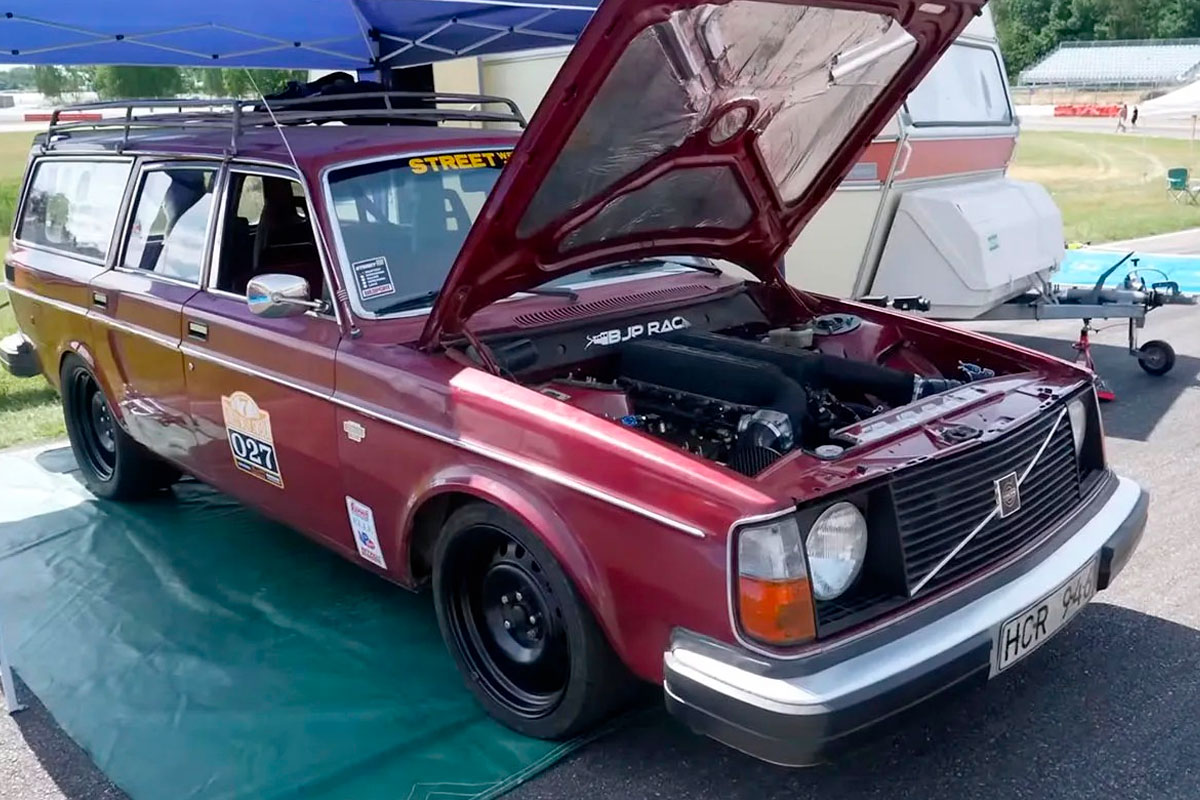
The first project that made him known in the scene was based on a 1975 Volvo 245 station wagon, which had a relatively conventional design, with a front-mounted engine and a manual transmission. The story begins in 2019. At that time, the car was still an old Swedish station wagon, powered by a Volvo B20 four-cylinder engine. Despite the upcoming transformation, the Volvo had to remain recognizable and retain its vintage station wagon appearance. The project was thus named Volvoghini, an obvious portmanteau of Volvo and Lamborghini.
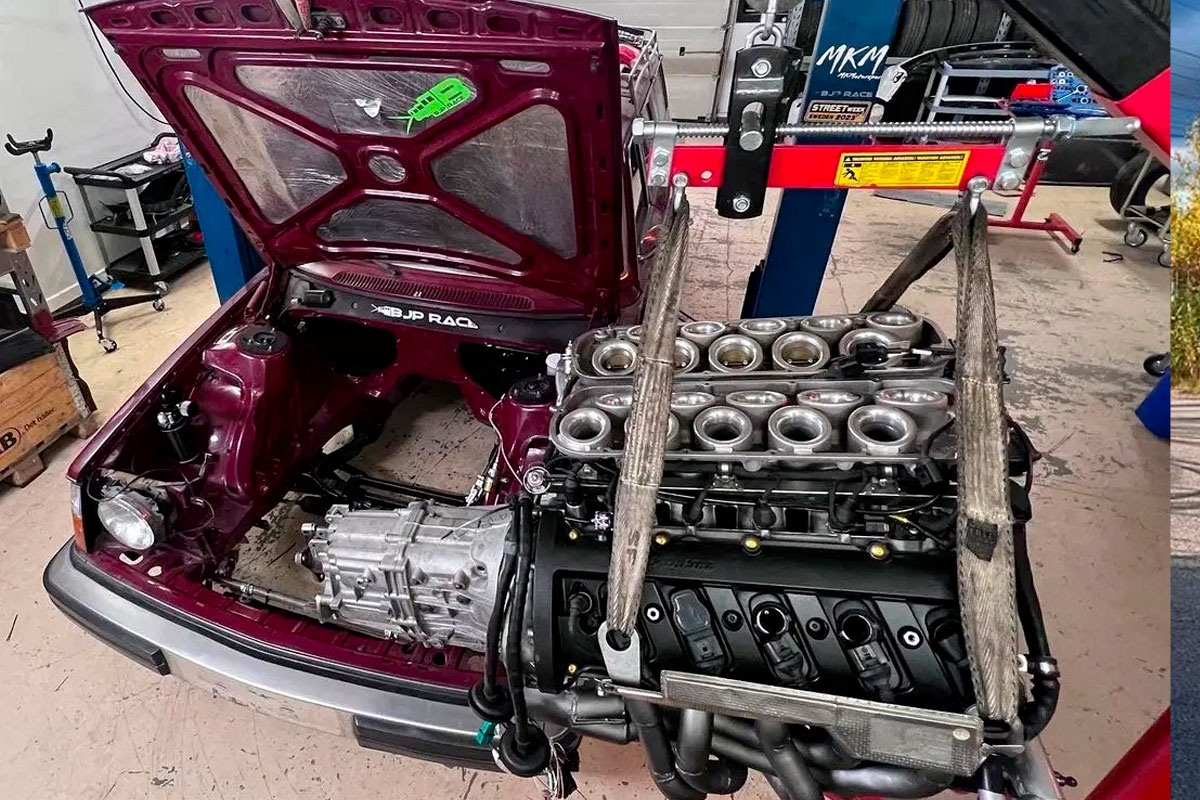
Peter setts his sights on a 5.0-liter naturally aspirated V10 from a Lamborghini Gallardo, but behind this fun idea lies a major mechanical undertaking, since an engine swap isn’t something you can just wing. The engine compartment of the 245 was obviously not designed to accommodate a Lamborghini V10. The mounts need to be redesigned, the clearances adjusted, and a layout found that’s compatible with the various accessories. The transmission presents another challenge. The choice fell on a six-speed BMW manual transmission. An interesting solution, but one that requires specific adaptation to the Italian V10, notably including a custom-made engine-to-transmission connection.

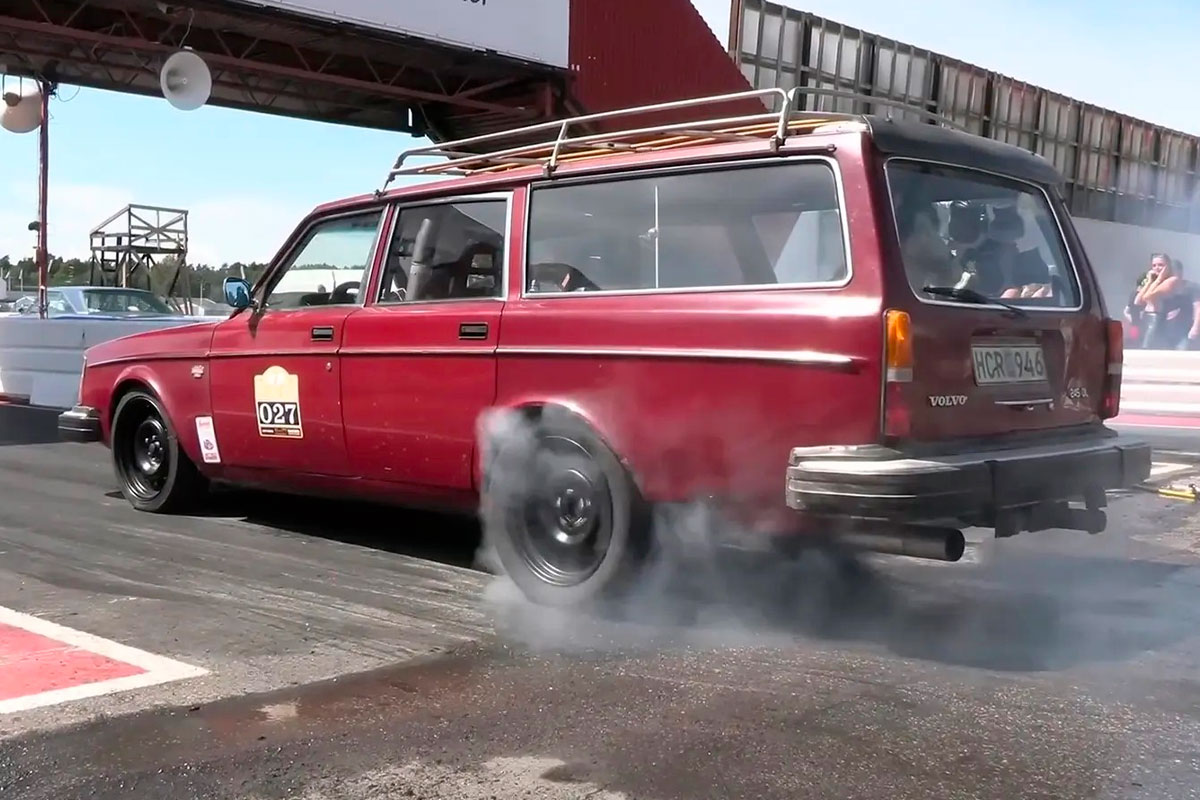
After several years of work, the Volvoghini is finally set to be completed in 2023. The advertised power output exceeds 500 HP. The car makes its public debut at Street Week Sweden 2023, a must-attend event on the Swedish tuning and drag racing scene. Peter, however, doesn’t want it to be just a show car. The Volvoghini is used at automotive events and gatherings, such as hill climbs, where its relatively understated appearance contrasts with the power hidden under the hood. As for the sound—it doesn’t fool anyone!
Another important milestone comes in 2025 with its certification by the Swedish Technical Inspection Authority and approval for road use. You can even use it to run errands!

Project Waffle: A Volvo 240 Converted into a Mid-Engine Prototype
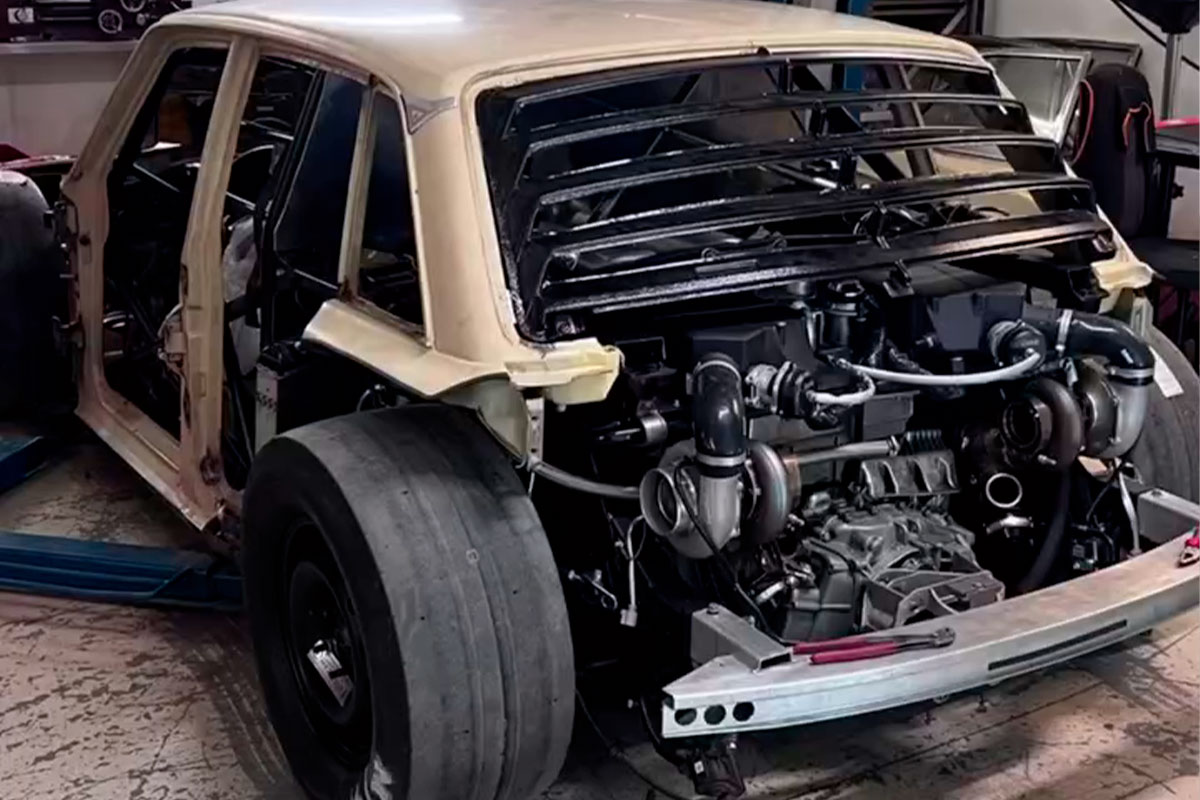
The second project is even more ambitious. This time, Peter no longer wants to simply replace the engine in an old Volvo but to build a true mid-engine drag racer, while retaining the distinctive silhouette of a 240. The concept is radical: the engine is moved from the front compartment to a position behind the occupants, where the rear seat would normally be. The original body is retained as the outer shell, but the mechanical structure is radically transformed.
The car chosen as the base was a 1976 Volvo 240, which had been out of commission since 1993. The craziest part? Even though it hadn’t been driven in decades, the old Volvo started right up and was driven to the garage. The project is called Waffle, or Våfflan in some Swedish publications. It’s a waffle that’s really going to heat things up, because the engine chosen this time is a 5.2-liter V10 from the Lamborghini Huracán and Audi R8 families.
The original Volvo obviously cannot withstand the stresses Peter intends to put the car through. He sets out to build a tubular chassis designed to replace much of the original structure. The frame is constructed from steel tubes, with a design tailored to accommodate the mid-engine layout. The body retains the characteristic lines of the Volvo 240, but the car’s undercarriage bears little resemblance to that of the production model.
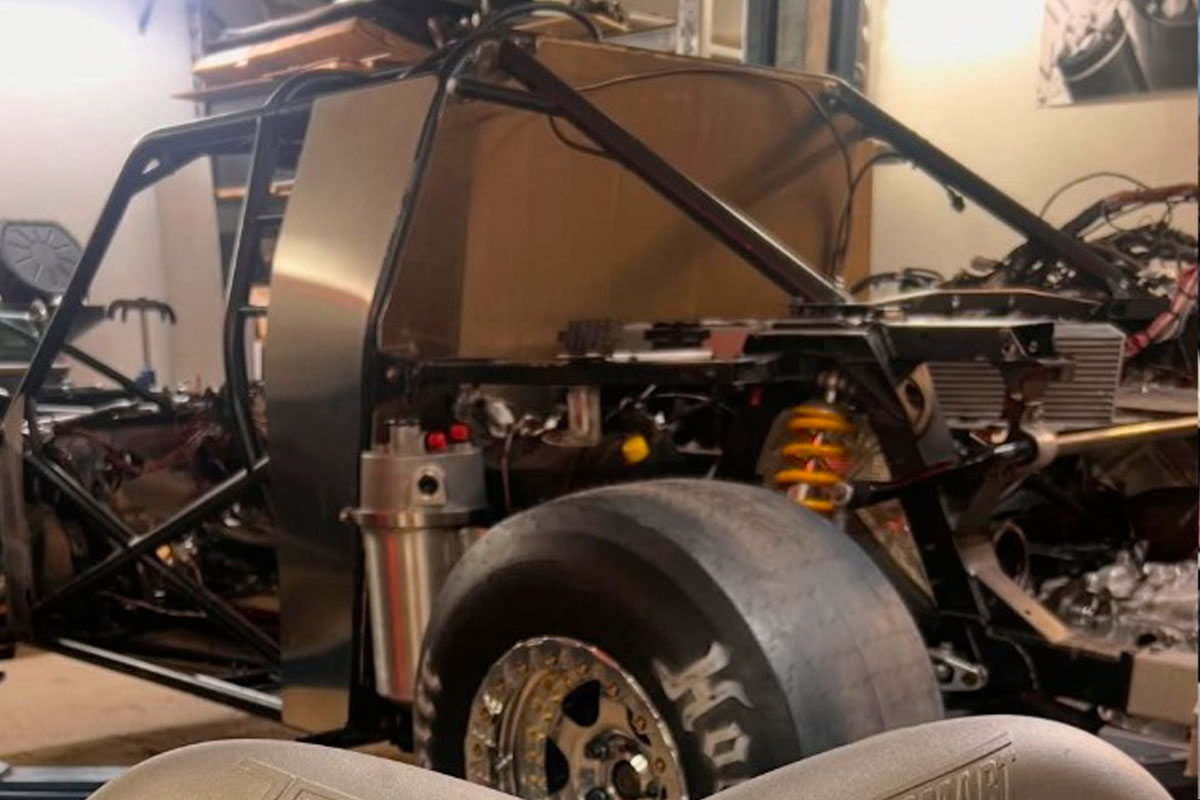
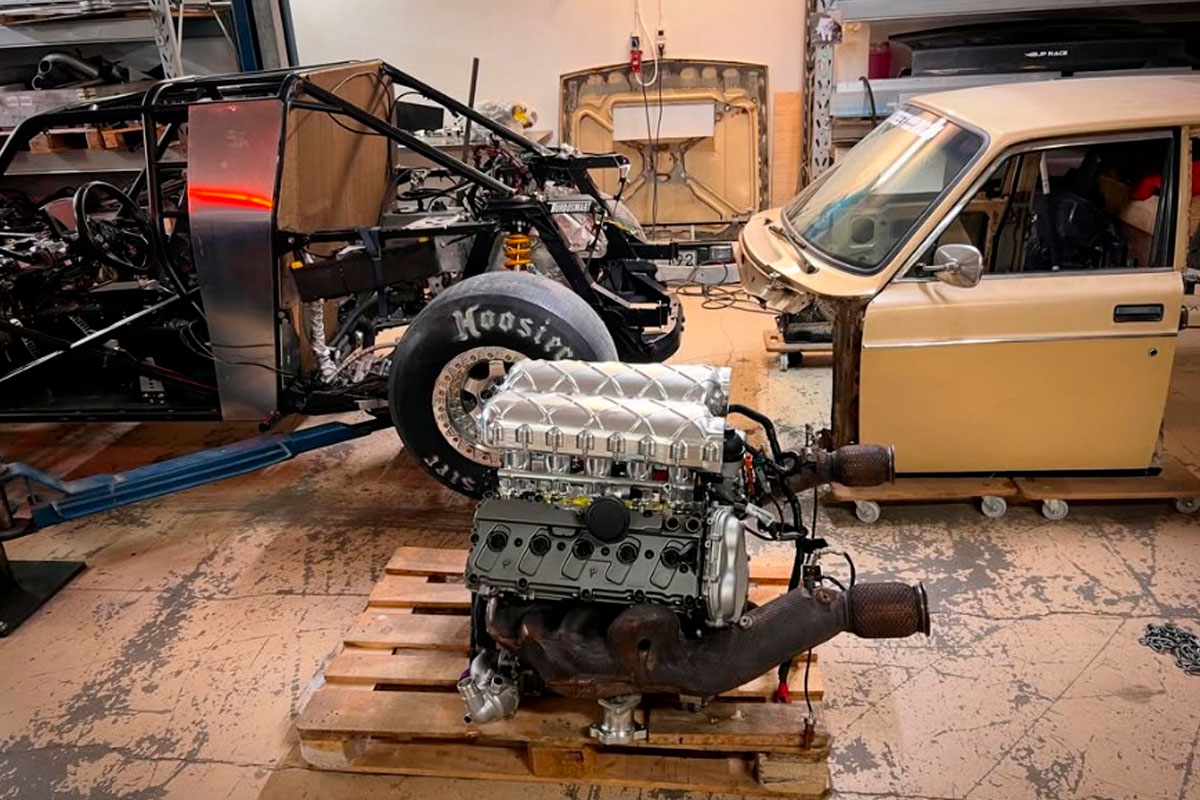
The rear has been extensively redesigned to accommodate the powertrain and the tires needed to transmit power. The silhouette, which is wider and lower, thus takes on proportions much closer to those of a race car prototype than a family sedan. Still, it doesn’t exactly look like a lucky charm.
One feature, however, makes Peter’s job easier: the Volvo 240’s wheelbase is almost identical to that of the Audi R8, with a reported difference of about one millimeter. To properly harness the mid-mounted V10, the powertrain architecture is modeled after the Audi R8, featuring a DL800 dual-clutch transmission and all-wheel drive. The entire system requires significant integration work.
2024: From the First Steps to a Reassessment
In July 2024, Peter managed to start the car and take it for its first drives. The initial test drives, however, revealed several challenges. The all-wheel-drive system and its electronics still required extensive fine-tuning. He also had to learn how to handle a car whose weight distribution was now completely different from that of a conventional Volvo.
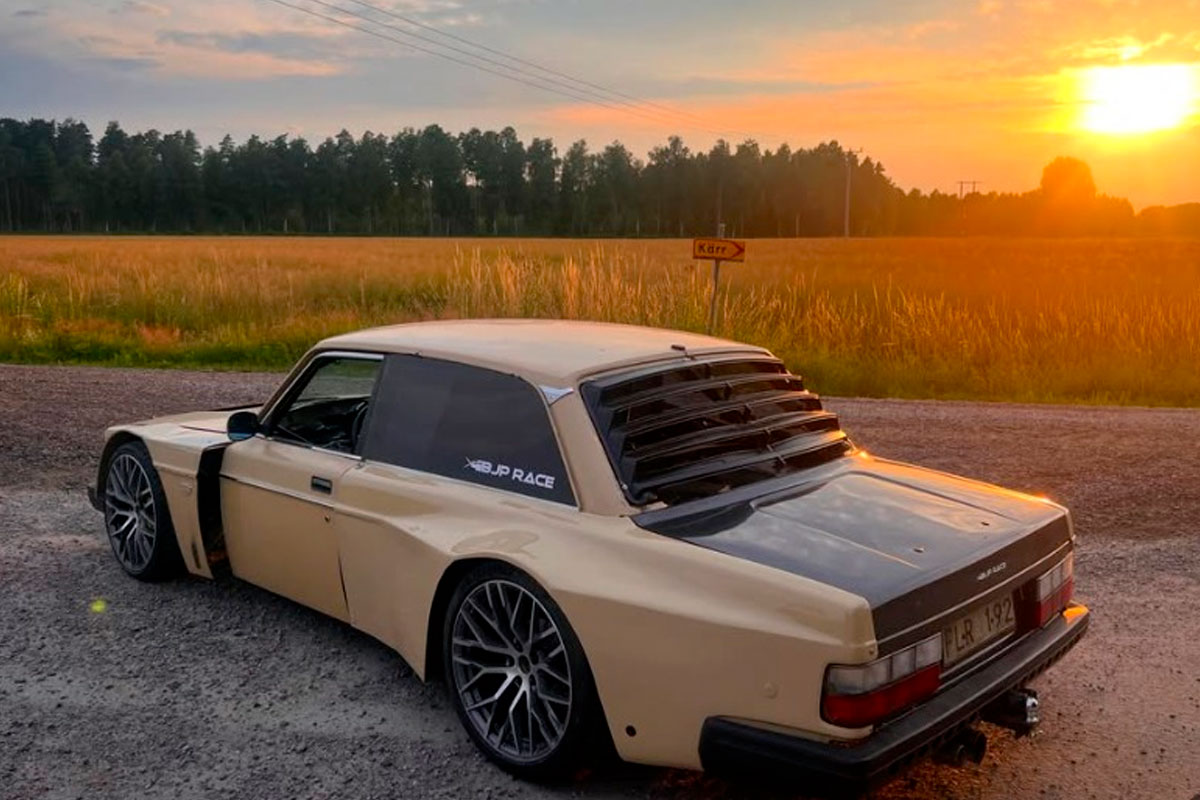
The car is competing in Street Week Sweden 2024 and has begun its first timed runs. In September 2024, it clocked a time of 6.91 seconds over the eighth of a mile, or approximately 201 meters.
But at the end of 2024, Peter Björck was the victim of a burglary in which several important components were stolen. The total value of the stolen equipment is estimated at approximately one million Swedish kronor (about 90,000 €). Peter was therefore forced to halt part of the development and redo a significant portion of the work after having devoted hundreds of hours to building the chassis and integrating the mechanical components. But this stroke of bad luck would ultimately lead to a significant evolution of the project.
2026: A twin-turbo V10 and a new ambition
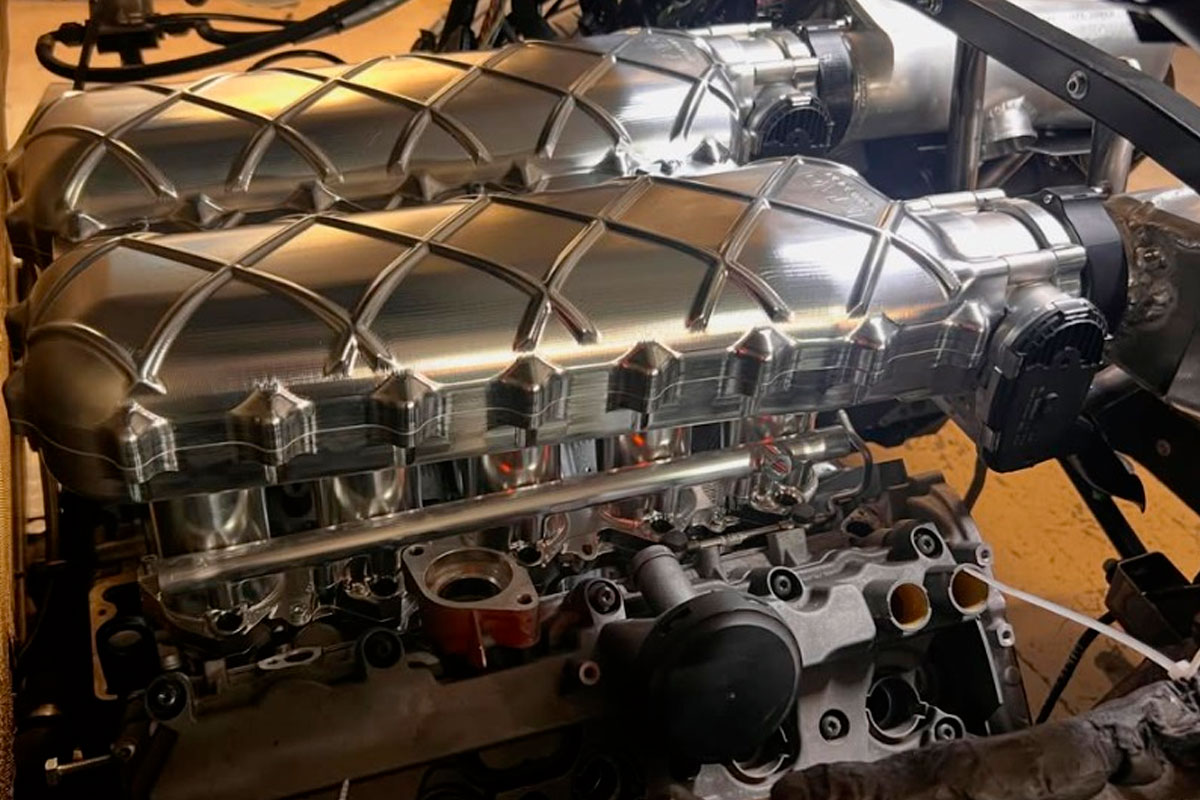
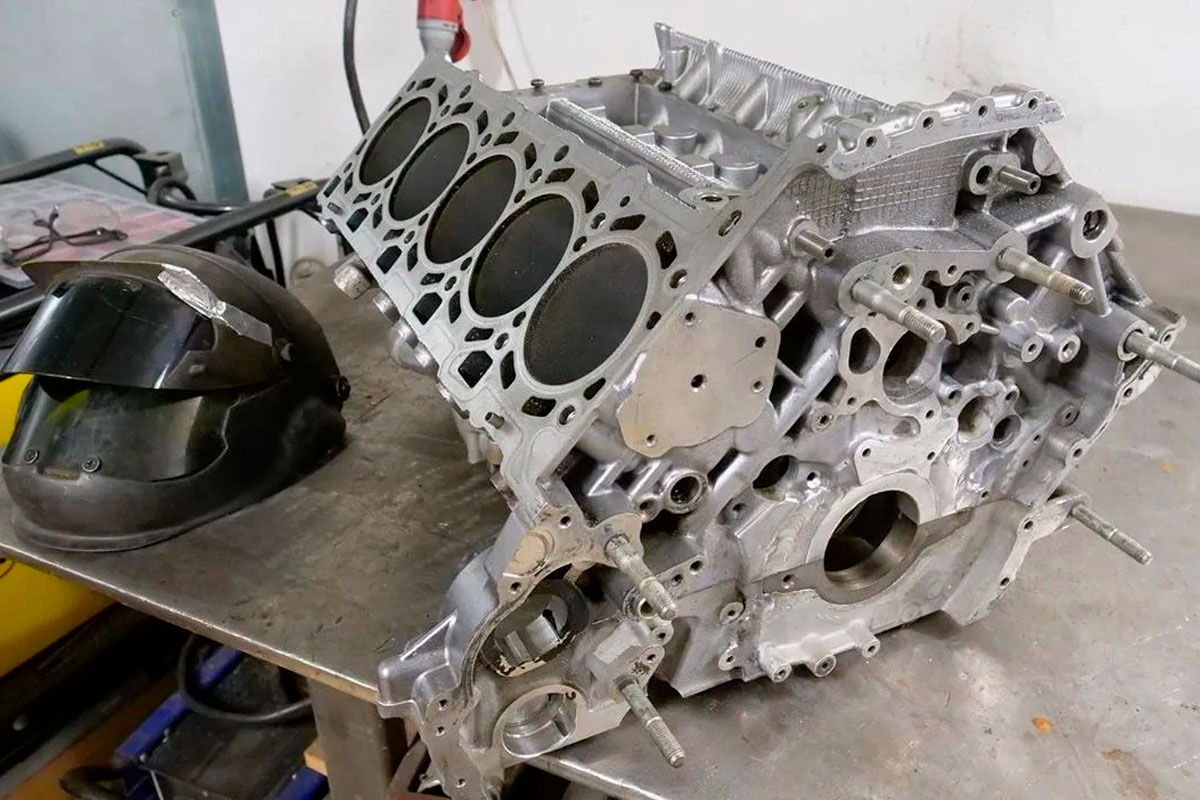
Waffle’s return involves, in particular, a much more extensive overhaul of the 5.2-liter V10. The engine has been completely redesigned to handle significant supercharging. The work focuses primarily on the lower half of the engine, featuring a balanced crankshaft, forged connecting rods, and forged pistons. The intake manifold is also a custom-built component. Machined from aluminum by MAD Sweden, it features twenty injector ports—a detail that underscores the importance placed on the engine’s fuel delivery. This component has been prominently featured on the project’s social media channels and is a product of exceptional quality.
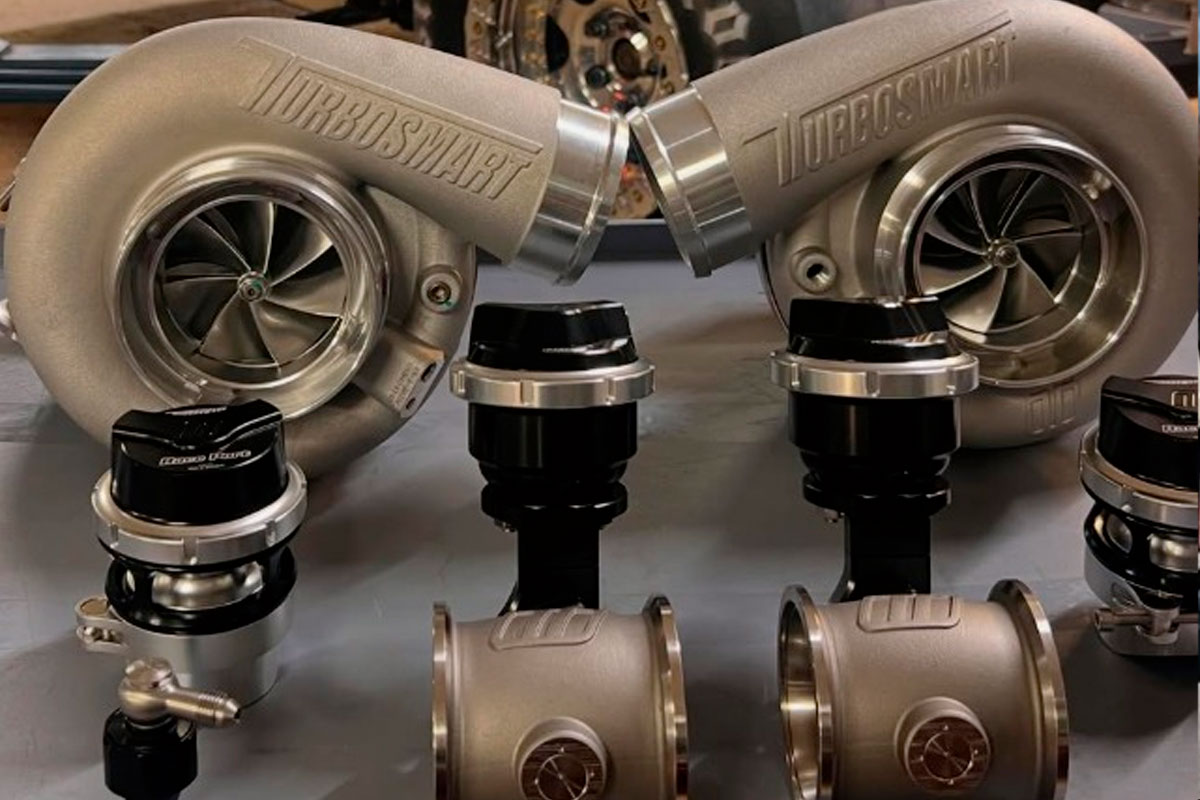
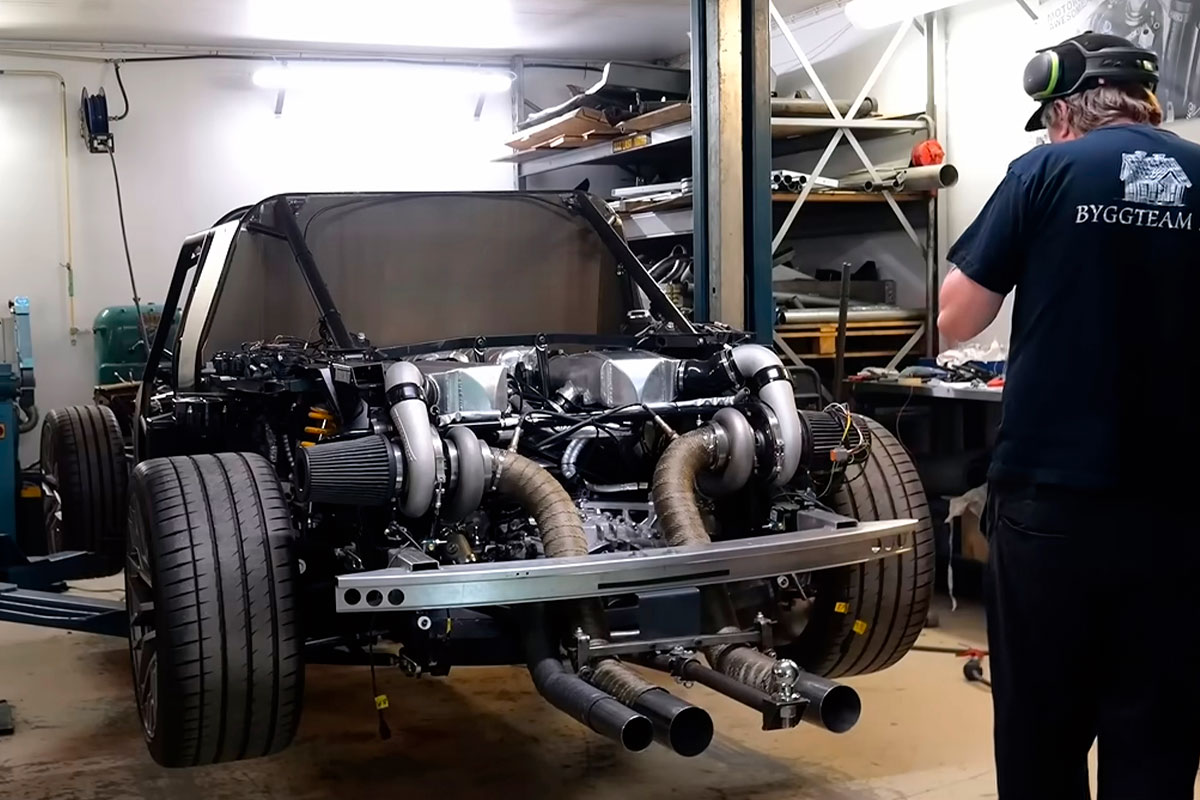
The choice of E85 as a fuel is consistent with this tuning approach: this fuel offers a significant margin against knocking and allows the engine to sustain high power levels.
Despite its tubular chassis, the Waffle weighs approximately 1,437 kg according to measurements reported in 2026. To get closer to one metric ton, the use of carbon-fiber parts is one of the options being considered. However, the task is not a simple one. The V10 engine, the dual-clutch transmission, and the all-wheel-drive components account for a significant portion of the weight. It is also necessary to maintain a structure that is rigid enough to withstand acceleration and ensure the driver’s safety.
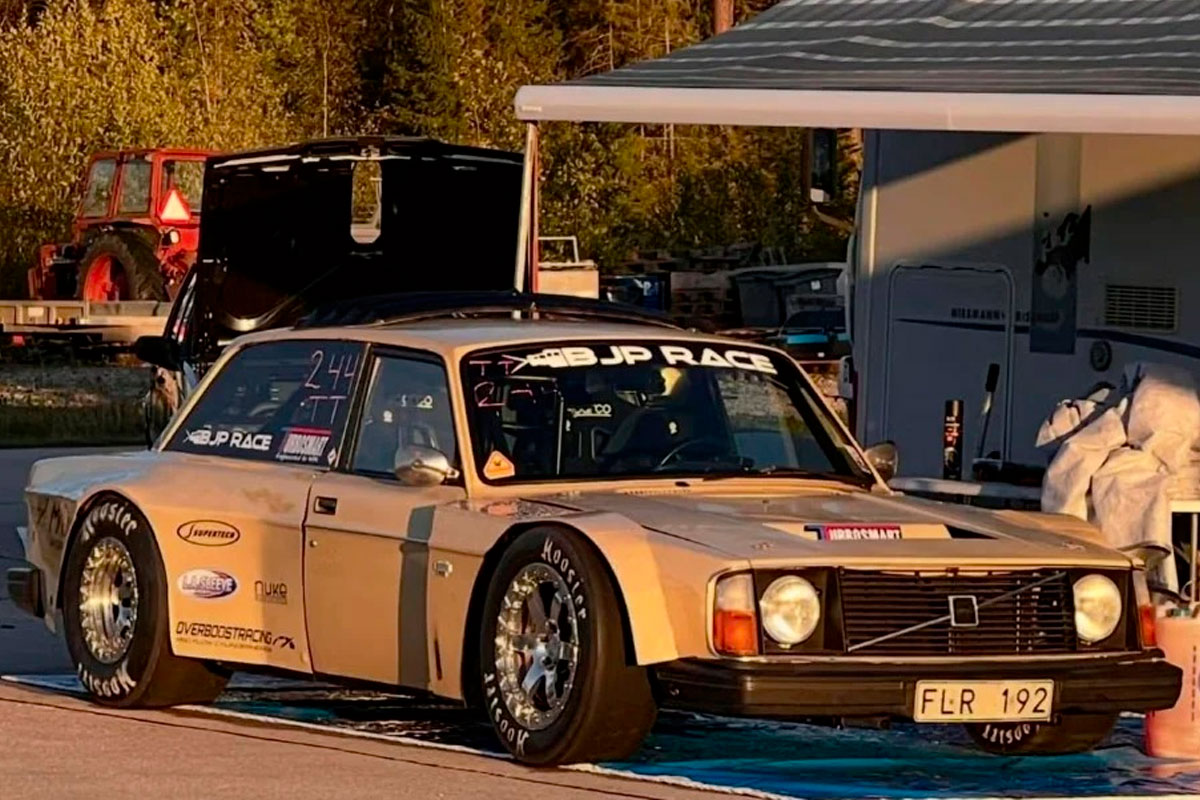
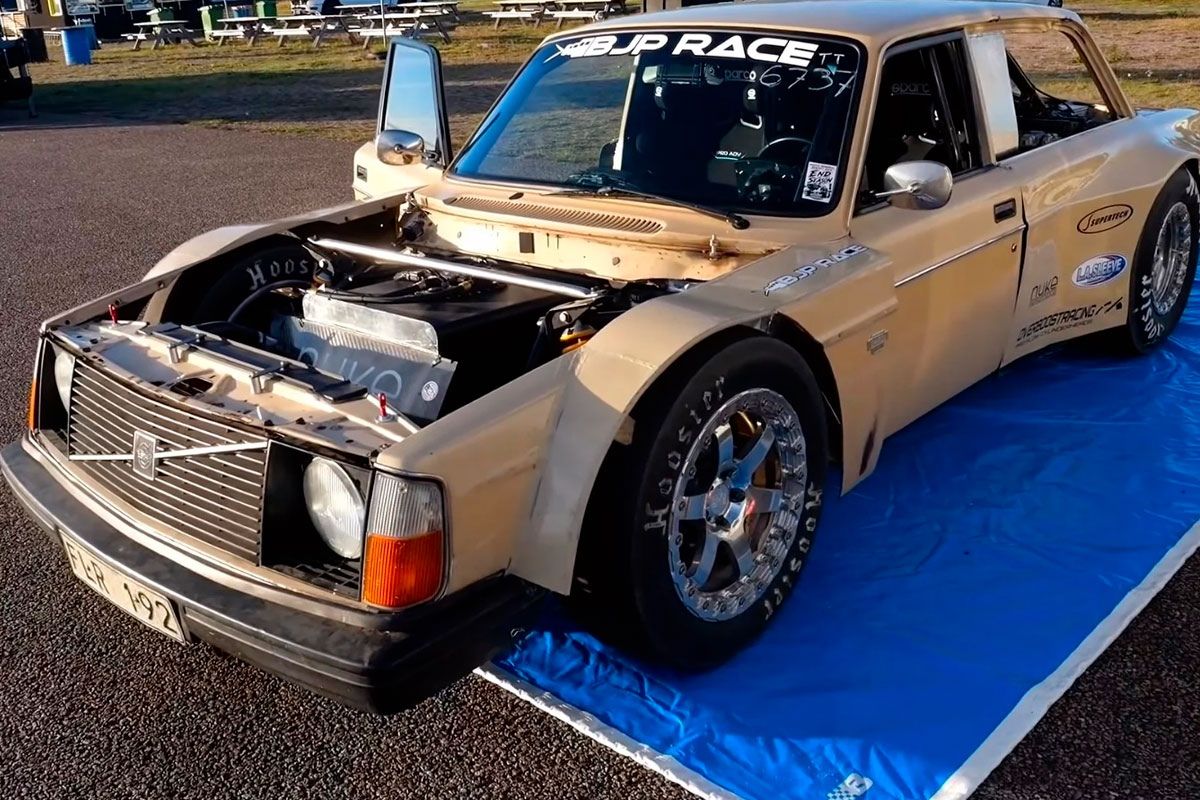
In the fall of 2026, Waffle will finally return to the track at Hudik Raceway in Sweden.
The initial test runs allow for verification of the twin-turbo V10 engine and all-wheel-drive system after the lengthy restoration period. The car first clocked a time of 5.52 seconds over the eighth of a mile, at approximately 218 km/h.
But the tuning challenges aren't over yet. Acceleration off the line, in particular, is a problem. The all-wheel-drive system transfers power so efficiently that the front end tends to lift, which makes accelerating difficult.
Despite these challenges, the best time recorded was 5.34 seconds over the eighth of a mile, at approximately 221 km/h. Undoubtedly the world's fastest waffle.
For Peter Björck, this is a significant achievement after the difficulties he’s faced since the break-in. The car is running well, the twin-turbo engine is performing as expected, and the initial lap times show that there’s still room for improvement.

 English
 French
 Italian
 Spanish
 German
 Japanese
 Dutch