

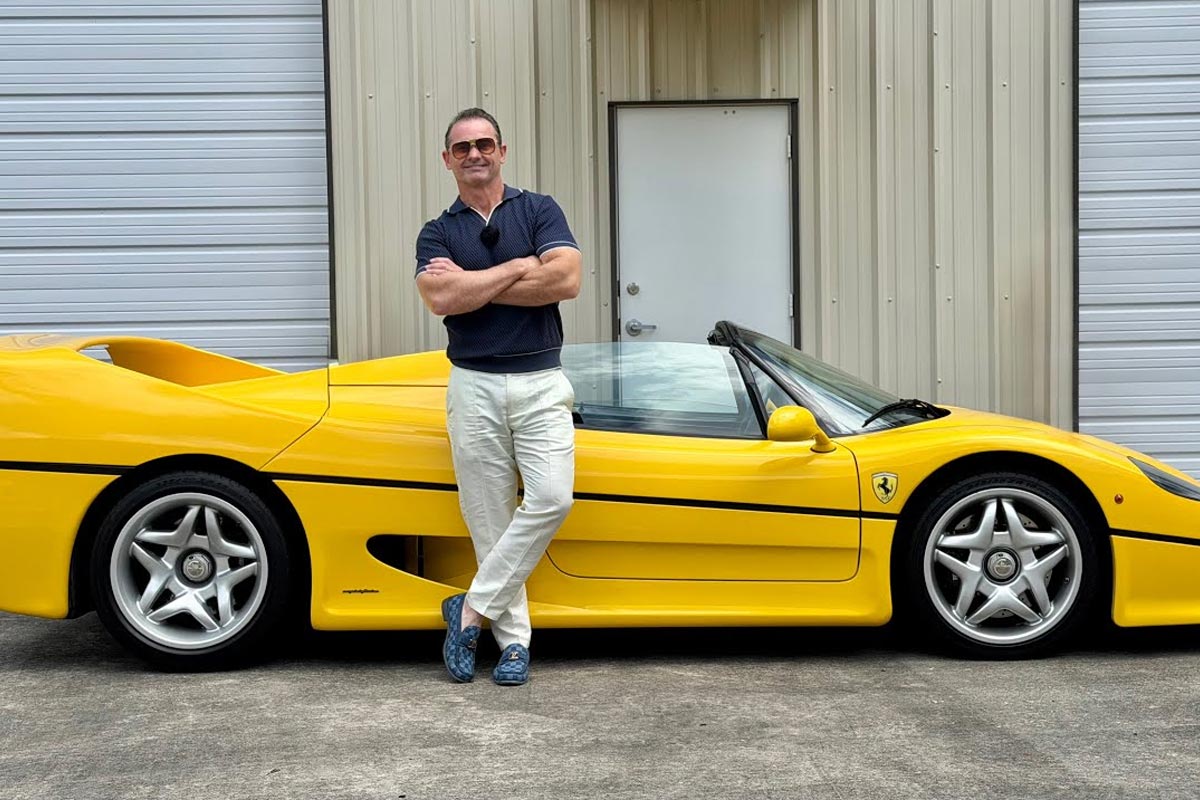
It's the kind of story the automotive industry sometimes produces. It's about a child raised on a farm with no special privileges, who dreamed in front of a Lamborghini Countach poster. Years later, that same person is driving a yellow Ferrari F50, one of the rarest hypercars ever produced by Maranello.
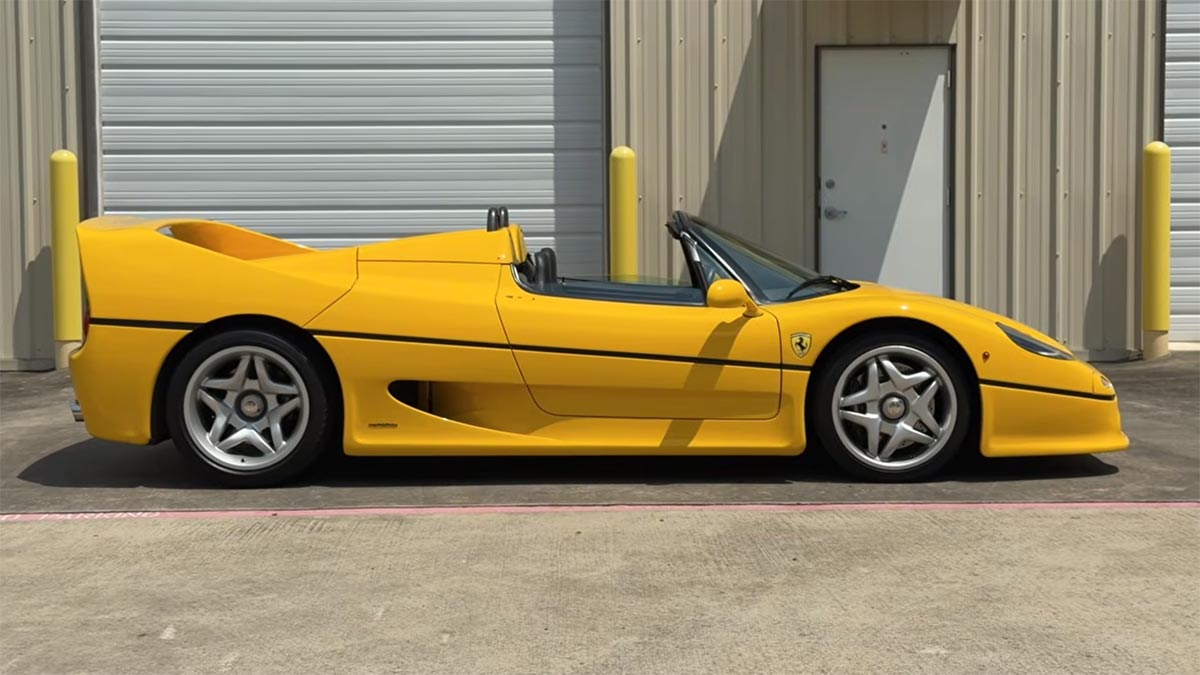
His name: Louis Flory. His car: a Ferrari F50 1996, yellow, chassis number 17. And according to him, this car has an even crazier distinction: it's the first F50 painted yellow by Ferrari.
A dream come true
For Louis Flory, the purchase of this Ferrari F50 was never simply a matter of collecting. He wasn't looking to collect all the great modern Ferraris. Above all, he had two dreams: the F40, then the F50. After acquiring an F40, the next step came naturally. He needed an F50. And not just any Ferrari. For him, while the red Ferraris are magnificent, the F50 is a car that really comes into its own in yellow (as in the old Ralph Lauren F50 Spider).
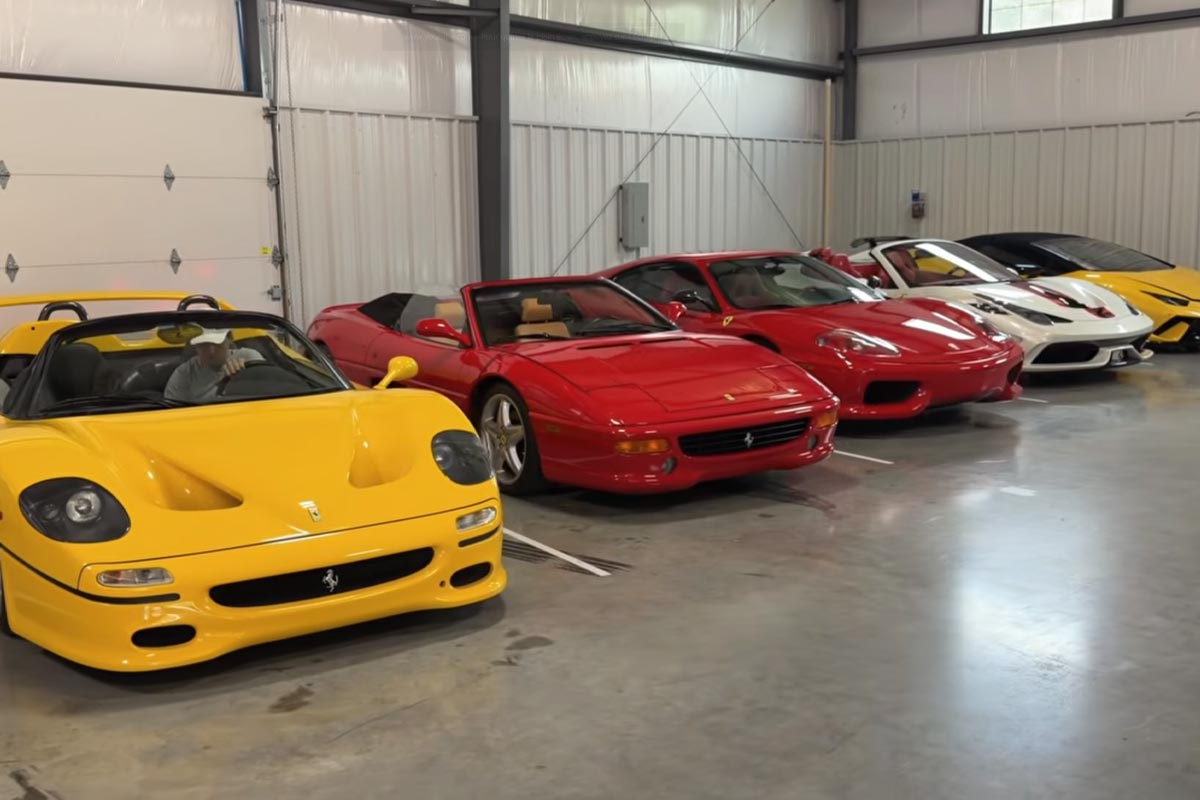
He admits, however, that owning such a car once seemed totally out of his reach. A dream too distant, unreal. Even today, he seems to realize just how far he's come when he speaks of this car, not as a financial asset, but as the accomplishment of a lifetime.
The Ferrari F50, long misunderstood
The Ferrari F50 occupies a special place in Ferrari history. It comes after the immense F40, whose aura long overshadowed its descendant. At the time of its launch, its style and positioning did not meet with unanimous approval. Over time, however, its image has changed profoundly. Its Formula 1-derived V12, manual gearbox and radical architecture made it one of the purest Ferraris of its time. Where the F40 impresses with its brutal character, the F50 offers a different kind of intensity: more mechanical, more sonorous, more accomplished.
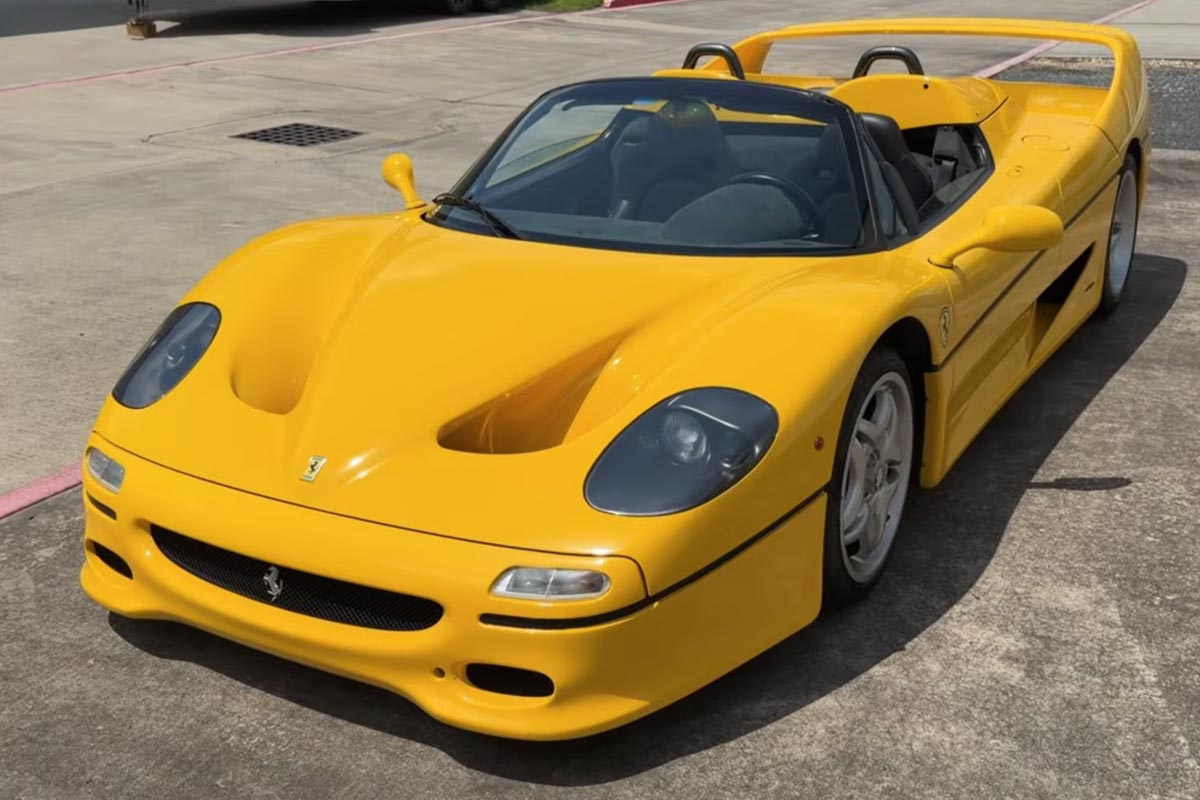
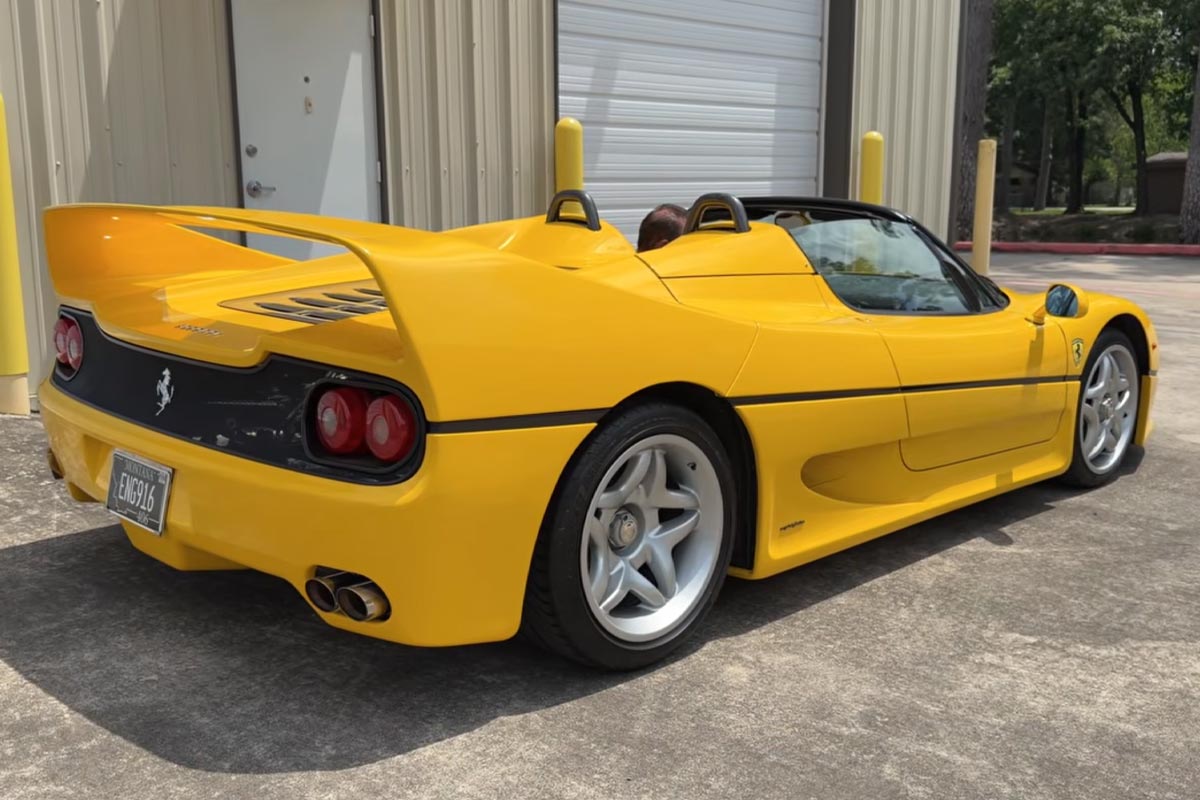
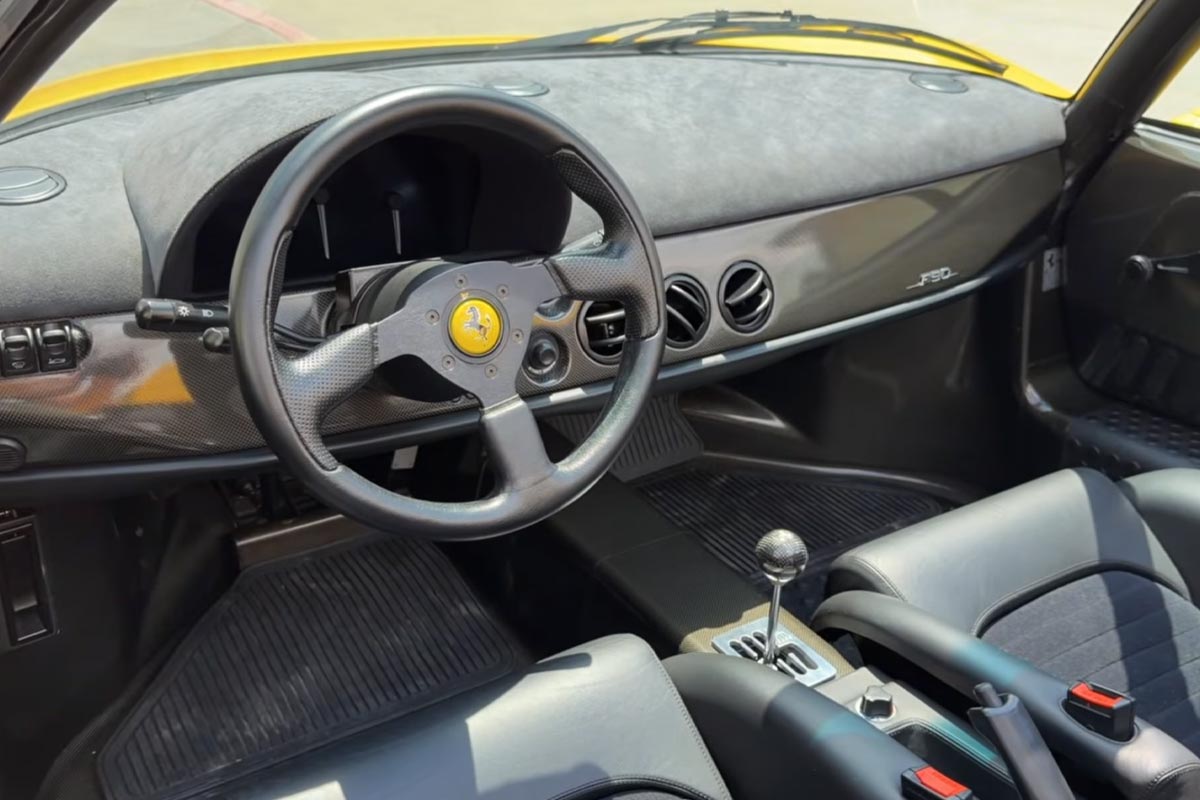
Above all, it's much rarer. Ferrari produced around 1,300 F40s, compared with just 349 F50s. In the case of Louis Flory's example, the rarity becomes almost vertiginous: only 31 F50s were produced in yellow.
Bought for 5 million, now estimated at more than double that amount
The story gets even crazier when he talks about the value of his car. Louis Flory explains that he bought the F50 for around $5 million, at a time when this price already seemed very high. Since then, the market has skyrocketed. According to the video, he recently received an offer in excess of $12 million. He himself estimates that a yellow F50 could be worth between $12 and $15 million today.
“I only have one life, so I lead it”.”
Louis Flory rejects the idea of owning a Ferrari only to leave it immobile. He explains that he drives all his cars, to the point of using an app to ensure that none goes more than 30 days without being driven. With around 28 or 29 cars in his collection, that means driving a different model almost every day!
His philosophy is simple: a car exists to be lived in. Even when it's worth over $10 million. Even when it's irreplaceable. Even when a simple accident could turn it into a financial catastrophe. He makes it clear: he only has one life. He owns this F50 because it brings him joy. So he drives it.
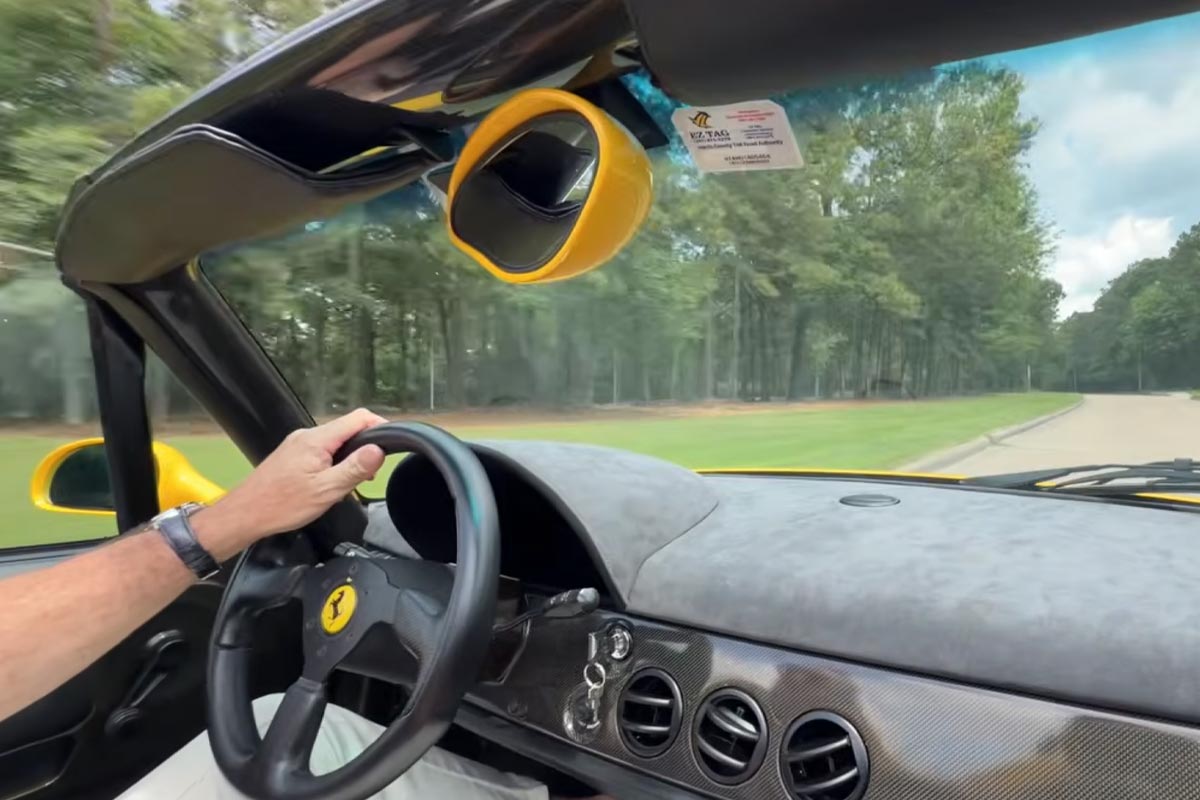

With his wife, he even completed a road trip between Houston and Palm Beach, Florida, at the wheel of this F50. Over 2,000 kilometers, including several hours in the pouring rain. On arrival, the car was presented at Cavallino, where it won a Platinum award and the title of best F50 of the event.

Today, the rarest Ferraris have become financial objects, so Louis Flory's speech makes a sharp distinction. He distinguishes between enthusiasts, who buy to drive, and speculators, who buy to store.
In his view, keeping a car without ever using it is more like collecting art than living the automobile. That's not necessarily a bad thing, but it's not his vision. He prefers to hear the V12 in the cabin, to feel the mechanics come to life, to share the car on the road. And perhaps that's what makes his story so endearing: despite the insane value of his F50, he continues to treat it like a car, not a safe.
Farm boy turned entrepreneur
The strongest part of his testimony, however, is not the one about the Ferrari. It's the part about his background. Louis Flory recounts how he was raised by his grandparents on a farm. His love of cars began at an early age, when at eight he won a Lamborghini Countach poster. He had never seen such a spectacular car. At that moment, something clicked: one day, he would own such a car, no matter how hard he tried.
Later, he left university before graduating. He's still a few hours short of completing his coursework, but he's off to work. With no particular skills, in his own words, but with one certainty: he knows how to sell.
He then finds a job in a recruitment agency. Training is minimal. He was given a directory and asked to call companies. It was 1998, the Internet was still young, and he was learning on the job. He soon realized that he could do better. He doesn't really like the industry model in which he works. He thinks it's possible to bring more value to customers, to change the way things are done, to create something more useful. When he proposes his idea to his superior, the answer is curt: the company has been running the same way since 1974, so all he has to do is go back to his desk. Inwardly, he rejects this answer.
Louis Flory began selling his own model, while still working for the company. He improvised, tested and adjusted. And it worked. At just 24, he claims to generate 42 % of the company's sales. When he realized that the company might be sold, he asked to participate in the exit, believing that his weight in the company's revenues justified it. He refused.
He quit his job and set up his own business the very next day. No customers. No employees. No income. Just an idea, energy and an immense will. In his first year, his company achieved sales of $18 million. Three years later, it had grown to between $70 and $74 million. More than twenty years later, he says he has built up one of the largest private companies in his sector, now run by a team while he enjoys his life, his travels and his Ferraris.

 English
  French
  Italian
  Spanish
  German
  Japanese
  Dutch
Dutch
Schoenes auto