

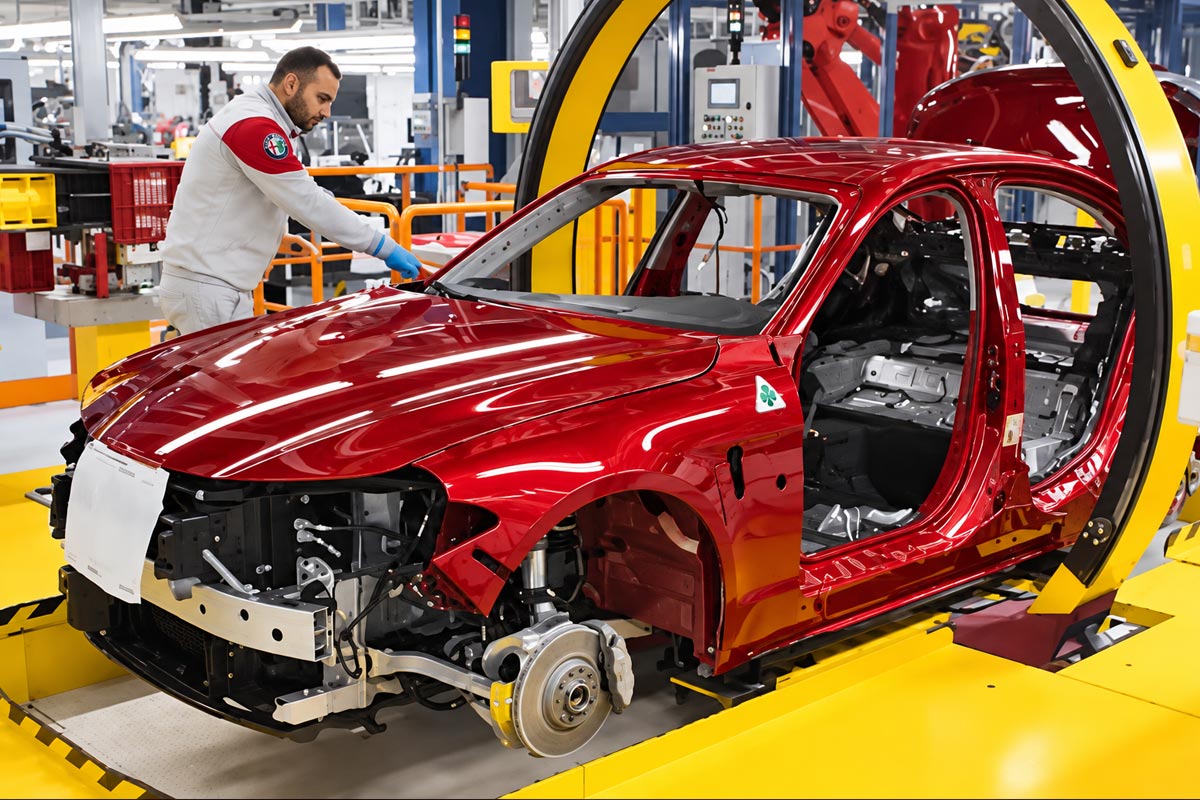
The History of Alfa Romeo Giulia and Stelvio will take an unexpected turn, to say the least. As both models slowly approach the end of their production runs, their manufacturing process is set to move from its current assembly line in Cassino to a much more artisanal approach—one that echoes Ferrari’s philosophy in Maranello.
There was a time when the Cassino plant had to focus above all on producing cars quickly. During the Italian plant’s heyday, up to 400 cars could roll off the line in a single shift. The priority back then was maintaining the assembly line’s pace, even if it meant having to rework vehicles later that required minor adjustments. Those days now seem long gone. Stellantis is planning a major reorganization of the Piedimonte San Germano plant: the Alfa Romeo Giulia and Stelvio will be leaving the Building 2 to join the Building 0, using a radically different manufacturing method.
Fewer cars, much more manual labor
In this new space, there will be no more scrolling through the Alfa Romeo at the pace of a traditional production line. Production rates will be slowed down, more tasks will be performed manually, and workers will have more time to work on each car.
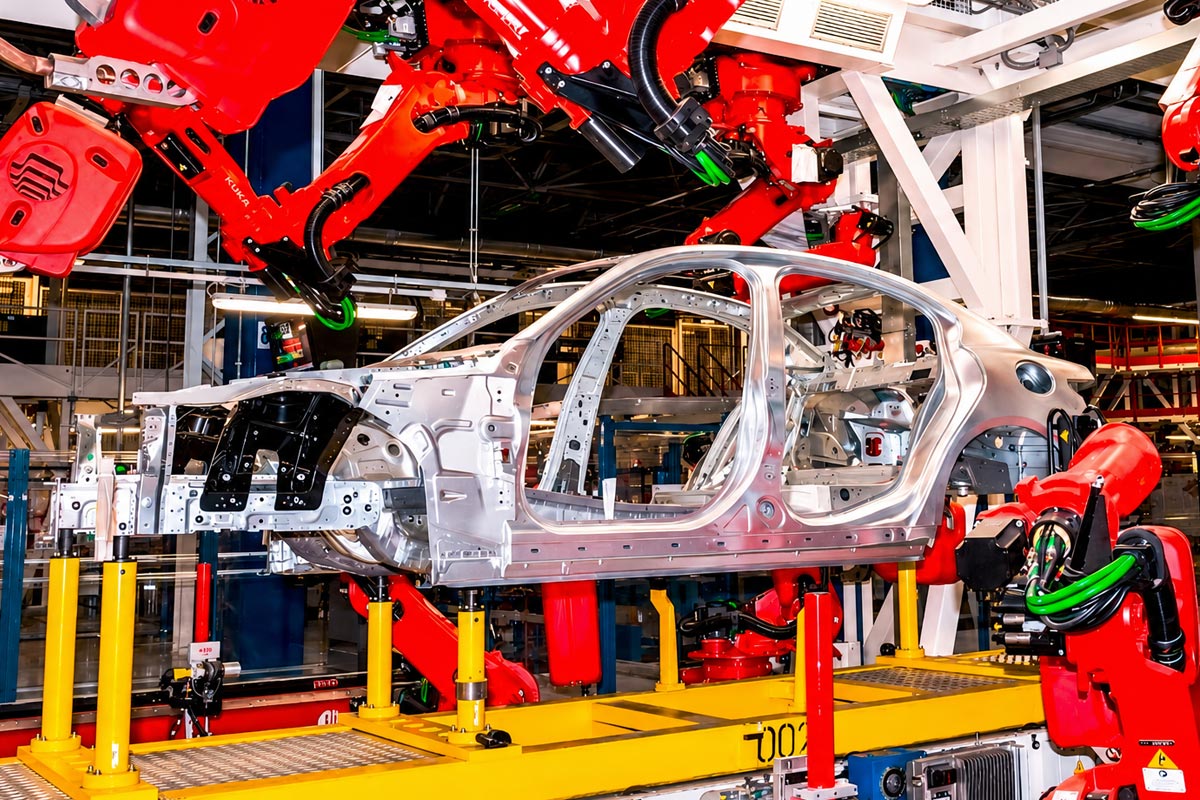
According to the Italian media outlet AlessioPorcu.it, According to the source of this information, the employees involved must also undergo training to adapt to these new methods. The approach thus resembles that of small-batch luxury production: lower volume and greater attention paid to each vehicle. This philosophy is reminiscent of the one practiced at Ferrari in Maranello. It lends a special character to the latest Giulia and Stelvio models of this generation. Production is set to continue through the end of 2027, pending their replacements.
Behind the comparison with Ferrari lies a much less glamorous reality
However, it would be misleading to view this transformation as merely an effort to make the Giulia and Stelvio even more exclusive. If Cassino can afford to abandon the high-volume production model, it is primarily because sales volumes have plummeted.
In 2017, the plant produced 135,263 cars. In 2025, it assembled only 19,364, a drop of 85.7 %. And the first half of 2026 did not reverse the trend: only 6,700 vehicles rolled off the assembly line in Cassino, including 4,125 Giulia and Stelvio models and 2,575 Maserati Grecale models.
As of July 22, 2026, the plant had operated for only 45 days out of 203 calendar days, producing approximately 7,000 cars. In addition, more than 500 employees were subject to solidarity contracts (a form of partial unemployment) that reduced their working hours. The almost artisanal manufacturing of the Giulia and Stelvio thus appears to be as much an industrial choice as it is an adaptation to production levels that have become very low.
Meanwhile, the Building 2 must be vacated to make room for more Maseratis. The specific models involved have yet to be confirmed. For the Giulia and Stelvio, however, the end of their production run promises to be unique: after years of assembly-line production, the last Alfa Romeos of this generation will soon be assembled almost like luxury cars.
 English
  French
  Italian
  Spanish
  German
  Japanese
  Dutch
Dutch
It’s depressing to think about how they let these two masterpieces fall by the wayside. Insignificant updates, the removal of customization and engine options, and marketing and after-sales services on par with Dacia—not even close to a premium brand.
No wonder sales began to plummet after 2018.