

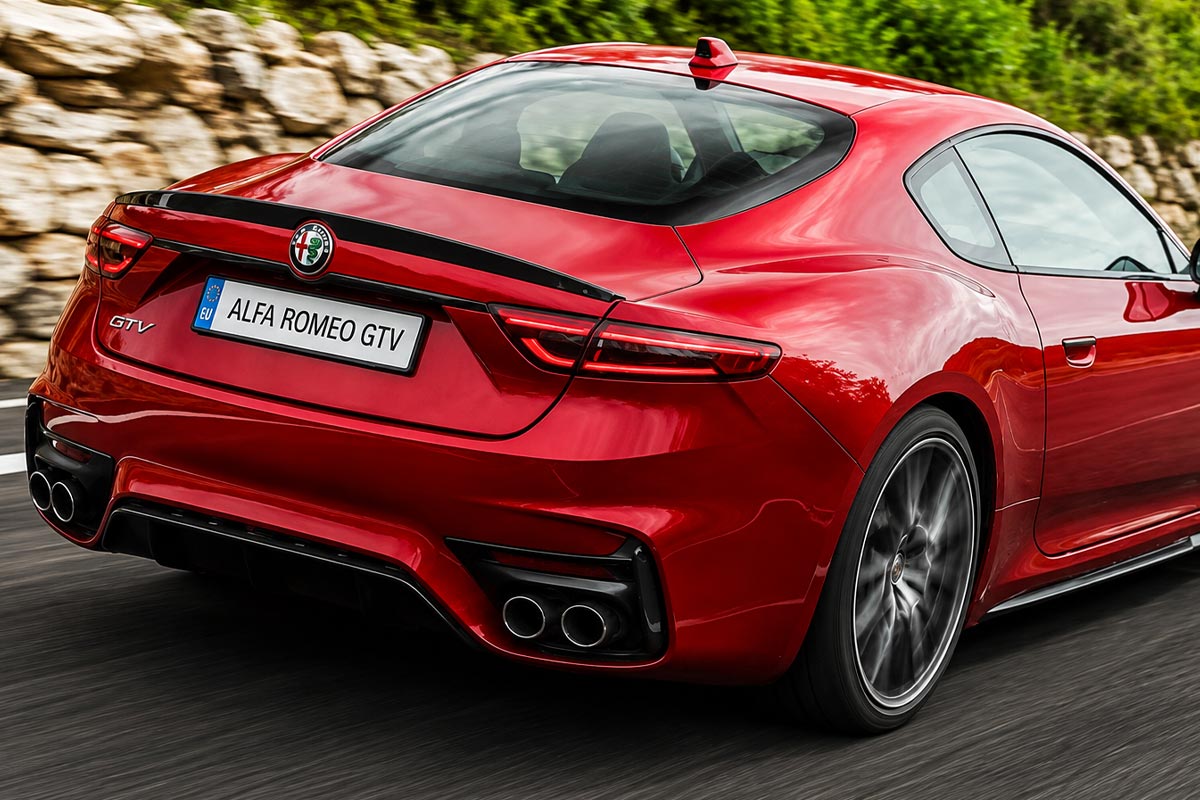
Let's go back ten years. Alfa Romeo This comes after a period during which the brand launched the 4C in 2013, after the MiTo in 2008 and the Giulietta in 2010. But Sergio Marchionne has much bigger plans. His goal is to completely revitalize Alfa Romeo and finally turn it into a true competitor to BMW.
Billions of euros are being invested. A new platform, new engines, a new lineup: everything must change. The Giulia appears, followed a year later by the Stelvio. The ambition is immense, with a goal that seems almost unrealistic today: to reach 400,000 annual sales. We know the rest by heart.
It's not a failure… it just didn't work out
It's 2026, and the Giulia and Stelvio are still in the lineup, even though their run is now coming to an end. In the meantime, the Tonale in 2022, built on a platform derived from the Jeep Compass. After a strong start, sales plummeted, and the model no longer really meets market expectations.
At the other end of the spectrum is the Milano, which was quickly renamed Junior, is a close cousin of the Peugeot 2008, which is assembled in Poland. It is now largely this model that is driving Alfa Romeo’s sales. And let’s be realistic: the brand is not expected to exceed 60,000 sales this year.
Ten years after the overambitious plans of the Marchionne era, Alfa Romeo seems to be returning to its roots as a more regional brand, with more modest product ambitions. Stellantis appointed a new CEO in 2025, and Alfa Romeo also replaced a significant portion of its management team. Santo Ficili has been leading the brand since late 2024, Gilles Vidal became [...], during the summer of 2025 Director of Design for European Brands, and Arnaud Belloni recently took over as head of marketing for European brands. So there have been a lot of changes at the top, and the product strategy is evolving as well.
A much more streamlined Alfa Romeo lineup
In the coming years, we expect a facelift for the Junior, followed by the Tonale’s successor. The latter is expected to be a close cousin of the Peugeot 3008 and could also indirectly take the place of the Stelvio: with dimensions falling between those of the two current SUVs, it would allow Alfa Romeo to streamline its lineup. A new Giulietta is also expected, built on the STLA One platform, and will likely share many technical similarities with the future Peugeot 308.
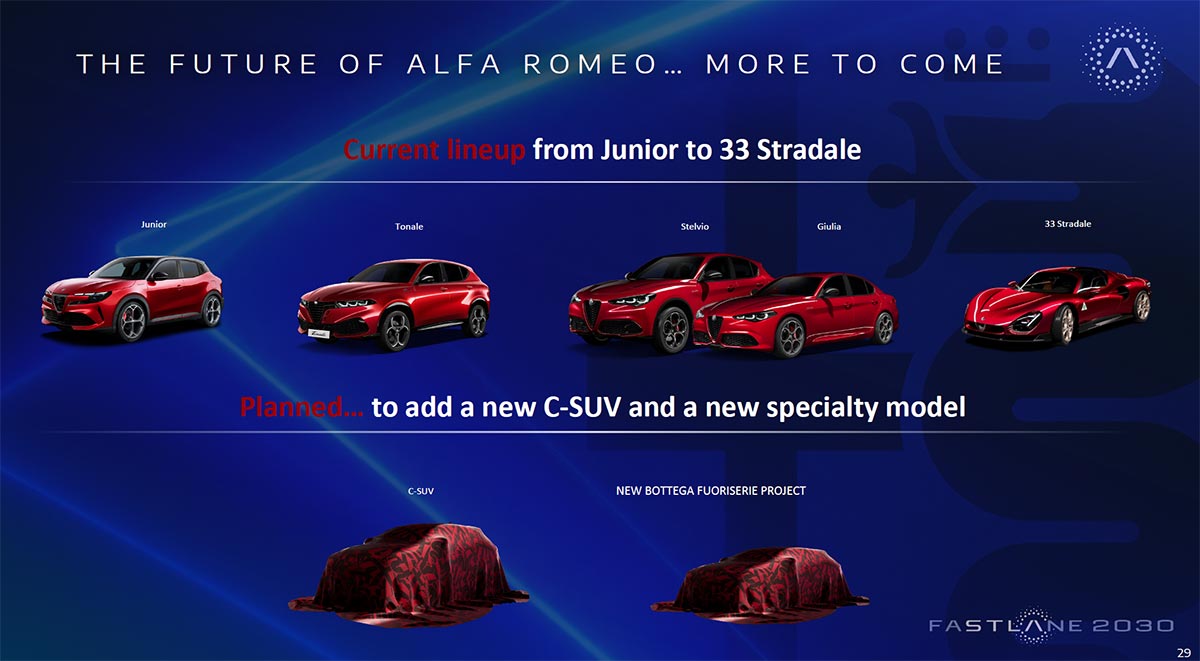
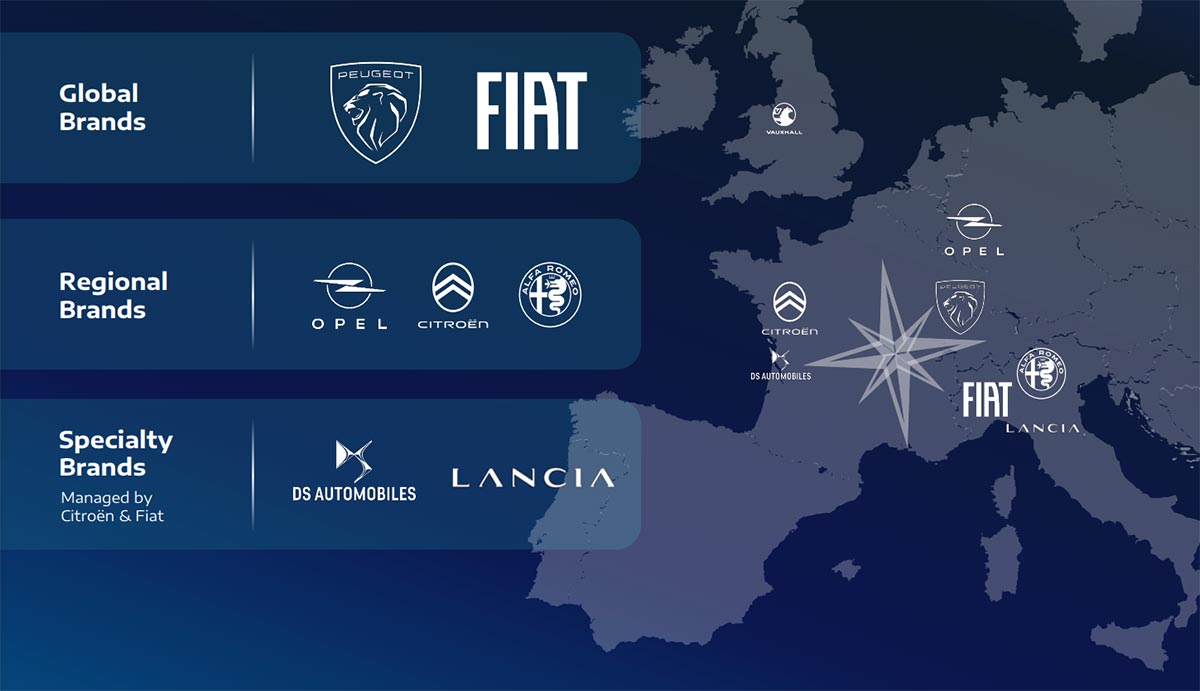
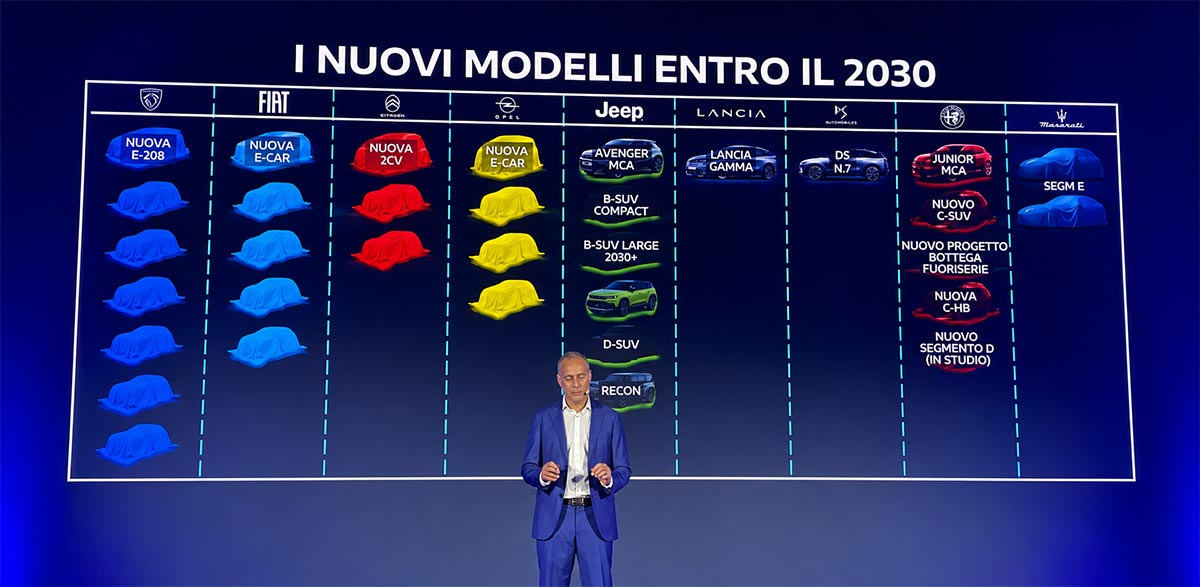
But one question remains: the D-segment. That’s because the new Giulia and Stelvio—which were expected to be built on the STLA Large platform—have been canceled. Instead, we simply know that a new D-segment model is in the works, with a launch expected by 2030. So, what can Alfa Romeo really offer?
It's hard to imagine an SUV
In our view, this mysterious model is unlikely to be an SUV. If the future Tonale is nearly as large as the current Stelvio, why would Alfa Romeo want to develop an even larger vehicle for the European market? An Alfa Romeo equivalent to the BMW X5—likely priced at around 80,000 euros or more—seems difficult to reconcile with the brand’s current sales volumes and its new, more reasonable ambitions.
That would leave two main possibilities: a sedan or a coupe. In either case, Alfa Romeo could turn it into a sort of «halo car»—a model positioned at the top of its lineup and designed as much to boost the brand’s image as to drive sales volume. But we know Stellantis: to make such a project viable, it needs to be a joint effort.
Dodge, Peugeot… or Maserati?
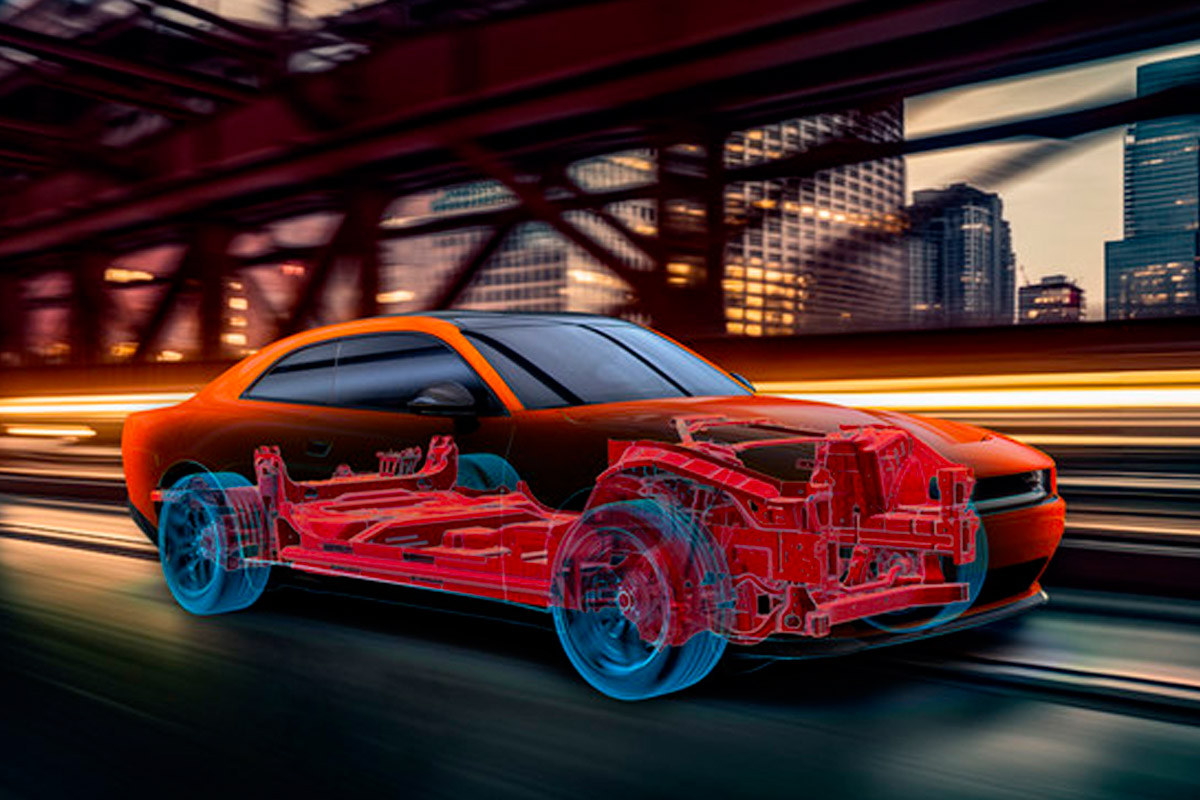
One possibility leads us to the United States. The new Dodge Charger is built on the STLA Large platform and is available as both a sedan and a coupe, with a length of nearly five meters. Technically, it’s not impossible to imagine an Alfa Romeo using this platform. But it would then risk becoming the group’s only European car to use the STLA Large platform, which seriously undermines this hypothesis.
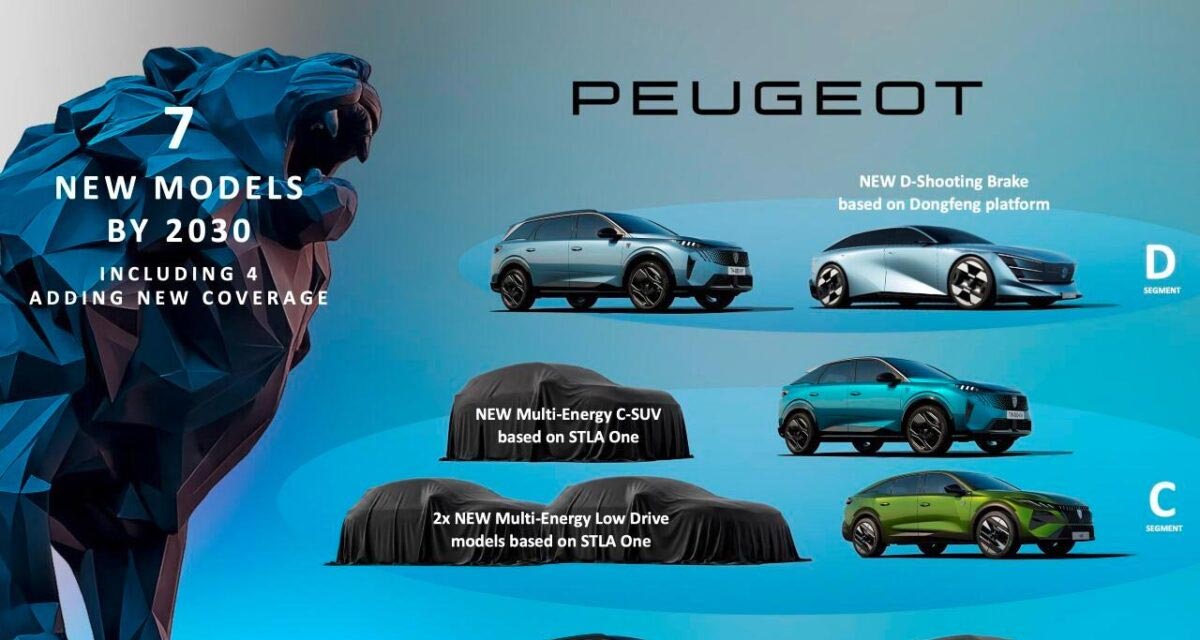
Second possibility: Peugeot. The French automaker is expected to launch seven new models by 2030, including two in the D-segment. Among them is a «shooting brake» that would use a Dongfeng platform. Here again, synergies would be possible. The question remains: how could Alfa Romeo convince its customers to accept a high-end Italian model derived from a Peugeot and based on a Chinese-designed architecture? The marketing challenge would be a delicate one.
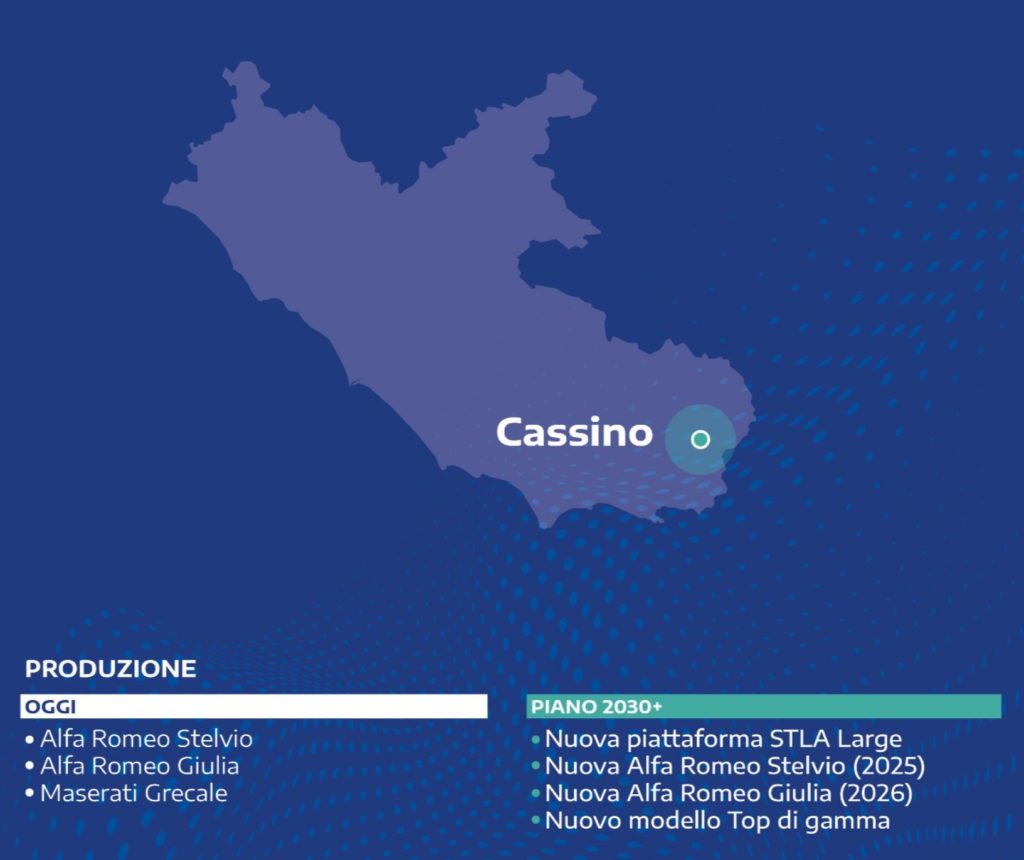
And then there’s Maserati. This is probably the most natural path, both geographically and industrially. Alfa Romeo and Maserati have the same CEO, and the two brands share the Cassino plant, which is currently significantly underutilized. A future flagship Alfa Romeo developed in parallel with a Maserati would therefore make a certain amount of sense.
The problem is that Maserati’s future itself remains particularly unclear. The brand is seeking an industrial partner, and its new product plan is due to be presented by the end of 2026. Under these circumstances, it’s difficult to draw any firm conclusions today about a potential merger between the two brands.
Alfa Romeo's Big Mystery by 2030
So, which D-segment Alfa Romeo will actually make it to market? For now, there’s no clear answer. The solution could come from the United States with Dodge and STLA Large, from France with Peugeot, or from Italy with Maserati. Sedan, coupe, or shooting brake? Everything is still up in the air.
One thing, however, seems much clearer: before the possible arrival of this high-end Alfa Romeo, the brand is expected to operate with three models based on three different architectures: the Junior on eCMP, the future Tonale on STLA Medium, and the new Giulietta on STLA One.
After once dreaming of producing 400,000 cars a year, Alfa Romeo seems to have changed its philosophy. Perhaps the question is no longer how to cover every segment, but rather how to find the right model, at the right price, and with the right synergies. And in the D-segment, that equation is still far from being solved.
 English
  French
  Italian
  Spanish
  German
  Japanese
  Dutch
Dutch
Sergio Marchionne died before seeing what became of Alfa Romeo. He was opposed to the merger with PSA, and he was right. We owe Marchionne the Giorgio platform, the best sedan and SUV on the market in the form of the Giulia and Stelvio, even though sales were disappointing (likely due to marketing and the lack of hybrid options).
As for Alfa Romeo's future, there's reason to be concerned. We're fed up with SUVs, PureTech engines, and Peugeot platforms.
I completely agree, and I get immense pleasure from driving a 2019 Stelvio Quadrifoglio. I’ve driven 100,000 km with only the ceramic brakes and power steering replaced. I have a super-sporty car, but of course the Giulia must feel even better!!
Last December, I bought a 2020 Giuia Quad with 30,000 miles for less than half the original sticker price, and it’s magical. This was sometime after I rented a Stelvio Quad through Turo. Both are fantastic vehicles, in my opinion. I haven’t driven it enough yet to say whether or not it will have many problems, but so far it’s been perfect.
I don't have a Giulia or Stelvio Quadrifoglio—just the Giulia 2.0 with 280 ch.
On the other hand, I’ve had the chance to drive the Giulia and Stelvio Quadrifoglio several times, both on the road and on the track (notably at the Scuderia Adamich in Varano di Melegari), they’re fantastic—and even more exciting than the Porsche 911s, which I know well from having driven them on the track.
And we have Marchionne to thank for the mess FCA found itself in, which forced it to merge with PSA.
Marchionne isn't just about the Giorgio platform or the beautiful Alfas. He's the one who killed off the Punto in favor of the 500, who brought about the near-disappearance of Lancia, and who made financial decisions rather than industrial ones, among other things.
What mess? He didn't discontinue the Punto because of the 500, but because it wasn't profitable. His plan was to acquire Opel from GM and develop a new Punto in conjunction with a new Corsa. The deal fell through due to opposition from German politicians.
Lancia was already dead before he arrived, with massive flops like the Lybra, the Kappa, and the disastrous Thesis, which sold fewer units in eight years than it was supposed to sell in one year.
It was impossible for a company in recovery, such as Fiat (later FCA), to invest billions of euros to revive it.
His decisions were definitely business-oriented.
Correction: It did not replace the Punto for the sake of profitability. But it killed off the Punto—the brand’s best-seller up to that point—by failing to significantly update it, in favor of the 500.
They didn't update it because it wasn't worth the effort after the failed deal with GM.
The 500 was always more profitable than the Punto.
@Stanislas…
The Stelvio came out well before the merger… 2016 versus 2021, and it's an SUV!
The Tonale is also an FCA product… Not a Stellantis product.
Peugeot's dealerships are keeping the brand afloat for now!
Loving a brand is one thing… Buying it is another… That’s Alfa’s long-standing problem.
Personally, I'm in favor of a MiTo based on the 208 and a Giulietta based on the 308, but with Italian engines.
I don't like SUVs either, but I'm not the one calling the shots!
«Peugeot's dealerships are keeping the brand afloat for now!»
The only Peugeot platform is the Junior, the entry-level model. And it’s far from being a game-changer. We need to stop talking about «Peugeot platforms saving Alfa Romeo»—it’s no better, far from it.
Did I mention a tidal wave!?
The Alfa Romeo Junior is approximately 75 % to 82 %.
Sorry… But it saves the day!
Go ahead, keep spitting on the savior …
I'm not making this up.
That said, there's a MiTo and a Giulietta missing!
«Go ahead, keep spitting on the savior …»
No, I'm stating a fact.
«The Alfa Romeo Junior ranges from about 75 % to 82 %.»
Sources?
A quick note on the Mercedes investment, which ultimately didn’t turn out as promised! The initial plan was for 6 billion over 5 years. In the end, only 3.2 were allocated, resulting in the Giulia and Stelvio. The blame lies with the U.S. market, which failed to deliver the expected 100,000 sales. In short, rather than returning to Europe and launching a replacement for the Giulietta… nothing, or almost nothing!!
Marchionne.;)
It's Marchionne—he's presented so many product plans that never came to anything.
This resulted in a dearth of new models following the 2021 merger… After that, it takes a lot of work to revitalize the brands.
In the midst of the transition from gas-powered cars to electric vehicles.
"Just do it"... Easy to say.
After 2020, the entire global automotive industry has been in crisis—making comparisons to the period before that makes no sense!
«After 2020, the entire global automotive industry has been in crisis—comparing it to the period before that makes no sense!»
It's fine to focus only on what interests us, but that doesn't hold up against reality.
Some brands, however, weathered the so-called crisis.
Since the merger, platforms and engines have been shared. Well, in theory, at least.
Well, maybe… yes, if we prioritize the industrial aspect over the financial one.
It’s important to remember that it’s decisions made at the top that lead to the situations these groups face.
A nice package.
As the owner of a Stelvio, I feel the manufacturer has overlooked a fundamental aspect: the vehicle is nearly perfect, but one thing falls short—the customer service. When I contacted them for more details, they failed to meet my expectations.
Purchased in Switzerland and imported into Spain—nothing came of it.
If Alfa Romeo is truly destined to become a regional brand, what’s the point of having a D-segment lineup, given that the bulk of its sales volume comes from Asia and the United States?
The future Tonale may already have dimensions similar to those of the current Stelvio
The future Giulia has no existing model to build on, so in my opinion, we should just forget about it.
With two C-segment vehicles and a B-SUV, Alfa is positioning itself in the most promising segments, which seems like a sound strategy to me.
To win people over, it will take Italian engines and truly polished designs—which isn't the case with the Junior
Italian engines for Italian brands—to us, that seems like a no-brainer… but it isn’t for FCA and its push for standardization across the entire group. I don’t see this changing for the better, especially given the current market and the cost of oil. It’s better to stick with the old Italian models.
Create the new Alfetta with a sporty, sedan-like look and an eye on the price; Alfas must captivate the public with their design, color scheme, and price. I remember that the 75 was based on the Giulietta’s design, with its wedge shape and legendary rear end that drove us young people wild. It would be a dream to have a new ALFETTA with the name on the dashboard and so much charm—to see it once again on the roads of Italy and around the world. FABIO RIZZOLINI, BRESCIA
The 75 was the car I learned to drive in. But it was an Alfa Romeo, plain and simple. Not some Alfa-Peugeot-DS hybrid or anything like that. It was a car unlike any other. Only the 1600 had 110 CV back in ’85. De Dion axle. Transaxle. Would you buy an Alfa Romeo SUV that’s just a Peugeot with a different body? I wouldn’t.
It didn't go well, but the Alfa Romeo Giulia is a fantastic car!👍♥️
The Alfa Romeo Giulia Ti is a work of art on wheels, and it is so underrated.
Unfortunately, Alfa Romeo is gone 😔
Had 159 with a lot of problems. .
I've never had any problems with my Volvo XC60
Next up is the Zeekr x8 Ultra Plus
The future is China 🇨🇳
Sorry, but these ideas are based on a flawed premise. You have to start with the car that, by virtue of its name, has made history in terms of quality, rather than relying on the idea that “more is better.” That’s not the right approach, Zeekr.
I have a 159 2.4 JTDM. It's 18 years old, has 350,000 km on it, and runs without any problems.
Alfa made just one mistake! They should have released the Giulia as a sport wagon. Many Alfisti don't want a sedan or an SUV.
It was already like that with the 156. The ratio in Switzerland is about 70:30.
That's why, after 2x 156 and 1x 159, I still have this one and don't know what's coming next. But I don't want one of those Stellantis cars.
That’s true. People have been saying this ever since the current Giulia was introduced. You’d expect at least a concept car—a sports wagon, a liftback, a wide-body model, or a hybrid—unveiled at Lake Como, Paris, or Brussels. Nothing has happened. It would be so easy to turn a GTAm into a sports wagon—a competitor for Alpina or Bovensiepen—just to breathe new life into Alfa Romeo.
The problem is precisely the streamlining… People who buy an Alfa want an Alfa, not a Peugeot or some other similar knockoff. You can’t just take a run-of-the-mill brand, slap the “Biscione” emblem on it, and hope it sells—it doesn’t work that way!!!!
Grazie
My Alfa 147 has 400,000 km on it and has been running like a charm—but now it's out of commission because the belt broke, and it breaks my heart to have to scrap it—it's so beautiful?
Sell your affordable hot hatches in America! The Giulia and the Mito
For the Giulia, not offering a station wagon version is already a huge mistake. On top of that, the car is too expensive—with a lease, you can get a BMW or a Mercedes for less!
STLA Large—you can forget about it, just like the Medium; the platform is too heavy. The only solution would be for Giorgio to develop a version for Alfa and Maserati.
Personally, I think both models will be discontinued.
Alfa Romeo has been on the wrong track for a long, loooong time; it focuses mainly on the higher end of the market—read: expensive!
Alfa Romeo is missing a car like the MITO—affordable for the general public… but apparently they’re aiming for a higher market segment, targeting customers who can afford to spend money! But it turns out to be a financial fiasco… and it doesn’t surprise me… I can’t believe the executives don’t get this.
It's a shame, but ALFA is doomed—mark my words!
Man, we need a new Mito and a new Giulietta, too!
And for all these fine folks, Italian engines—definitely not French ones.
You bet! With real engines—not those shoddy factory-made knockoffs that are ready for the scrap heap after 35,000 km. In the meantime, I’m keeping my 2013 Giulietta; it’s still a real car, even with a Multiair engine!
Shit boxes on wheels. Riddled with electrical problems. No one wants to fix them. Just drive them. The problem will go away—but it'll be back next week. Save your money.
I hate to call out my fellow Alfist…
And yet, you’ve all missed the mark.
Price.
Price.
Price.
You're relaunching in the U.S. and you've overpriced it by 20-30K USD…?
What did you think would happen?
That something other than 0.5% of the buying market would be drawn to your brand?
People's memories are short…but bad experiences aren't.
I said what I said.
A QV at 90K was a STUPID proposition on the face of it.
Even if Alfa Romeo were to create the best Alfa Romeo—one that’s most true to the brand’s spirit, the one that alfisti would consider perfect—most of them simply wouldn’t buy it because they can’t afford it. They’d have to wait six or seven years before they could afford it. That’s the reality. And we can’t count on wealthy buyers who aren’t Alfisti to purchase enough of them to satisfy Alfisti seven years down the line. If they still refuse to acknowledge this paradox, perhaps it’s time for the brand to fade away quietly.
Alfa is a lot like our politicians: big announcements, but when it comes to taking action, nothing—or very little—gets done. The stories are all from the past. It’s a shame, but they’ll fade away. Hopefully my 939 BTI will last a long time yet.
I thought the French were smarter than that. They didn't realize that you can't just take a Peugeot, change the headlights, stick on the "Biscione" emblem, and pass it off as an Alfa Romeo.
It would be like grabbing a random guy on the street, putting a Messi jersey on him, and hoping he'll help you win the World Cup.
Alfa is a one-of-a-kind legend. You need to train engineers and designers and build unique cars!
Well, there's the proof… It works!
Except that Junior is too lonely.
Since 1990, I’ve been driving 🇮🇹, Fiat, Lancia, and Alfa Romeo. My next car will be Asian—I don’t want knockoffs of Italian cars; they can keep them for themselves!!!!! And that’s one less customer for them!!!!!
Regular changes in leadership, changes in policies, speeches, and announcements—but no concrete action to back them up for the past ten years or so.
Catastrophic choices that run counter to the brand’s DNA (the Tonale built on a «flimsy» American chassis)…in the automotive industry…That’s all it takes to bring a brand down. And it just keeps going…announcements but nothing to back them up. The Giulia and the Stelvio are excellent Alfas, but they can’t carry the brand indefinitely…
Alfa must remain Alfa—no partnerships with other brands except Italian ones, and definitely not with PSA. The Giulietta, the Giulia, and the Stelvio are perfect, but as for the Tonale and the Junior, I don’t understand how they ever came to be….
In any case, continue to offer rear-wheel-drive or all-wheel-drive cars—and, above all, ones with authentic Italian design and a chassis like the one used in the Giulia.
The Tonale is an FCA product!
The Junior… the only model that’s really been a hit over the past two years is a Stellantis product!
By the way, are you sure about what you're saying? … Don't you have even the slightest doubt about what you're so certain of? 😉
The entire auto industry should just go to hell—preferably right now—and then there'd be peace and quiet.
SUVs look just like everything else on the road. Get rid of them and bring a new Giuilitta to market.
The main shortcoming Alfa faces in America is the availability of dealerships and customer service. Our family loves the Stelvio and Giulia we own—they’re great cars. But whenever warranty work needs to be done, the cars are towed 200 miles to the nearest dealership and sit there for a month before anything gets done. That’s not feasible for daily drivers, especially when other European sports car brands are so much more accessible.
Unfortunately, Chinese products are everywhere in our lives, all over the world. And now we’re even buying their cars. I have three European cars (two Alfa Romeos and one Fiat), and I’m not sure if they’re free of Chinese parts. In my opinion, the world has become too dependent on just one country, and that’s usually not a good thing.
I believe Alfa will take an approach similar to that of DS—creating a sort of «DS8» to replace the Giulia—resulting in a vehicle that blends the characteristics of a sedan and a crossover.
Among the possibilities being considered, I believe the model will have a Maserati «twin» (the new Grecale), but it will follow the strategy Fiat adopted with the Grizzly: the fastback version will be an Alfa, while the traditional version will be a Maserati.
Alfa shouldn't replace the Giulia—that would be a mistake! The Giorgio platform is perfect… Mercedes, BMW, and Audi will be rubbing their hands together… No more Giulia for me—I’ve owned two and am very proud of them; the first one had 190,000 km on the odometer! No problem… we need a station wagon version too, or maybe a limited-edition QV coupe….
You bet! With real engines—not those shoddy factory-made knockoffs that are ready for the scrap heap after 35,000 km. In the meantime, I’m keeping my 2013 Giulietta; it’s still a real car, even with a Multiair engine!
There are so many potentially successful options for Alfa Romeo—and thus Stellantis—but you have to see it for yourself. Top management simply has no clue. A Giulia liftback; introduce concept cars to gauge customer interest; offer special editions based on the Giulia from Touring, Zagato, or Pininfarina. Right now, nothing is happening. Even though enthusiasm is high. Just look at the number of reactions here.