

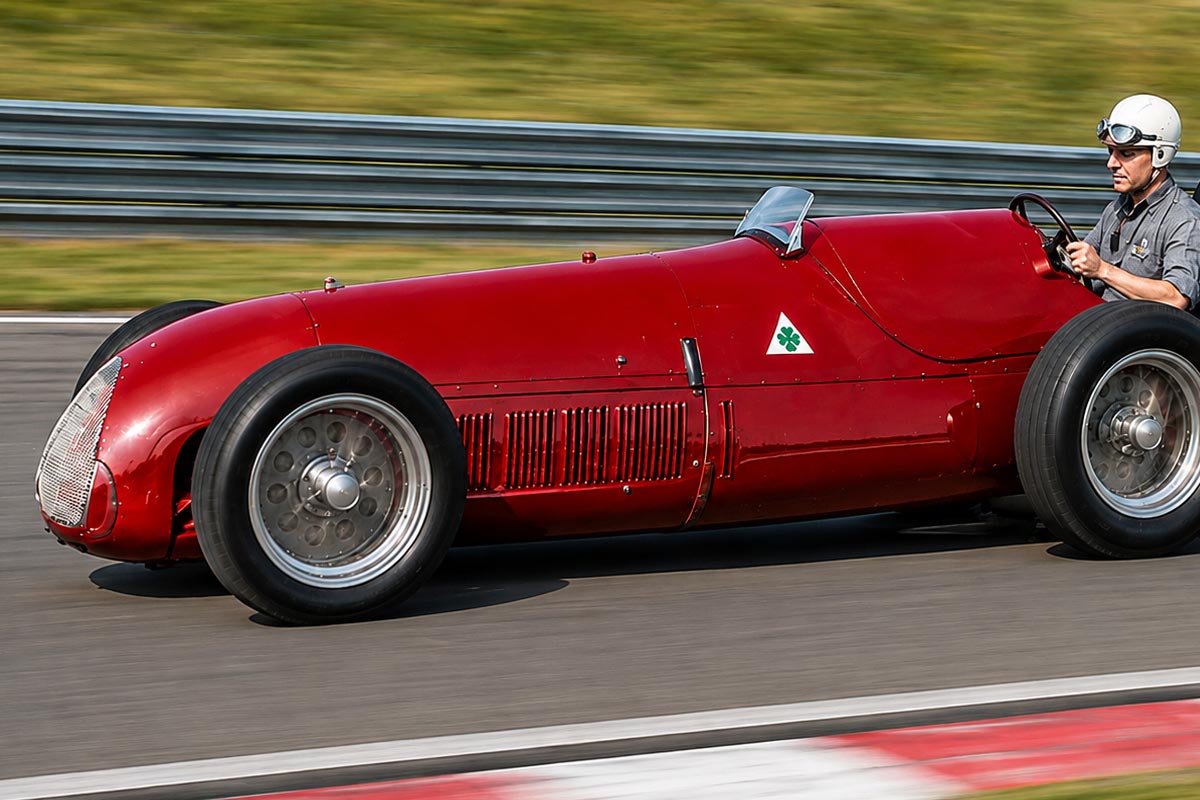
Alfa Romeo dominated the postwar Grand Prix races and the first F1 World Championship in 1950 with the Alfetta 158, which had been designed for the «voiturette» class before World War II. The following season, the 159 took over and allowed the Biscione to continue its dominance, despite the rise of a new rival, Ferrari, which claimed its first victory with José Froilan Gonzales at Silverstone, thanks in part to a more modern and fuel-efficient engine.
The technical and athletic situation of the Formula 1 The situation changed radically at the end of the 1951 season: after winning its second world title, Alfa Romeo announced its withdrawal from the world championship. Faced with the void created by this withdrawal, the Federation’s Sporting Commission adopted Formula 2 regulations for the 1952 season in order to fill the field. This decision gave Ferrari a tremendous opportunity to dominate the scene in the absence of any worthy opponents.
In the back!
But for their part, the engineers at Portello continued to work secretly on a new project, with a view to a possible return of Alfa Romeo. After Gioachino Colombo’s departure, Alfa Romeo’s «Research and Development» department—composed of just a few people—was entrusted to Giuseppe Busso, the future creator of the eponymous V6 engine. In 1952, he embarked on a project featuring technical innovations that were highly futuristic for the time, one that had been in the works for a long time: the 160.
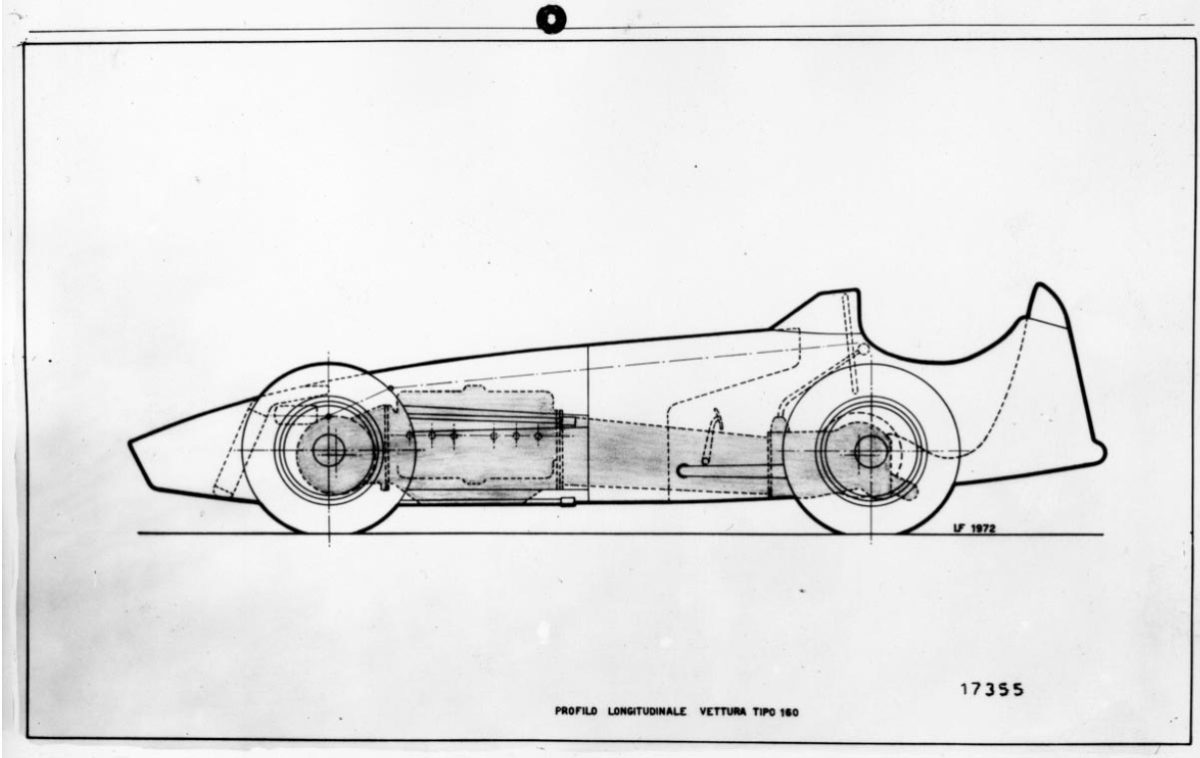
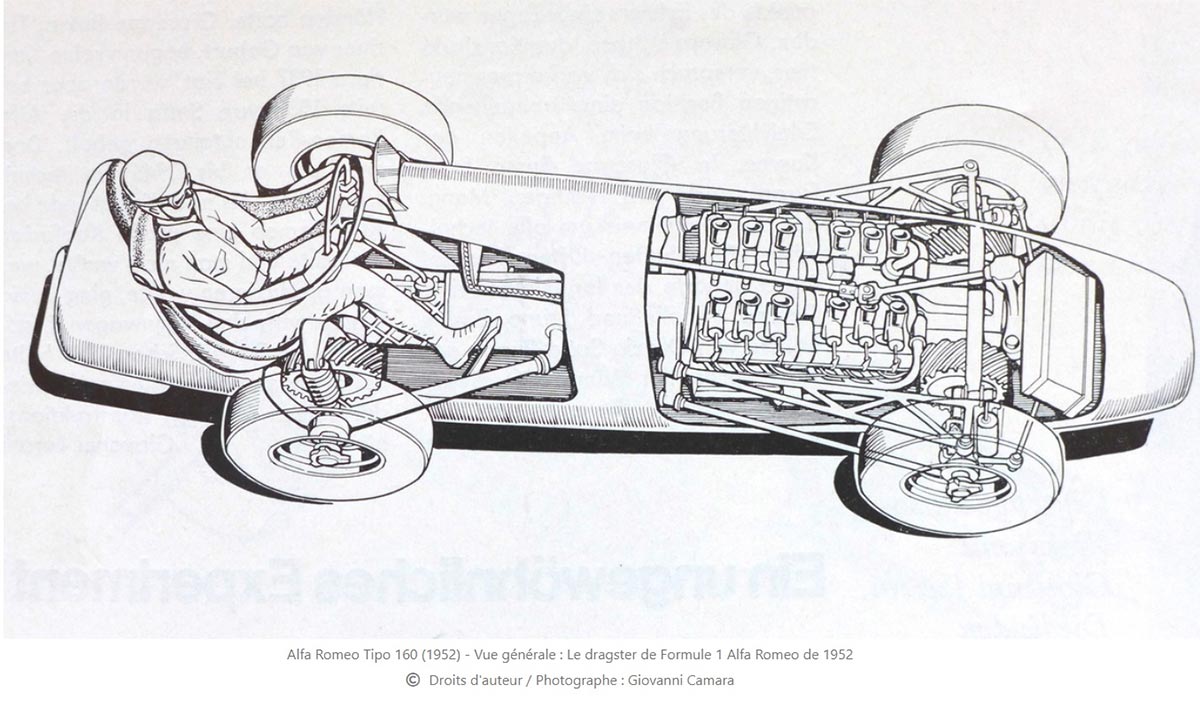
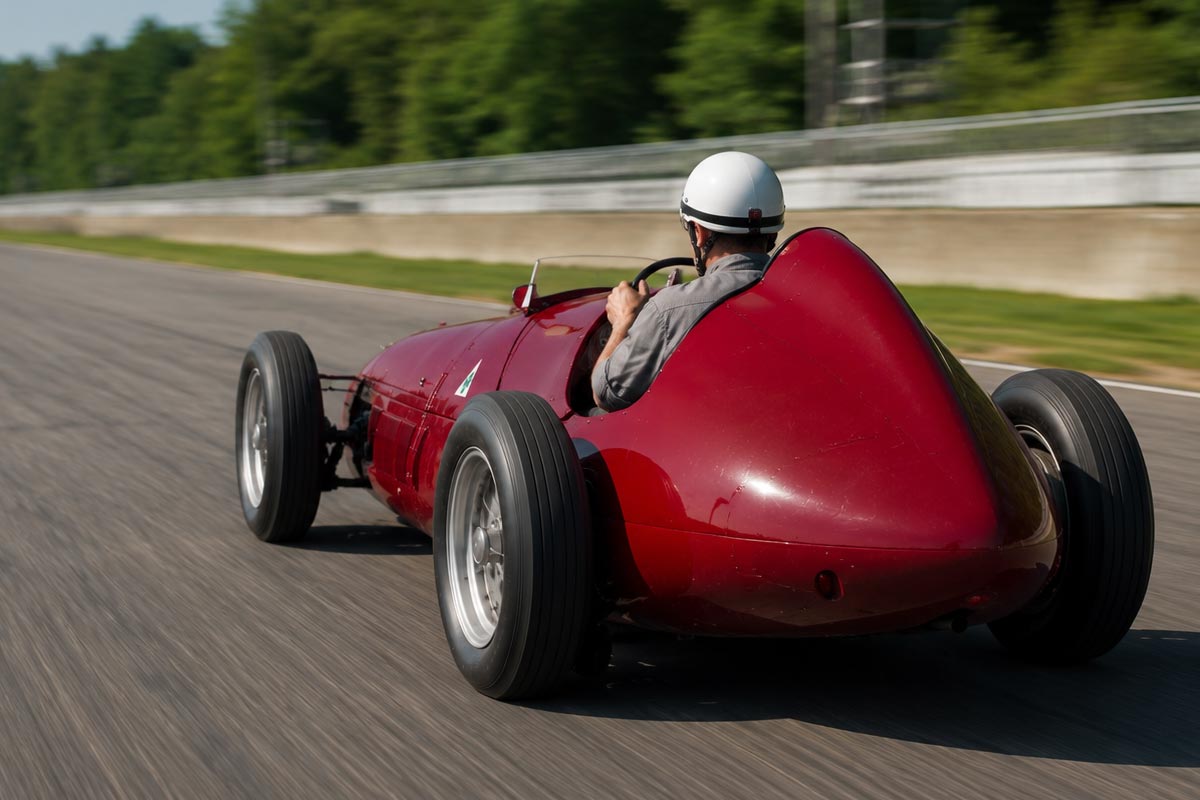
Alfa Romeo’s engineers started with a unique tubular chassis that connected the engine to the transmission. While the suspension configuration was identical to that of the 159, the braking system now featured drum brakes that were not integrated into the wheels but centered within the body. The center of mass was ideally positioned to reduce polar moments of inertia when cornering, thereby improving handling dynamics on paper. To improve weight distribution, the decision was made to radically alter the position of the cockpit, placing it all the way at the rear—even beyond the axle!
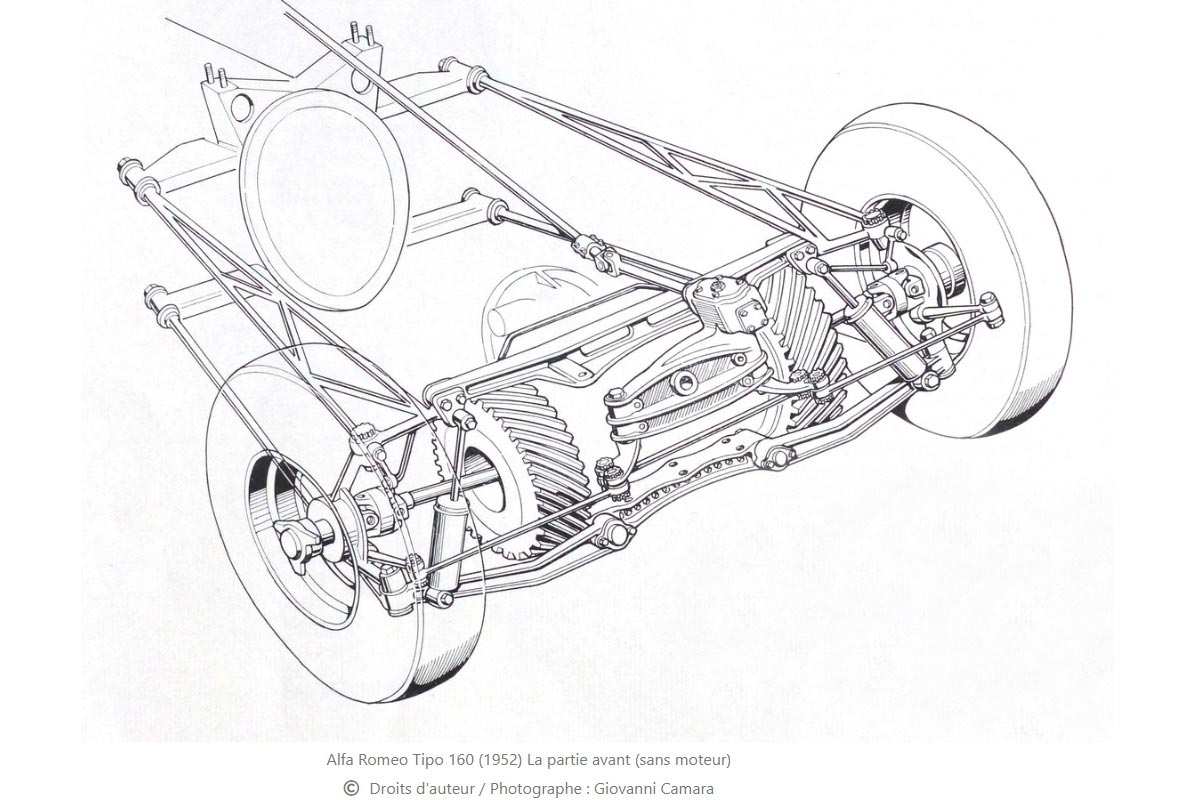
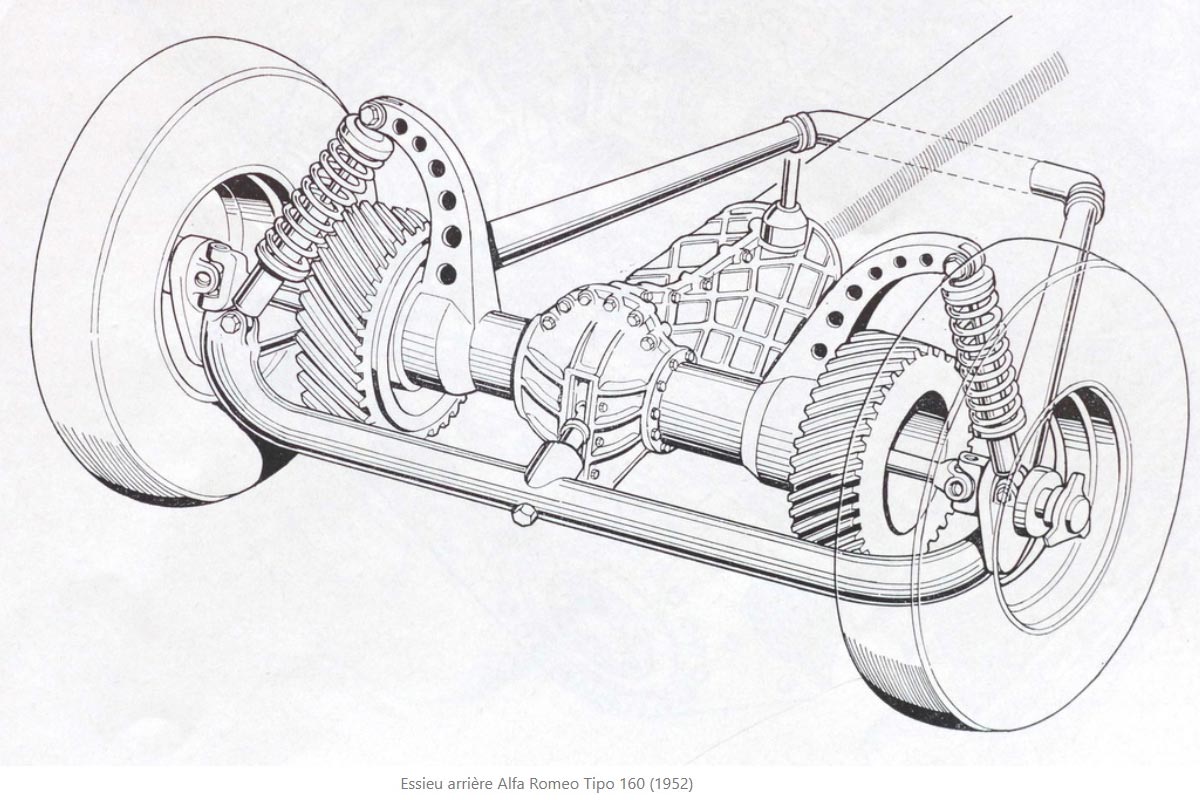
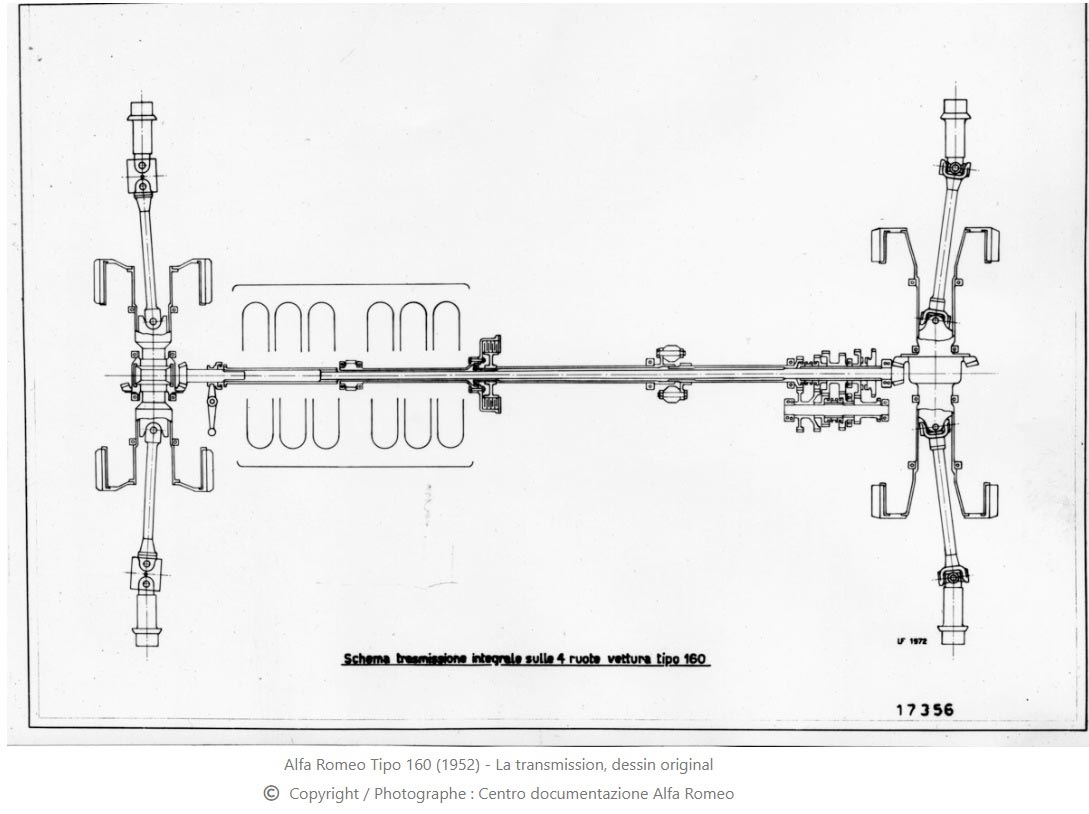
According to Busso, this bold approach was the result of numerous discussions with Sanesi (the test driver) about the mid-engine Tipo 512, which had been designed by Wifredo Ricart before the war and tested at Monza in 1941. Sanesi had complained that the very forward driving position was the 512’s main flaw, which led to the somewhat provocative suggestion of placing the driver’s seat behind the rear axle.
Thirty Years Before the Quattro
However, the main innovation was yet to come: the 160 was to feature all-wheel drive, an extremely futuristic solution for the time, which had already been tested in 1947 by Cisitalia with the 360 GP. The materials and machine tools available in the first half of the 1950s made the creation and development of such a drivetrain system extremely complex, but work continued. Let’s not forget that at the same time, Alfa Romeo was competing with FIAT to supply a 4×4 vehicle to the Italian army, the’AR51 Matta. The engineers at Biscione weren't starting from scratch!
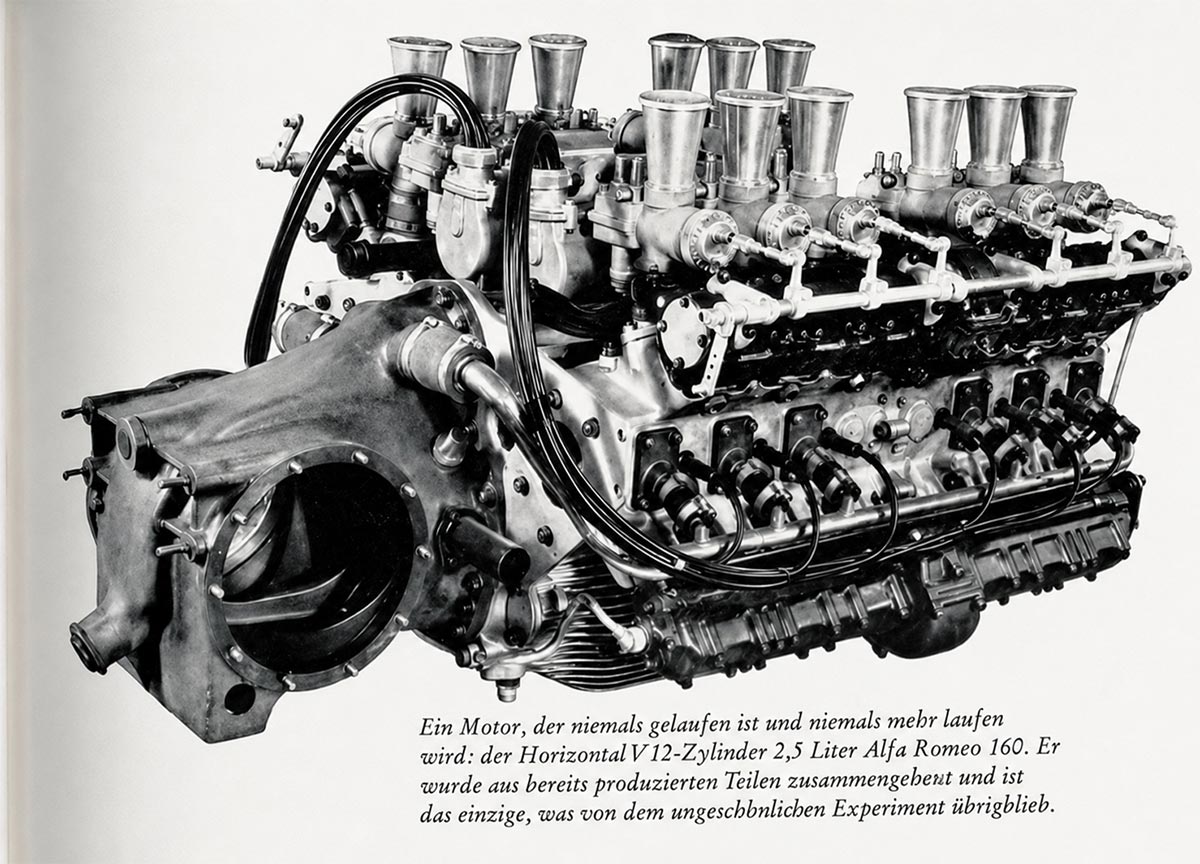
Giuseppe Busso summarized the concept in his memoirs as follows: “My idea was to develop a car based on a mid-mounted 2.5-liter 180° V12 engine, with four-wheel drive, a rear-axle-mounted transmission, a large-diameter central tube connecting the engine to the transmission and serving as the chassis, conventional independent front suspension, a De Dion rear axle, inboard brakes at the front and rear, and the driver’s seat positioned behind the rear axle.”
The final plans for the project were completed in July 1952 and were met with considerable enthusiasm. Busso was supported by world champion Juan Manuel Fangio as well as a new addition to the Alfa Romeo engineering staff, the German Rudolf Hruska, who had in fact worked on the Cisitalia project!
A modified 159
A «hybrid» prototype, based on a modified 159 chassis, was thus assembled. The new regulations for single-seaters for 1954 required 2.5-liter naturally aspirated engines or 750 cm³ supercharged engines. The engine, featuring a cast crankcase that integrated the front differential housing, dual overhead camshafts, and 12 single-barrel carburetors, produced approximately 300 ch on the dynamometer—a remarkable achievement for the time. Its redline was just as impressive, approaching 10,000 rpm!
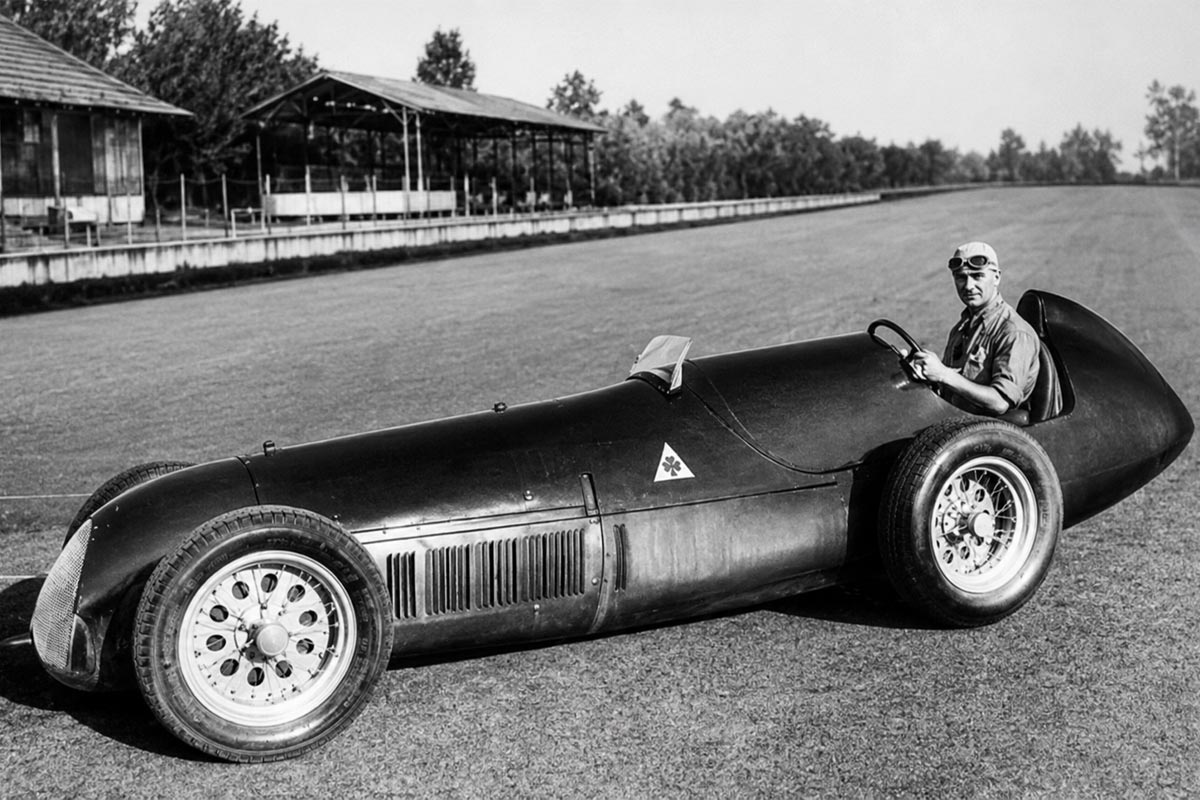
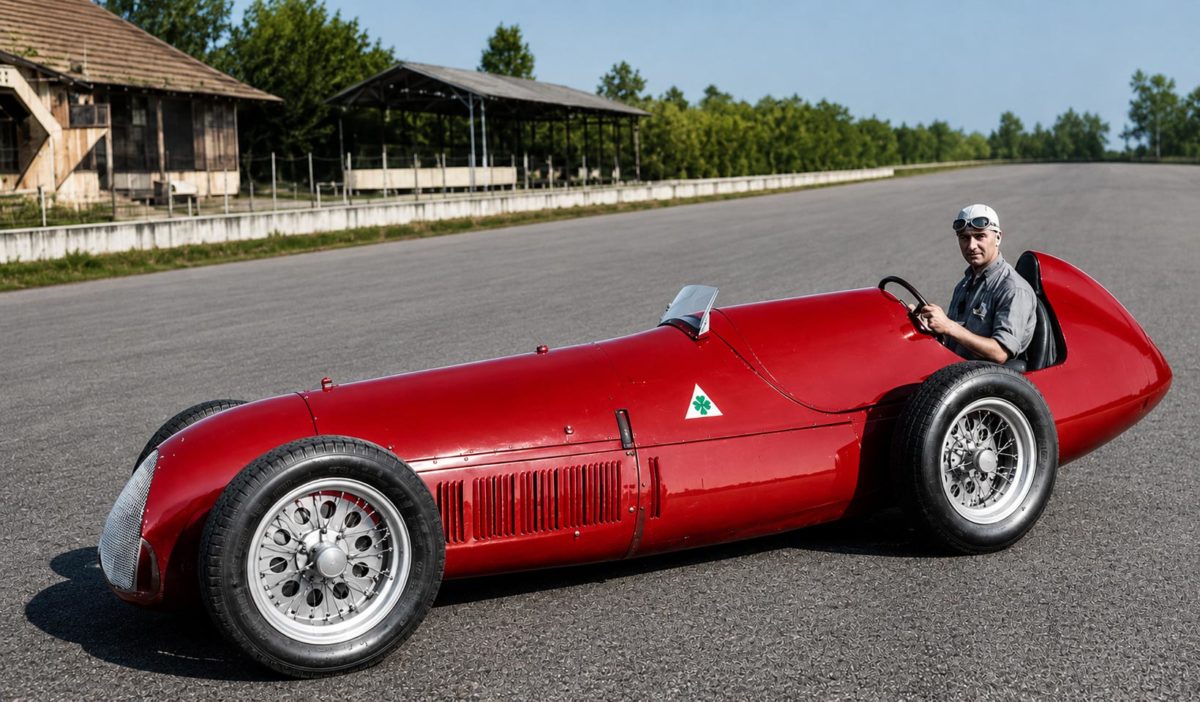
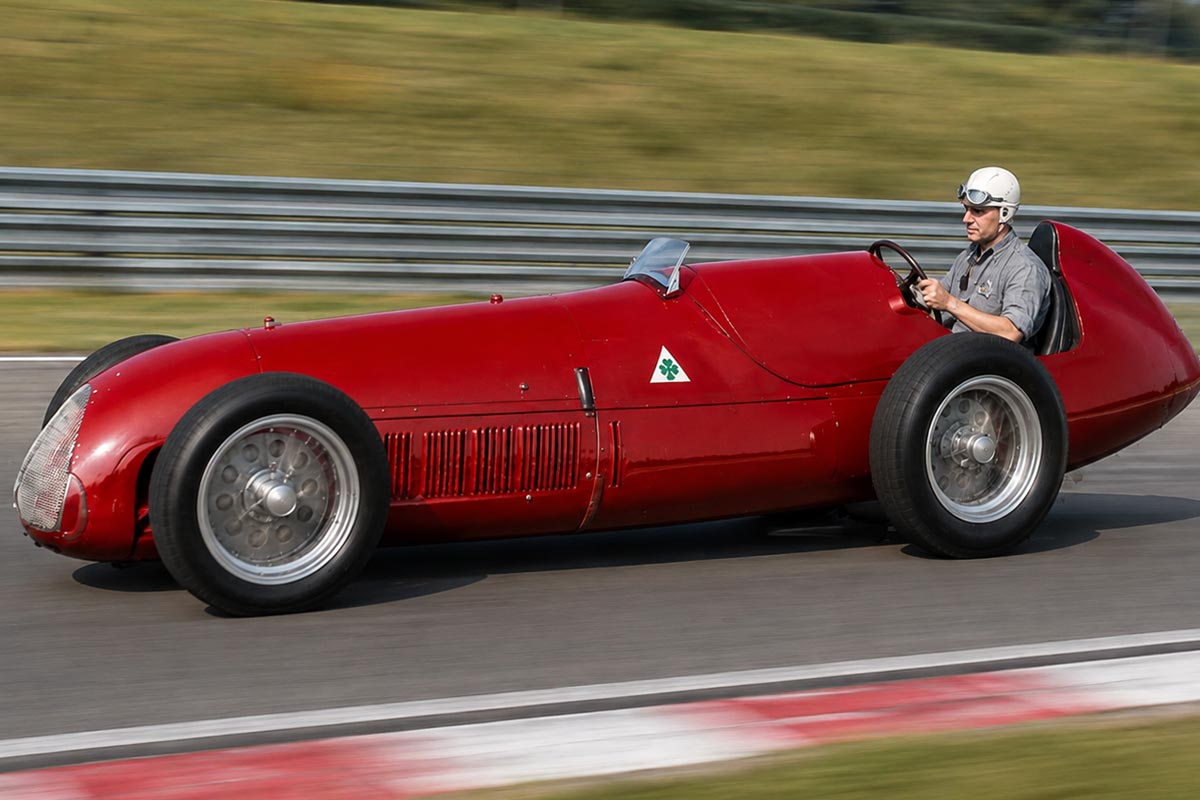
The modified 159 was ready for testing in mid-October. The most significant modifications involved the seat, steering wheel, pedals, and gearshift lever. The small windshield remained in its original position. The first test run, clocked at 1’59», was well above Fangio’s record (1’53″4), but the initial feedback from test driver Sanesi, was positive; the driving position provided an unprecedented view of the car’s handling and helped him understand its behavior. He also put his “poor” lap time into perspective, having had to drive with one hand to hold his glasses in place because the original windshield was positioned far too far forward! The fine-tuning, however, promised to be extremely complex, both in terms of settings and handling.
The Dawn of a Golden Age
Management finally ordered a halt to development of the 160 in order to focus all its resources on passenger cars: the Giulietta was about to be born and take Alfa Romeo into a whole new dimension. What became of the 160? Information on this subject is very limited, as is the technical documentation. The engine was exhibited at the Alfa Romeo Museum in Arese, alongside other unfinished projects by the Milan-based manufacturer, but the 160 remained a fantasy that never came to fruition. All-wheel drive was experimented with again in Formula 1 by Matra and Lotus in the 1960s, but nothing came of it.
 English
  French
  Italian
  Spanish
  German
  Japanese
  Dutch
Dutch
The 1931 Bugatti Type 53 race car already had all-wheel drive…