

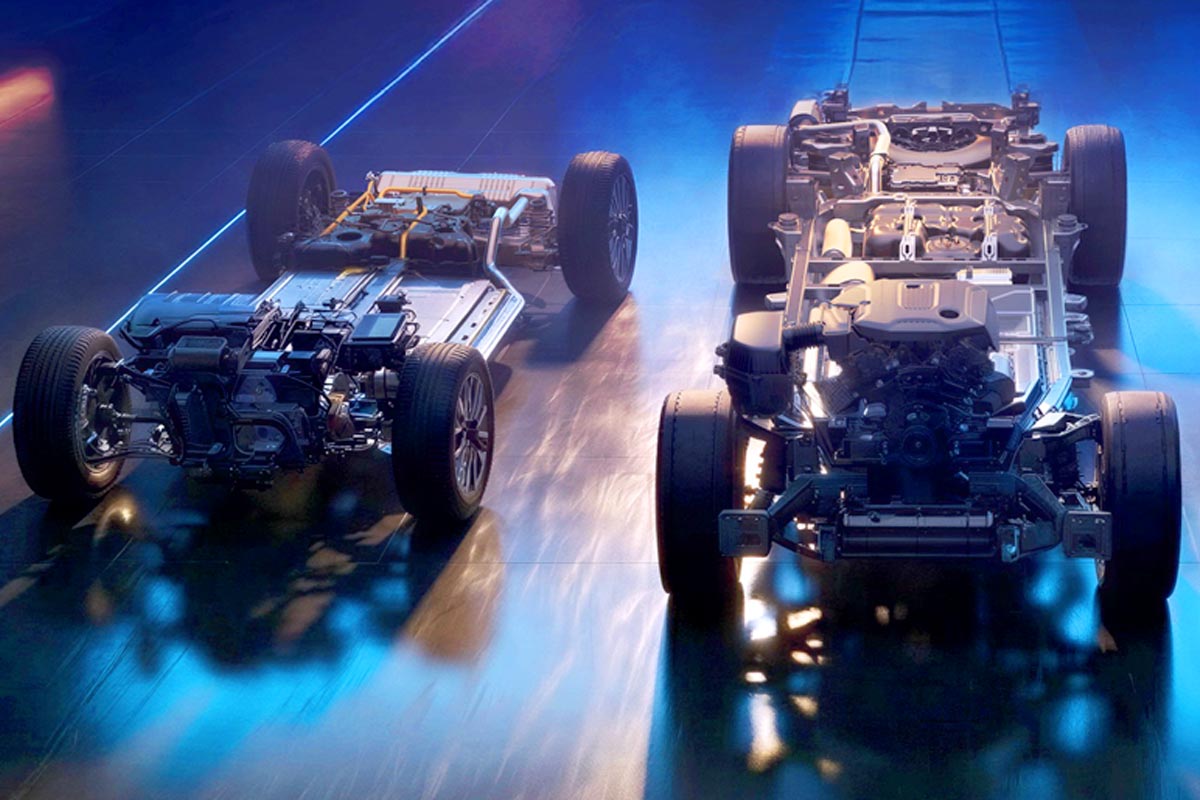
At Stellantis, Hybrid technology has become a sensitive subject. While the group is multiplying its announcements around electric vehicles, one reality is obvious: there is still no real HEV technology capable of competing with market benchmarks such as Toyota or Renault E-Tech.
Today, the automaker's offer is based mainly on two solutions. On the one hand, the micro-hybrid (MHEV), already available on several models such as the Fiat 500. On the other, rechargeable hybrids (PHEV), like the 280hp Alfa Romeo Tonale or the Peugeot 3008 Hybrid 225. But between the two, the true non-rechargeable hybrid, capable of running on electric power for long periods without plugging in, remains virtually absent.
Of course, Stellantis already has the 145 hp 1.2L Hybrid eDCT. An interesting engine for reducing fuel consumption in town, but still a long way from the performance of a Toyota Hybrid or Renault E-Tech system. Today, these technologies make it possible to drive more than 50 % of the time in electric mode, including at speeds of up to 100 or even 130 km/h, depending on conditions. And it's just one detail glimpsed at the Stellantis Investor Day that could well herald a major turning point.
Stellantis prepares a hybrid offensive
In its strategy presentation, the Group confirmed its intention to launch 60 new models by 2030. Of these, 24 will feature HEV hybrid powertrains in the B, C and D segments.
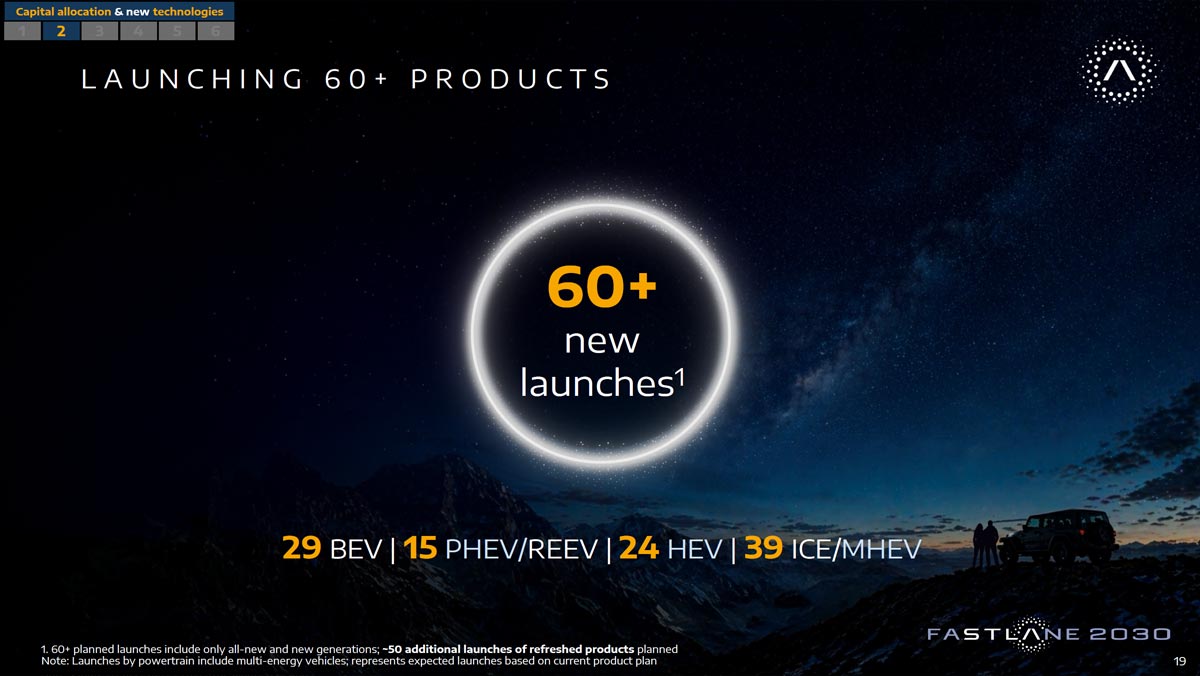
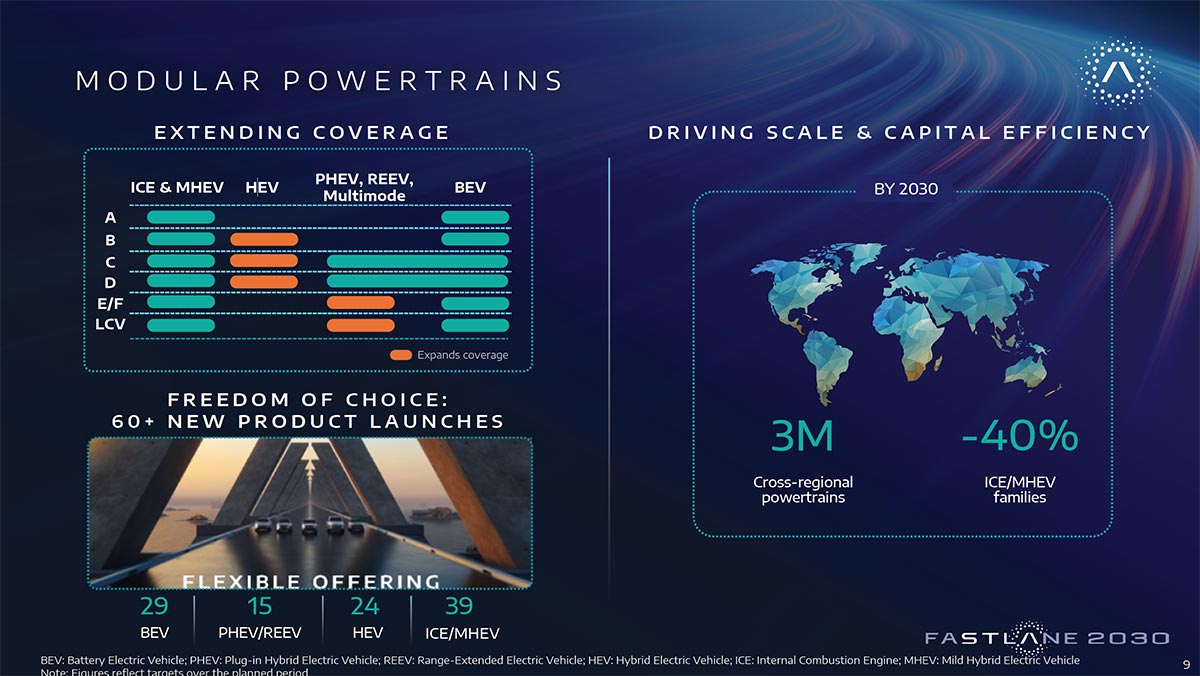
This is by no means an insignificant fact. Stellantis clearly distinguishes these future models from simple micro-hybrids and plug-in hybrids. At the same time, the Group is also planning 29 electric 100 % models, 15 PHEV or REEV models, as well as 39 thermal or micro-hybrid models.
The manufacturer explains that it wants to reinforce «freedom of choice» with a multi-energy strategy. According to Stellantis, almost 50 % of global volumes sold by 2030 will use trans-regional powertrains capable of adapting to several markets and regulations. Behind this very corporate communication lies perhaps at last the answer to a problem that has become obvious: to offer a truly efficient hybrid technology capable of seducing customers who don't yet want to go all-electric.
Could the American 1.6L HEV come to Europe?
It now remains to be seen what technology lies behind these 24 future hybrid models. It's hard not to think of the new 210hp 1.6L HEV engine. recently launched in the United States on the Jeep Cherokee. A particularly interesting engine, since the first American tests highlighted its efficiency.

This powertrain combines PSA's original 1.6L EP6 engine with a Japanese hybrid transmission supplied by Blue Nexus, a company linked to Toyota. The result is very similar to the way Toyota hybrids work: frequent electric driving, eCVT transmission and very low fuel consumption.
According to initial feedback, this Cherokee hybrid could exceed a range of 800 km on a full tank, while allowing 100 % electric vehicles to reach speeds of around 100 km/h. At last, Stellantis can offer HEV technology that is truly competitive with the market benchmarks.
So the question is simple: is this new 1.6L HEV one of the 24 future launches announced by Stellantis? For the moment, it's impossible to know. The group has given no technical details on these future hybrid models, nor on their precise timetable.
 English
  French
  Italian
  Spanish
  German
  Japanese
  Dutch
Dutch
HEV in B/C class: could it be the firefly with full Hybrid system? 1.6L 210HP seems a little too much for those cars
In my opinion, I'd like to see the 1.5 Firefly hybrid HEV and the 1.6 l for the C categories.
yeah I agree, for the C segment it is a good choice to have
a lot of promises ..like in the FCA days! sorry, it doesn't inspire confidence.
and this explanation of the classic hybrid Toyota Honda style (hyundai and renault too) is curious. the goal is efficiency (recovery) not autonomy Ev!
Frankly, a beautiful car with good handling and the American HEV engine, I'll buy it, if it confirms what the US tests show.
After Stellantis doesn't invent a concept, it can improve it, but it doesn't create a technological advantage over the competition.