

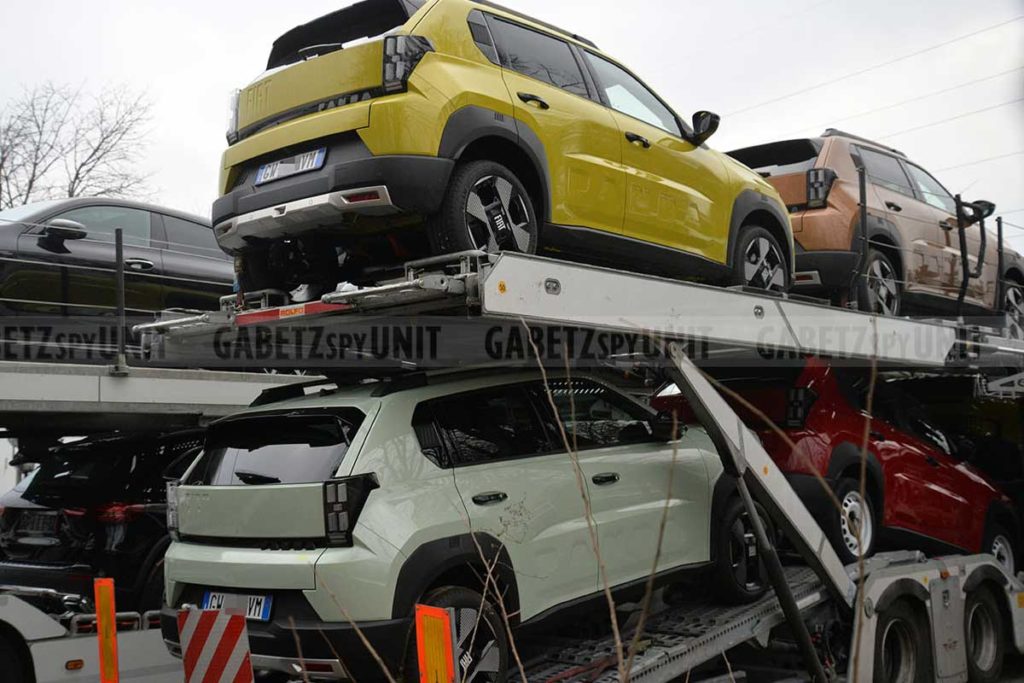
Until a few months ago, the Kragujevac plant in Serbia had come to symbolize the industrial difficulties of Stellantis. Production delays, staffing pressures, Italian workers rushed to support local teams: the launch of the new Fiat Grande Panda looked more like a race against time than an industrial success story.
We recently reported on a close to maximum production, despite a tense social context marked by the abolition of the April bonus for Serbian employees. But a few days later, the latest news from Serbia shows an even more spectacular change in scale. According to Petar Veselinović, professor at the Faculty of Economics in Kragujevac, production at the site could now reach up to 150,000 vehicles a year by 2026, thanks to the commercial success of the Fiat Grande Panda.
A speed-up that changes everything
The figure is far from insignificant. With such a volume, the Serbian plant alone would account for almost 45 % of current Stellantis production in Italy, where volumes have fallen to around 380,000 vehicles a year, compared with 750,000 just a few years ago.
This increase can be explained above all by the strong demand for the Fiat Grande Panda, particularly in its combustion and hybrid versions. As we recently explained, it is mainly petrol models equipped with the 1.2-liter engine that currently dominate Serbian production lines.
The Kragujevac site now operates with a much more stable organization than at the end of 2025. After a chaotic start, the plant seems to have found its industrial rhythm. Stellantis is already preparing a new stage in the process: the introduction of weekend shifts from June onwards. According to the Serbian media, several hundred new jobs could be created in the coming weeks to accompany this increase in output.
Serbia becomes a strategic link for Stellantis
Over 90 % of vehicles produced in Kragujevac are destined for the European market. A proportion of exports also go to Africa and Asia. Like Spain, Serbia is thus playing an increasingly important role in the Group's industrial strategy.
This development also illustrates a wider change in the European automotive industry. Long considered a low-cost labor country, Serbia is gradually becoming a strategic platform for the production of hybrid and electric vehicles. According to local media reports, the country is attracting a large number of international OEMs. Chinese companies are already producing components for premium brands such as Mercedes-Benz and BMW.
At a time when several of the Group's European plants are idling or under threat, Kragujevac offers the opposite image: that of a site that has returned to the forefront after having long embodied the manufacturer's industrial difficulties.
 English
  French
  Italian
  Spanish
  German
  Japanese
  Dutch
Dutch
It was almost an industrial disaster, but seems to be coming to an end with a real commercial success so far.
Ditto for C3 and other clones!?
I think it's only the eC3 that's produced in Serbia, the C3 thermal is produced in Slovakia if I'm not mistaken, and I don't have the figures.