

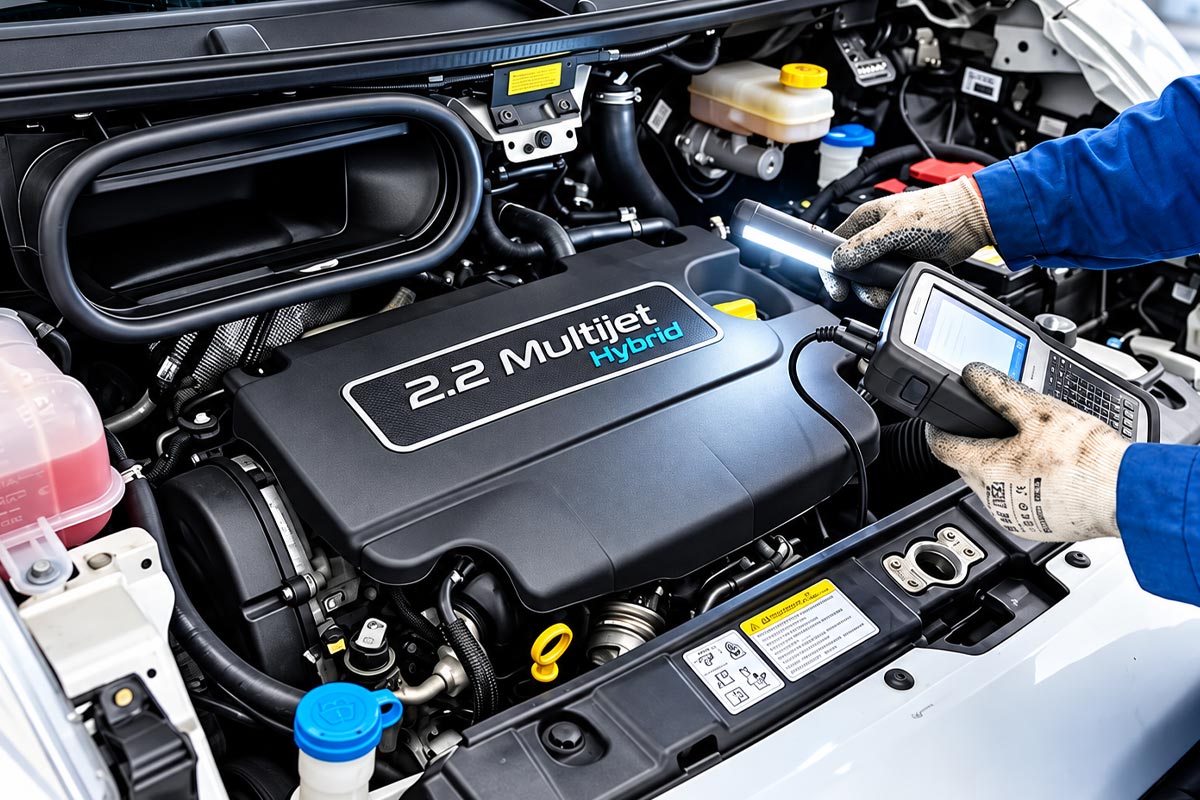
Just a few years ago, the idea might have seemed almost counterintuitive. As the European automotive industry was racing toward the 100 % electric, Stellantis was working on a solution that many thought was doomed: a diesel engine combined with hybrid technology. The latest reports from Italy now confirm that this project is indeed real. But there’s a big surprise: it turns out it’s not intended for passenger cars after all.
It is the Italian plant in Pratola Serra that is reportedly set to secure exclusive production rights for Stellantis. According to several Italian unions briefed by the site’s management, production is scheduled to begin in 2029.
A 2.2 Multijet 48V hybrid diesel engine
As early as February 2025, we were discussing the possibility of seeing Stellantis Returns to Hybrid Diesel. In February 2026, new information even suggested the possibility of an electrified Multijet diesel engine that might to equip several of the group's cars. The latest announcements have now shed much more light on the matter. According to the Fismic union, it will indeed be a 2.2 Multijet diesel engine with a 48-volt MHEV hybrid system.
The engine will be produced in Pratola Serra, a plant that already manufactures the 2.2 Multijet, which is primarily intended for Stellantis commercial vehicles. This new iteration is designed to improve efficiency and reduce emissions while retaining the benefits of diesel for vehicles that cover long distances. However, contrary to what initial reports might have suggested at the time, this new engine is not expected to be found under the hood of an Alfa Romeo, a Peugeot, or a Fiat.
Engine designed exclusively for commercial vehicles
This is likely the main revelation of this announcement. According to information provided to union representatives, the new mild-hybrid diesel engine will be used in commercial vehicles produced at Stellantis’s plants in Atessa, Italy, and Gliwice, Poland.
The FIOM-CGIL union specifically mentions its use in the Fiat Ducato and vehicles in the same lineup. This would give Stellantis a new option between its 100 % electric commercial vehicles and traditional diesel versions. This choice is by no means insignificant. For professionals who travel long distances, transport heavy loads, or cannot regularly stop to recharge their vehicles, diesel still has strong advantages. The 48V hybrid system could allow Stellantis to reduce fuel consumption and emissions without disrupting these use cases… but also to’avoid a massive fine.
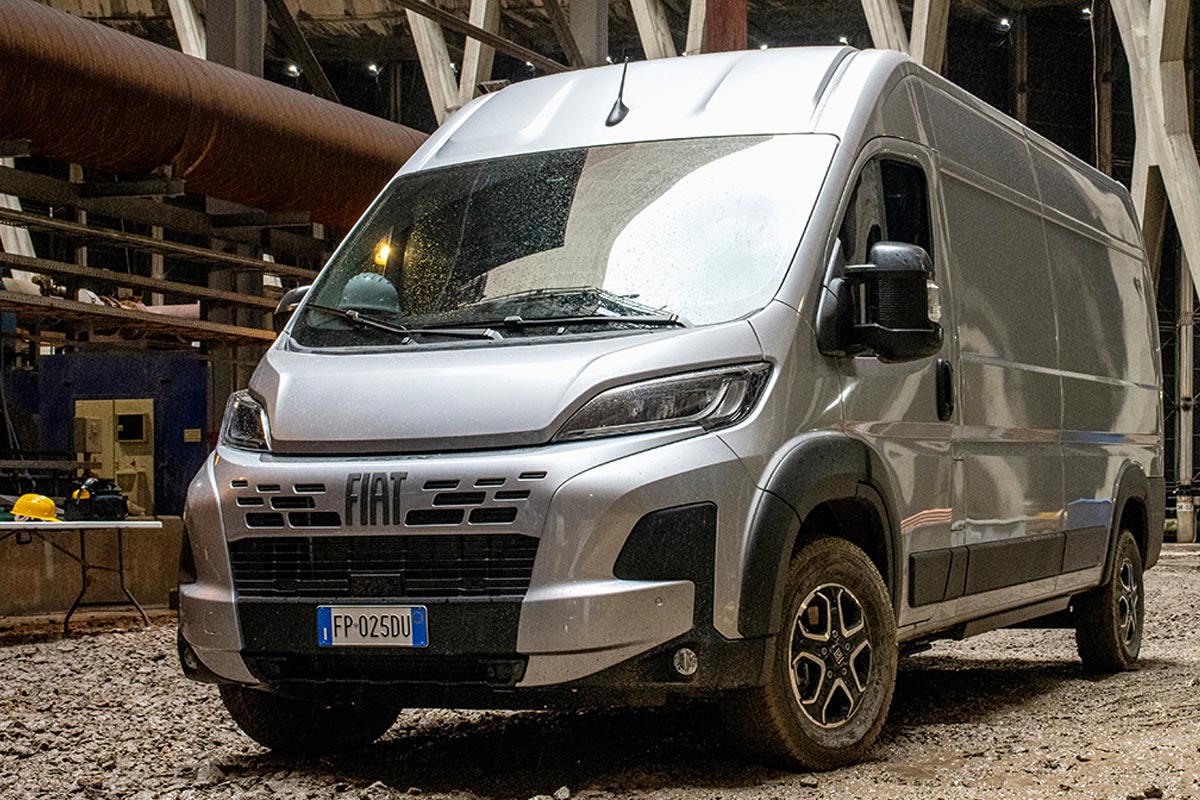
Pratola Serra Secures a Key Engine
Above all, the announcement is excellent news for the Italian plant. After years of uncertainty and furloughs, Pratola Serra now has industrial stability that could extend into the next decade. The industrial site is said to have a capacity of approximately 600,000 engines per year. The unions therefore hope that the new 2.2 Multijet Hybrid will gradually help to increase production on the assembly lines. However, questions remain regarding investments, production volumes, and the precise impact on employment.
Stellantis isn't giving up on diesel. On the contrary, the group is preparing a new technological advancement for 2029 and at least through 2040, according to some local media outlets. But this time, it's business owners who are expected to benefit.
 English
 French
 Italian
 Spanish
 German
 Japanese
 Dutch
Isn't that basically the engine in the Giulia and the Stelvio?
The Alfa Romeo Stelvio and Giulia did indeed come with 2.2 Multijet engines producing 150 and 180 ch. Probably an updated version.
And 210 (Veloce).
A utility vehicle is a car….
Thanks, Seb
It depends. Some utility vehicles with a gross vehicle weight rating (GVWR) of more than 3.5 metric tons are considered heavy-duty vehicles (i.e., trucks).
Well, the next fiasco from this arrogant Stelantis group—in 1 or at most 2 years—these factories will also close, using the excuse that they can’t keep up with demand. What a joke—arrogance taken to the extreme. They’ve never been able to produce a reliable or good product,They’re closing factories everywhere under the pretext that they can’t keep up with demand. Well, they’ll go under because of their arrogance—but let them go ahead and do it. Just a bit of friendly advice.
Never buy a car there—it's junk.
I think going all-electric is a false solution…
Making generalizations is always a mistake because they don't always match people's needs!
It is important to remember that a vehicle's fuel consumption is proportional to its mass plus the weight of its batteries.
What's more, the environmental impact of mass battery production is counterproductive…
So I am extremely supportive of this type of hybrid initiative.
Guillaume, a mechanical manufacturing technician since 1980.
The environmental impact of battery manufacturing is no worse than oil extraction and everything that follows! Oil isn’t just water that you pump up. And thermal combustion, by definition, will always be «dirty» (the maximum possible efficiency is about 50%—that’s physics).
But I agree that the future with current battery technology isn’t sustainable either. There’s still a lot of progress to be made (and we can and already know how to do it experimentally, but it’s far from being ready for industrial production because it’s at least 100 times too expensive!).
There had been talk of the 1.6 Mjtd hybrid replacing the 1.5 HDi—fact or fiction???
Oh, really? That's interesting. Where did that rumor come from?
This is a news item from a few months ago on italpassion.fr that mentioned the replacement of the 1.5 HDi with an updated version of the 1.6-liter MJTD hybrid and the 2.2 MJTD hybrid for commercial vehicles.
Diesel is in its final years.
Get the Fiat Punto EVO Back on the Road
This car, equipped with a 1.3-liter Multijet turbo diesel engine (Rihd1: 33), emits only 82 CO2.
This diesel engine emits less CO₂ than a gasoline engine