
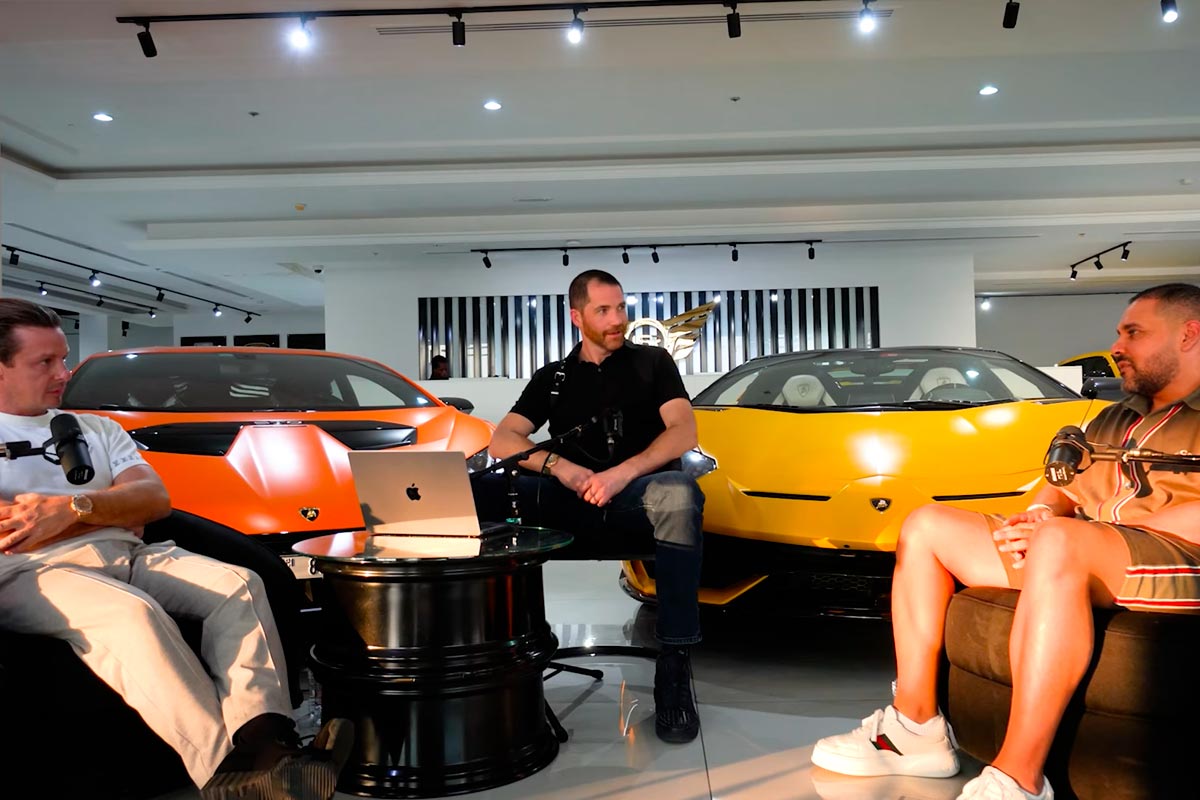
In the closed world of supercars and hypercars, certain rules are never written down... but they are applied with absolute rigor. The story of Ahmed, entrepreneur and head of one of Dubai's largest luxury car rental companies, is a case in point. Despite an impressive collection, millions invested and solid relationships with brands such as Bugatti and McLaren, one brand continues to close its doors to him: Ferrari.
An automotive empire built by sheer force of will
Starting from nothing, Ahmed has built up a veritable empire in just a few years. Since 2019, he has been developing a luxury car rental company in the Emirates, with over 100 vehicles in stock today.
Lamborghini, Rolls-Royce, Porsche... the biggest names parade through the showroom. Some models are rented up to 30 times a day during peak periods. A dazzling success, based on a simple strategy: offer unique, often customized cars, and impeccable customer service.
But behind this impressive showcase, the reality is far more complex. Accidents, expensive insurance, unpredictable customers... the business is risky. Very risky. Ahmed admits it himself: each car put on the road can become a loss of several hundred thousand euros in a second.
Renting a Bugatti: too risky a bet
One of the craziest decisions of his career was to lease a Bugatti.
A totally irrational gamble on paper. Insurance capped at 3 million dirhams (around €700,000) for a car worth over 10 million. In the event of an accident? A gigantic deadweight loss. As a result, over 25 days of rental, several million were generated... but the pressure was constant. Every time we took the vehicle out, it became a source of anxiety. GPS surveillance 24 hours a day, sleepless nights, constant stress. Finally, he decided to stop. Too risky.
Ferrari refuses to sell him a car
Despite his status, Ahmed has hit a brick wall: Ferrari categorically refuses to sell him new cars. And the reason is simple: his business. Ferrari doesn't want its models to be used in rental fleets. The brand favors private collectors, those who buy to keep, not to make a profit.
Ahmed recounts that the situation is even more extreme: even if he wishes to buy a Ferrari for himself, at the list price, he is immediately refused. Worse still, some dealers even refuse to sell to his relatives if they suspect a link with him. For Ferrari, he's blacklisted.
Faced with this blockage, Ahmed adapts. He uses intermediaries, buys via other profiles, and imports cars from Europe. A strategy that enables him to continue acquiring certain models, but at the cost of extra effort... and sometimes higher costs.
At the same time, he is developing his personal collection. Contrary to popular belief, not all his cars are for rental. He owns several hypercars ordered just for him, with commitments signed with the manufacturers never to rent them out.
These include extremely exclusive models worth several million euros, such as the future Bugatti Tourbillon, a rare McLaren W1 and the Aston Martin Valhalla. He also mentions an order from Koenigsegg for a hypercar with over 2,000 horsepower, proof of the scale of his investments.
The paradox of a passionate man turned businessman
One thing has changed over time: his relationship with cars. As he admits himself, cars don't make him dream like they used to. Buying a multimillion-dollar model is now done... over the phone.
Passion has given way to business logic. Today, the buyer looks at a car either for the profit it can generate, or for its investment potential. Some hypercars are even bought with no intention of driving them, purely for their future value. A paradox for the man who, when he was younger, bought and repaired his first cars for a few thousand euros.
Despite a colossal income, several million a month, Ahmed sometimes considers slowing down. The reason? Stress. Between accidents, insurance, managing over 70 employees and the constant unexpected, supercar rental is far from a smooth ride.
Today, he says he makes more money in real estate... with far fewer constraints. But it's hard to let go completely. His company remains his “baby”, the one that enabled him to build it all up.

 English
  French
  Italian
  Spanish
  German
  Japanese
  Dutch
Dutch