

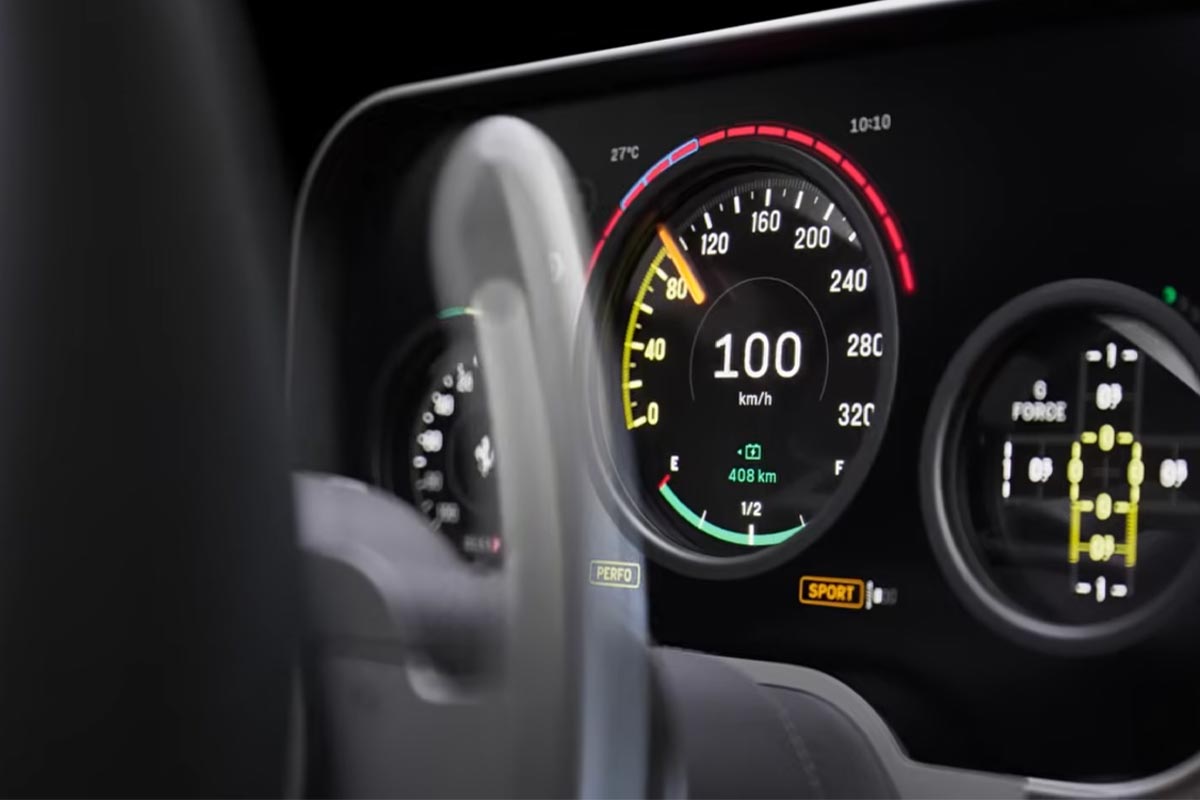
For several weeks now, Ferrari distils information about its very first 100 % electric car, the future Ferrari Luce. Hypercar performance, collaboration with NASA, design by Jony Ive... everything seems to indicate that the Maranello-based brand is preparing more than just a technological shift.
But in its latest technical video, one detail in particular caught our attention. An almost paradoxical, but profoundly Ferrari idea: to create steering wheel paddles... on an electric car that has no gearbox. And behind this decision, one sentence sums it all up: «something was missing».
An electric Ferrari too perfect?
On paper, the Ferrari Luce has everything to impress. With a 0 to 100 km/h time of 2.5 seconds and a top speed of 310 km/h, it is immediately on a par with the brand's most extreme models.
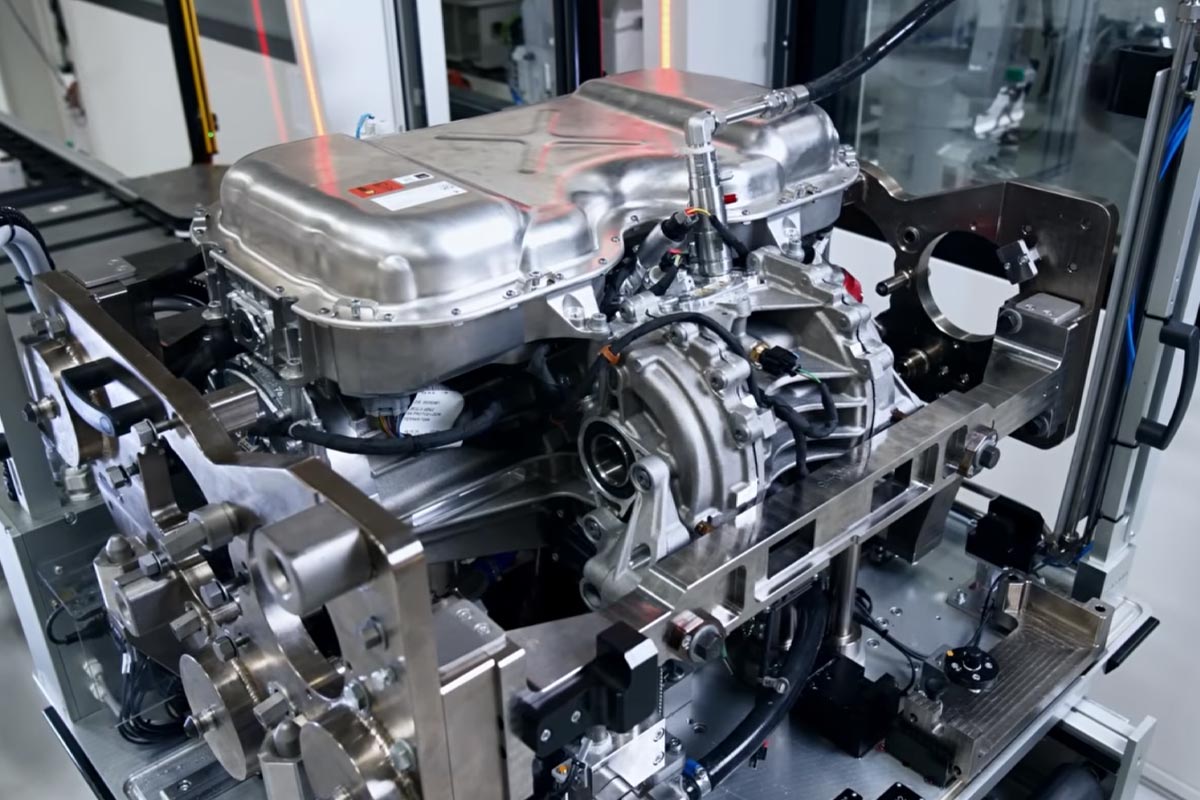
This performance is due in no small part to the car's advanced electrical architecture. The car relies on four independent motors, capable of managing each wheel individually, with a control system that adjusts the vehicle's behavior... 500 times a second.
The result is a feeling of total control, even in extreme conditions. On ice, on a circuit or at very high speeds, engineers explain that the car feels lighter than it actually is. But that's precisely where the problem begins.
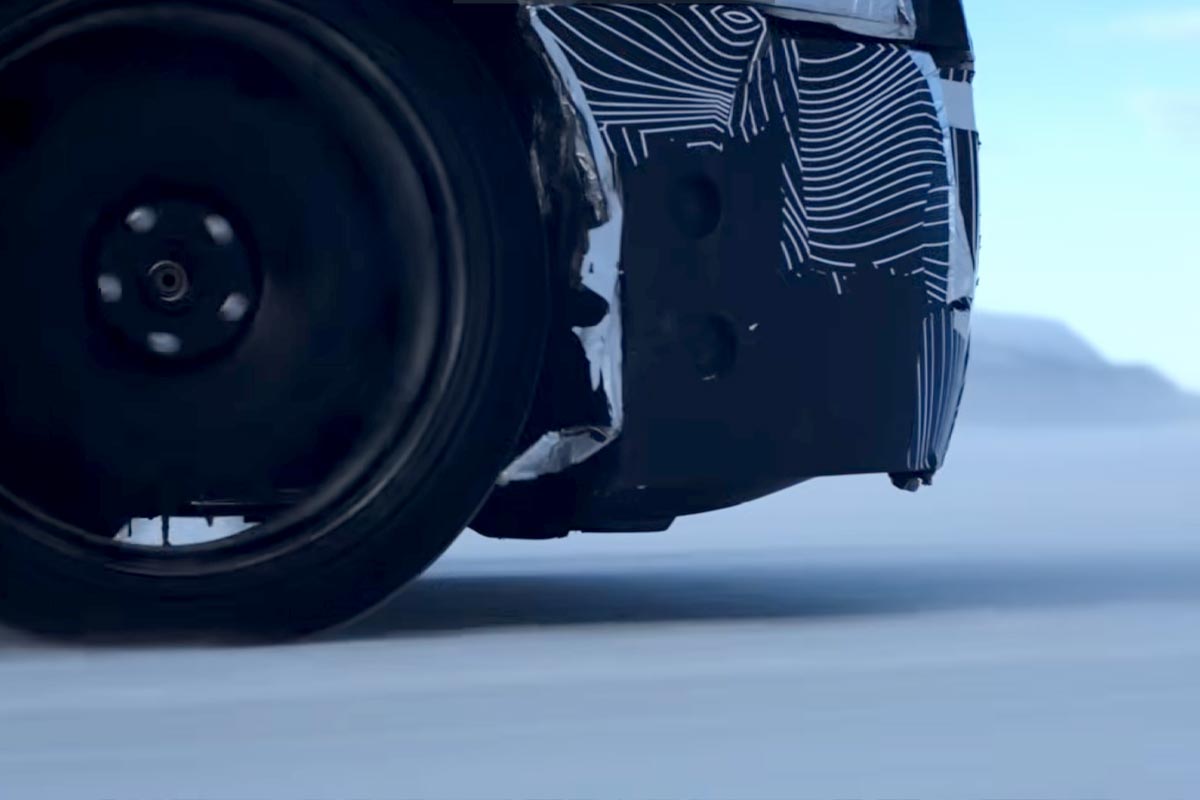
Because in an electric car, everything is immediate. Torque arrives instantaneously, with no build-up, no break, no transition. Acceleration is linear, brutal... almost too perfect. And for a brand like Ferrari, this raises a fundamental question: where has the emotion gone?
«Where are the pallets?»
In the latest video, the engineers themselves admit that something was missing. On combustion-powered cars, steering wheel paddles aren't just a tool. They contribute directly to the driving experience. They punctuate acceleration, anticipate bends and manage acceleration. They create interaction.
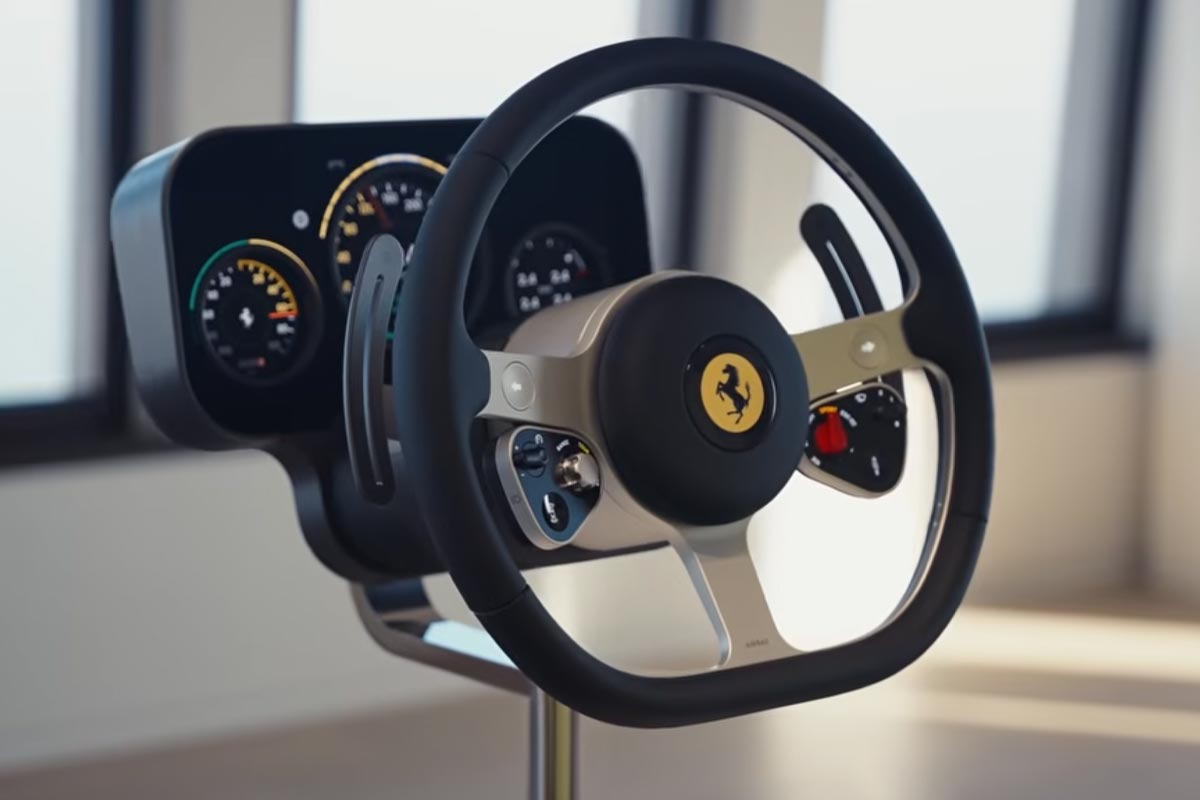
But in an electric car, they disappear. No gearbox, no gears to shift, no reason to exist. And yet, during the Luce's first test drives, one reflex kept coming back. «On other electric cars, we used to look for them. But where are the paddles?» This lack, almost instinctive, prompted Ferrari to completely rethink their role.
Paddles... for a different kind of car control
Rather than artificially simulating gears, Ferrari has chosen a far more interesting approach: giving the paddles a real function.
The left-hand paddle, traditionally used for downshifting, is now used to better control corner entry. The right-hand paddle is used to optimize exit. In other words, the paddles are no longer used to change gear... but to manage the car's dynamics in real time. These controls become a direct interface between the driver and the control systems.
This choice is not insignificant. It's part of a much broader reflection by Ferrari on the driving experience. With the Luce, the brand has to do more than just manage performance. It also has to deal with new human constraints. Instant acceleration, for example, is so violent that it necessitated studies with NASA to understand its effects on the body.
As CEO Benedetto Vigna explained, acceleration that is too linear can disturb the brain. So it's not just a question of going fast, but of making that speed “understandable” and controllable for the driver. Paddles help to achieve just that.
They allow us to “slice up” the experience, to re-establish reference points, to create a form of dialogue between man and machine. Even the sound follows this logic. Ferrari is not trying to imitate a combustion engine, but to work on the frequencies of the electric motor to create its own sound signature, capable of accompanying the sensations.
During test drives, some drivers spoke of an “almost illegal” experience. Others spoke of a deep connection with the car, made possible by a simpler, more direct interface, less digital than one might imagine.
Ultra-technological with its four engines, Formula 1-derived batteries and thousands of aerodynamic simulations, it simultaneously seeks to remain physical, intuitive, almost mechanical in its approach. In a car where everything could have been automated, smoothed out, optimized... Ferrari has deliberately added interaction. Because yes, even in the electric age, the driver had to have something to do.

 English
  French
  Italian
  Spanish
  German
  Japanese
  Dutch
Dutch