

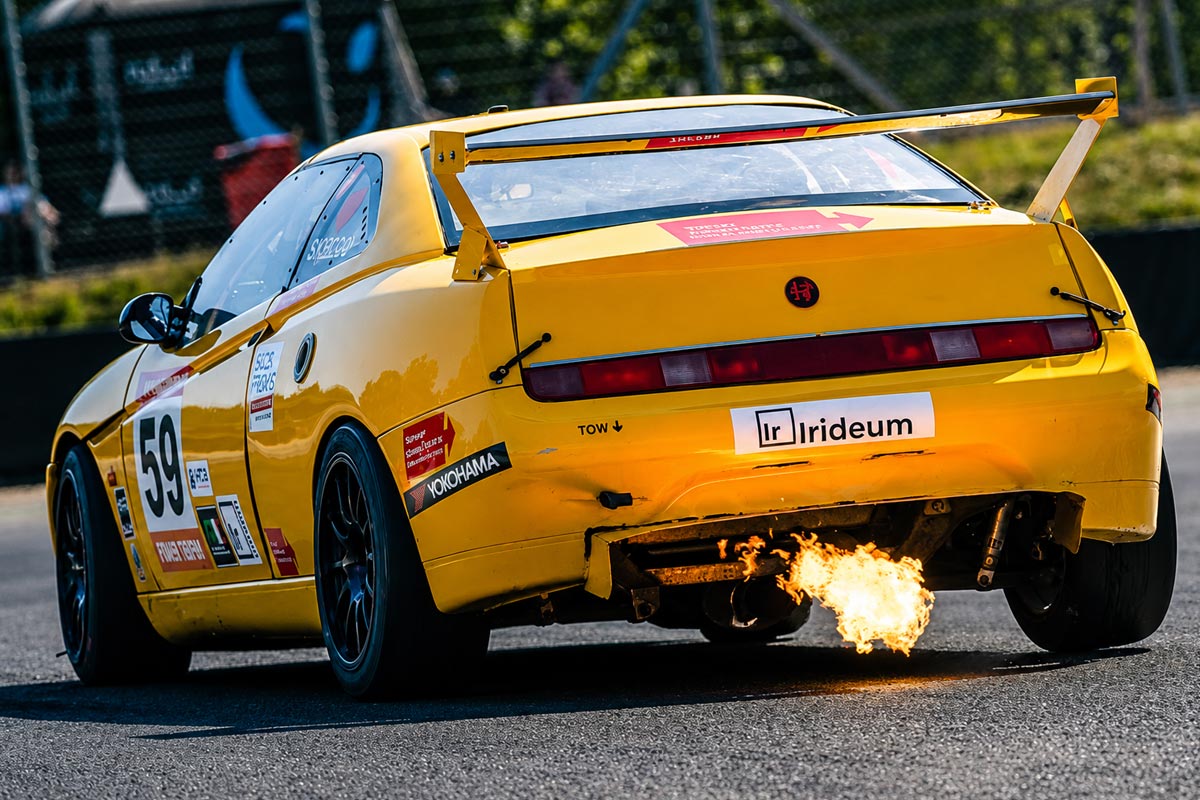
On the starting grids of the British Alfa Racer Championship, a Alfa Romeo GTV 916 Yellow certainly doesn’t go unnoticed. With its flared fenders, ground-hugging front spoiler, large rear wing, and the distinctive sound of the Busso V6, it seems to come from another era. And for good reason: this Alfa Romeo GTV isn’t just a club car converted for the track—it has a history spanning more than twenty years. Built in the early 2000s for the British LMA Euro Saloons Championship, it was developed by Tony Soper, then forgotten before being revived recently thanks to the work of Bianco Motorsport—which prepares many of the cars in the British Alfa Romeo Championship—and its new driver, Mark Skeggs.
A GTV designed for competition from the very beginning
In the late 1990s and early 2000s, the Alfa Romeo GTV 916 enjoyed a strong sporty image. Its Busso V6 engine, Pininfarina-designed body, and balanced handling made it an attractive platform for racing. In the United Kingdom, several tuning firms began to take an interest in this car. The LMA Euro Saloons championship provided a particularly favorable environment: unlike single-make series, this series accepted a wide variety of cars, often heavily modified. Among them were BMWs, Nissans, Fords, Hondas, and even Alfa Romeo prepared according to a wide variety of philosophies.
It was against this backdrop that the LMA Motorsport project was born. The car is built by Mark Fish Motorsport, starting with a relatively recent production chassis that has been transformed into a machine akin to a competition touring car. The GTV is not a production car upgraded with a few racing parts. It was designed from the outset to compete against the best-prepared cars on the grid.
A design worthy of a touring car
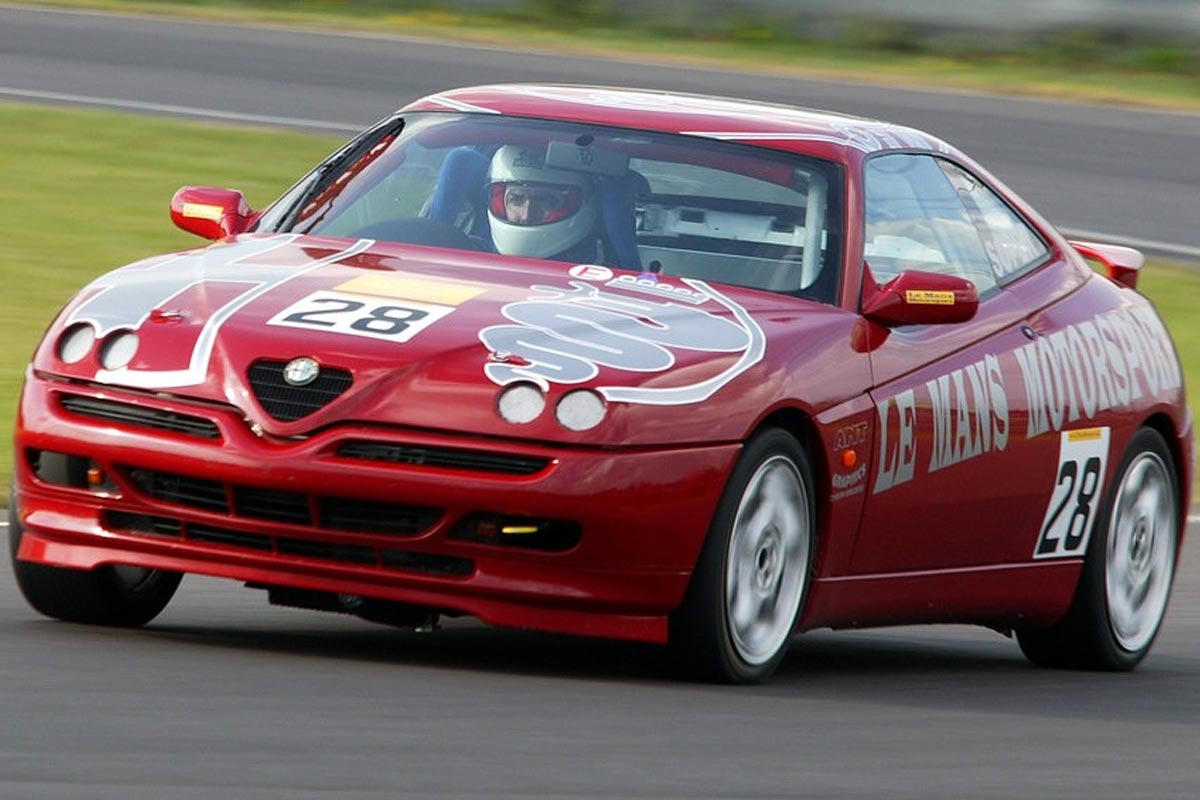
The body is significantly reinforced with the installation of a full roll cage and modifications to the components necessary for intensive track use. The chassis has been extensively modified: racing suspension, specific geometry, upgraded brakes, race-spec wheels and tires, a limited-slip differential, and overall weight reduction. The GTV 916 has excellent natural balance thanks to its compact design and front-mounted engine, but the front-wheel-drive layout requires significant work on traction and front-end handling.
The car is powered by a 24-valve Alfa Romeo Busso V6 engine, which has become legendary among enthusiasts for its sound and character. The 3-liter version debuted in 1997, while the 3.2-liter version didn’t appear until 2003. Racing records indicate a V6 24V configuration for the GTV entered by Tony Soper. However, the exact displacement of the car at that time remains difficult to confirm with certainty.
The most likely configuration at the time of original production is a 3.0-liter V6 with 24 valves, an engine that was very popular among British Alfa tuners in the early 2000s.Subsequent upgrades to larger displacement engines are also possible; some Alfa racing projects have been fitted with 3.2-liter engines or 3.3-liter-class upgrades. The exact power output is not officially documented in currently available sources, but an estimate of around 300 chevaux is consistent with the performance expected from such a modification.
The Rebirth: Bianco Motorsport and Mark Skeggs
In 2022, a message posted on the British Alfa community announced his return: « »The old LMA Motorsport GTV is back on the track!" When the former GTV LMA Motorsport returned to the racetrack in the early 2020s, the restoration work was entrusted to Bianco Motorsport, a British shop specializing in the preparation and maintenance of Alfa Romeo race cars.
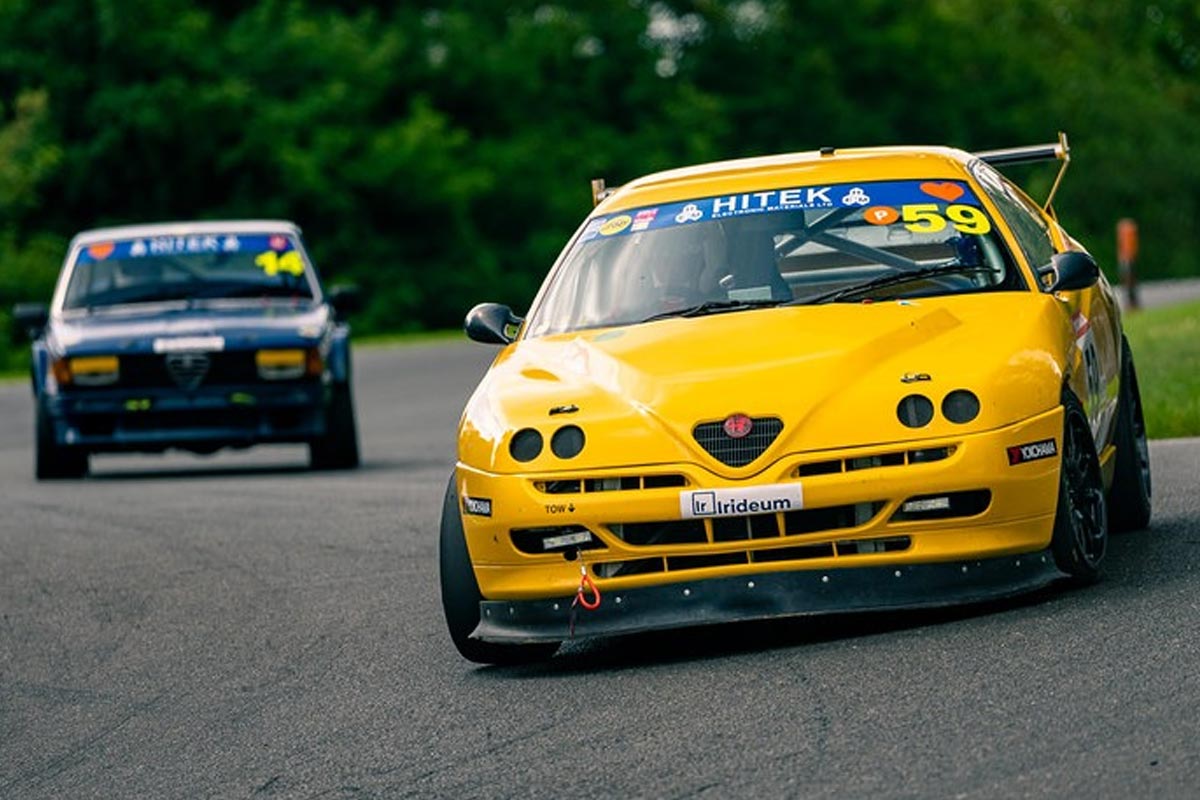
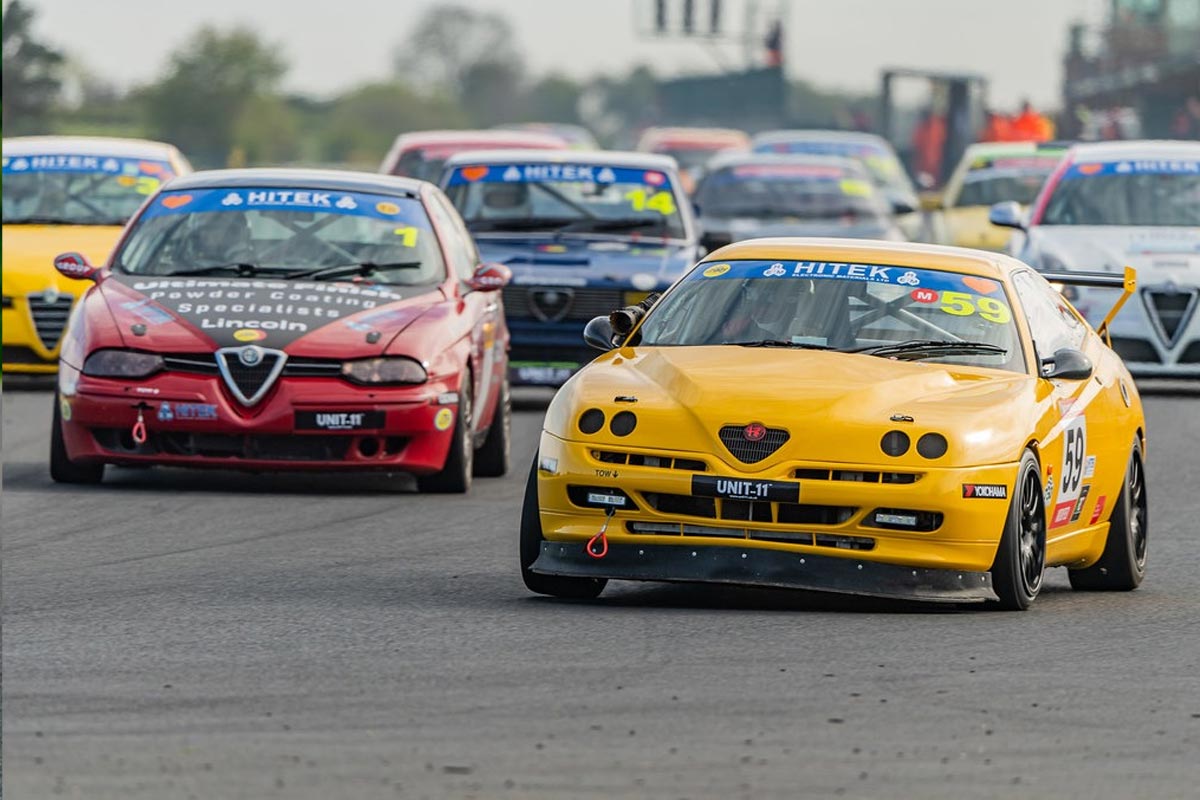
Since its return to competition, the GTV has been driven by Mark Skeggs in the “Modified” class. While the British Alfa championships now feature more modern cars such as tuned Alfa Romeo 4Cs and Giulietta models, seeing a GTV 916 continue to compete on the track holds real symbolic value. The arms race sparked by the arrival of 4Cs that have been virtually transformed into “mini-GT3s”—often exceeding 400/450 ch—obviously makes the task more challenging. That’s also why the GTV now competes in the “Power Trophy” class, which strictly limits performance: cars in this class must have a power-to-weight ratio of 240 ch per 1,000 kg. This suggests that Mark Skeggs’ GTV is powered by a 3.2-liter Busso V6 whose original power output has been preserved.
More than twenty years after it was built, it’s still on the road. It also serves as a reminder that automotive history isn’t just about the cars that won the biggest championships. An Alfa built to race, saved so it could keep racing, and which still echoes with the roar of the Busso V6 through the corners of British circuits today, competing against more modern cars like the Giulietta TCR and 4C. When will the next generation take over?
Just for fun, here's a video from the Alfa Romeo & Italian Intermarque Championship, the series in which this Alfa Romeo GTV 916 is competing.

 English
  French
  Italian
  Spanish
  German
  Japanese
  Dutch
Dutch