

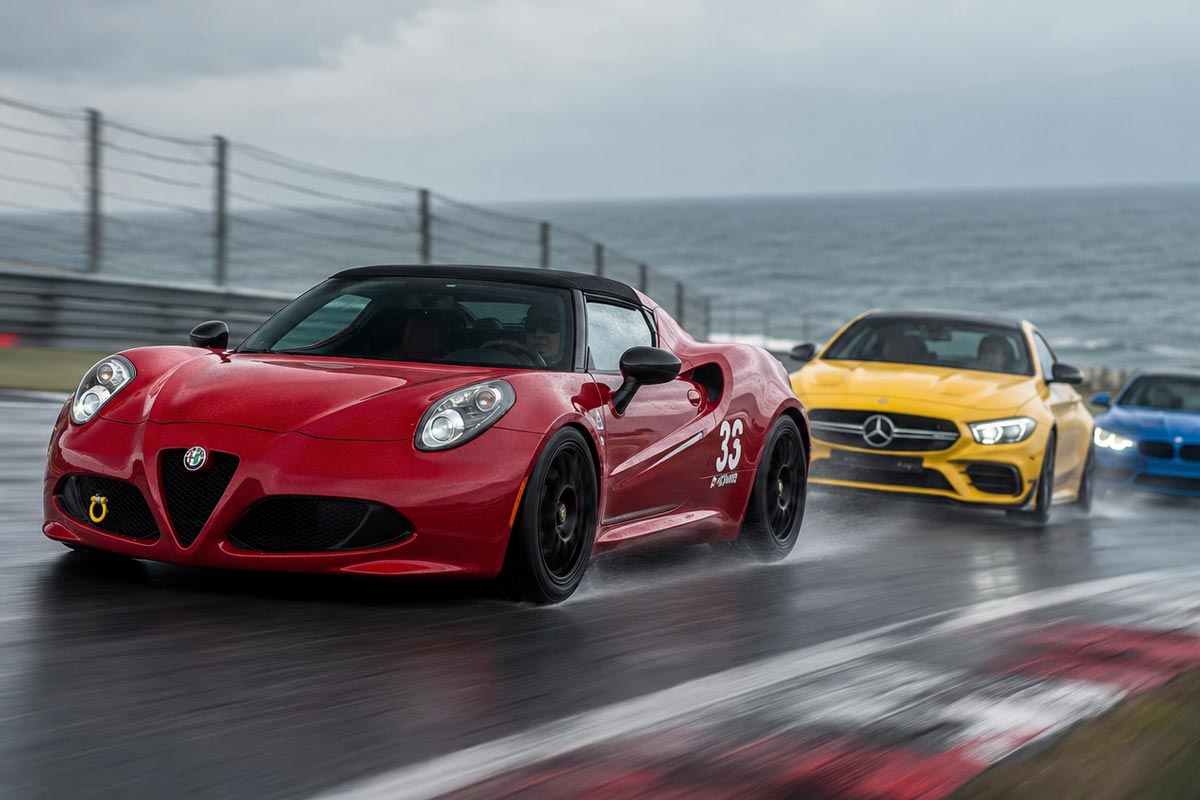
When we talk about the Alfa Romeo In the Japanese racing scene, names like TEZZO, Stile, and Tsukude Club come up often. However, since the early 2020s, another name has emerged as the undisputed leader: Toshio “Antonio” Ito. At the helm of Club PAZZO Auto Mobiles, he has gradually transformed a Alfa Romeo 4C Spider in one of the top-performing cars in the Alfa Challenge Japan and the ETCC (Japanese European Touring Car Challenge).
A very unique championship
The Alfa Challenge Japan is much more than just a single-make championship. The cars are divided into performance categories, but many races are held in conjunction with the Japanese ETCC, a series entirely dedicated to European brands! Could you imagine a championship dedicated to Japanese brands in Germany or Italy? Alfa Romeos thus find themselves on the track competing against Porsche GT3 Cup cars, Porsche Cayman GT4s, BMW M4s, Audi TTRSs, Mercedes-AMG A45 Ss, Alpine A110Ss, Lotuses, and McLarens.
In this context, performance is no longer measured solely by class standings, but also by the ability to compete with much more powerful GTs. This is precisely where the PAZZO 4C will set itself apart.
The Philosophy Behind the PAZZO 4C
The car gradually appeared under several names: «PAZZO AR11X 4C Spider,« »NEWAGE PAZZO 4C Spider,« and then »CLUB PAZZO 4C Spider.” Despite these name changes linked to sponsors, it is the same technical project developed over several years. Like TEZZO, PAZZO does not seek pure power but instead pursues a more ambitious goal: to be the fastest and most consistent car over a full lap. Development focused on four key areas: cooling, traction, consistency, and chassis balance.
The modifications, worthy of a Gran Turismo setup
On his CARTUNE account—which allows Japanese developers and designers to post updates on their projects—Ito detailed the successive improvements that have been made.
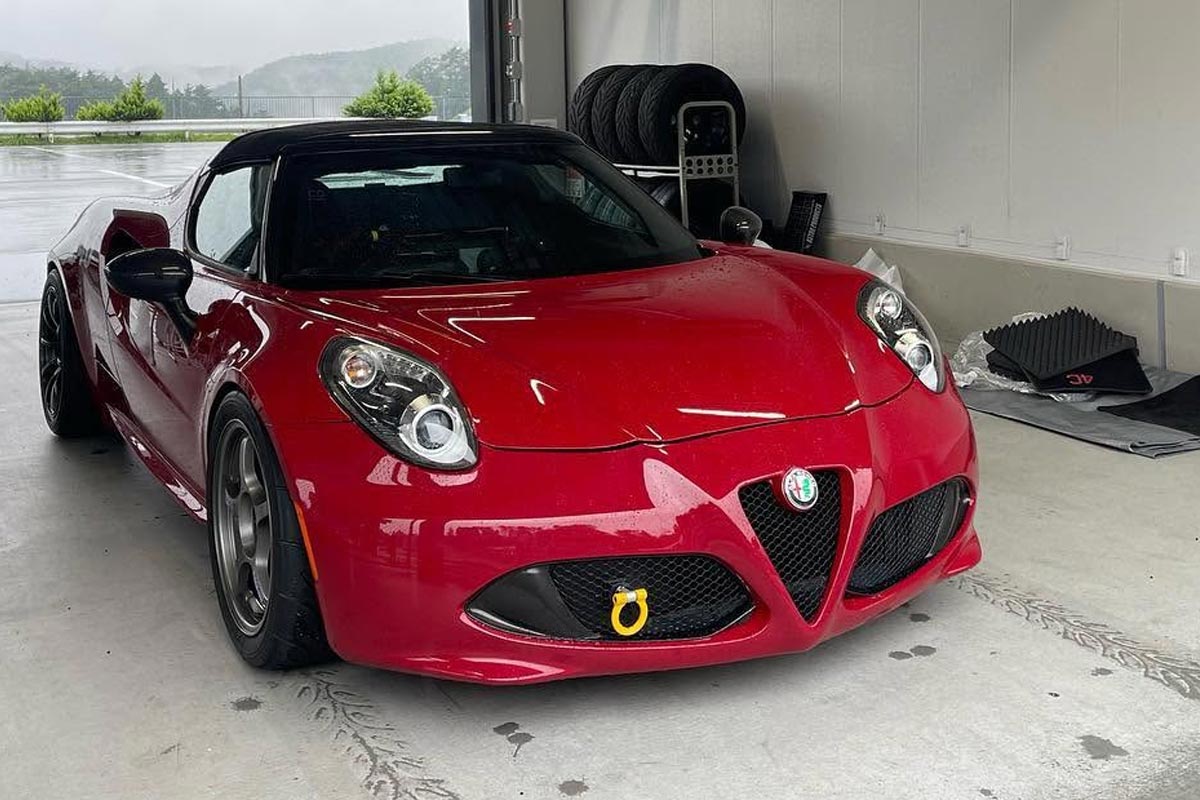
Notable features include: a “high-flow” turbocharger with an air intake diameter widened by approximately 5 mm, resulting in an increase of approximately 15 % in intake performance.
The turbocharger is still based on the IHI RHF3 that came standard on the 4C’s 1750 TBi models. PAZZO has therefore not replaced the turbocharger with a complete Garrett or BorgWarner unit. It retains the typical turbine outlet flange, the scroll geometry, the position of the internal wastegate, and the integrated manifold specific to the 4C. The exhaust-side impeller appears slightly larger, with thinner, more streamlined blades.
In the trade, this is known as an “IHI hybrid,” developed to prioritize very rapid boost build-up, excellent torque at mid-range, and sufficient reliability to tackle back-to-back rounds of the Alfa Challenge. It’s a very Japanese approach: rather than using a large Garrett turbo with a lot of inertia, the goal is to maximize the potential of the stock turbo.
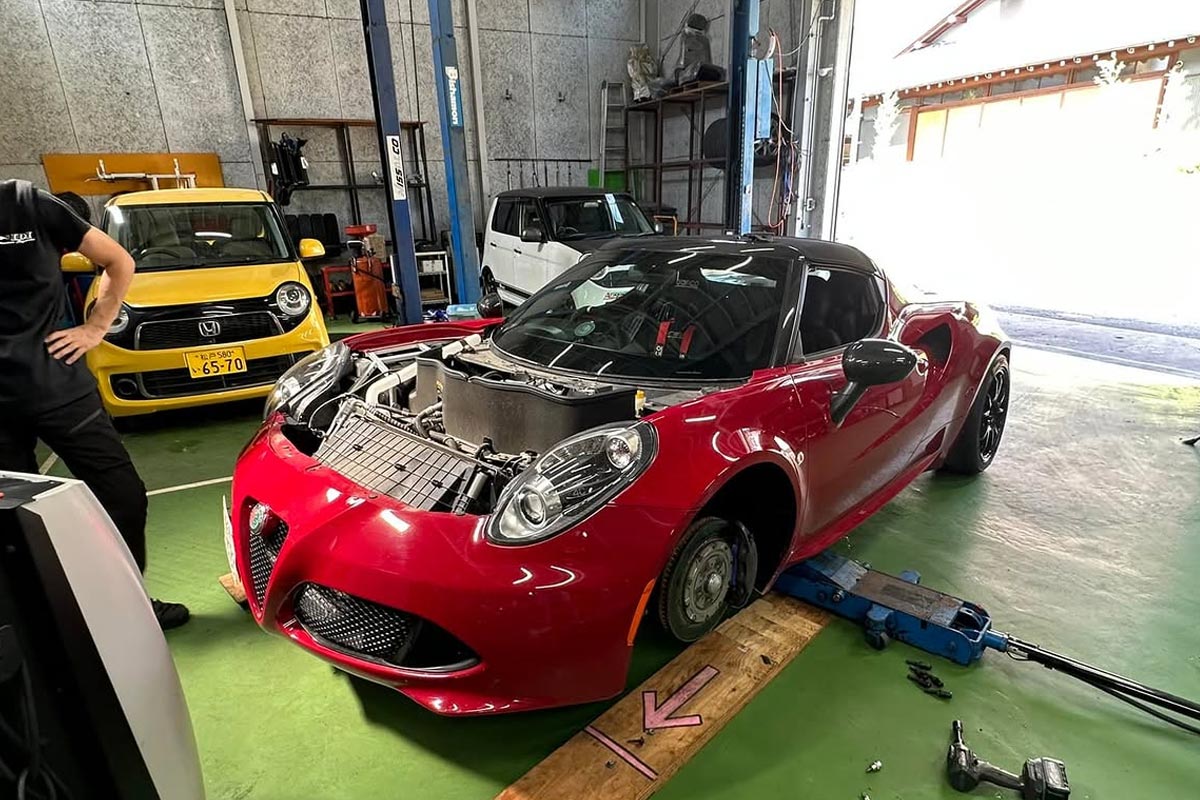
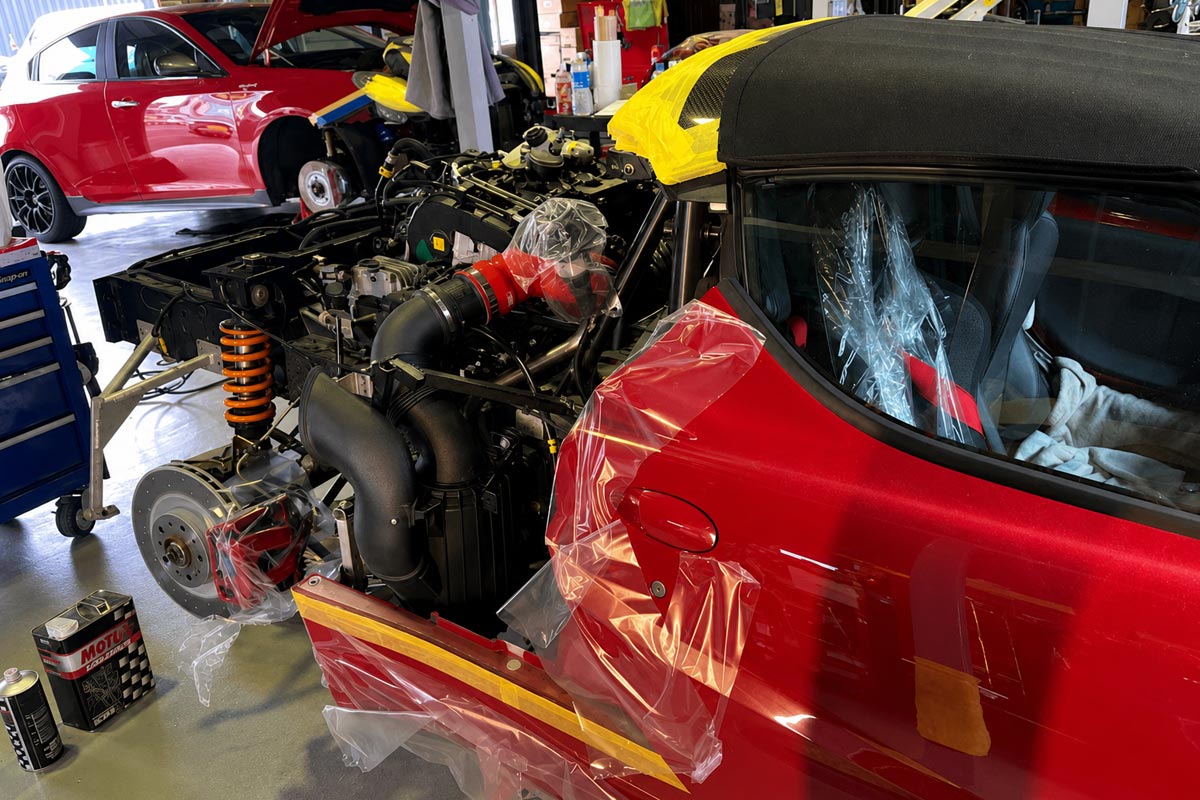
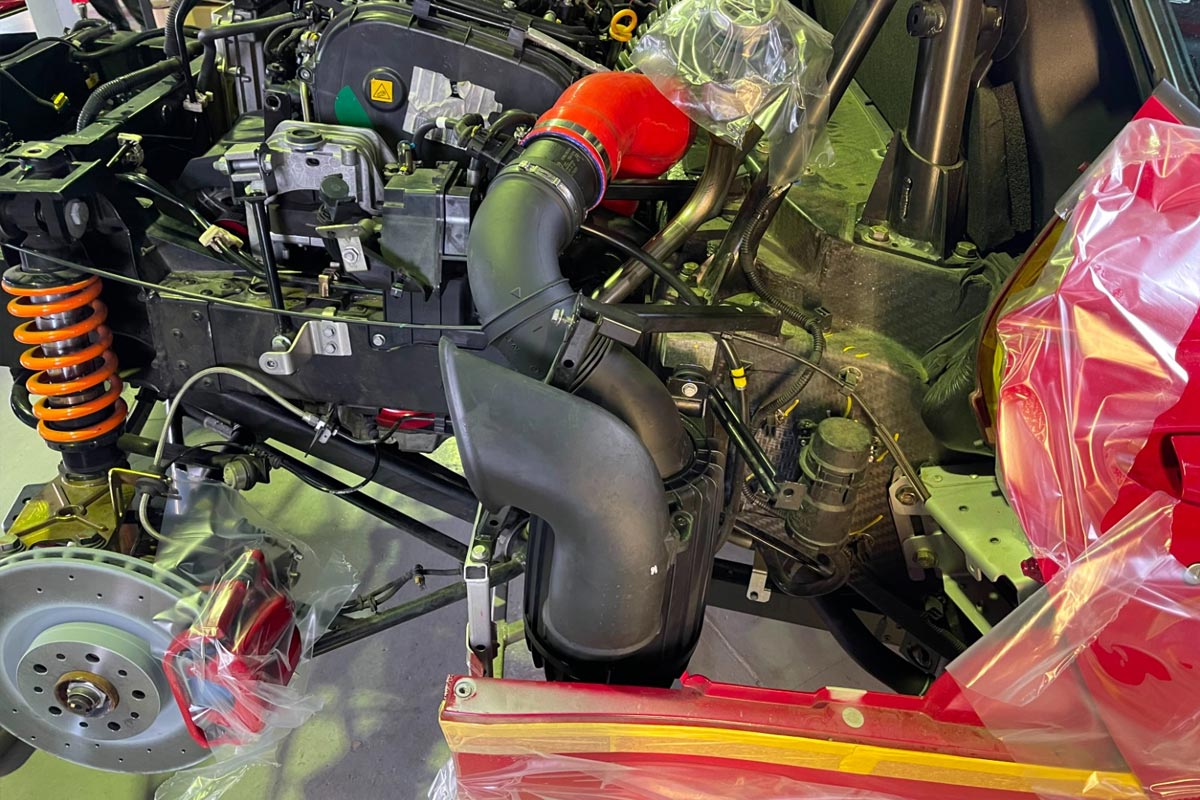
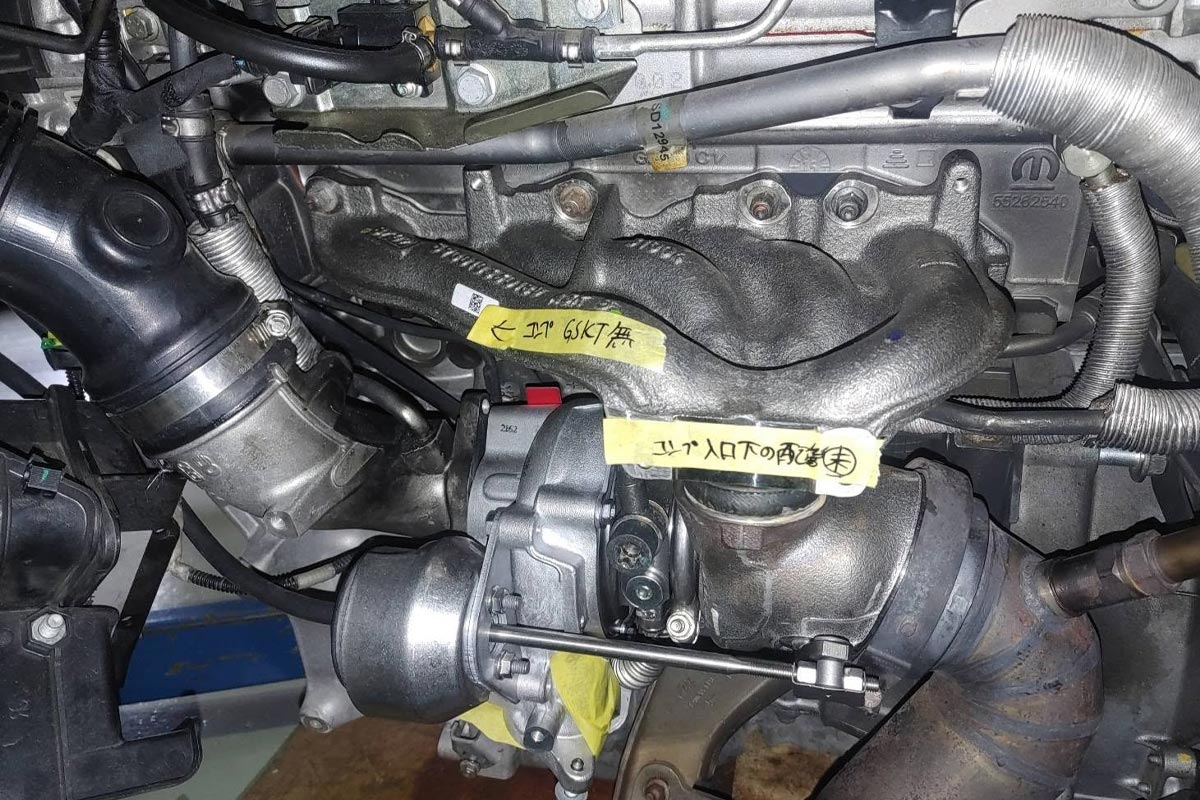
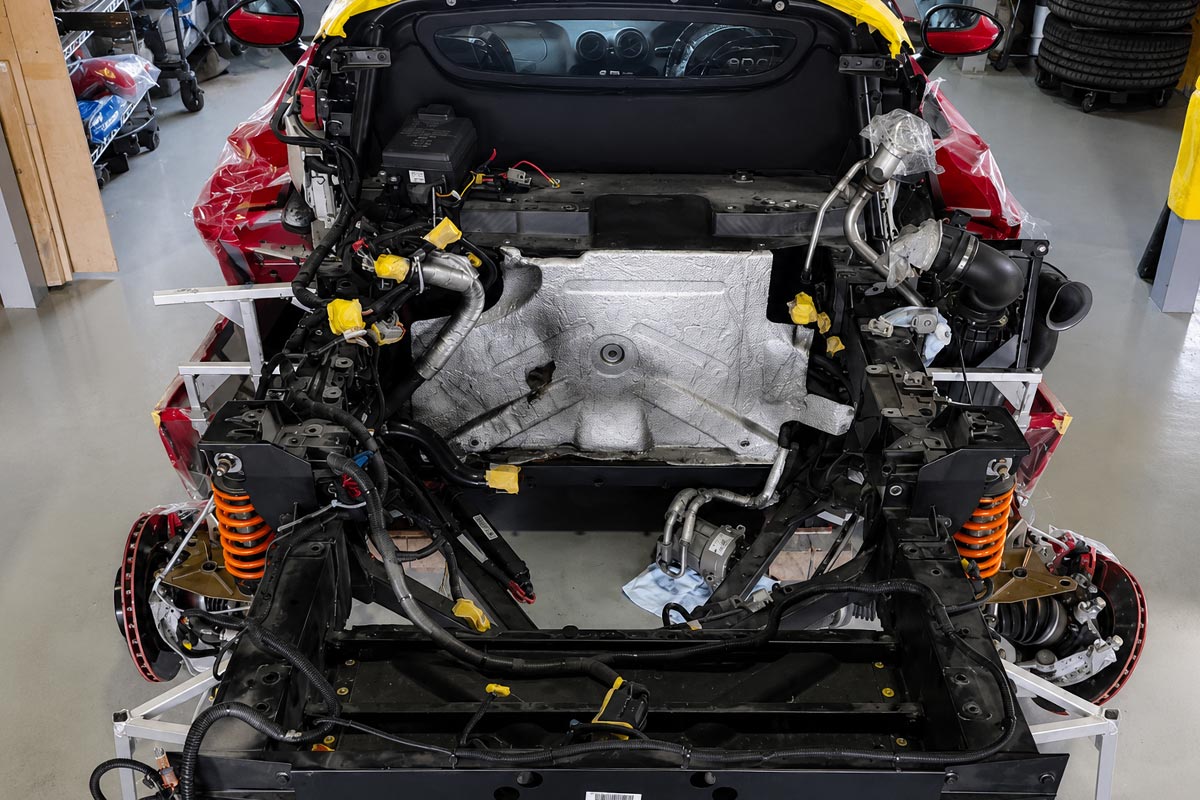
To date, no official PAZZO source has reported any dyno test results. Therefore, we cannot provide a specific figure. However, the known configuration (High Flow turbo, large intercooler, specific mapping) generally corresponds to modifications that produce approximately 340 to 360 ch, without major internal engine modifications. This is, however, a technical estimate and not an officially published figure.
Other key changes include a lightweight crankshaft pulley, an intercooler 1.5 times larger than the stock one, Samco silicone hoses, shock absorbers from the Japanese brand Aragosta—which is highly regarded there for its custom suspension kits—new engine mapping, and a major mechanical overhaul following the discovery of a leak in the turbocharger system and a faulty flow meter.
Finally, Pazzo installs a mechanical limited-slip differential, which completely transforms the car's handling, especially on winding sections. At Fuji in 2021, he stated "”Driving in the third sector is completely different! I don't have to hold back anymore!"
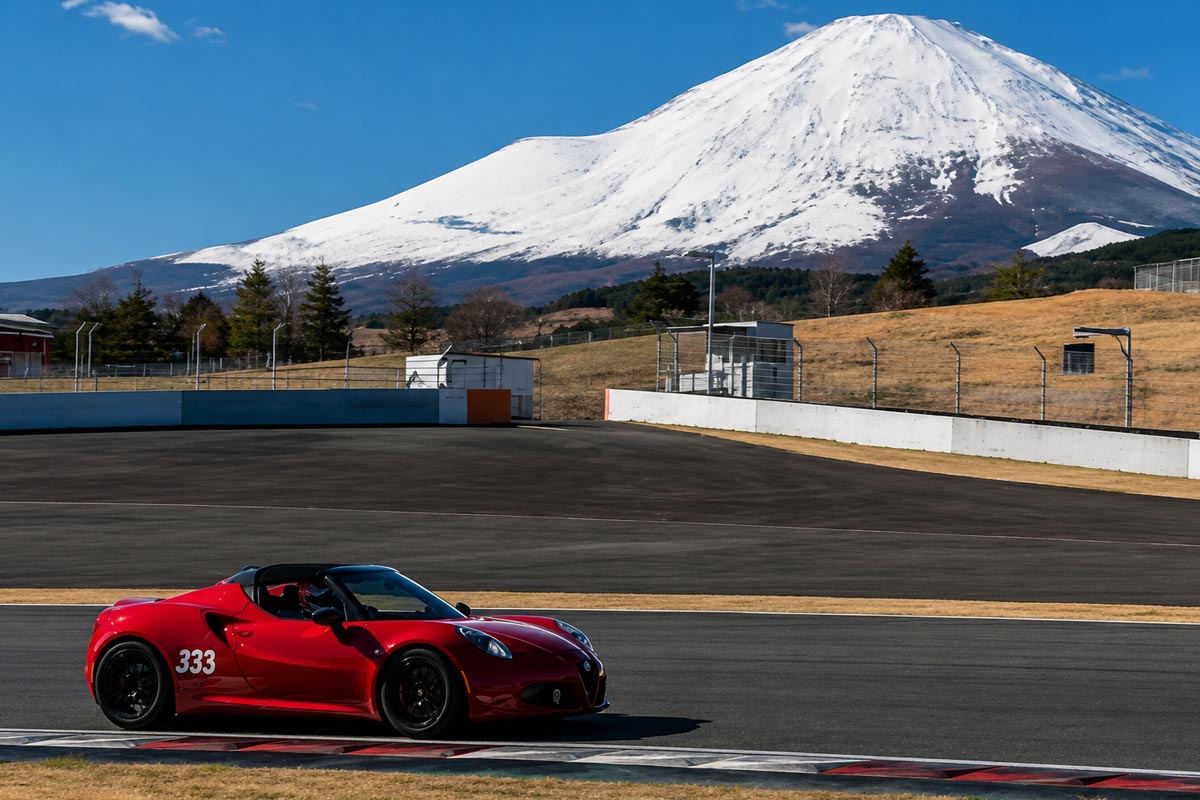
The year 2021 truly marks the PAZZO 4C’s emergence as a top contender in the championship. At the National Final held at Fuji Speedway, Antonio Ito secured the pole position in the SR category (Super Race, the top tier of the Alfa championship) with a time of 1’56″064, ahead of two other 4C specialists.
Beating Porsches… with an Alfa Romeo
One of the most fascinating aspects of Antonio Ito’s career is his ability to compete against cars that are theoretically superior. In several ETCC races, the PAZZO 4C has finished ahead of Porsche Cayman GT4s, BMW M4s, BMW M3s, Audi TTRSs, and even 500 ch Mercedes-AMG A45 Ss.
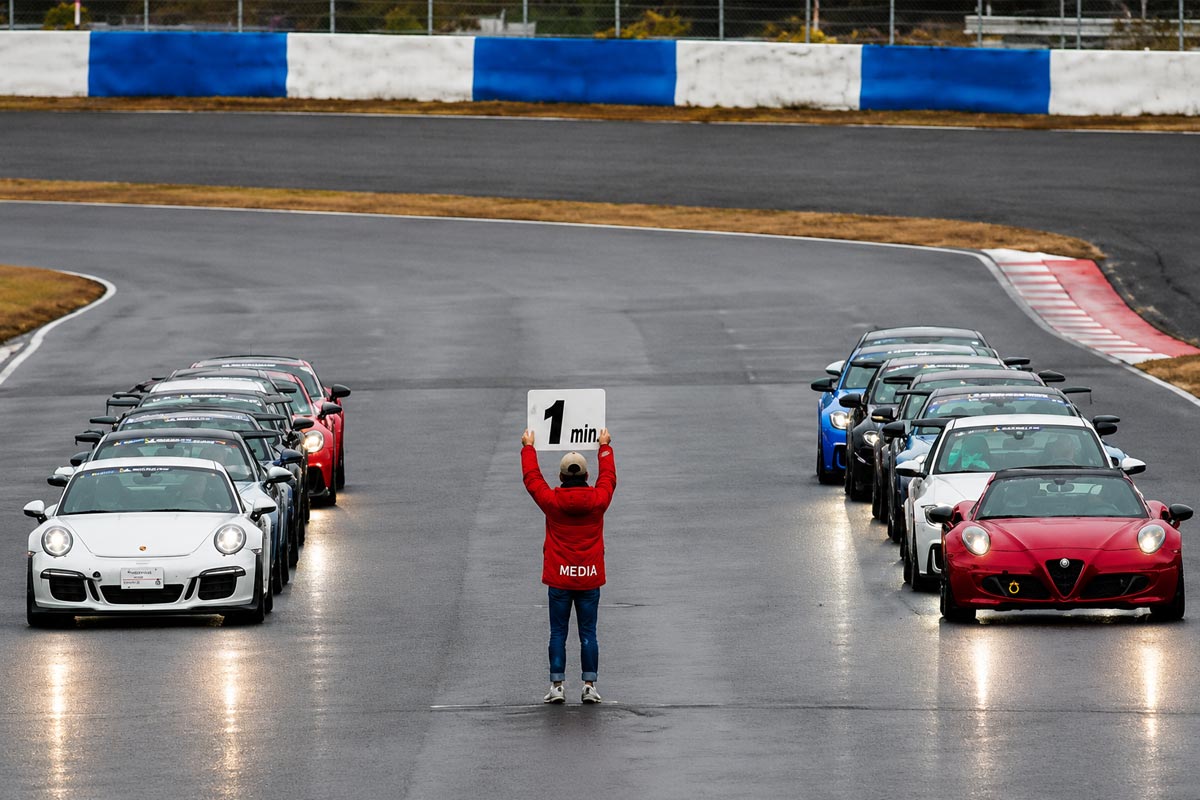
At the 2021 ETCC round at Fuji, Antonio Ito finished 7th overall but 1st in the SR class with a time of 1’55″073. He finished directly ahead of a Porsche Cayman GT4, a 600-ch BMW M4, and an Alpine A110S—sometimes by several seconds.
Even in the rain, the 4C works wonders. Also in 2021, although the session was dominated by a truly formidable sports car (Porsche 991 GT3 Cup, 1’58.633), Antonio Ito finished second with a time of 2’04.752, ahead of an Audi TTRS (2’05.943), a McLaren 620R (2’08.719), and a Mercedes-AMG A45 S (2’08.98).
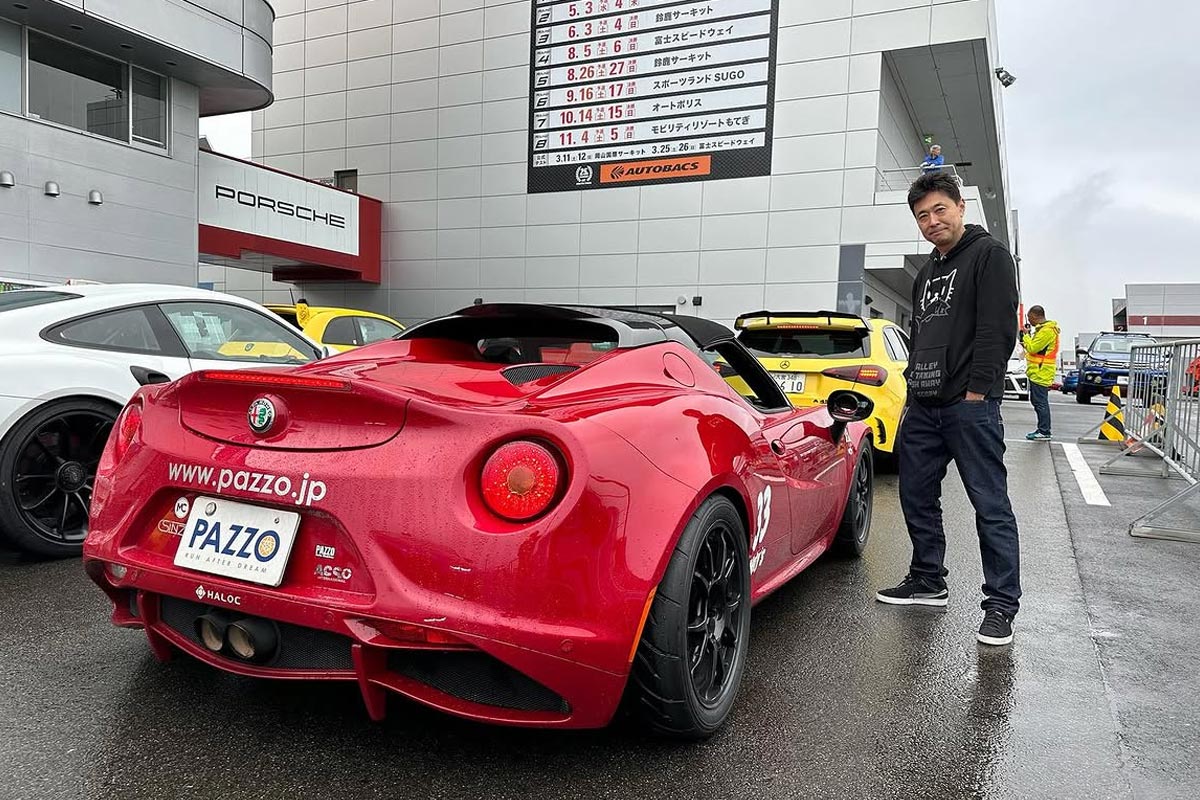

Weighing approximately 900 kilograms with an estimated 350 ch, the power-to-weight ratio is 2.6 kilograms per horsepower, compared to, for example, 3.2 kg/ch for an M4. The Alfa Romeo 4C features a very low weight, an extremely rigid carbon-fiber monocoque, excellent traction, and a particularly well-tuned chassis. The project culminated in 2022 when Antonio Ito was officially crowned SR & Overall Champion of the Alfa Challenge National Final behind the wheel of his Alfa Romeo 4C Spider. Ito was also the Kanto region champion for three consecutive years, in 2020, 2021, and 2022.
 English
  French
  Italian
  Spanish
  German
  Japanese
  Dutch
Dutch
Go, Alfa…