

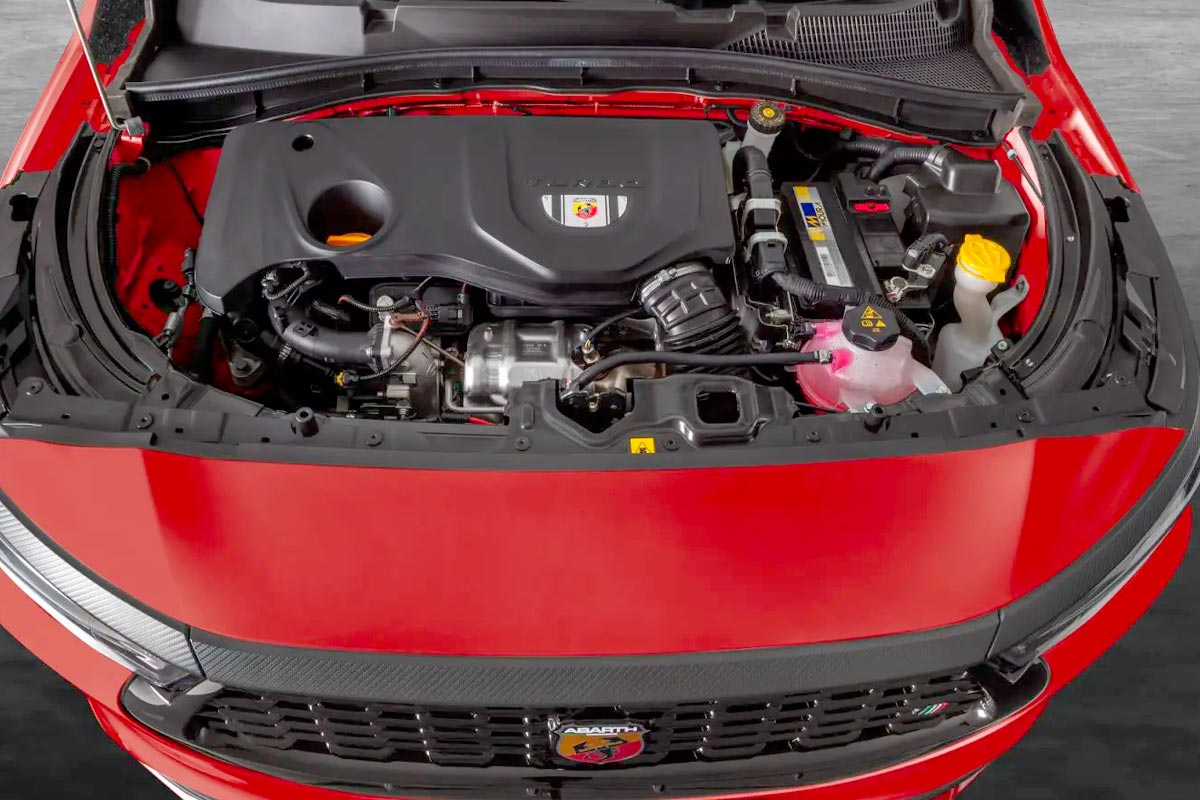
Weak signals had been piling up for several months. The return of dieselthe FireFly engine extensions, the investments in Termoli... all clues suggesting that Stellantis was in the process of overhauling its engine strategy.
But this time, there's almost no room for doubt. According to information from Brazil, the Group has taken a global decision: to phase out the 1.2L EB2 engine (PureTech/Turbo 100/TGEN3...), in favor of Fiat GSE Turbo timing chain engines. This decision is far from insignificant, and has a clear objective: to restore an image of reliability that has suffered in recent years.
PureTech in the sights
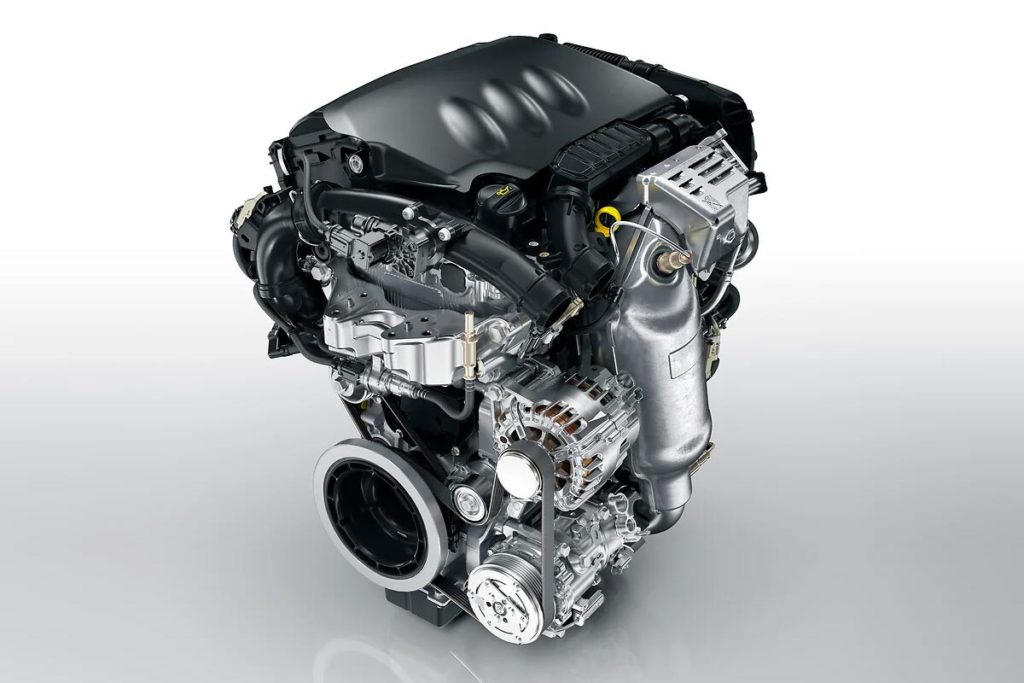
The 1.2 PureTech engine, long heralded as the cornerstone of Stellantis' European combustion strategy, now seems to be in the hot seat. Beyond the well-known belt problems, it's the engine's entire design that is being questioned internally. With the arrival of the Euro 7 standard, thermal and mechanical constraints are set to increase, making upgrades costly and technically complex. In this context, continuing to invest massively in this base no longer seems the most appropriate solution.
The comeback of Fiat GSE engines
Faced with this situation, Stellantis seems to have found a credible alternative on the Italian side, with GSE engines, also known as FireFly. Long considered secondary in the Group's organization, these engines are now back at the center of the game. And this return is not just symbolic: it is based on solid technical and industrial arguments.
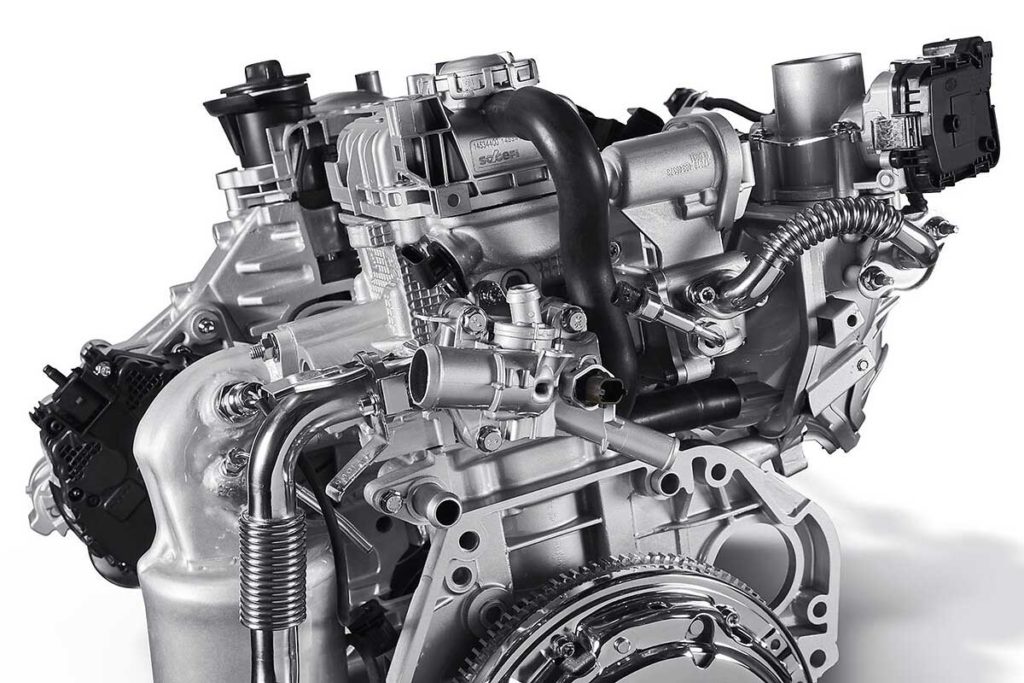
In Brazil, these engines have already proved their worth on a large scale. In 2025 alone, Fiat registered more than 500,000 vehicles equipped with these engines, a volume that speaks volumes for their industrial maturity and perceived reliability. In recent years, millions of Fiat cars have been powered by these engines in Brazil.
The local versions of the 1.3L GSE engine deliver up to 185 hp and 270 Nm of torque, well up to today's standards. For its part, the 1.5L GSE used in Europe, notably on the Alfa Romeo Tonale, boasts 175 hp. Less power on paper, but with considerable potential once adapted and optimized.
Euro 7 and hybridization
The real challenge now lies in adapting these engines to future European standards. Stellantis is currently working on upgrading the 1.3L and 1.5L GSE engines to make them compatible with Euro 7. But above all, these engines should be combined with more advanced hybrid systems than the current micro-hybridization.
This is where another strategic element comes into play: the electrified eDCT gearbox. Produced at Metz, Mirafiori and soon Termoli, it could become a central element of this new generation of hybrid powertrains. The combination of a robust combustion engine, a high-performance turbo and an efficient electrified transmission would significantly reduce CO₂ emissions while maintaining attractive performance.
Italian industrial revenge
Beyond the technical aspects, this evolution also tells an industrial story. At the time of the merger between PSA and FCA, many imagined a lasting domination of French technologies. For several years, this was indeed the case, with the rapid spread of PureTech engines across many of the Group's brands.
But market realities, regulatory constraints and reliability issues now seem to be reshuffling the deck. Italian engines, thought to be doomed to disappear, could finally become Stellantis' thermal base for the next decade.
If this strategy is confirmed, it will mark a major turning point. The Group's future European models could be based on a simple but coherent architecture: electrified GSE Turbo engines for petrol, a modernized diesel for long-distance driving, and electric power to complete the range.
In this scenario, the 1.3L and 1.5L GSE, modernized, turbocharged and hybridized, appear to be the ideal candidates for meeting Euro 7 requirements while keeping costs under control. It's a complex equation that Stellantis now seems intent on solving by relying on a proven technical base.
 English
  French
  Italian
  Spanish
  German
  Japanese
  Dutch
Dutch
Better late, very late, than never...
Yes, very late. I hope Stellantis puts the 4-cylinder and not another 3-cylinder bastard. The VW group is abandoning the 3-cylinder.
My last fiat engine in my kubo... never under 10 liters... 🙄
bir türk atasözü der ki. eşşeğe altın semer vursan eşşek yine eşşek. yıllardır bağara bağara söylüyorum stallantis adam olmaz
Yessssss for once Stellantis takes a good logical decision since the group exists, the Firefly is of more recent design than Puretech, to undergo the standards euros 7 .
It's about time, because I've had enough of French and German engine dung, unless I've taken out a «frequent and chronic repairs at the garage» subscription!
Which German engine in Stellantis?
He was certainly thinking of Opel.... forgetting that, since the takeover by PSA, it's all French under the hood.
You're forgetting that Opel hasn't had a German engine under the hood since 1935, when GM took over in 1929.
Just look at the latest 2.0 Turbo found in the 2 sublime Speedster and GT, or the 2.0 and 2.4 versions. What's more, Opel's diesels over the last 20 years have been powered by original Fiat engines.
Even during the GM era, Opel had its own engines, not all of which were shared with the other brands in the «GM» group.
Scudric
NO, Opel was even an engine manufacturer for European GMs.
The engines of the GTE, GSI and OPC were all in-house.
Totally untrue, because these engines were partly Holden and we've known for a long time that Opel was using GM parts.
Of course they're GM engines, as found in Pontiac, Saturn, Vauxhall and even the occasional Daewoo. Whether 2.0, 2.2 or 2.4.
Quoted: «... Inoltre, i diesel Opel degli ultimi 20 anni erano alimentati da motori Fiat.»
Non tutti: io ho lo Z17DTR della Corsa 1.7 cdti che e’ di derivazione Isuzu ed e’ un mulo, oltreche’ assai potente.
Quote: «...i diesel Opel degli ultimi 20 anni erano alimentati da motori Fiat.»
Non tutti: lo Z17DTR della Corsa 1.7cdti era di derivazione Isuzu ed era un mulo, oltreche’ molto potente.
Since 1935, Opel has no longer had a German engine, having been taken over by GM in 29.
Das ist falsch. Selbstverständlich hat Opel Motoren selbst entwickelt und gebaut. Benziner als auch Diesel.
No, it was based on GM engines for economic reasons, and the only GM brand to have kept its own engines for a long time was Saab.
Wrong. This was only the case for the top-of-the-range Diplomat, Admiral, etc. equipped with v6 or v8 before the 1st oil shock...
Astra, Ascona, Manta, Rekord, Corsa, Kadett, Mokka, etc. all had German engines. Even the latest Saabs were rebadged Vectras.
Not at all, because even the L4 engines were shared, as can be seen in the GT appeal or the Black Widow in racing. Yes, the last Saab was a Vectra and lost all its engines in the process, and the same was true of the previous version, which had to share its platform with the Alfa 159 and the famous Thema, which also never came out.
The 1.6L, initially a PSA-BMW collaboration
Fortunately, Stellantis doesn't have any, but the German engines have nothing to envy the problems of the puretech, because it's breakdown after breakdown.
Just goes to show that it's not just PSA, Ford and Honda that have had major engine problems, because the Teutons.... It's no better 🤣
The ex. THP has been remarkably reliable!
Exactly, the 1.6L is not affected by reliability problems.
Just by chronic oil overconsumption and premature chain slackening, but for you it's reliable.
Not to mention the Turbo, connecting rods, etc.
Liduofrimas
Scudric
Do you have it?
Me YES, soon 100.000 and absolutely NOTHING of what you say!
Since BMW's design problems were solved by Peugeot.
To top it all off, BMW enjoys an excellent image.
Yes, we've seen what it's been like for the RCZ and subsequent vehicles.
It's an unofficial report, validated by the brand, because it's the original parts that have been pushed to the limit, but as they are limited, they wear out much more quickly. On this point, Renault has never made such a mistake out of penny-pinching and have never skimped on their sports cars.
Maybe in the THP era, but since then it's been made more reliable.
Scudric
RCZ reliability is unanimously judged to be poor.
The 270 hp version can even be easily upgraded to 308 or even 330 hp without major parts changes, because the engine is so strong!
Wrong, because the RCZ is well and truly reputed to have serious engine problems, and Bimota had to redesign its 304hp version. Whether you like it or not, the old problems of the 1.6l are still a source of problems, and you can't increase the power of supercharged engines with original parts without being sure they'll hold up, as you can see on the L4 Honda, Toyota, Renault or Alfa.
Between the 1.6 THP and the 1.75 TBi, there's a huge world of reliability that Peugeot has never crossed since the end of the asthmatic 2.0 atmospheric made in PSA.
330hp but of course with a service life of 5000km?
Bimota must have worked very hard to produce 306hp and never wanted to guarantee reliability, and all the 1.6 THP 270hp engines that fail before 100,000km are puncture-proof?
That's not at all what their owner and the journalist testers say.
330hp but of course with a service life of 5000km?
Bimota must have worked very hard to produce 306hp and never wanted to guarantee reliability, and all the 1.6 THP 270hp engines that fail before 100,000km are puncture-proof?
That's not at all what their owner and the journalist testers say.
Indeed, a PSA engine that doesn't break down every 100km, that's noticeable 😌
You could say that up to the 406c it was top of the range, but on the other hand, these PSA engines were sorely lacking in HP and NM, as was Lancia for that matter.
One thing's for sure, the 406 coupé's chassis is impossible to fault. I did everything I could to get it to stall, but it didn't, whereas the Alfa GT stalls quicker (but with more HP and Nm for the same displacement).
PSA would have done better to buy foreign engines and focus on its strong point, the best front-wheel-drive chassis, but since then Honda has taken over.
It's completely the opposite, and I've already sent you many of the problems, especially for the 270hp versions, which have a lifespan of no more than 100,000km.
To late, first GSE cars will arrive in 2029-2030 ( peugeot 208 and 2008 replacement). No current car will recive upgrade. DS7 and Lancia Gamma will remain on 1.2 puretech until replacement comes in 8-9 years and will be 100% electric (2035 european electric mandate). Stellantis is done.
No, no, the Firefly should arrive progressively to replace the Puretech as soon as the euro 7 standard becomes mandatory, but the replacement will take place little by little while we put a quantity of engines into production to supply the Stellantis brands. This doesn't mean that all 1.2l engines will be replaced at once. .
I'm not sure if this step is radical enough. The future is electric and a lot will change in the next decade. My advice: much smaller engines, below 1 liter, as standard plus hybrid. And max 2 liters for the topmodels, including 6 or 8 cilinders plus hybrid. And ofcourse also much more EV.
Do we know if the models currently equipped with puretech (large panda, for example) will benefit from these FIREFLY engines?
If so, when?
Good news at last
All that remains is to give Italian brands back their Italian style....
If I'm not mistaken »Euro 7 will first apply to new homologations from November 29, 2026″. So it will surely be for models homologated after this date. So for the moment, for example, Fiat Grande Panda and Fiat Grizzly are not concerned.
Finally! It seemed so obvious to do it this way from the start that one wonders how such well-paid executives could make decisions so out of touch.
With FILOSA, pragmatism and b9n sense seem to be making a comeback.... let's hope it continues.
Not least in its purely Italian design, and not yet in the rebadging of Peugeot or Citroën.
Why not upgrade the TU XU XUD 2-litre HDi and 2-litre 2 twin-turbo HDI blocks, which are solid and puncture-proof?
3 cylinders and small displacements were technical errors
At the prices our beloved cars sell for
We can expect reliability, safety and longevity.
A complete overhaul of the automobile, otherwise for some it will be the end.
The TU and XU are a thing of the past, replaced by the THP 1.4 l/1.6 l PSA/BMW and the 1.2 l Puretech. All PSA engines will be replaced by Italian ones: 2.2 l and 1.6 l multijet diesel and Firefly petrol euros 7 .
Exactly, I have two petrol vehicles, a TU and an XU. Vehicles that run every day, passing 200,000 km without any problem and no oil consumption.
In any case, the EWs don't have a CV, but they love oil.
When will these engines be available?
The end of the tunnel is finally in sight.
I'll be able to think seriously about my future Italian, it's about time.
Maybe that'll make me stay on the Italian side of Stellantis for my next vehicle. For the moment, with Peugeot engines, that's out of the question.
To be confirmed in practice, but the Italian recovery seems to be underway.
If this could materialize as a low-slung compact at Alfa or Lancia, that would be great, given that at Fiat the next compact model will be the Panda SUV coupe. I'd love a new Giulietta or Delta.
Let's hope for something more efficient than GSE in the Tonale! Otherwise, it's not worth it either. And above all, we expect qualitative hybridization. ... better than what is now available in the US. Stellantis is still lagging behind.
There's a world of difference between a sand problem and a basic operating problem.
Keer op keer geeft Stellantis voorkeur voor Frans makelij tegen beter weten in,ook bij nieuwe modellen krijgt PSA voorang.
We absolutely must turn the page on these Puretech engines, which have damaged Peugeot's brand image. Strangely enough, before 2013, Peugeot knew how to design excellent engines.
The Tavares effect?
1.3 and 1.5 engines instead of Peugeot's 1.2 and 1.6, that's good news. But there's no way these engines can be used as top-of-the-range solutions, even on Tonale-level cars. Not to mention overpriced Stelvios and DS7s. These cars need real engines like the 2.0 Hurricane, which is only offered on the Tonale for the American market, as well as gearboxes capable of handling high torque.
The engineers' job should be to figure out how to adapt all this to Euro 7 standards.
The 1.6 peugeot will stay!
What a horror... 🤢
Oh yes, it won't be replaced, since it has just undergone a Euro 7 upgrade by Opel engineers, is already available as a U.S. hybrid on the Jeep Grand Cherokee and should soon be arriving in Europe.
The 1.6L HEV available in the USA would finally be a credible engine for Europe. It's a pity to offer it so late.
Who can afford to buy models with a 2.0 l petrol engine, taxed on registration, insurance and pollution???
Except on top-of-the-range Alfa Romeo and Maserati models.
Finally, Stellantis is going to part with PureTech for Italian cars. It's about time, but better late than never.
For the entire Stellantis Group, including French and German brands
In any case, Stellantis will go bankrupt because of Brussels, which is imposing unachievable targets that favor Chinese industry, and because of its policy of immediate profit, its lack of investment and its many U-turns.
The Agnelli family has done a lot of damage to brands like Alfa, with the switch to front-wheel drive and imposed platforms, the abandonment of Lancia and its iconic models, and the glaring lack of investment in FIAT.
When can I buy a C3 with this new Italian engine?
In my opinion, Firefly engines will be available from 2027 onwards, but we need to be patient to produce a quantity for the whole range of Group brands.
Tante promesse per il futuro ma presente??? Le auto con la cinghia a bagno d'olio che con 50/60000 km devono essere cambiate??? Questa grande «cazzata» che hanno fatto chi le paga? Non dovrebbero essere sostituite gratis?
I'd like to buy a French car, but their engines have been crap for a long time. I currently have an Opel, but with a 1.4 turbo petrol, so far so good, but it's my last European,
Für mich kommt nur ein Auto mit Allrad und Diesel infrage!
Instead of manufacturers finally uniting to fight these absurd European standards, we're once again embarking on attempts that will ultimately fail!
You're absolutely right.
The problem is these absurd standards.
I prefer to drive a pre-2010 used car for this reason.
I don't want stop and start, I don't want autonomous driving, I don't want automatic braking, I want to remain in control of my vehicle.
I just want the minimum:
ABS
EBD
ESP (except on my coupé)
A wireless car play/Android car radio
Reversing radar
Reversing camera
A reliable naturally-aspirated engine.
Too late the damage is done, while Italian engine builders have always been considered among the best if not the best, Elkhann and his underling Tavarès choose 💩 from Peugeot as a base! Go figure Charles 🤔
Ich habe mir den Peugeot traveller mit 2.2l Multijets Motor gekauft bin damit total zufrieden besser als der alte PSA 2l Motor der sehr oft Öl Verlust hätte bei 100.000km mußte ich den halben Motor ausbauen weil fast jede Dichtung an Motor defekt war und das schlimmste war der Simmerring zu getriebe
And yes, the proof is in the pudding, the Mjtd Fiat diesel is far more reliable, which is why Stellantis decided to keep them for the whole group. .