

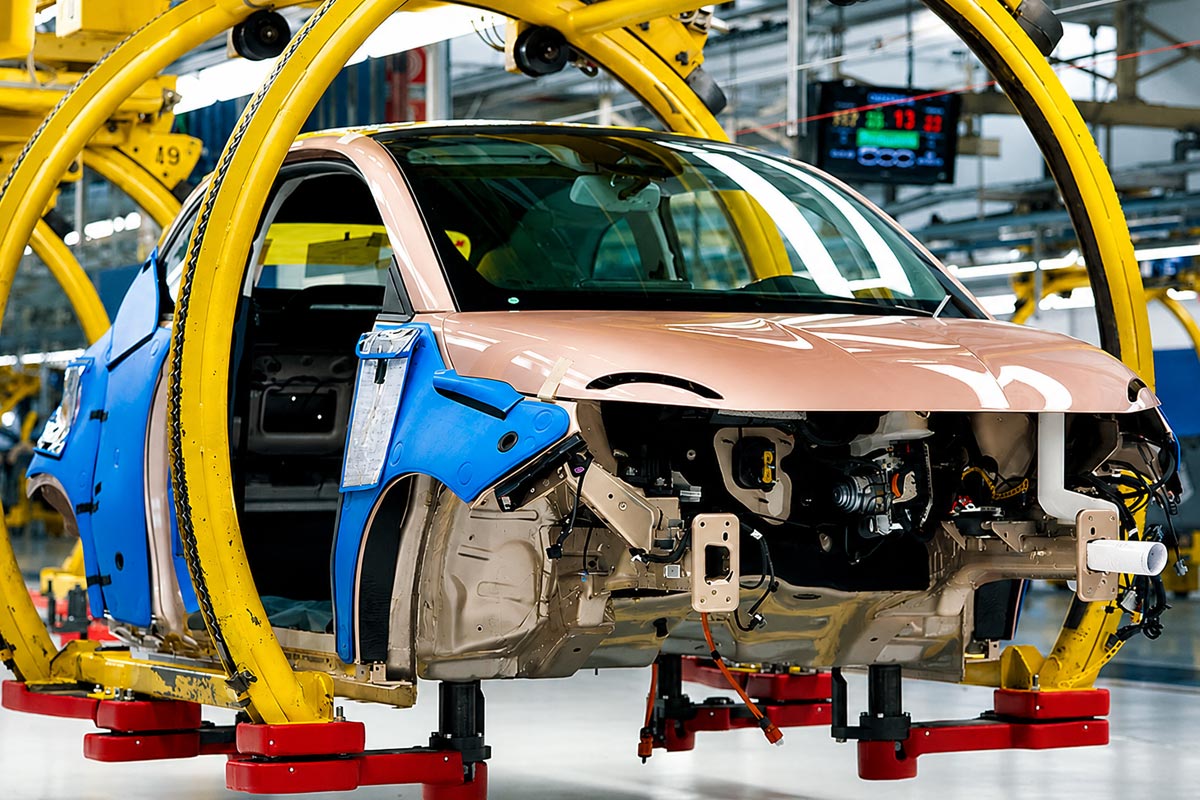
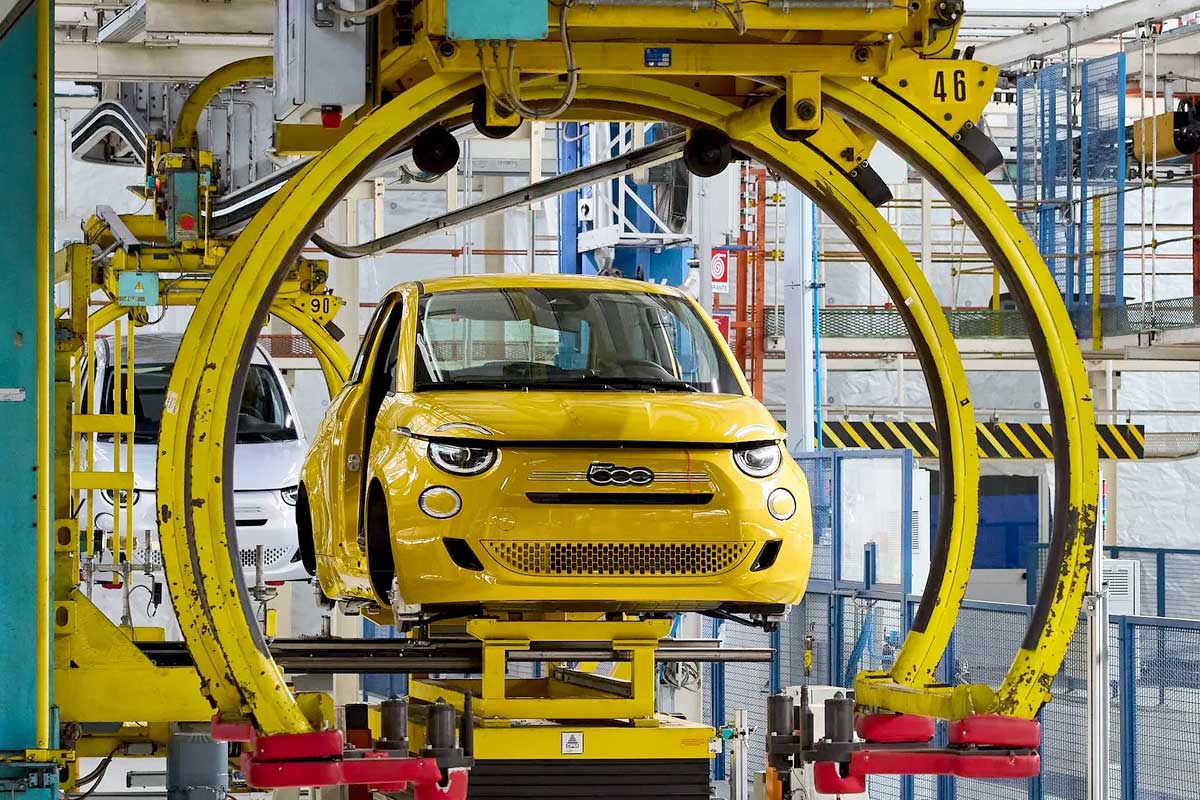
In Mirafiori, the clock keeps ticking. Three days off, then six, and now seven since the beginning of September. Stellantis has just announced another day of no production on Monday, September 21, at its historic plant in Turin, where the Fiat 500 Electric and Hybrid.
And the paradox is becoming increasingly hard to ignore. Since the beginning of the month, Stellantis has attributed these production stoppages in part to supply chain issues with engine components, as demand for the 500 Hybrid reportedly exceeds the capacity of certain suppliers. A few days later, Emanuele Cappellano, head of Stellantis Europe, even welcomed the «expected doubling of production at Mirafiori in 2026.» A very real increase on paper. But one that does nothing to reassure the unions.
Production has doubled… but compared to a disastrous 2025
Ultimately, it all comes down to the point of comparison. By 2025, approximately 30,000 electric Fiat 500s had been sold. The arrival of the Fiat 500 hybrid was therefore expected to take production at Mirafiori to a whole new level. Initially, the ambitions were particularly high. The goal of 100,000 Fiat 500s produced annually had been suggested, and the figure of 120,000 units had even been mentioned shortly before that. With hybrid models bolstering the electric lineup, Mirafiori was finally set to return to high production volumes.
But since production of the 500 Hybrid began in late 2025, forecasts have gradually been revised downward. Estimates have dropped from 100,000 cars to around 90,000, then to 80,000. Now, Stellantis is reportedly expecting around 60,000 cars. This is where the famous «doubling» takes on its full meaning. Compared to the very low volumes of 2025, production in 2026 is indeed expected to be about twice as high. But it would still fall far short of the initial ambitions. The FIOM summarizes the situation: «According to her, the goal was to quadruple the volume, not simply to double it.».
«They're playing with words.»
According to Edi Lazzi, secretary general of the FIOM from Turin, and Gianni Mannori, the union leader at Mirafiori, say that the latest shutdown on September 21 is therefore particularly symbolic. «Once again, they’re playing with words when what’s needed are concrete solutions,» they criticize, arguing that Stellantis is trying to portray as a success an industrial situation that, in their view, remains very concerning.
The Fim Cisl has reached the same conclusion. Its automotive division head, Igor Albera, believes that this new suspension «confirms just how fragile the plant’s production continuity is» and points to insufficient volumes to keep the production lines running at full capacity. The same concern is shared by the’UILM, which believes that repeated work stoppages have a direct impact on employees' incomes and are now creating uncertainty about job security.
More than 400 new hires… and now fears for jobs
This is probably the most troubling point. In early 2026, more than 400 new hires had been made to support the ramp-up of the Fiat 500 Hybrid. These hires made sense for a plant aiming to produce 100,000 cars or more. They make much less sense if Mirafiori ultimately ends the year at around 60,000 units. The unions are therefore now concerned that some contracts may not be renewed in the coming months. What was supposed to be the year of Mirafiori’s revival could thus end with renewed concerns about jobs.
And the September schedule does nothing to reassure employees. After a summer shutdown extended to four weeks, the plant resumed operations only to face a series of work stoppages almost immediately afterward. With the stoppage on Monday, September 21, seven production days will have already been lost since the beginning of the month.
What's next after the Fiat 500 Hybrid?
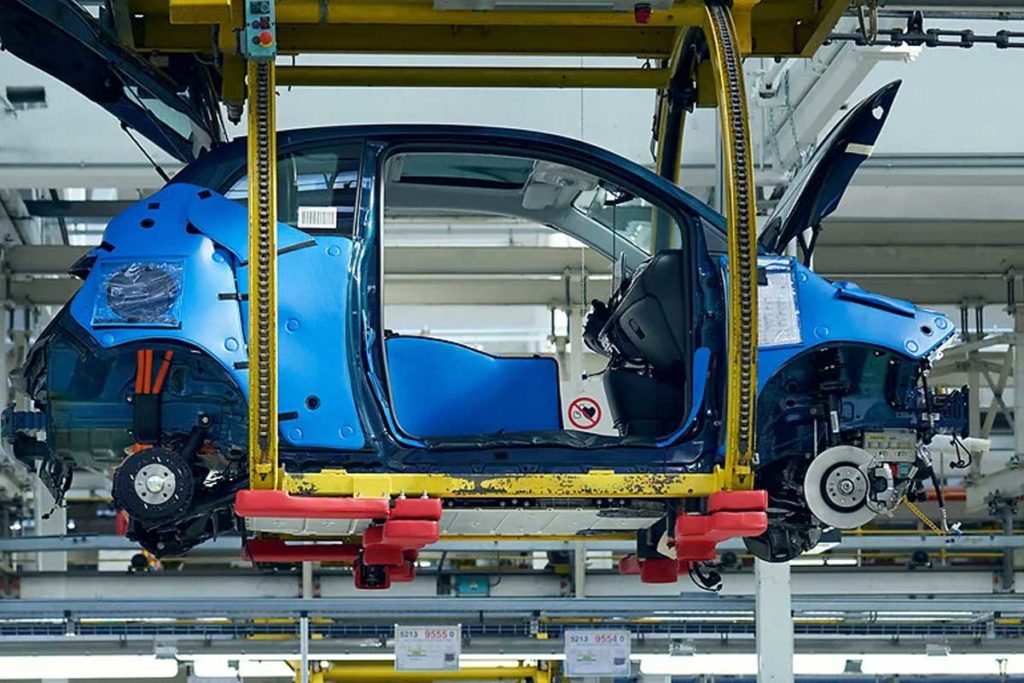
Above all, there remains one question to which Stellantis has not yet provided a clear answer: how can production volumes at Mirafiori be sustainably increased? The unions have been calling for months for a second model to be assigned to the plant. In their view, the hybrid and electric Fiat 500 models are not enough to ensure sufficient production volume until the arrival of the next generation of the 500, which is not expected before 2030.
To date, however, there appear to be no plans for a second model. Stellantis can therefore, in fact, take pride in the fact that production at Mirafiori is expected to double by 2026. But after three days of downtime, then six, and now seven in September alone, the workers are paying less attention to the growth rate and more to the assembly lines that are shutting down. Above all, they’re now wondering how many of them will still be there when production is set to resume.
 English
  French
  Italian
  Spanish
  German
  Japanese
  Dutch
Dutch