

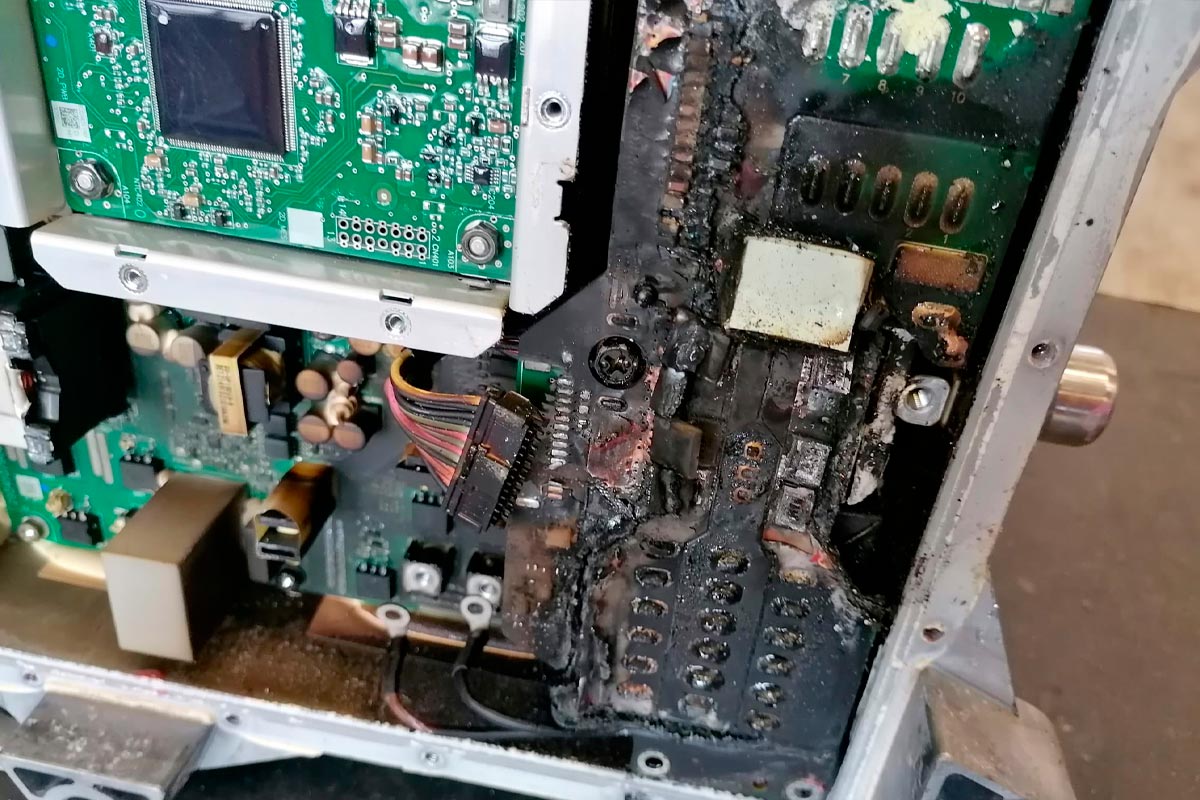
Just a few days after mentioning the technical future of the electric Fiat 500, a revelation has cast a pall over the Italian city car. And not from just anyone. The alert comes from EV Clinic, a leading European specialist in battery and electric motor repair. Their findings are disturbing: a design flaw could make the 500e potentially dangerous.
An electrical “brain” that can turn into a catastrophe
At the heart of the problem lies a component little-known to the general public, but essential to the car's operation: the IDCM/OBCM/AMP/EVCC module. Behind this complex acronym lies the true electrical brain of the Fiat 500e. It groups together several critical components, such as the on-board charger, battery management and power controller.
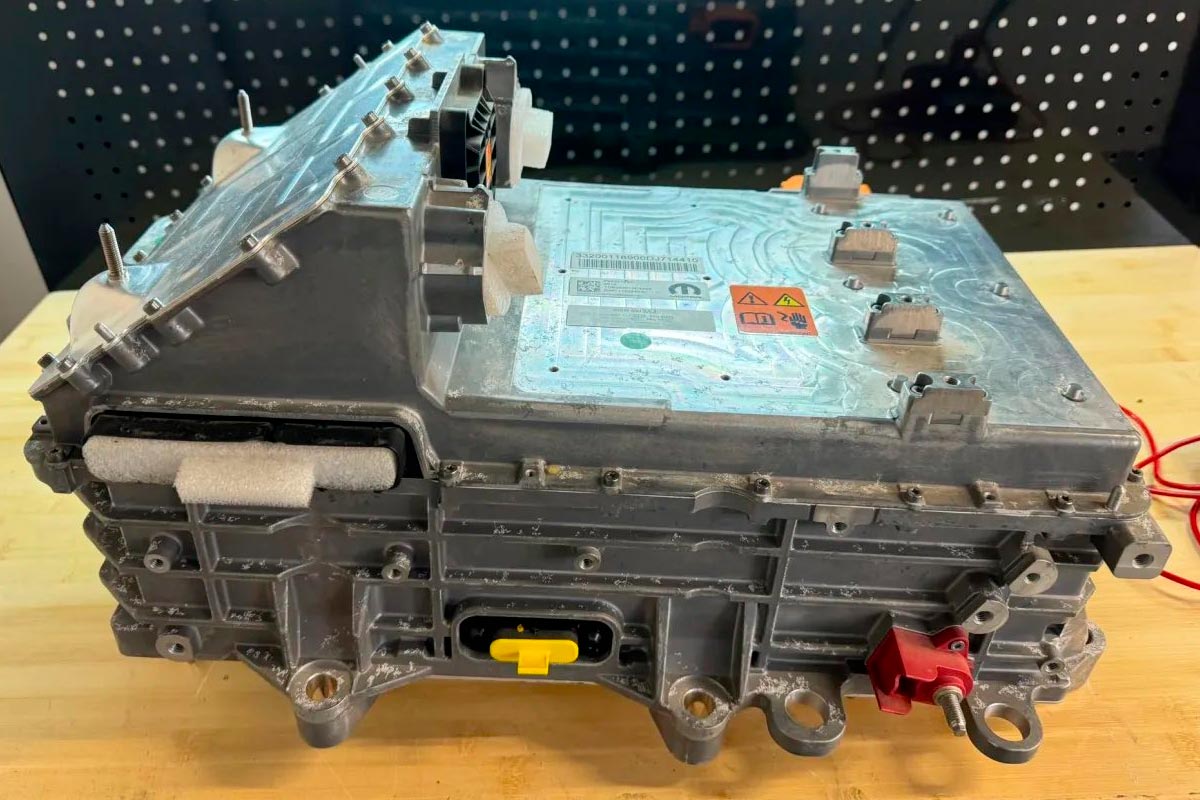
According to EV Clinic, this module has a major flaw. It can allow coolant to seep inside its circuits. An explosive situation in a high-voltage electrical environment. Once in contact with 400-volt components, this liquid causes a short-circuit. The result can be spectacular: the casing can swell, blow up or even catch fire. The workshop even refers to a recurring behavior, ironically but disturbingly described as a “kaa-boom” phenomenon.
A real risk for security systems
What makes this situation even more worrying is that this module doesn't just manage high voltage. It is also connected to the car's low-voltage network, which supplies essential equipment such as safety systems. In at least one case documented by EV Clinic, a failure resulted in the complete destruction of the low-voltage circuit. In practical terms, this means that components critical to passenger safety can be affected. So we're no longer just talking about an immobilizing failure, but a problem that can have direct consequences for safety.
A costly breakdown... and almost beyond repair
As is often the case with modern electric vehicles, repairs are neither simple nor affordable. Replacing this module costs between 5,000 and 7,000 euros. A substantial sum for a city car. But the biggest problem lies elsewhere. Unlike many automotive parts, it is impossible to install a second-hand module. This component is electronically locked to the vehicle via several immobilizers, with VIN and key data stored in different memories. As a result, even a part from a crashed vehicle cannot be reused. A constraint that makes each breakdown particularly onerous financially for the owner.
My wife's 500 also had a similar problem. It took nearly a year involving a lawyer and an auto expert to finally get Fiat to pay for the repairs. They also had to replace the high-power battery as the original wouldn't work with the new units. pic.twitter.com/UGpcCtuhz2
- Arnaud Stelian (@Piloufa) April 17, 2026
A design error according to the experts
For EV Clinic, the problem is more than just an isolated defect. It's a questionable design choice. Grouping all high-voltage components in a single housing creates a single point of failure. Clearly, if this module fails, the whole system can be affected, sometimes brutally. An architecture which, according to the experts, considerably increases the risks.
Even more worryingly, the workshop claims to have observed a sufficiently high number of cases to speak of a recurring problem. A failure rate deemed “alarming”, which in other contexts might already have triggered a large-scale recall campaign.
A silence that raises questions
Faced with these revelations, one question arises for this expert: why has no action yet been taken by Fiat ? Again according to EV Clinic, a fault involving a mixture of coolant and high-voltage components should be immediately classified as a safety hazard. In many markets, this type of problem would already have led to a global recall. For the moment, no official communication has been made in this regard.
This revelation comes against an already delicate backdrop for the Fiat 500e. With declining sales, a repositioning of its pricing and the expected arrival of a new battery by 2027, the electric city car is playing an important part in its future. But if this flaw were to be confirmed on a large scale, the whole strategy around this electric model could be called into question.
 English
  French
  Italian
  Spanish
  German
  Japanese
  Dutch
Dutch
Like Apple, Fiat has chosen to use authorized repairers and certified parts for reasons of margins and safety. While there's no denying the problems described here - which seem serious - it's worth noting that EV Clinic has been taking potshots at Stellantis for years because they'd like to be able to repair their electric models instead of the aforementioned repairers.
Thank you, in fact EV Clinic, which I've been following for several years, takes a swipe at Stellantis but not only (BMW's been there too), overall they regret manufacturers who don't play the reparability game. But who can blame them? Whether it's a combustion-powered car or a smartphone, it's now possible to have repairs carried out wherever you want.
I see an advantage for owners and second-hand buyers: stolen models can't be easily pirated or sold as spare parts, and a second-hand model can be easily certified. The downside is the cost of parts and labor.
Like a combustion-powered car, in fact
Whatever the strategy, the manufacturer should take a very close look at it, so as not to end up with one more scandal like takata takata here come the daltons...which could cost it its already lacklustre future...
Was für einseitiger, reißerischer Müll. Was nützt die ansatzweise berechtigte Kritik, wenn sie in technisch falschen Anschuldigungen untergeht?
Ich habe nun ein paar «Enthüllungsartikel» hier gelesen und bin irritiert, welch altbekannten Informationen mit großem Pomp als neue Sensationen angepriesen werden.
I had the same issue with my Seat Mii three weeks after the warranty expired
I had a problem with the company
Not
I was left with a car I couldn't use, so I had to scrap it—it was only 3 years old. That's crazy.