

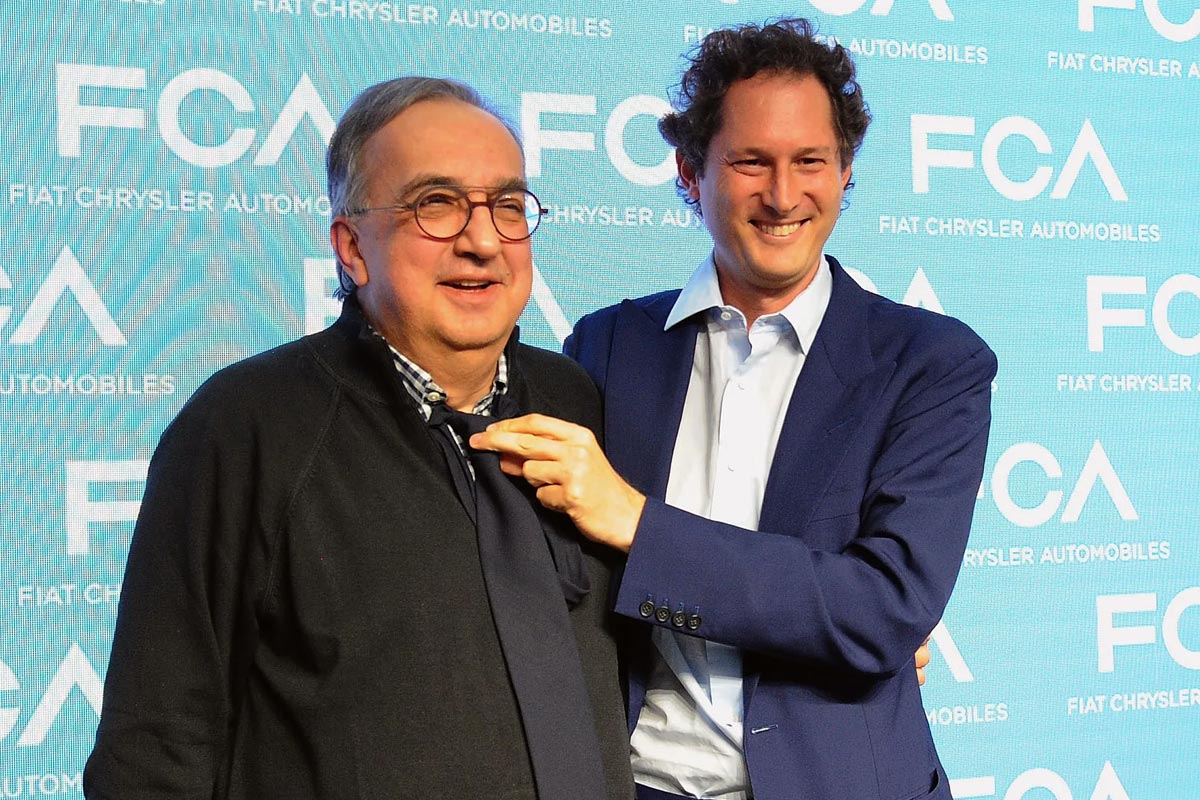
In 2018, the deal was presented as one of the last major strategic moves initiated during the Sergio Marchionne era (and finalized by Mike Manley). Fiat Chrysler Automobiles sold Magneti Marelli, its long-standing parts supplier, for 6.2 billion euros. Eight years later, the story could take an unexpected turn: Stellantis is now considering acquiring part of Marelli's business, but this time for a sum that would likely be nowhere near what was paid at the time.
Because, in the meantime, the Italian-Japanese supplier has gone from being a global giant in the automotive equipment industry to a company in serious financial trouble, now under bankruptcy protection in the United States.
Record Sales for FCA in 2018
When it was announced in October 2018, the sale of Magneti Marelli to Japan’s Calsonic Kansei—which was then controlled by the U.S. private equity firm KKR—took the market by surprise. Analysts had valued the auto parts supplier at between 4 and 5 billion euros, but FCA ultimately managed to secure 6.2 billion euros.
The deal creates the world’s seventh-largest independent automotive supplier. The new entity, named Magneti Marelli CK Holdings, now comprises nearly 200 factories and research centers worldwide. The headquarters will remain in Milan, and FCA has stated its intention to maintain a close industrial relationship with its former supplier.
In May 2019, FCA finalized the transaction. The group received approximately 5.8 billion euros in net proceeds and distributed a portion of the sale proceeds to its shareholders. At the time, CEO Mike Manley explained that this transaction would allow the automaker to refocus on its automotive business while giving Magneti Marelli the means to continue its global expansion.
From World Champion to Bankruptcy Proceedings
The reality will be quite different. Following the merger with Calsonic Kansei, the company ultimately adopted the name Marelli and continued to produce a wide range of components: suspension systems, lighting, electronics, instrument panels, air conditioning systems, and electric motors.
But the group will gradually face serious difficulties. A decline in orders from several major customers, supply chain disruptions following the pandemic, international trade tensions, and a slowdown in the automotive market are undermining its business.
A year ago, Marelli filed for bankruptcy protection in the United States in order to restructure its debt. The company, which still employs more than 40,000 people worldwide and operates more than 150 industrial sites, is now seeking to ensure its survival.
Stellantis could take back certain operations
According to reports from Bloomberg, Stellantis is currently in talks to acquire certain Marelli operations. The automaker, led by Antonio Filosa, is reportedly particularly interested in the suspension division. The operations in question are not limited to Italy. Facilities in Poland, Brazil, and Mexico are also reportedly being considered. For its part, Nissan is reportedly exploring the possibility of acquiring the cockpit systems and instrument panel operations in Japan.
No agreement has reportedly been reached yet, but these discussions are part of Marelli's broad restructuring effort.
An ironic twist for Stellantis
The deal would have a particularly symbolic significance. In 2018, FCA sold the entire Magneti Marelli business for 6.2 billion euros, a sum considered very favorable for the Italian automaker. Today, some of those operations could return to Stellantis for a sum that is likely to be much lower.
This situation also illustrates how the automotive sector has evolved in recent years. Automotive suppliers, long considered stable and relatively protected players, are now feeling the direct impact of fluctuations in automotive production, electrification, and growing cost pressures.
Marelli’s difficulties were also exacerbated by declining volumes from certain major customers… notably Stellantis. The cost-cutting measures implemented during the Carlos Tavares era are believed to have contributed to the relocation of certain production operations to more competitive regions, gradually reducing the number of orders awarded to the supplier.
It remains to be seen whether Stellantis will see the negotiations through to the end. Eight years after selling Magneti Marelli for a fortune, the group could finally regain control of part of this Italian industrial legacy—but in a radically different context.
 English
  French
  Italian
  Spanish
  German
  Japanese
  Dutch
Dutch
We need to see what they’re taking back, too. Because the former Magnetti-Marelli has suffered a lot. Many business units were sold off, spun off, and so on… But it’s great news that Stellantis is bringing back operations that had been outsourced. It’s funny because PSA had also outsourced operations like this in the past. Seats, shock absorbers, and so on… Next step: the acquisition of Forvia (formerly Faurecia)? In short, this is good news that will help restore lost in-house expertise. A guarantee of quality for the future.
To make that happen, we’d even need to tap their fingers with a ruler (yes, just like in school when we were kids), so they’d keep their hands in their pockets instead of emptying the cash registers!!!!
Thank you for your detailed article about STELLANTIS.
Perhaps it's time to take it over entirely and spin off the Stellantis group before the merger.