

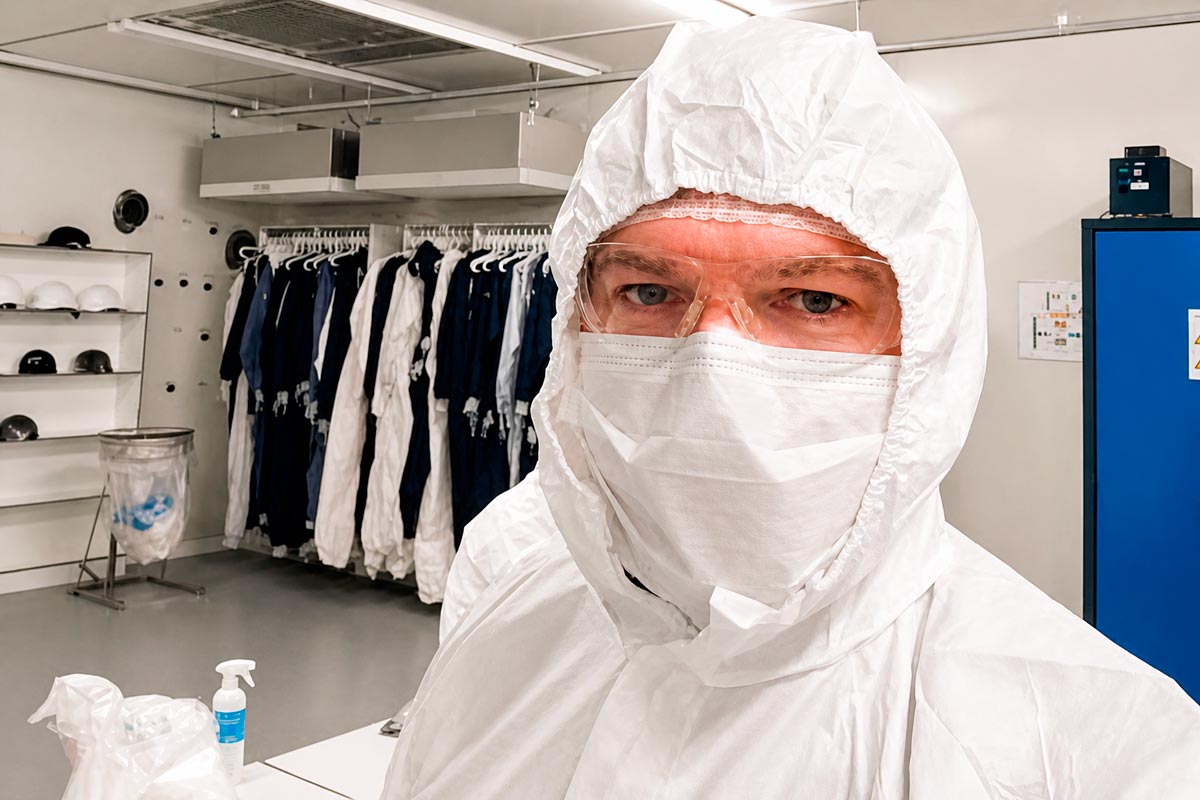
The message is simple: «Today I'm going back to Termoli». Behind this sentence, published on LinkedIn by an industrial executive, lies a much stronger signal about the current state of the European battery industry.
After just over two years with Automotive Cells Company (ACC), this experienced manager has decided to return to Stellantis, on the historic Termoli site. Officially, his return was motivated by «passion» and «new industrial challenges», but above all it comes at a particularly tense time for ACC. This testimonial illustrates a fundamental trend: certain key profiles are now leaving battery projects to return to thermal or hybrid activities.
The end of an industrial dream at Termoli
In his message, the former manager clearly states the reason for his departure: the abandonment of the Termoli gigafactory project. A decision already known, but whose human consequences are beginning to emerge.
Yet ACC had big ambitions. Founded in 2020 by Stellantis, Mercedes-Benz and TotalEnergies, the company was to embody Europe's response to the Asian battery giants. The Termoli site in Italy was to be one of the pillars of this strategy. But industrial reality caught up with these ambitions. Technical difficulties, slower-than-expected ramp-up, high costs... all factors that led to a review of plans. As a result, the Italian and German projects were abandoned, leaving entire teams in transition in France. For the employees involved from the outset, like this manager who speaks of an «extraordinary» and «pioneering» experience, the page has turned.
ACC under pressure, direction change
This move back to Stellantis comes at a time when ACC is trying to relaunch itself. In early May 2026, the company replaced its CEO, with the arrival of a former Panasonic executive to take charge of the French gigafactory at Billy-Berclau. The objective is clear: to speed up production, which has been lagging behind since its launch.
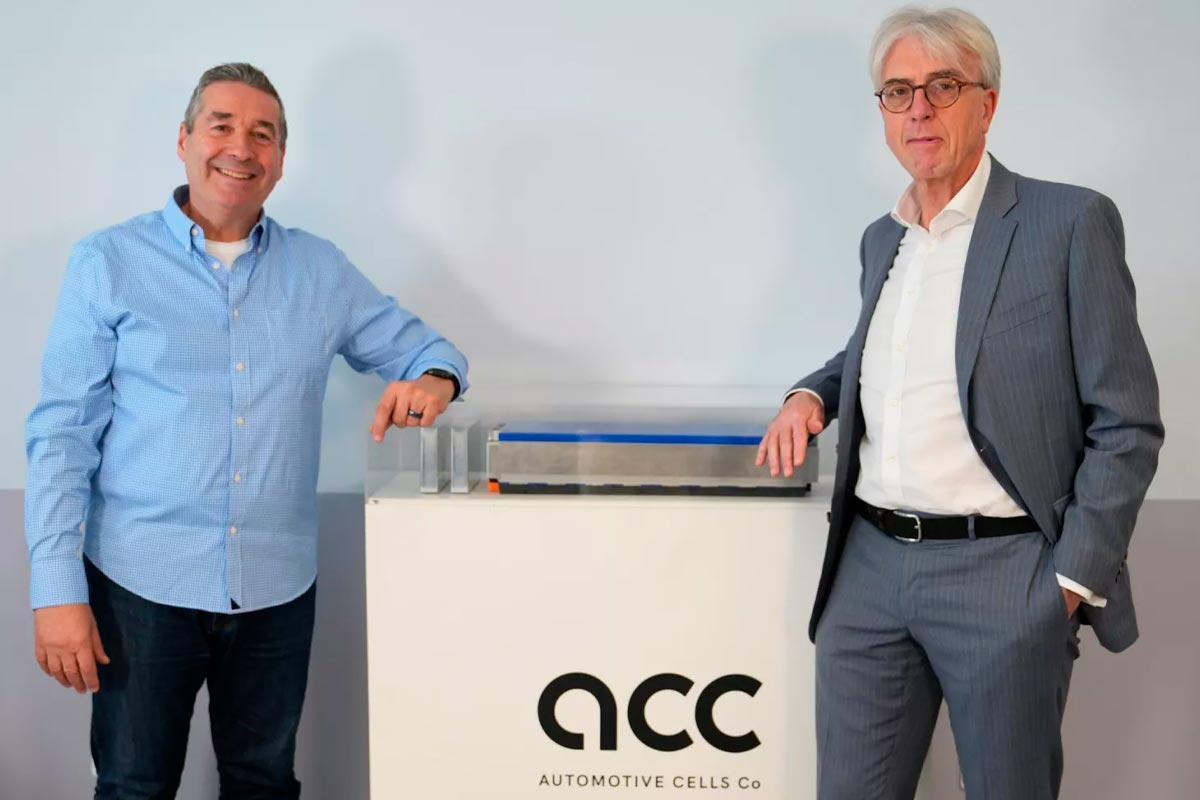
The difficulties are real. The NMC technology chosen by ACC is proving more complex to industrialize than expected, particularly when compared with the LFP solutions used extensively in China. The result: quality problems, insufficient production rates and lengthening delivery times. Some of the Group's electric models, such as Peugeot's SUVs, have wait times of several months, a level that is difficult to maintain in an increasingly competitive market. Against this backdrop, the fact that experienced profiles are leaving ACC to return to Stellantis is no mean feat.
Termoli changes its face
This manager's return to Termoli is not just an individual story. It is part of a wider transformation of the Italian site. Long touted as a future battery hub, Termoli is now reinventing itself around new industrial priorities. These include the production of electrified eDCT transmissions and, above all, the reinforcement of Fiat GSE internal combustion engines.
Today, I return to Termoli, to a plant that embodies the history, know-how and future of the Italian automotive industry, driven by sincere enthusiasm and strong motivation to take on new production challenges.
These engines, also known as FireFly, are in the process of back at the heart of Stellantis' strategy. While the 1.2 PureTech is gradually being called into question, GSE engines are emerging as a more reliable alternative that has already been tried and tested on a large scale, notably in Brazil. The Termoli site could thus become a pillar of this new direction, combining modernized combustion engines and hybridization via eDCT gearboxes. This strategic repositioning contrasts with the 100 % electric ambitions announced just a few years ago.
An energy transition more complex than expected
This testimony, discreet as it may be, highlights a reality often absent from official discourse: the transition to electric vehicles is far more complicated than expected. Between technological challenges, colossal investments and competitive pressure, European manufacturers are walking a tightrope. Certain choices are being reassessed.
The return to hybrid solutions, the renewed importance of optimized combustion engines, and the difficulties encountered by gigafactory projects show that the road to total electrification will be longer and more complex than expected. At Termoli, this change of direction is now visible. And this manager's message sums up this new reality perfectly: having helped build the electric future, he is now returning to where the automotive industry continues to produce.
 English
  French
  Italian
  Spanish
  German
  Japanese
  Dutch
Dutch
And what does the future hold for internal combustion engines, with soaring fuel prices and a shortage scheduled for the near future? The bio-ethanol solution is only viable if it is planned and permitted on new car engines guaranteed for this use, and it must not lead to the destruction of forests as is the case in Brazil. As far as the electric transition is concerned, moving backwards is not the way forward.
Ps. I have driven 100000kms with a pure tech engine without any belt problems.
The problem is that the northern European markets, including France, are in the process of switching to electric vehicles, while the southern markets, Spain, Italy and Portugal, and the eastern markets, Poland,...
It would be a terrible mistake to let up on the pressure.
At a time when we're switching over to Chinese technologies with leapmotor, stopping the ACC project or gutting it is an admission of powerlessness and weakness, an abandonment.
Stellantis has also abandoned hydrogen.
Stellantis only makes micro hybrids, far behind Asian manufacturers in general with full hybrids. Rechargeable hybrid not really convincing
In my view, there is no gradual transition from internal combustion engines to electric vehicles. As has been clearly seen at VW, for example, electric vehicles require completely new platforms that must be designed to accommodate the battery, the electric motor, and the charging infrastructure, etc. These components are rarely found in internal combustion engine vehicles. Perhaps Nissan’s e-Power concept is another step in this direction, but after that, it’s a matter of replacing the internal combustion engine with a battery and adding fast-charging capability.