

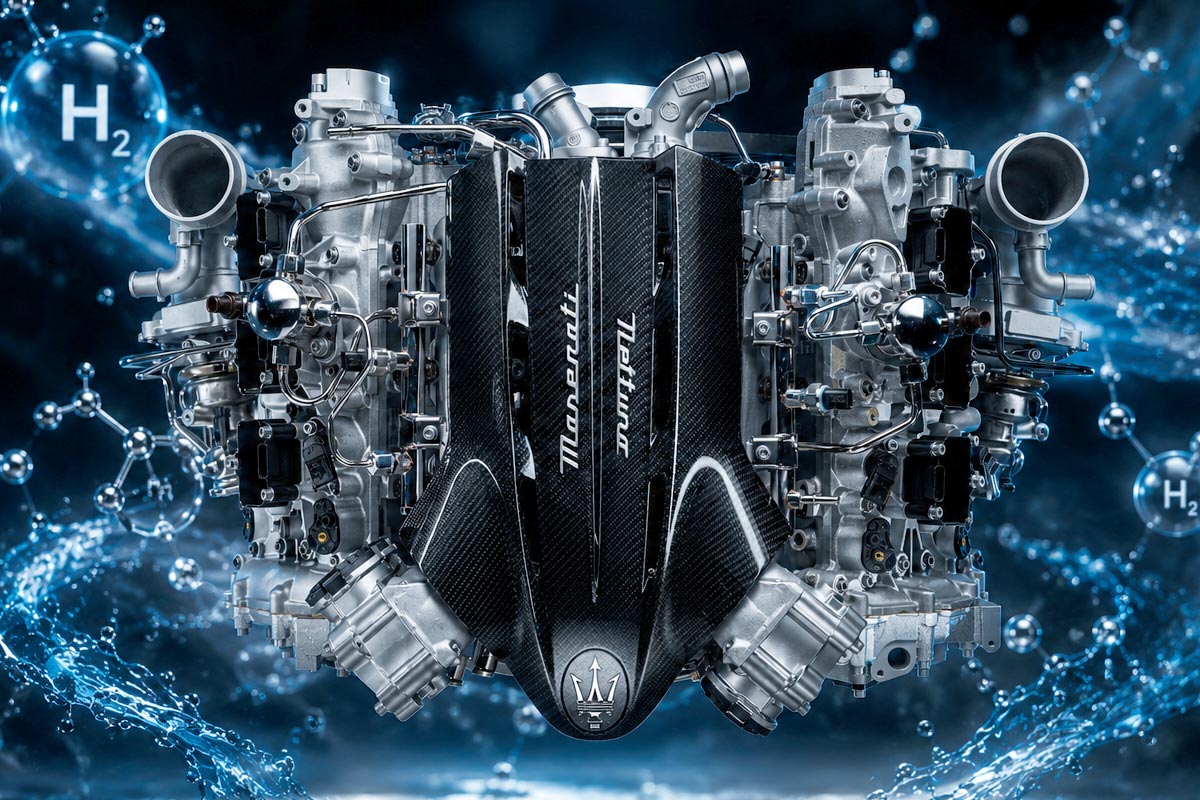
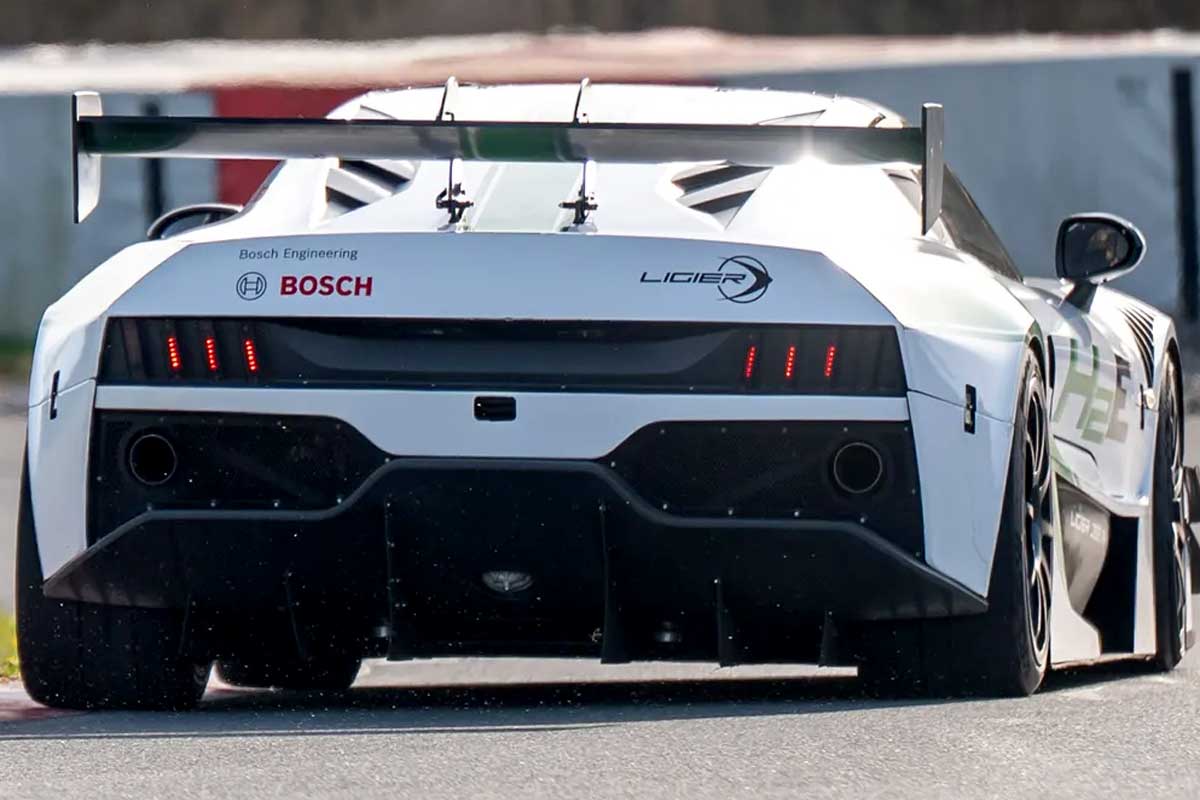
This Saturday, June 13, 2026, on the sidelines of the start of the 24 Hours of Le Mans, a major technological demonstration will set the Circuit de la Sarthe abuzz. Bosch and Maserati are preparing to put a one-of-a-kind experimental track supercar through its paces. Its heart? The famous Nettuno V6 from Maserati, completely converted to run on hydrogen. With nearly 650 hp, 880 Nm of torque, the sound of a true combustion engine, and virtually zero CO₂ emissions at the exhaust, the promise is compelling: to retain the driving experience of an Italian sports car while eliminating its environmental impact.
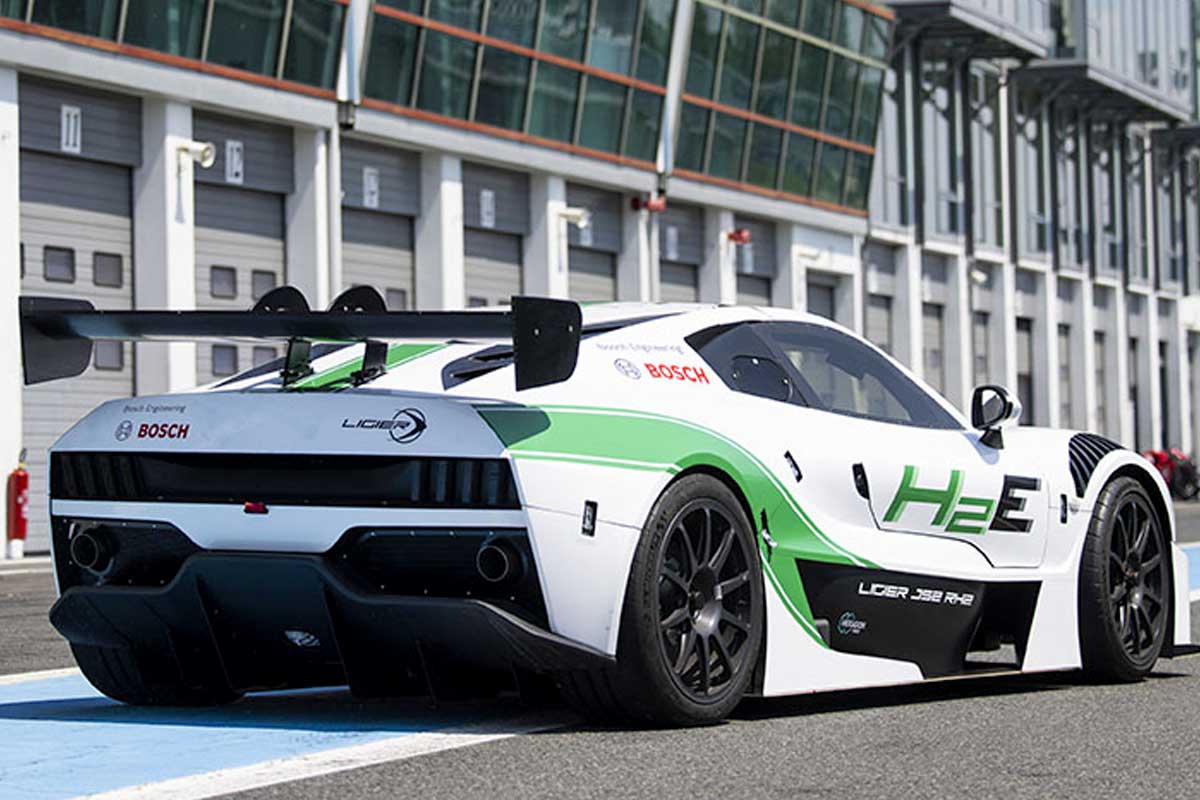
But beyond the hype of this weekend, does this hydrogen engine truly represent the future of supercars? Or is it a technological dead end destined to remain nothing more than a track-only concept car?
An idea that appeals to combustion engine enthusiasts
The main selling point of the hydrogen-powered internal combustion engine is simple: it preserves everything that makes a sports car so appealing. Unlike an electric car or even a fuel-cell vehicle, the engine remains a true combustion engine. It has pistons, valves, turbochargers, and, above all, a rev range reminiscent of traditional sports cars.
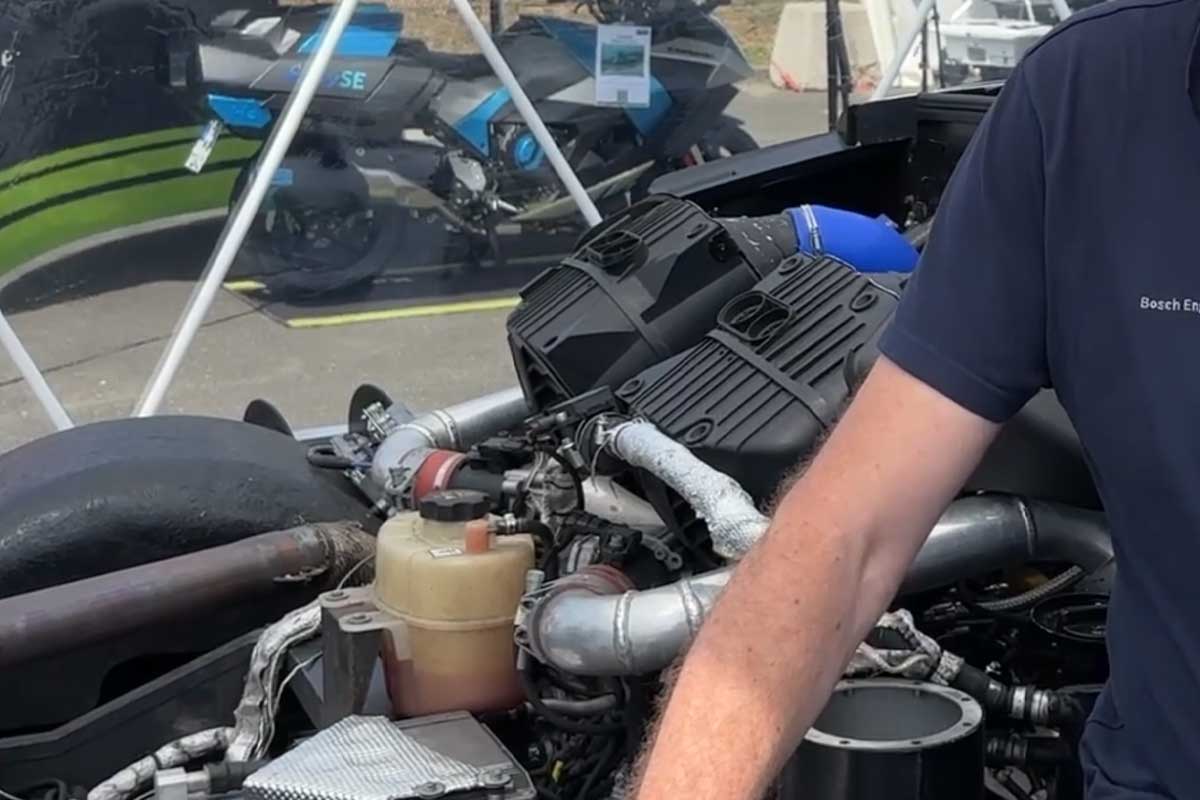
In the case of the Ligier JS2 RH2, the starting point is actually one of the Stellantis Group’s most iconic engines: Maserati’s Nettuno V6, already used in the MC20, MCPura, and GT2 Stradale. This solution appears to be an ideal compromise. Performance remains top-notch, and the sound of the engine isn’t replaced by the silence of an electric motor.
When it comes to emissions, hydrogen is a winner
From an environmental standpoint, hydrogen has a clear advantage. When burned, hydrogen contains no carbon. It therefore cannot produce CO₂ like a gasoline or diesel engine. The chemical reaction is relatively simple: hydrogen combines with oxygen in the air to produce mainly water. This is, in fact, one of the arguments that advocates of this technology consistently bring up. No more CO₂, no more carbon monoxide, and virtually no more fine particulate matter.
The reality, however, is a bit more nuanced. As several experts point out, a hydrogen-powered internal combustion engine can still produce nitrogen oxides (NOx) due to high combustion temperatures. Nevertheless, these emissions are generally low and can be treated relatively easily with modern emission control systems.
Another detail that is often overlooked: an internal combustion engine always consumes a small amount of oil. This means that CO₂ emissions are not entirely zero in absolute terms, even though they are extremely low compared to a conventional gasoline engine.
The real problem isn't the engine, but the hydrogen
The debate becomes much more complex when we look at the entire energy chain. Running a hydrogen engine isn’t particularly complicated. Engineers at Bosch and Maserati have demonstrated this. However, producing, transporting, and storing hydrogen remains a real headache today.
To produce green hydrogen, electricity is used to split water molecules through electrolysis. This step alone results in significant energy losses. Next, the hydrogen must be compressed, often up to 700 bar in the automotive sector. Here again, a significant amount of energy is consumed.
Finally, once stored in the vehicle, this hydrogen must be used by the engine. However, even a high-performance internal combustion engine is still limited by its inherent efficiency.
The result: there are significant losses between the electricity used initially and the energy actually transmitted to the wheels. Several experts estimate that ultimately only 15 to 20% of the initial energy can be recovered to power the car. By comparison, a battery-powered electric car can exceed 70% overall efficiency.
A storage problem that is difficult to work around
The other major drawback of hydrogen is physical in nature. Hydrogen is the smallest atom in the universe. It tends to escape extremely easily and requires highly sophisticated tanks capable of withstanding very high pressures. These tanks are expensive, bulky, and relatively heavy. For a supercar where every kilogram counts, this is no small matter.
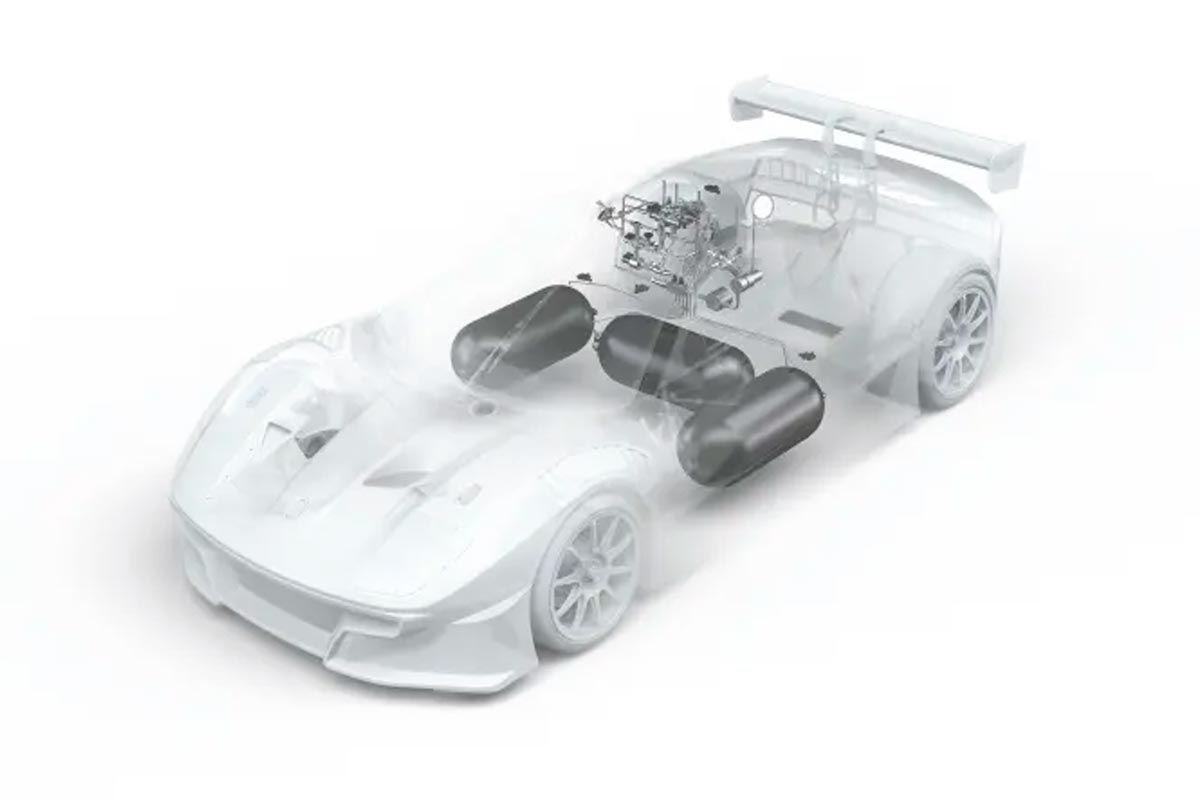
Even at 700 bar, the volumetric energy density remains lower than that of gasoline. This forces manufacturers to make trade-offs between range and tank size. This is a challenge faced by both fuel-cell vehicles and hydrogen-powered internal combustion engines.
Are synthetic fuels a better solution?
Given these constraints, some believe that synthetic fuels offer a more viable alternative for supercars. The approach is different: rather than making major modifications to the engine, a synthetic liquid fuel is produced that can be used in existing internal combustion engines.
The advantage is clear. The distribution infrastructure is already in place, fuel tanks remain unchanged, and manufacturers can continue to develop internal combustion engines without any major technical breakthroughs. Brands like Ferrari and Lamborghini are closely monitoring progress in this area. The main obstacle today remains production costs, which are still very high.
So, is this the future of supercars or just pointless technology?
The answer probably lies somewhere between the two extremes. The hydrogen-powered V6 Nettuno engine developed by Maserati and Bosch demonstrates that it is technically possible to retain the driving pleasure of an internal combustion engine while almost completely eliminating CO₂ emissions from the exhaust. For those who refuse to see combustion engines disappear, the idea is particularly appealing.
However, the challenges related to energy efficiency, storage, and hydrogen production remain significant. Today, the hydrogen-powered internal combustion engine appears to be more of a niche solution for high-end vehicles than the future of the automotive industry as a whole.
 English
  French
  Italian
  Spanish
  German
  Japanese
  Dutch
Dutch
Maserati didn’t invent this type of engine, but it’s great that they’re promoting it as a credible alternative to all-electric vehicles. I hope Stellantis will take it a step further by investing in the development and rollout of charging stations.
Stellantis has abandoned fuel cell technology for commercial vehicles because innovation was out of the question
It's sad that not everyone gets it.
Excellent solution. Not a compromise, but hitting the mark. A dual-fuel option using biofuels and hydrogen would be ideal for sports cars. Sound, excitement, and no or very few greenhouse gases. Ferraris, Porsches, or Alpines. The rest of the cars can be electric vehicles. Charging the battery with your own solar panels is perfect in that case.