

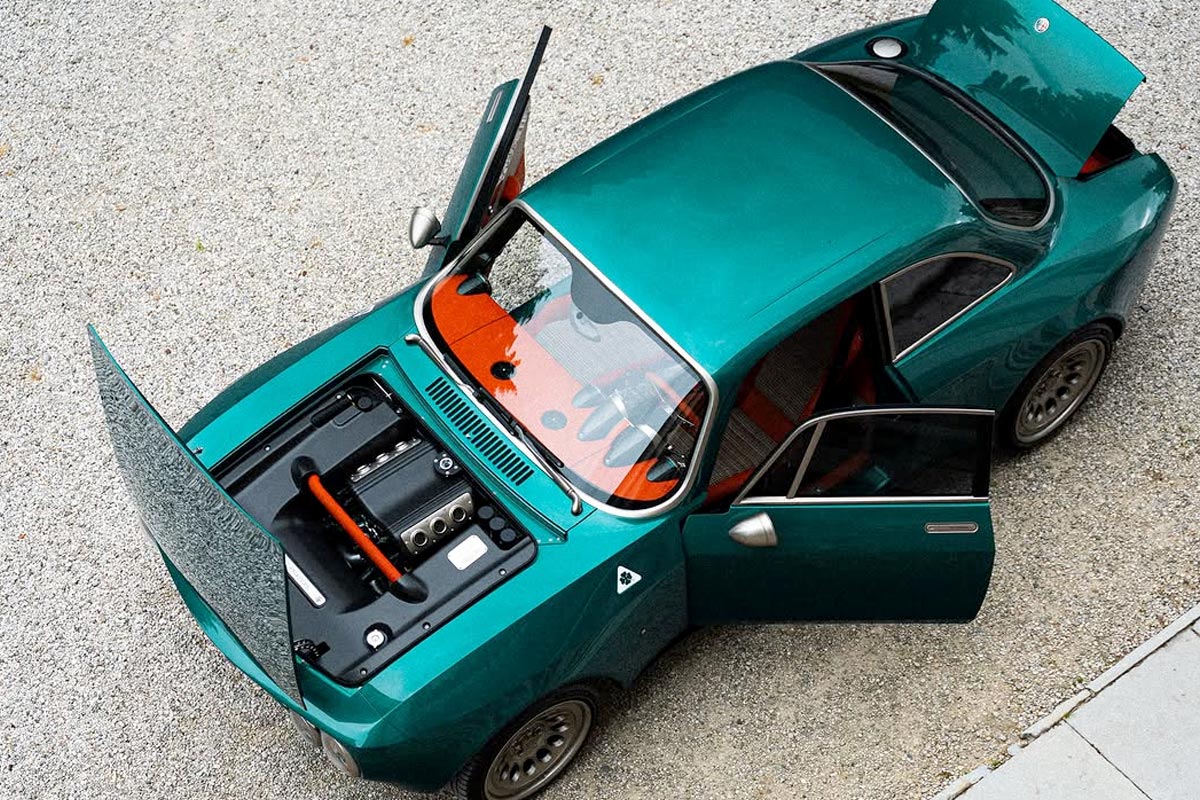
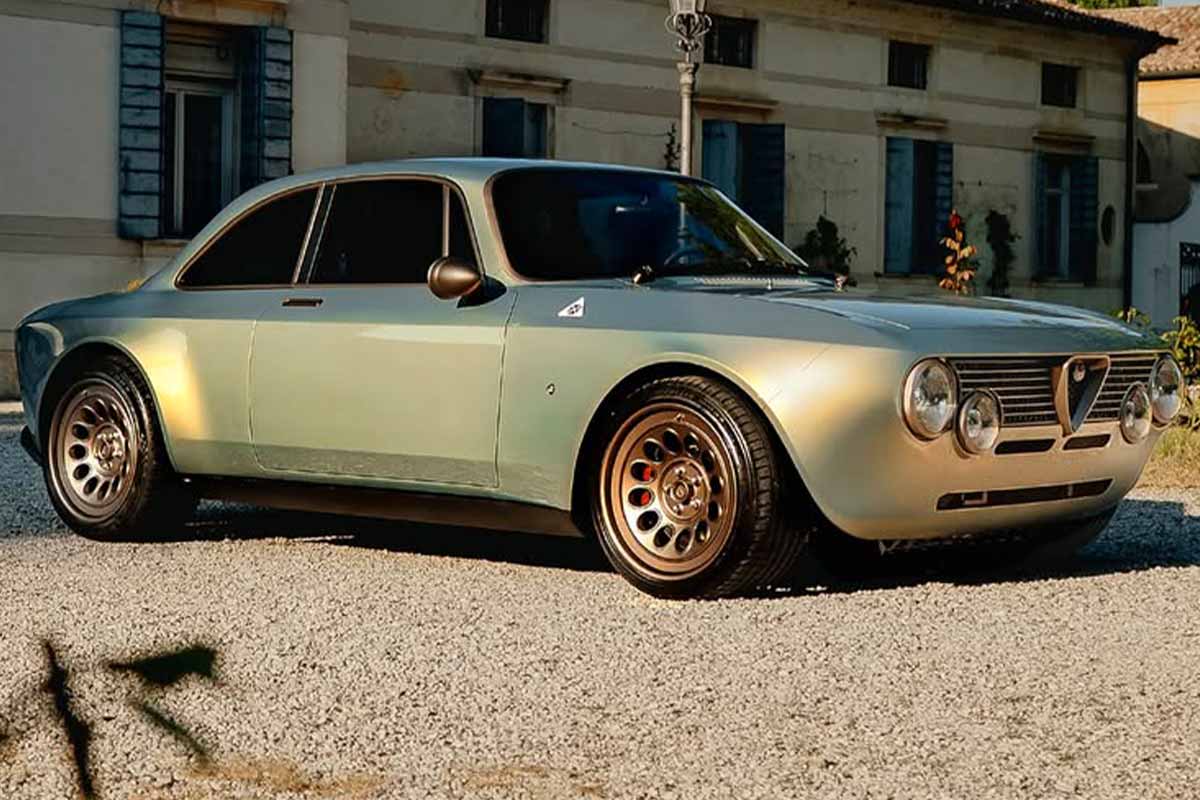
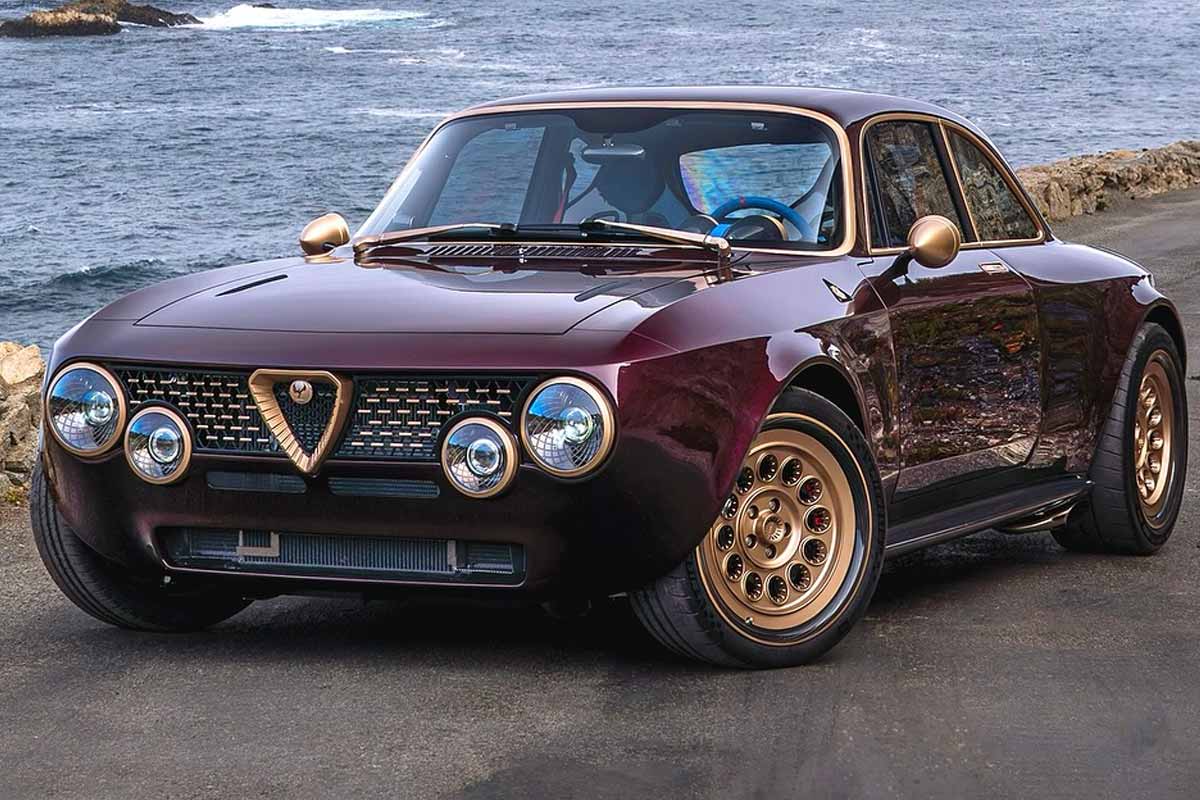
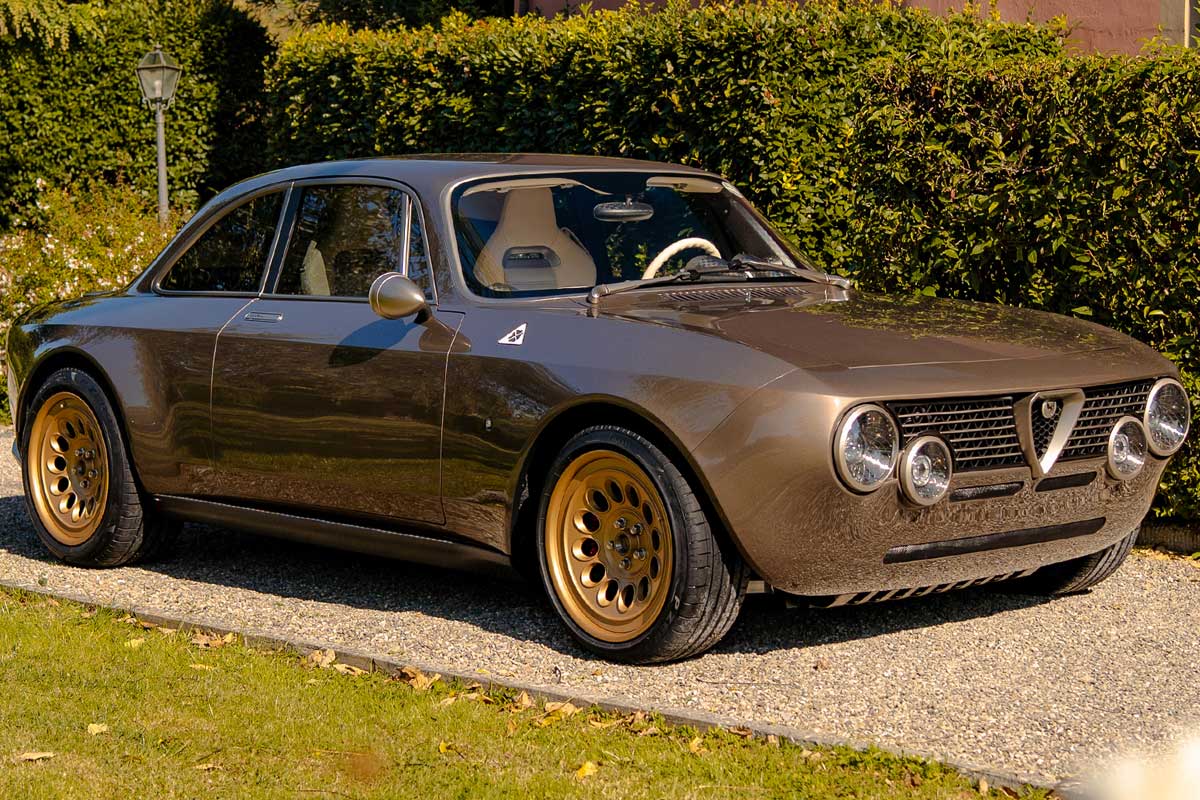
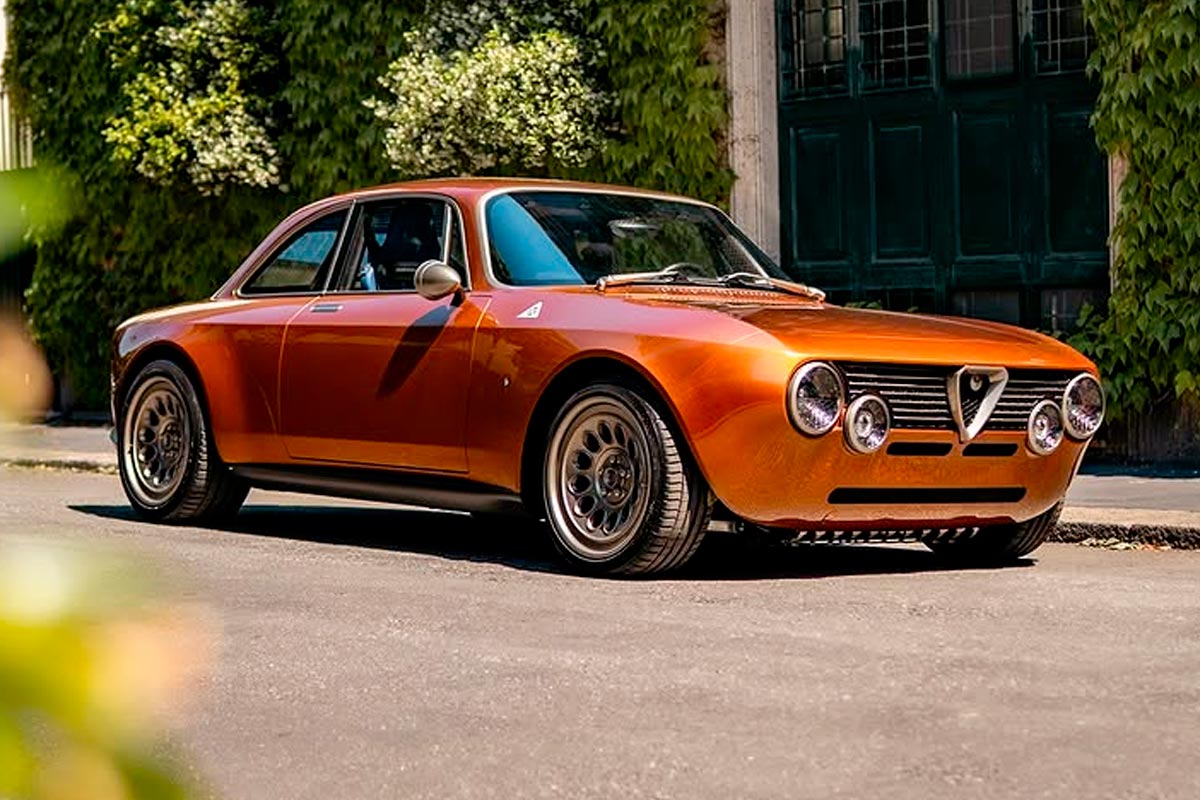
When you discover a Totem GT Super At first glance, your eyes are immediately drawn to its silhouette. It’s impossible not to think of the 1960s Alfa Romeo Giulia Sprint GT, whose iconic proportions it echoes. Yet beneath that carbon-fiber body lies one of the most fascinating Italian engines of recent years: a V6 developed by Italtecnica Engineering specifically for Totem Automobili.
Behind the GT Super’s 640 ch lies an engine that bears virtually no resemblance to a modified production engine. On the contrary, it is a project designed entirely around a simple idea: to create a modern engine capable of breathing new life into a classic Alfa Romeo.
An engine designed specifically for Totem
The collaboration between Totem Automobili and Italtecnica Engineering did not begin as a simple technical partnership. The two companies shared the same ambition: to go beyond the traditional concept of a restomod and create a car whose engine would be as exclusive as its design. The result is called «Gloria» at Totem, but it is directly derived from the ITV6 developed by Italtecnica. This family of twin-turbo V6 engines was designed from the outset for a variety of applications, ranging from road cars to race cars.
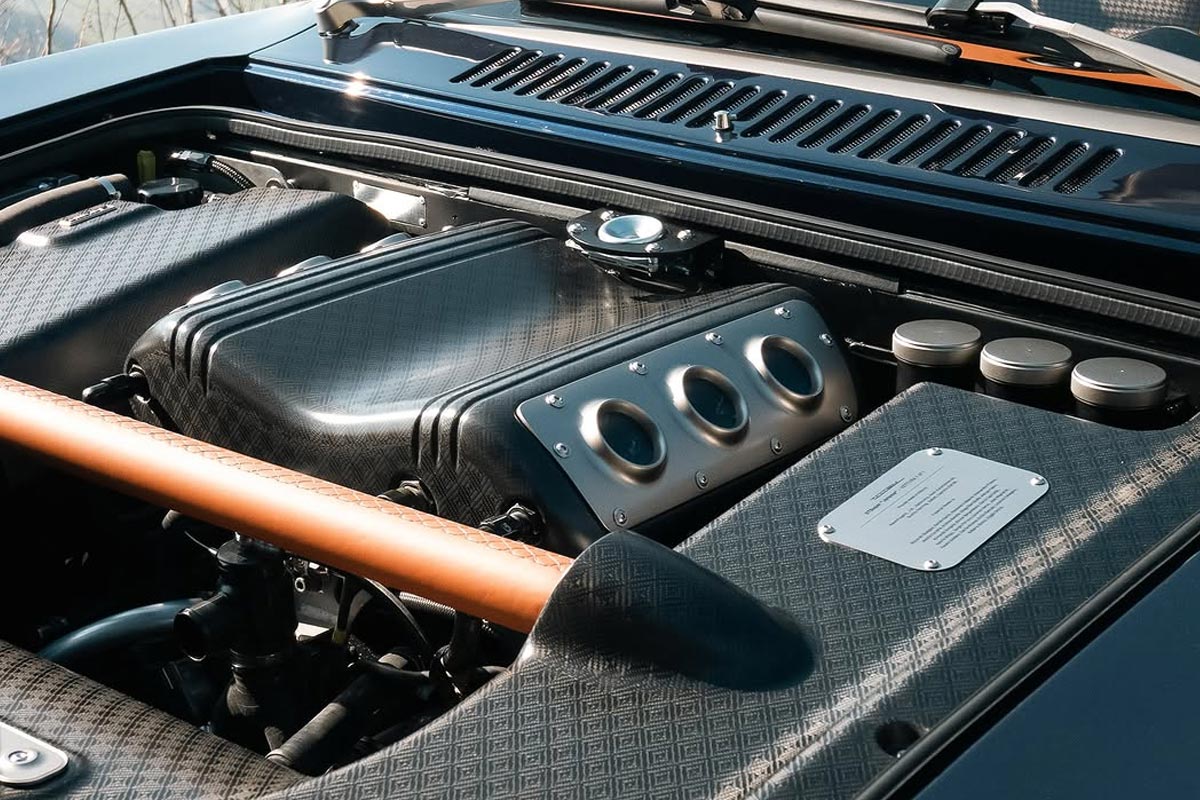
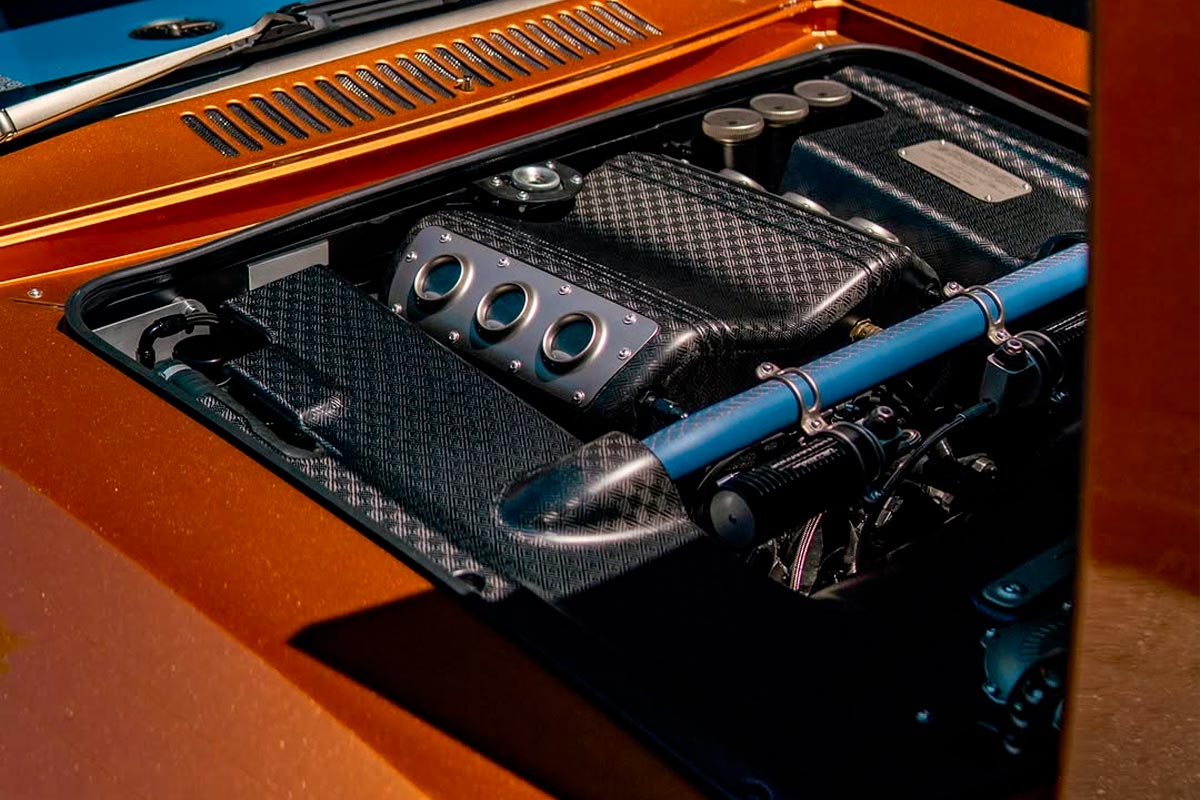
Under the hood of the GT Super is a 2.8-liter 90-degree V6 engine, featuring two overhead camshafts per cylinder bank and four valves per cylinder. Power output reaches 640 ch, while torque exceeds 650 Nm.
A compact, lightweight V6
One of the key features of this engine is its compact design. The engineers have grouped many components between the two rows of cylinders: the lubrication system, the cooling system, the heat exchanger, and even some intake components.
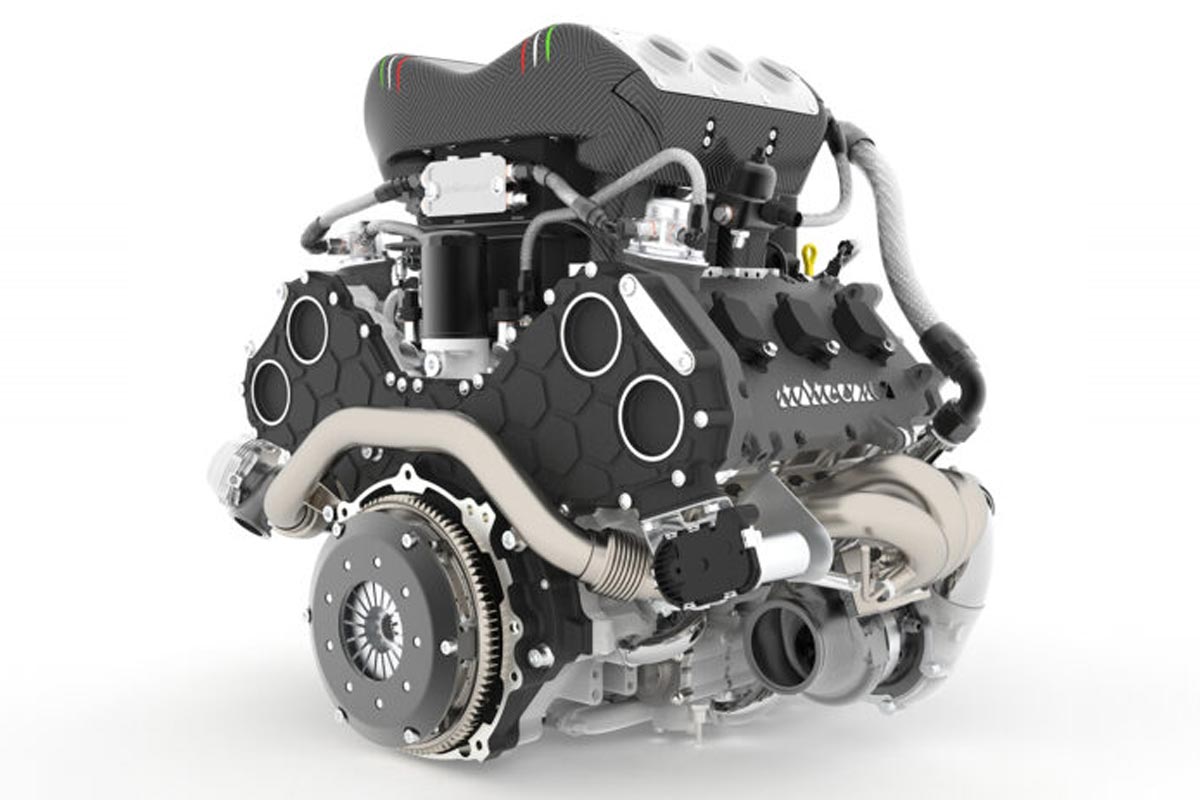
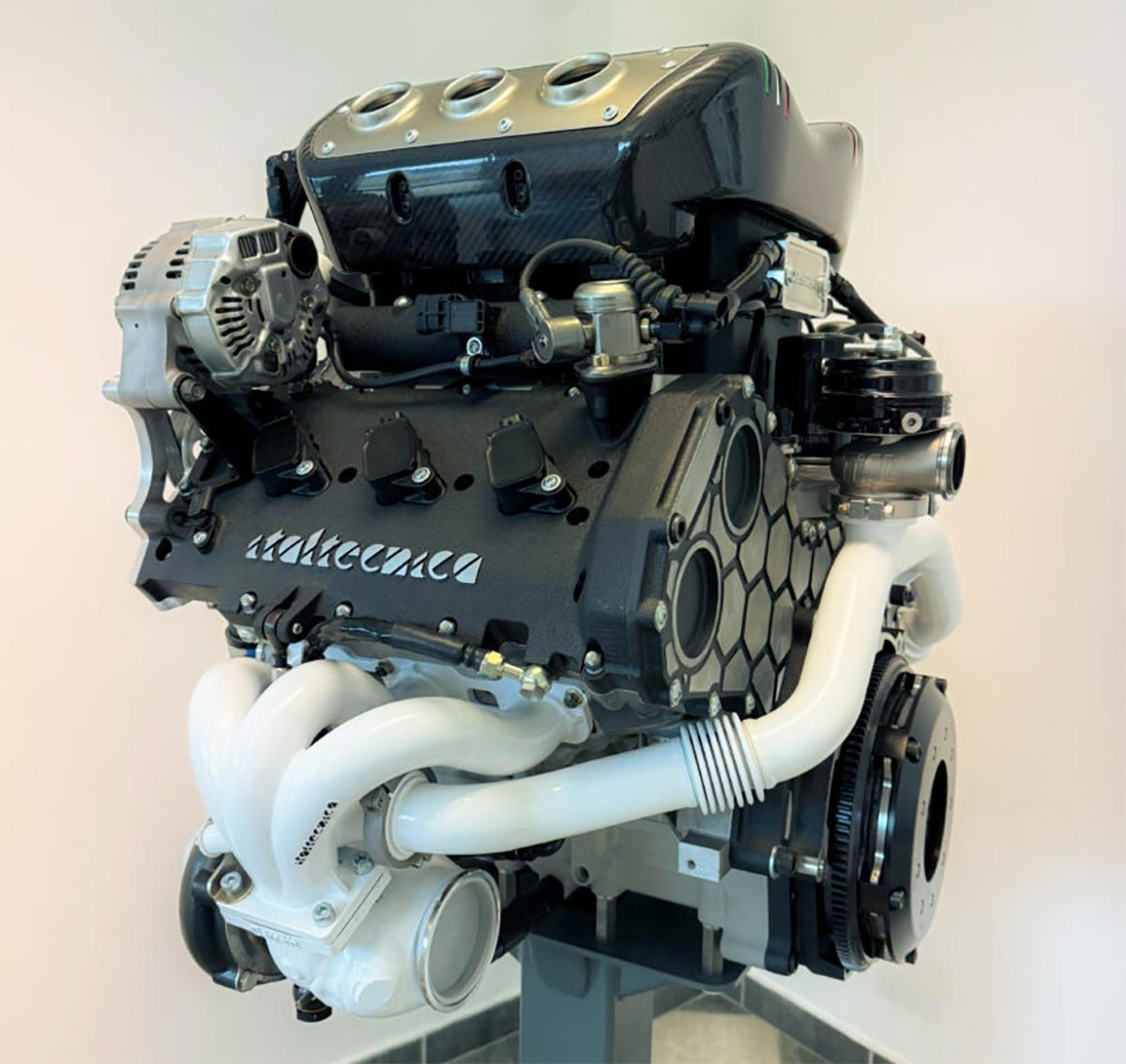
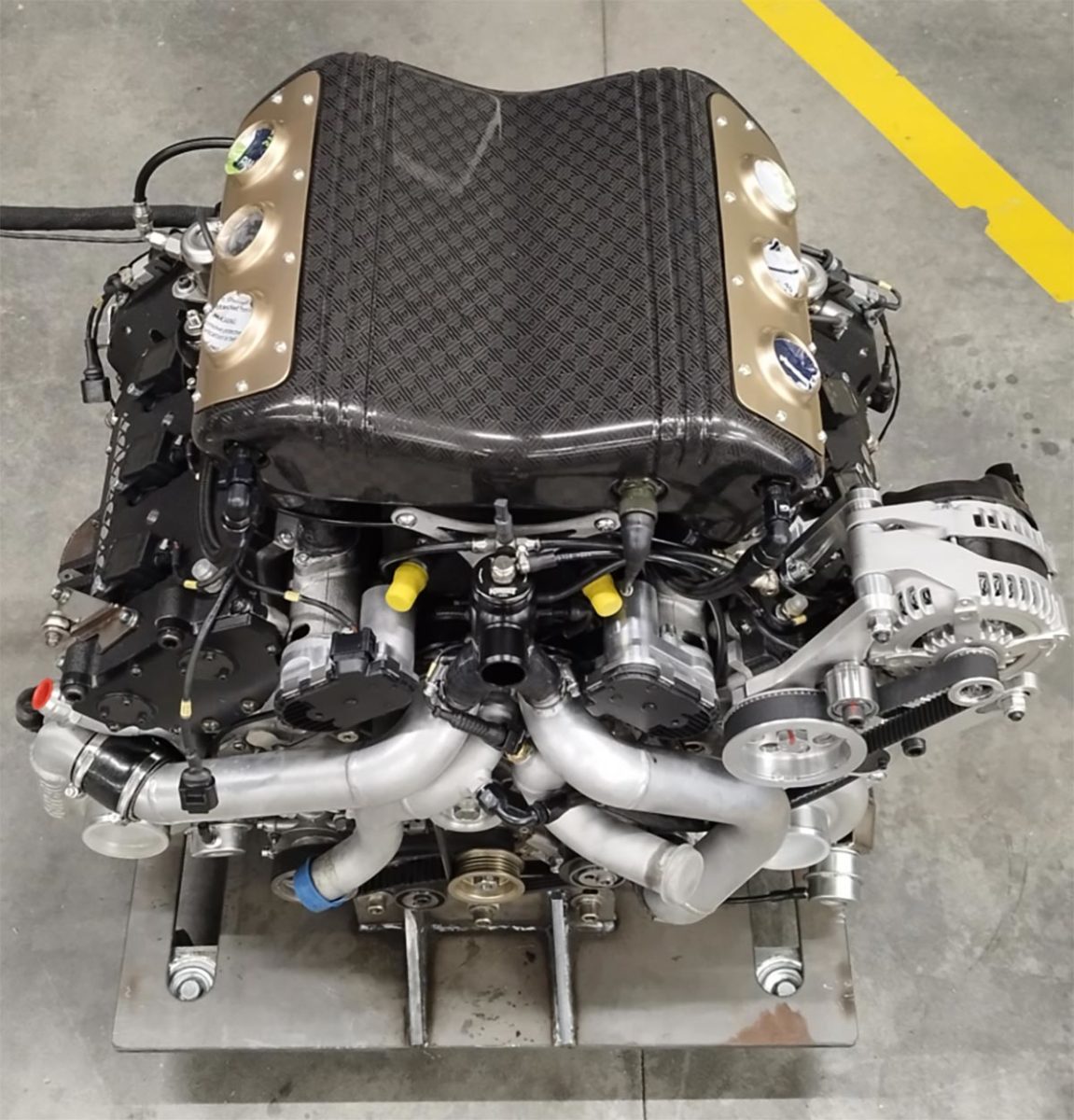
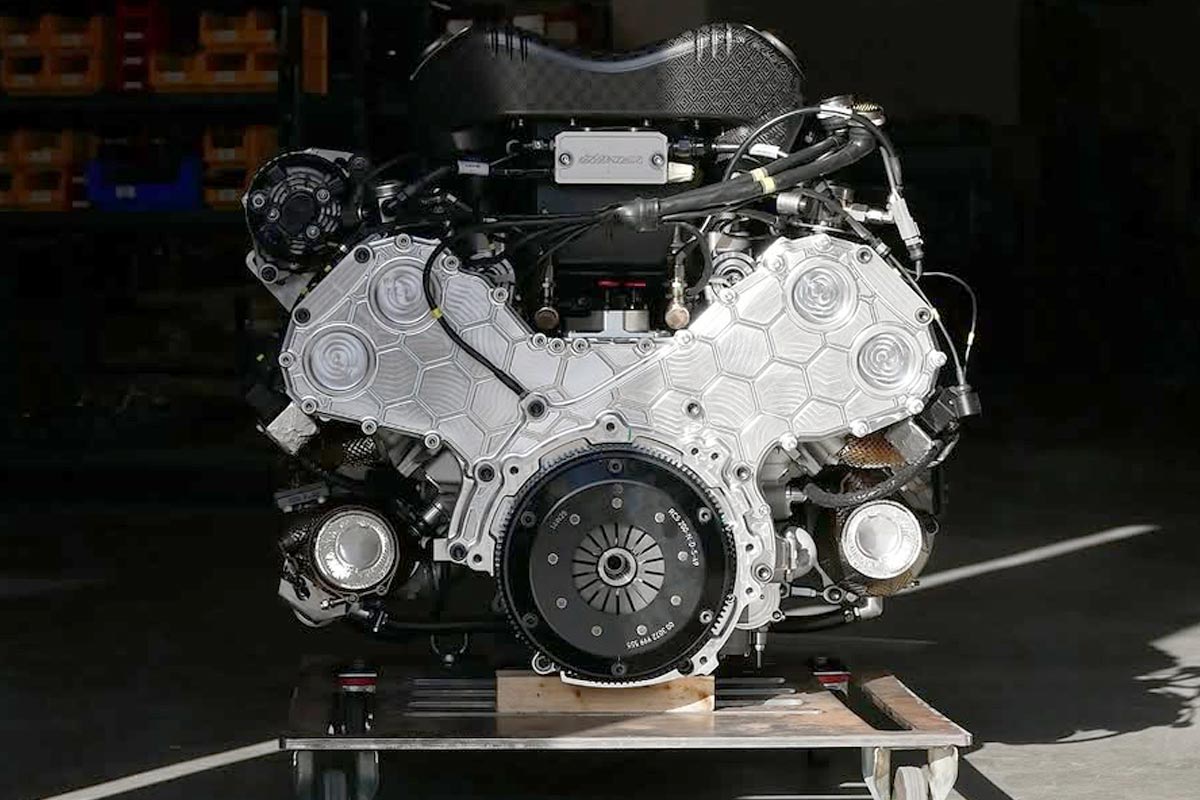
This design reduces the engine’s size while lowering its center of gravity. The weight remains under 180 kg, making the ITV6 one of the lightest V6 engines in its class. The carbon-fiber intake system designed by Italtecnica also plays a key role. It directly integrates the intercooler and the dual-injection system to improve cylinder filling, combustion stability, and throttle response.
Two turbochargers to eliminate lag
Unlike many traditional twin-turbo engines, the ITV6 uses sequential turbocharging. At low RPMs, only one turbocharger operates to minimize response time. As RPMs increase, the second turbo gradually engages thanks to a dedicated electronic control system, a bypass valve, and an external wastegate.
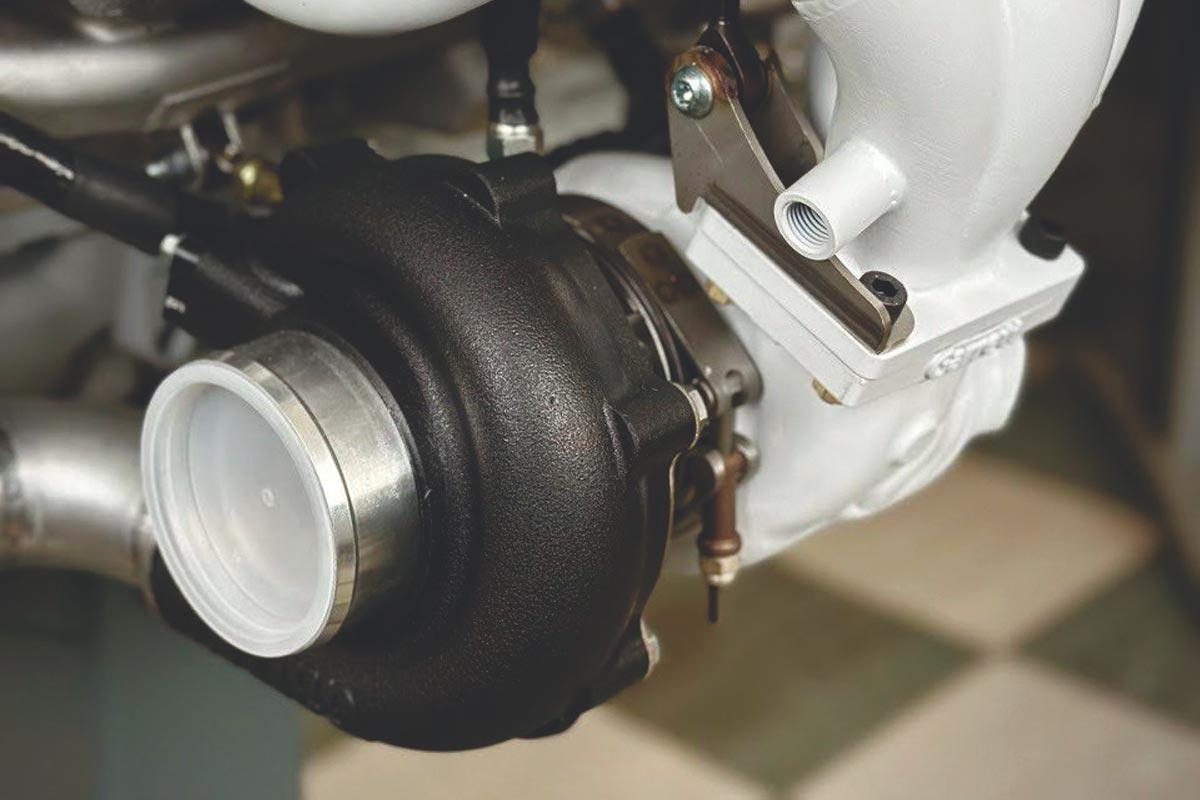
The result is particularly impressive: maximum torque is available starting at 3,000 rpm and remains available up to 6,000 rpm, while power continues to climb to over 7,000 rpm.
Technology Inspired by Competition
The engine developed by Italtecnica isn’t just powerful. It also features a dual-injection system—direct and indirect—that optimizes combustion based on operating conditions. The Italian company has even developed its own prechamber combustion technology, a solution directly inspired by motorsports and endurance race prototypes. This technology improves thermal efficiency and enables faster, more efficient combustion. Some experimental versions of the engine even achieve power outputs exceeding 700 ch.
The Modern Soul of a 1960s Alfa Romeo
With only forty units planned, the Totem GT Super remains one of the most exclusive projects in the Italian automotive industry today. Yet its engine deserves almost as much attention as its bodywork. Where many restomods simply adapt existing powertrains, Totem and Italtecnica have chosen a much more ambitious path: creating a V6 engine entirely dedicated to their vision of an Alfa Romeo that never existed.

 English
  French
  Italian
  Spanish
  German
  Japanese
  Dutch
Dutch
Now ask yourself this: Do you think there will be a tribute to or a reinterpretation of *Junior* in 60 years?
Unfortunately, it will end up in a collection without ever actually being driven… which is really a shame for such a gem.
It's terribly ugly with those low-profile tires and those shamelessly over-polished modern touches. It looks like a teenager got his hands on a classic Alfa Romeo and signed up for «Pimp My Ride.» Give me the classics any day.
They were iconic cars… deeply loved for their timeless design, their engineering, and the feeling you got when you drove them….
I'm sure that mass production will appeal to today's younger buyers, if the price can be kept reasonable….
Damn, that's beautiful...
Too bad about the round taillights