

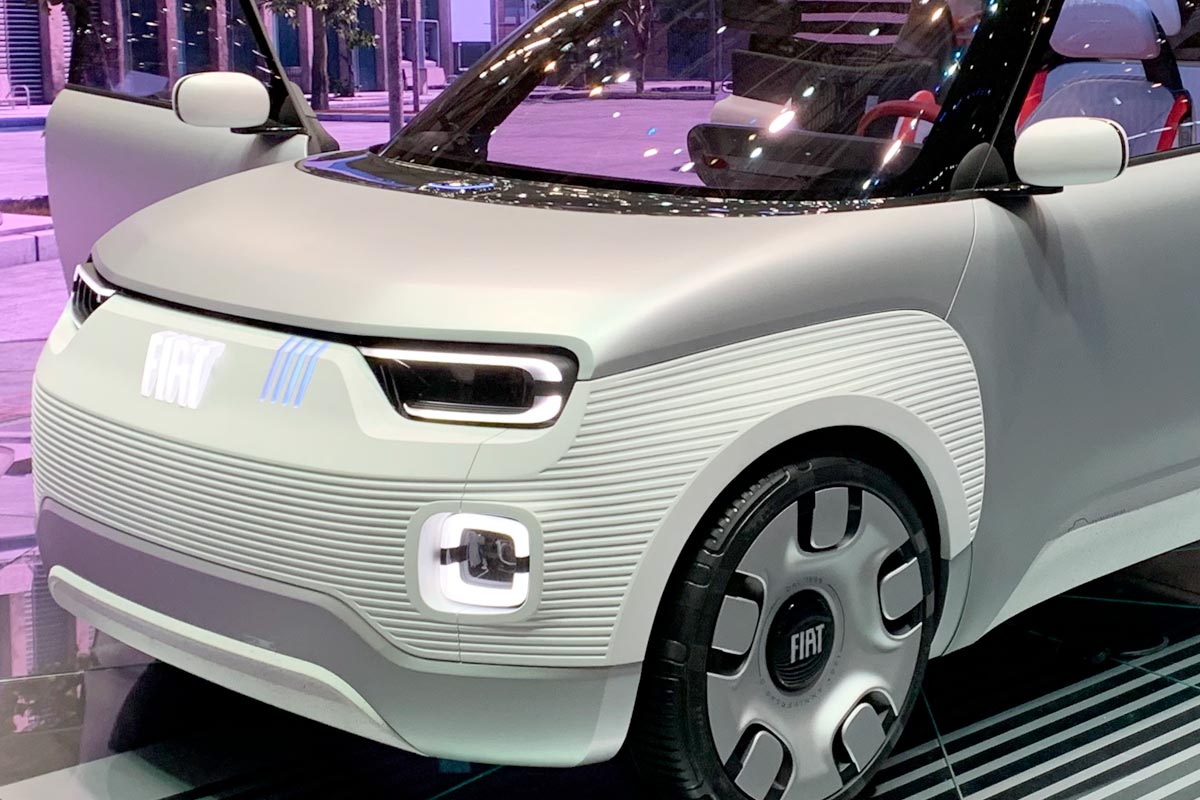
For several months now, Stellantis is quietly preparing its return to the affordable microcar segment. The group has already confirmed the development of two electric models as part of the E-Car program: a new Citroën 2CV and a future Fiat Panda, expected by 2028 and to be produced in Pomigliano d’Arco, Italy. While nothing is known about the future models, a new possibility is now emerging: what if these two models were based on technology developed by the Chinese manufacturer Leapmotor?
A hypothesis that is gaining traction
During a roundtable discussion held in Germany, Tianshu Xin, CEO of Leapmotor International (a company 51% owned by Stellantis), was asked about the possibility of the Chinese automaker’s technology being used in Stellantis’s future electric car. His response was cautious, but particularly revealing.

According to him, this solution is one of «the opportunities currently being explored.» Without officially confirming the project, the executive acknowledged that discussions were underway and that it is now essential for automakers to work with the right partners in order to improve efficiency. This statement comes as Stellantis is still searching for the ideal technical platform for its future electric city cars priced at around 15,000 euros.
The Leapmotor T03 as a starting point?
The idea isn't absurd at all. Today, the Leapmotor T03 is already on sale in Europe and is produced at the Stellantis plant in Tychy, Poland. This small 3.6-meter electric city car starts at 16,900 euros in several European markets.
Most importantly, Leapmotor is already working on a second generation of the T03. According to our research across several Chinese media outlets, this new version will feature significant improvements in design, interior quality, and onboard software, with a particular focus on the expectations of European customers. Also according to these Chinese media outlets, the target is clear: the Dacia Spring, Renault Twingo, and Volkswagen ID.1.
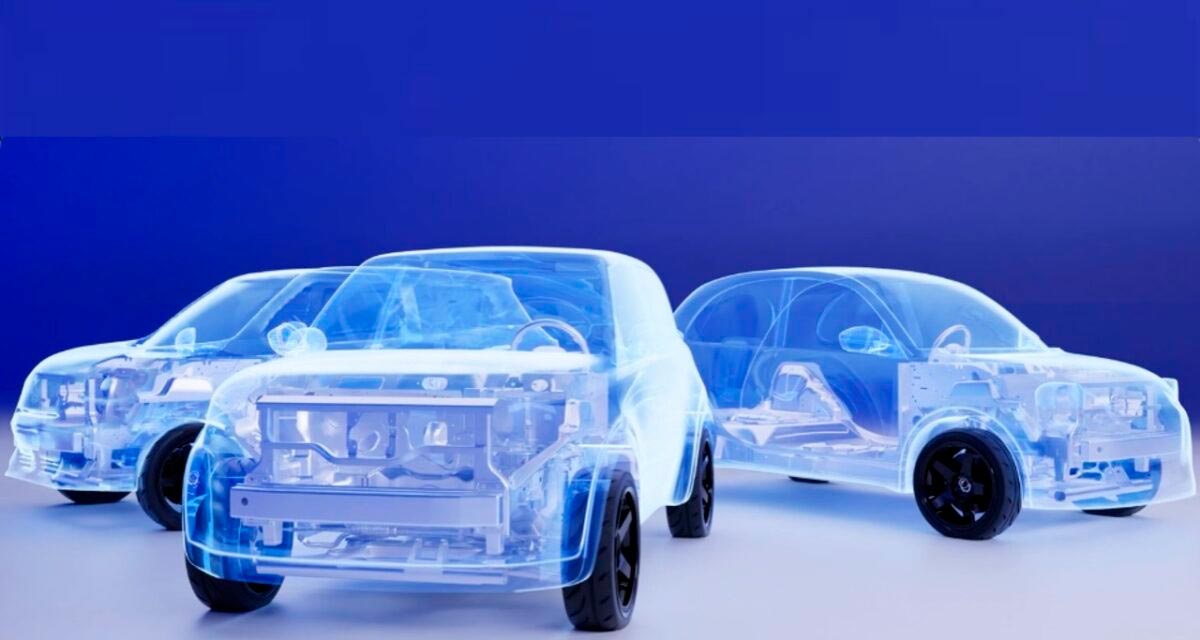
It would make sense for Stellantis to build on this existing technical platform—which is expected to be updated soon—rather than develop an entirely new architecture for a segment where margins are particularly low.
Two E-Car models manufactured in Pomigliano d'Arco
One thing is certain: the future Citroën 2CV and Fiat Panda will be assembled in Pomigliano d’Arco, the Italian plant that currently produces the current Fiat Panda and the Alfa Romeo Tonale, among other models. A smart way to keep the plant busy, given that the Fiat Panda is nearing the end of its production run and that Production of the Alfa Romeo Tonale is scheduled to end in late 2027.
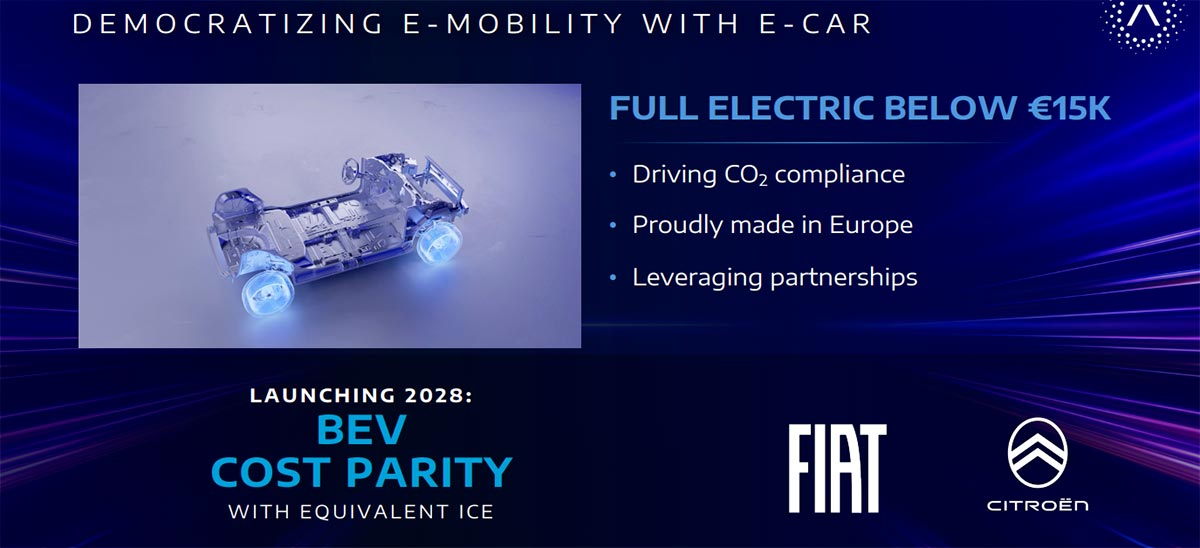
The E-Car project is part of the future European M1E category, inspired by Japanese kei cars. The goal is to enable manufacturers to offer electric vehicles that are simpler, lighter, and, above all, much cheaper than current models. Stellantis is clearly aiming for an entry-level price of around €15,000, a threshold that has become nearly impossible to reach with traditional European electric platforms. Using Leapmotor technology could therefore be a particularly attractive solution for delivering on this price promise. However, to go from the €16,900 price tag of the Leapmotor T03 produced in Poland to a price below €15,000 for a car produced in Italy, this will certainly require European subsidies.
A Panda… or a Fiat Koala?
Fiat might keep the name Panda… or change it. Several signs suggest that the model might ultimately adopt a different name. Among the possibilities mentioned is Fiat Koala, a trademark recently registered by Fiat.
If this option were chosen, the Fiat lineup could become particularly extensive, featuring a Fiat Panda/Koala (E-CAR, A-segment), a Fiat Grande Panda (B-segment), and the new Fiat Grizzly (C-segment). It should be noted that the Fiat 500 will indeed be updated (first with a new battery in 2027, then a new model by 2030), but the future of the Fiat 600 is uncertain.
 English
  French
  Italian
  Spanish
  German
  Japanese
  Dutch
Dutch
Yum yum, a Chinese 2CV assembled in Italy 🤤
The worst part is that Lysander will actually manage to sell some!
That said… you can’t really say Stellantis has much of a choice when it comes to A-segment cars… If that means launching a high-tech, electric Fiat Panda with good range, made in Italy, and priced at €15,000… it could work
Italians have been at the helm of Stellantis for over a year and a half, and Fiat has historically specialized in the A-segment.
Honestly, what if they can't do it!?
That said, Leapmotor is a great value for the price.
Oh, but I did get into a C10 or B10 (I can't remember which) and I think it offers great value for the money; I just wasn't a huge fan of the interior, which was very minimalist. So if they can pull off what the Topolino did—that is, infuse a more advanced Leampmotor T03 with a touch of La Dolce Vita—it could work.
Of course they can sell them, but that’s just adding another nail to the coffin…
Lysander, have you ever been with a Chinese woman? Because they've made some unbelievable progress.
Apart from the somewhat jarring electric motor, the Leap’s chassis is now definitely one of the best in its class.
Better than PSA and all Alfa compacts
The name «Koala» is fine, but the name «Panda» would then be forgotten, except in the name «Great Panda.» But why call it "Great" if there's no longer a "Little" one alongside it? Weird and illogical…
Looking at the slide, I don't see the Leapmotor at all. It doesn't match up when you compare it to a real T03.
What if it were simply the next-generation Panda/Koala? Especially since the two on the left are practically identical, apart from the front lower body panel, which is sleeker and sportier on the left. An Abarth version? That would be cool!
I just superimposed a photo of the Leapmotor T03 onto this image, and it matches perfectly
Unfortunately, that’s not unusual at all, Fred, Fiat has already done it: in 2005, it launched the «Grande Punto» to complement the older «Punto,» only to rename the «Grande Punto» simply «Punto» a few years later.
I'm afraid they'll end up doing the same thing with the «Grande Panda,» which, if you notice, only has «Panda» badges inside and out… just marketing. 🙁
Finally, what if Lancia joined the party too with a future Y10—as R. Zerbi hopes?
Increased sales for Lancia, an expanded lineup at little cost, the new Lancia/Fiat structure put to the test, production in Italy, and improved project profitability. It sounds like nothing but advantages!
Dreams keep us going, but who knows…
Seriously, why not? Because when I see the platform developed with Alfa, it's definitely worth it.
PSA, Fiat, and Lancia might benefit from this too?! Because given the results, we might as well go all out—it just needs a real engine.
I think the goal is to build a 100% electric % on this platform. I might be wrong, but if that means we get a technologically advanced, well-tuned car at a good price and made in Italy… I say, why not?.
The goal is to stop making cars
Is the goal to stop making cars altogether????????
The most appropriate term would be »to stop designing cars.».
Between the former PSA platforms and engines and the Leapmotor platforms and engines, what will remain of the Italian heritage at the former FCA?
It could also be that Fiat will keep the current gasoline-powered Panda on the market—updated to meet Euro 7 standards—for as long as it can sell it… and that the new electric car will therefore have a different name.
So we would have the Fiat Koala (electric) and the Fiat Panda (mild-hybrid). Same segment, different approaches.
This would also solve the problem of having a «Panda built on a Chinese platform»!
In any case, these days we’re buying a service along with a car. We no longer hire an engineer; we hire a service provider.
These cars have lost their soul, especially when it comes to their names.
Believing that they're going to manufacture them in Italy is like believing that they were going to manufacture 1 million cars in Italy
incorrect: No T03 is currently being built in Tychy
It seems impossible to me to manufacture in Italy.
Personally, if they can offer us Italian or French versions with charm, a nice interior design, and features that provide the modern comfort expected today, I’m all for it—even if it’s based on a Leapmotor platform.