

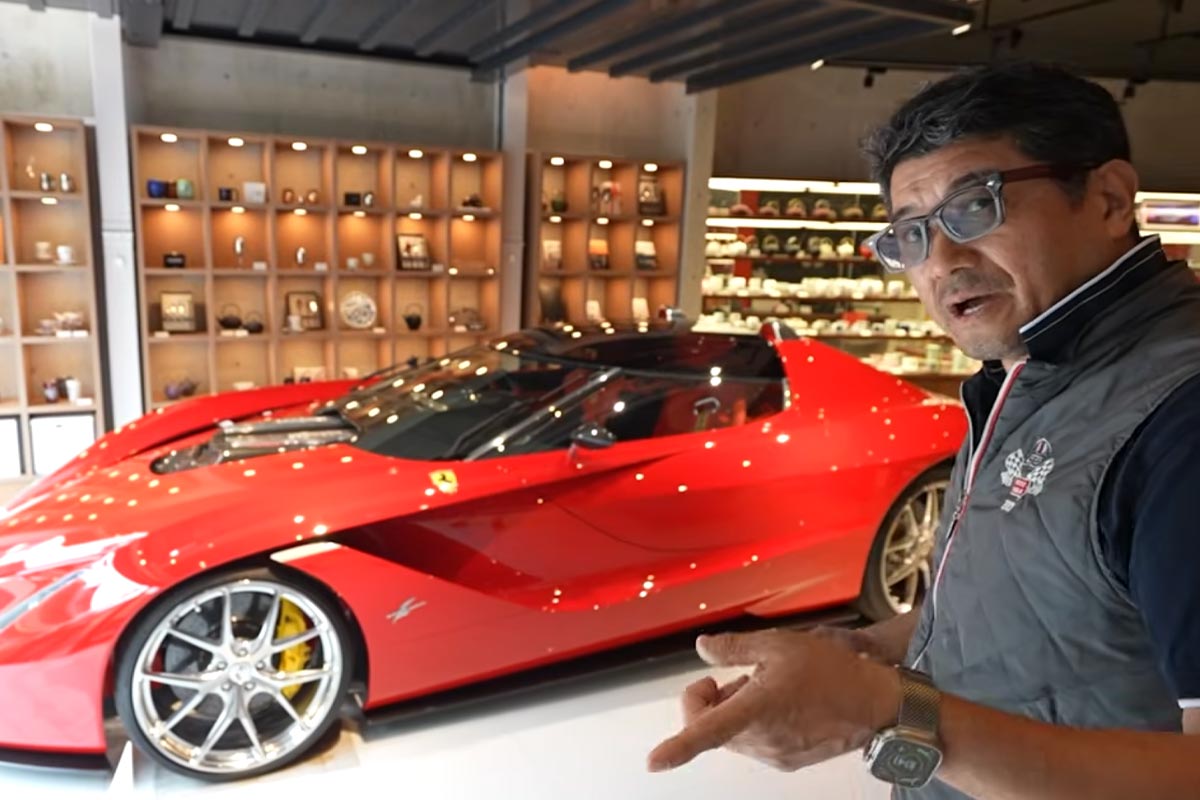
At 67, while most leading automotive designers are enjoying a well-deserved retirement, Ken Okuyama continues to design, build, and envision exceptional cars. The man behind some of the most iconic Ferraris of the 2000s doesn’t seem to have turned the page on the Prancing Horse just yet. Quite the contrary.
During a recent meeting with the American videographers from Daily Driven Exotics in Japan, the Japanese designer hinted that he might well be tempted by a new Ferrari project. It’s an idea that’s sure to spark the imagination of enthusiasts, given how closely Ken Okuyama’s career is intertwined with the modern history of the Maranello-based brand.
The Man Who Designed the Enzo Ferrari
Born in 1959 in Yamagata, Japan, Ken Okuyama built an impressive career before joining Pininfarina. After stints at General Motors and Porsche—where he worked notably on the 996 generation of the 911 and the Boxster—he became creative director of the renowned Italian design house in 2004.
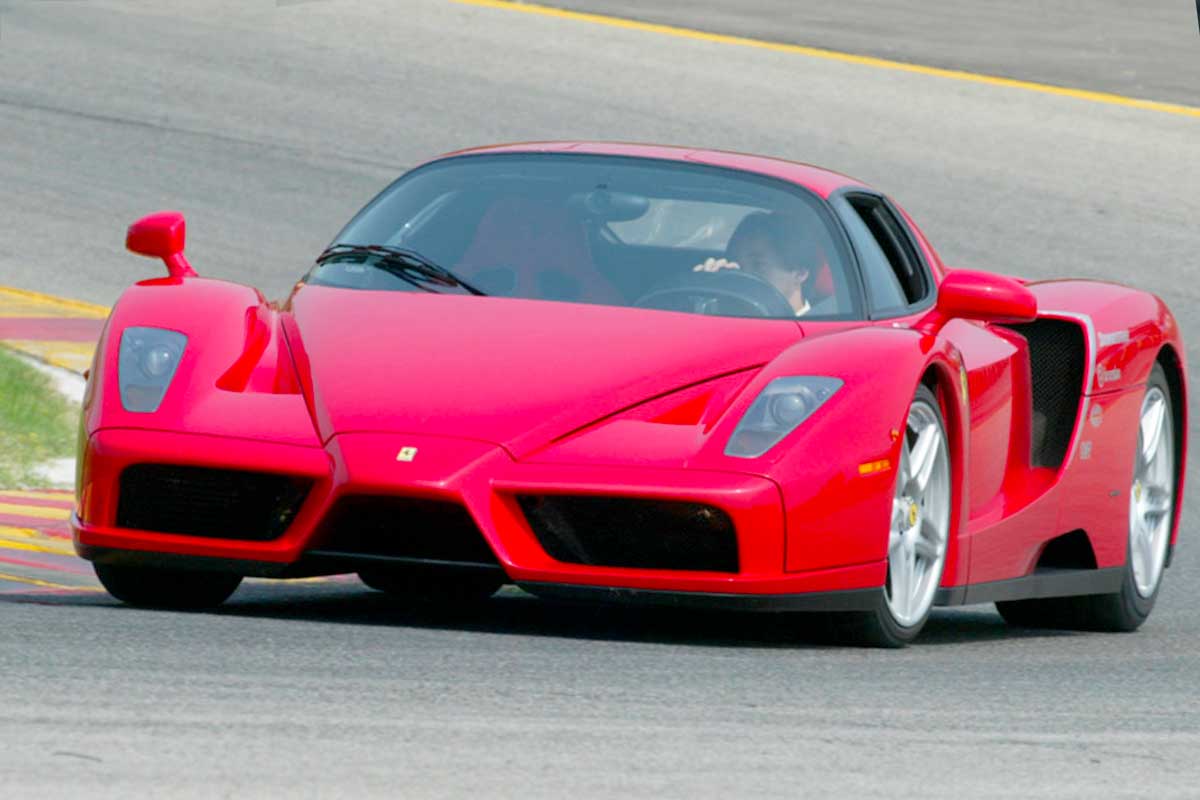
His name is associated with several iconic Ferrari models. He oversaw the development of the Ferrari Enzo, participated in projects for the Ferrari 599 GTB Fiorano, California, 612 Scaglietti or the extraordinary Ferrari P4/5. His influence also extended to Maserati with the Quattroporte V and the Birdcage 75th concept. For many, the Ferrari Enzo remains his most famous creation. More than twenty years after its debut, the supercar remains one of the most iconic Ferraris ever produced.
In his Japanese workshop, Ferraris are transformed into works of art
During a tour of his studio in Tokyo, Ken Okuyama showcased several of his personal creations. Among them was a spectacular Kode57 based on a Ferrari 599 GTB Fiorano.
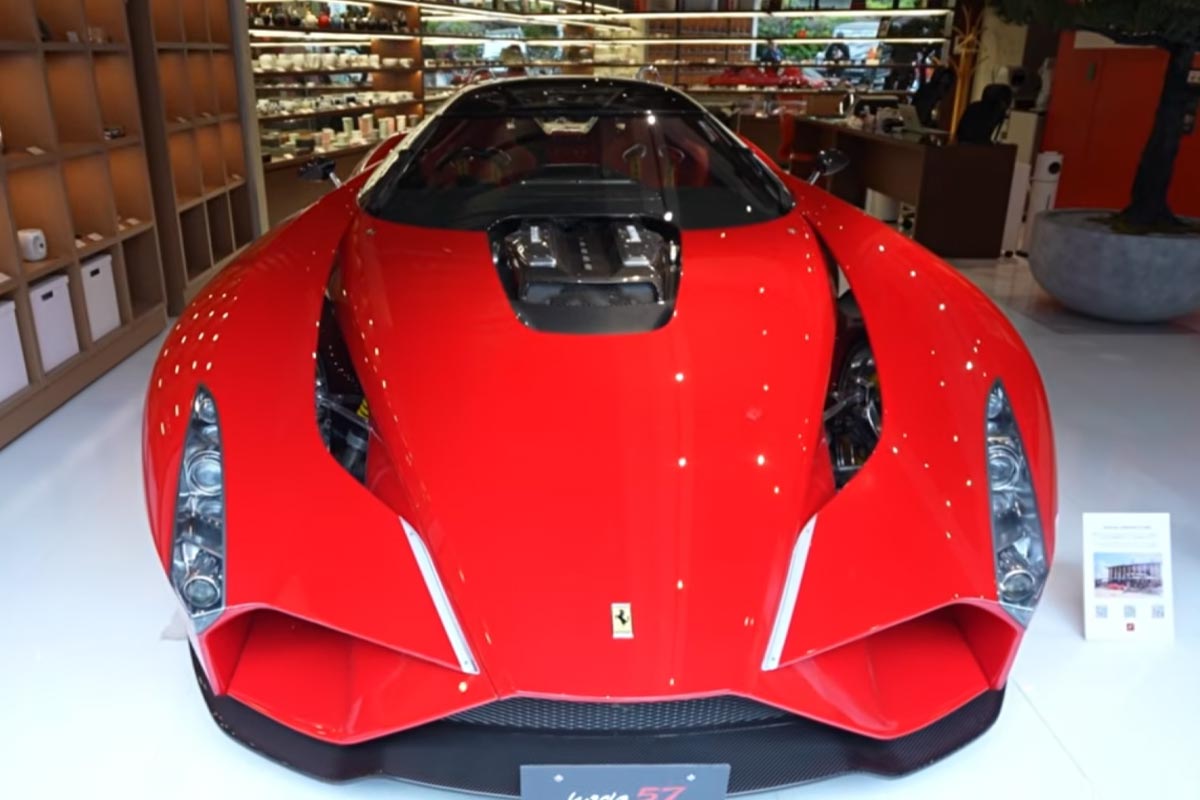
The project is indicative of his philosophy. Rather than creating an entirely new car, he prefers to start with an existing platform and reinvent it. The Kode57 thus retains the architecture of the Ferrari 599 while featuring a completely redesigned body, inspired by both the Enzo and historic Ferrari models from the 1950s.
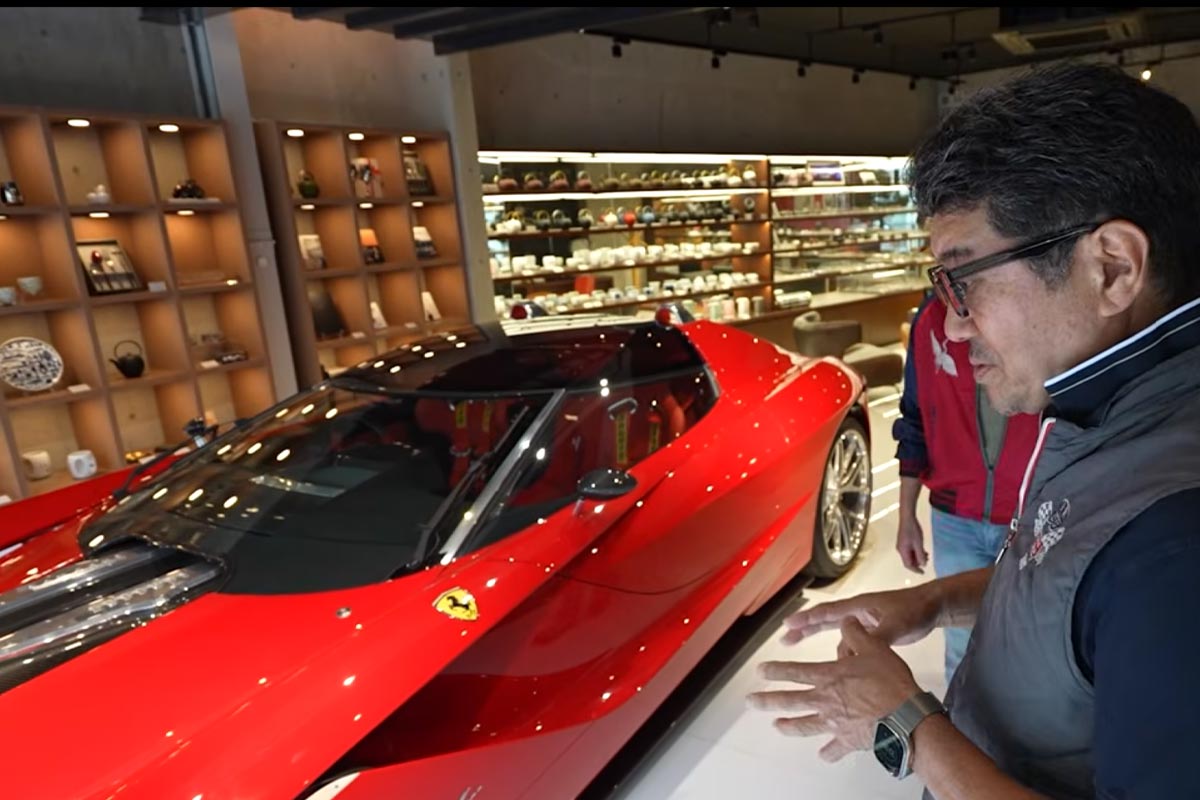
In front of the cameras, the designer explained his approach at length: every project begins with a discussion with the client about their ideal car. In his view, the designer’s role is not simply to sketch a body, but to turn an automotive dream into reality. This artisanal vision contrasts with an automotive industry that he sometimes considers too focused on technology and screens. For Ken Okuyama, a sports car must above all remain an emotional machine, designed to last for decades without losing its appeal.
«Modern Ferraris could be simpler»
The conversation also provided an opportunity to look back at some of the Ferraris he helped create. When discussing the Ferrari 599 GTB Fiorano, Ken Okuyama was surprisingly critical of his own work. In hindsight, he believes the interior could have been more compact and that certain safety constraints led to proportions that were less elegant than hoped for. He even explains that several of the solutions later devised for the F12berlinetta were specifically intended to correct these flaws.
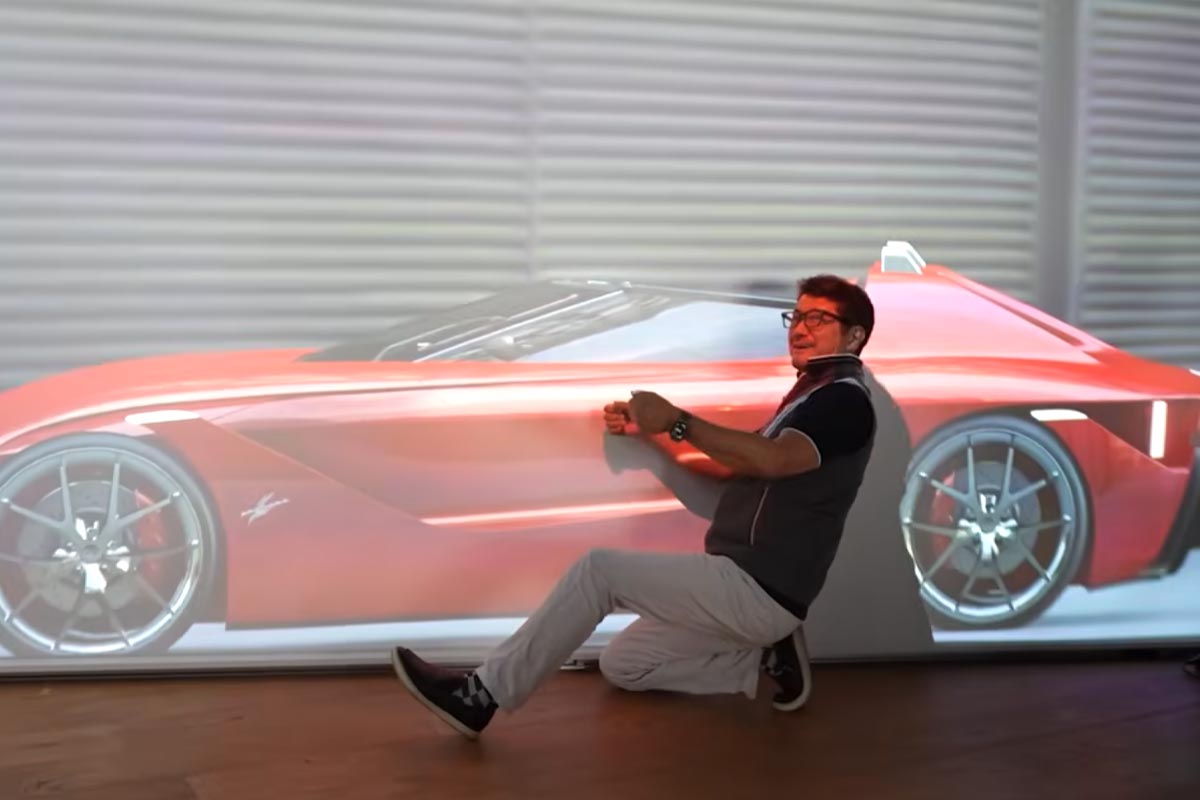
The designer also recounts having contributed to the thinking that led to lower, sleeker, and visually sportier Ferraris, such as the 458 Italia, while maintaining dimensions similar to the models they replaced. These anecdotes demonstrate that, in his view, automotive design remains a process of continuous improvement.
A one-of-a-kind Ferrari F12 could be his next challenge
It was actually toward the end of the visit that the most interesting topic came up. The creators of Daily Driven Exotics presented their somewhat crazy project: a Ferrari F12 converted into a true race car producing over 1,200 chevaux thanks to a twin-turbo V12 engine (which we’ve covered several times on Italpassion). After six years of development and over a million dollars invested, the vehicle is technically complete. Only one problem remains: it still looks like a stock F12.
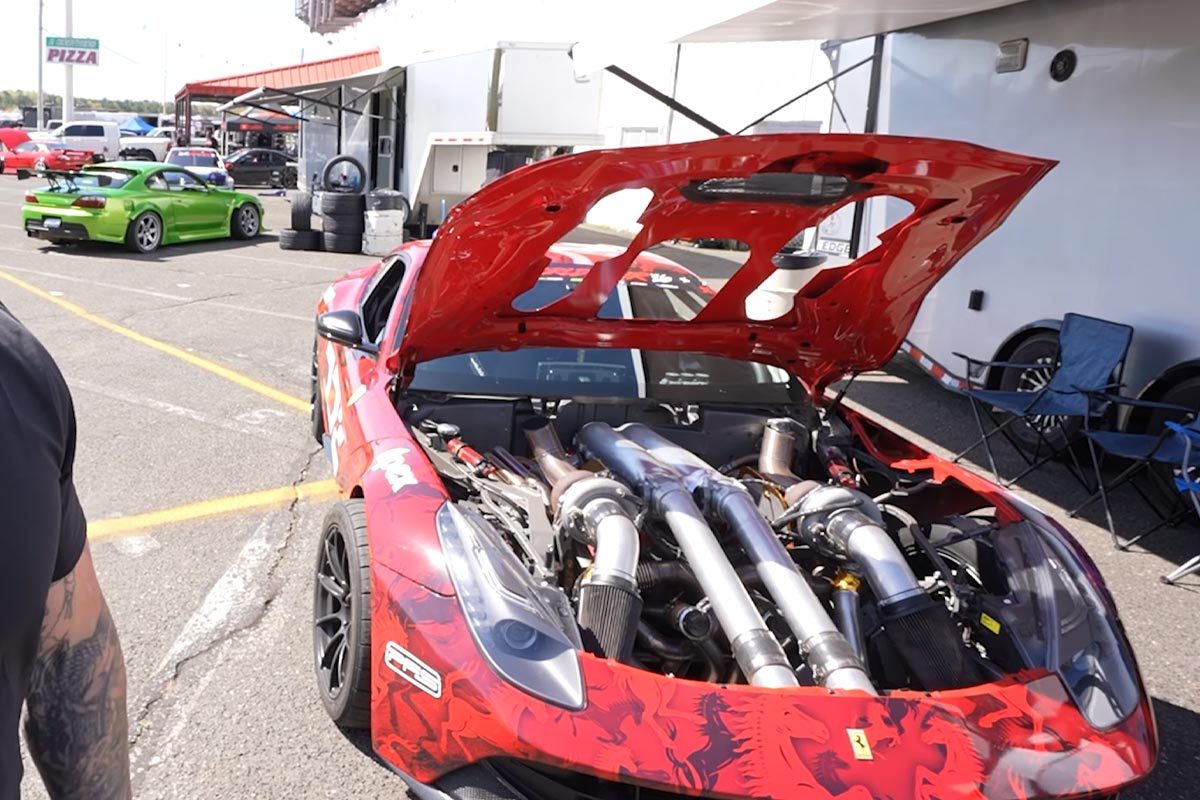
Given this situation, the idea came naturally: why not ask Ken Okuyama to completely redesign the car? While he didn’t make a formal commitment, he was very receptive to the idea. When the videographers explained their vision for the project and their desire to create something unique, he didn’t rule it out. The discussion even drifted toward what the project could become: a one-of-a-kind creation inspired by the most iconic Ferraris, blending modern design, a manual transmission, and the spirit of the analog supercars he particularly loves.
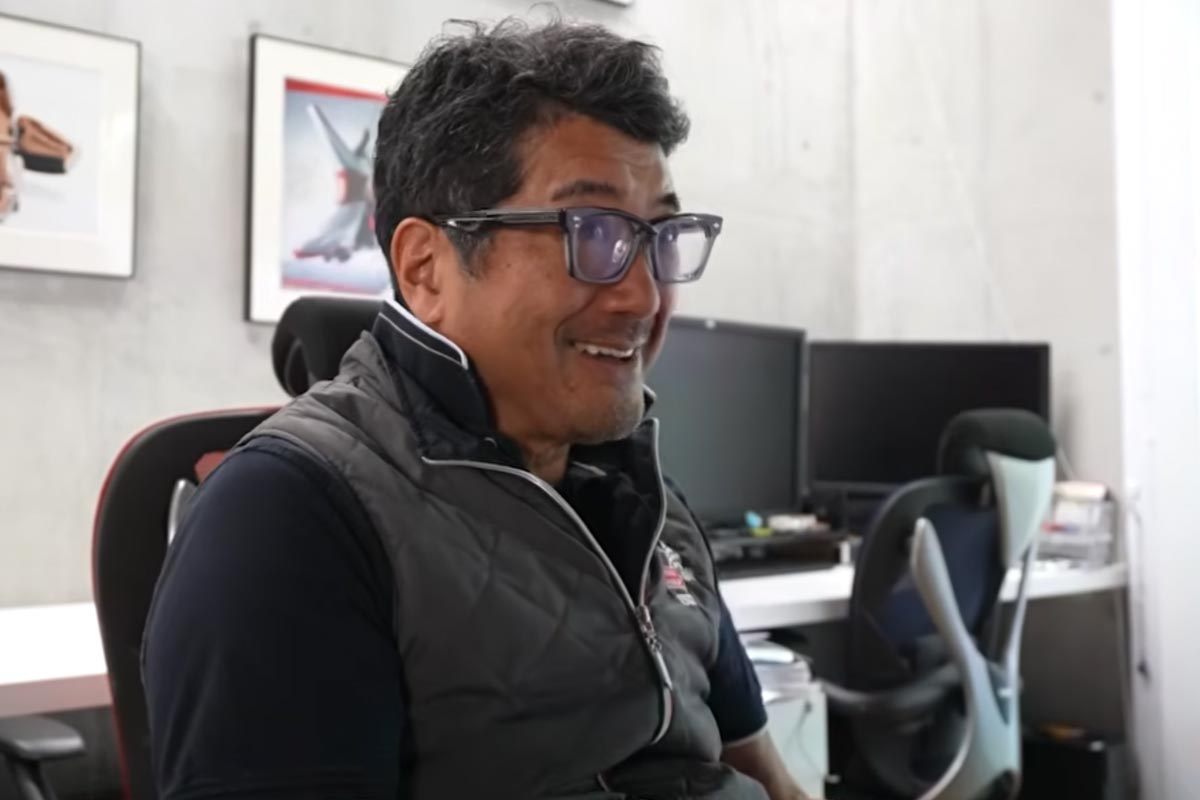
For the channel’s creators, such a collaboration would add considerable value to the project. After all, how many car owners can boast of having their Ferrari redesigned by the man who helped create the Enzo Ferrari and contributed to the very roots of the F12?
Ken Okuyama’s enthusiasm remains as strong as ever. Between his automotive projects, his hydrogen-powered V12 concepts, his handcrafted creations produced at his factory in Yamagata, and his upcoming presentations at Pebble Beach, the Japanese designer continues to work with the energy of a young designer. So, will we one day see a new Ferrari designed by Ken Okuyama? Nothing has been confirmed. But one thing is certain: at 67, the father of the Enzo Ferrari has clearly not said his last word.

 English
  French
  Italian
  Spanish
  German
  Japanese
  Dutch
Dutch
Good, I love the car, but it should be blue.
I find that today’s cars lack the smooth curves of the European sports cars built in the mid- to late 1950s and 1960s—they’re too jagged, too straight, too generic, I guess to save money or to downplay the actual art behind it—kind of like that “Synchronicity” painting of primary colors that sold for millions. Is that art? No, that’s total crap!!!
Ferrari's downfall stems from hiring a cell phone designer to design an electric Ferrari, while at the same time preventing the engineers from making it outperform a Tesla Model S Plaid or a Lucid Sapphire, and then slapping a $650K price tag on it.
Just think—Mr. Enzo Ferrari himself refused to allow the 246GT and 246 GTS to be called Ferraris; they had to be labeled «Dino.»