

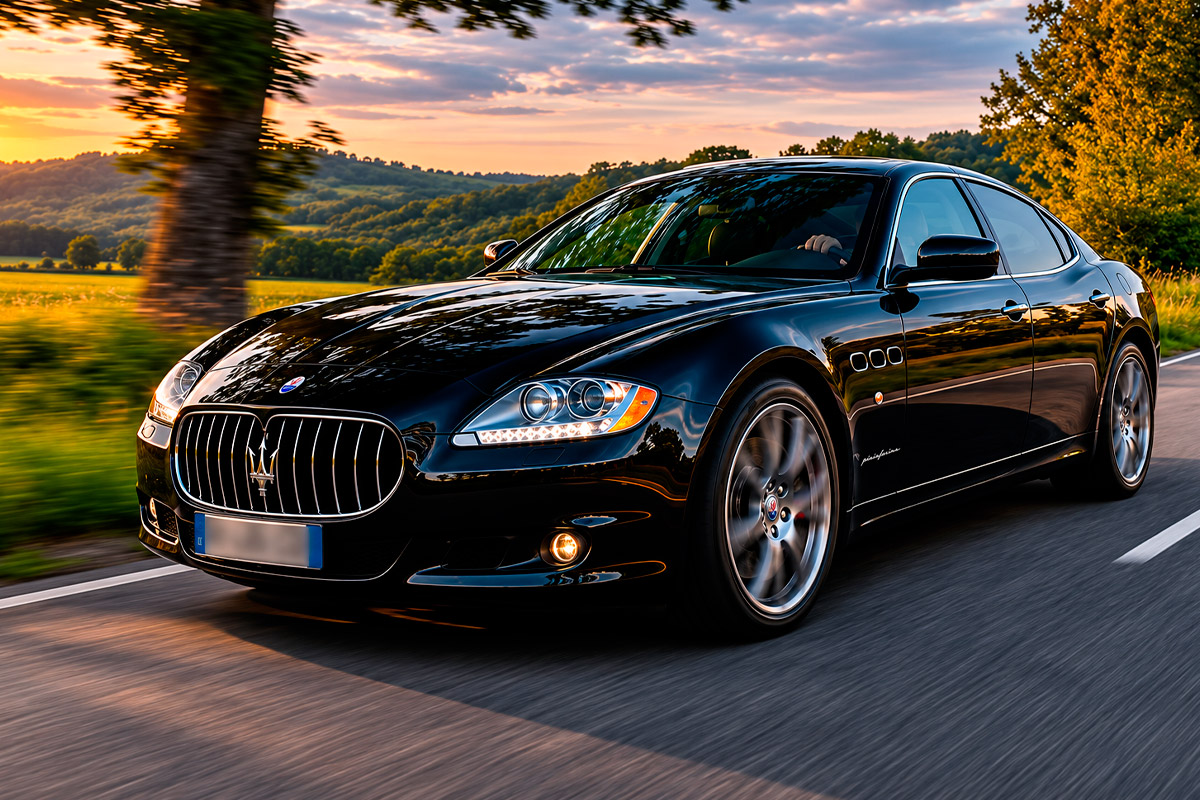
Driving every day in Maserati Quattroporte A 2011 V8 with over 220,000 km on the odometer—is that really a good idea? Tristan, a member of the Italpassion community, shares his experience behind the wheel of this large Italian sedan equipped with a 4.7-liter naturally aspirated V8 engine. Performance, sound, comfort, fuel economy, reliability, and maintenance costs: he gives us an unfiltered account of a car he uses primarily for his commute.
Some cars are chosen for their comfort, others for their technology. And then there are those that people buy first and foremost out of passion, like this fifth-generation Maserati Quattroporte.
Tristan knows Italian cars well. After owning, among others, a Alfa Romeo 147a GT and a Giulietta (though he has also driven a Renault Clio and an Avantime), he now drives a 2011 Maserati Quattroporte S. Under its long hood lies a 4.7-liter naturally aspirated V8 engine, paired with a ZF automatic transmission.
His car now displays 221,914 km on the odometer, of which Tristan says he has driven 90,000 km. This mileage is particularly interesting for assessing how this Italian luxury sedan ages. And when asked if he considered the large German sedans, his answer is straightforward: «I didn't hesitate between a BMW 7 Series and a Mercedes S-Class.»
Tristan's Maserati Quattroporte S: Key Statistics
| Feature | Data |
|---|---|
| Model | Maserati Quattroporte S |
| First registration | June 8, 2011 |
| Motorization | 4.7-liter naturally aspirated V8 |
| Power | 430 hp |
| Transmission | ZF Automatic Transmission |
| Mileage | 221,914 km |
| Kilometers traveled by Tristan | 90,000 km |
| Primary Use | Commutes |
| Reported Average Fuel Consumption | 15 L/100 km |
A naturally aspirated V8 that makes you want to hit the road
This is obviously one of the main reasons to buy a Maserati Quattroporte S: its engine. With its naturally aspirated 4.7-liter V8 producing 430 ch, this large sedan offers an experience that has become rare in modern automobiles. Despite its imposing size, Tristan particularly appreciates the engine’s responsiveness, both in the city and on the open road.
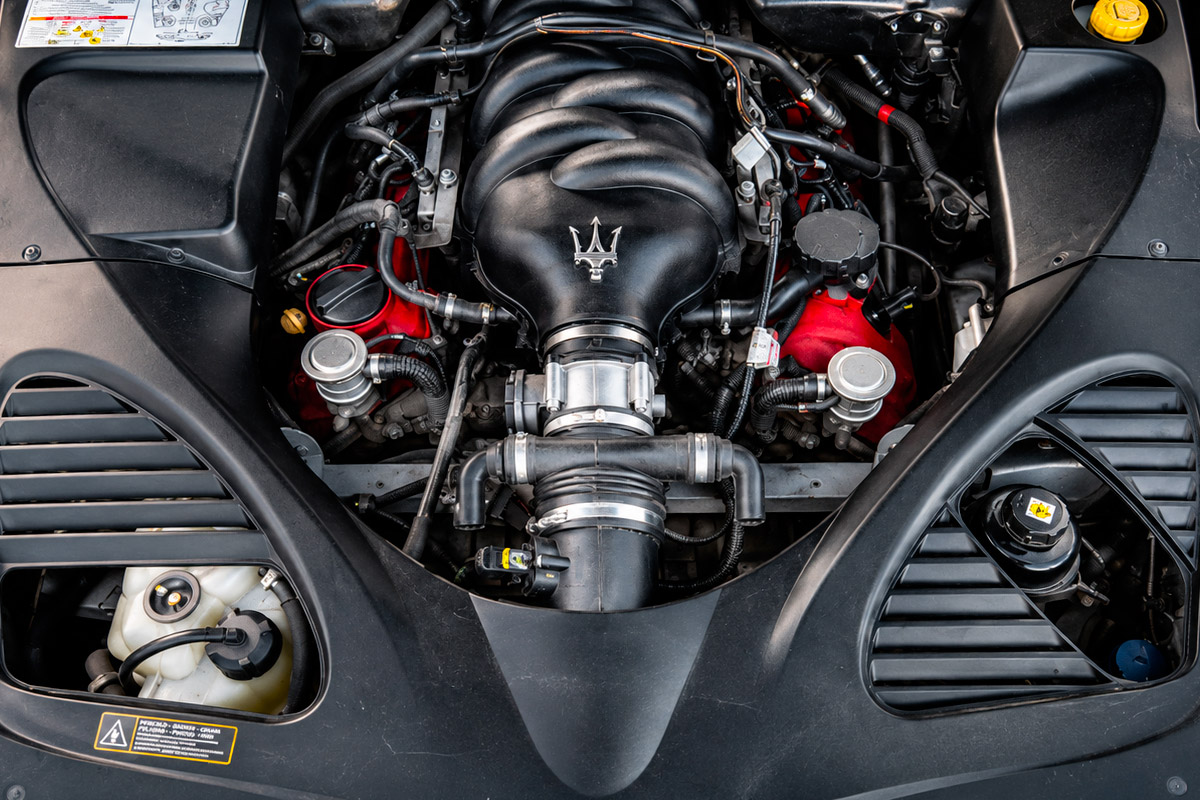
«The engine is a real pleasure to drive; it handles city driving with ease as long as you shift into manual mode. On the open road, just press the pedal and it takes off right away. In fact, once it’s up to speed, it feels like there’s no limit.»
The owner therefore recommends using manual mode when driving in the city. As for the ZF automatic transmission—which is sometimes less popular among enthusiasts than the older DuoSelect automated manual transmission—he finds it to be quite good. «The ZF transmission performs well, despite what purists say about it compared to the F1 transmission,» he explains.
But beyond the acceleration, it is above all the sound that makes this Maserati unique. At low speeds, the engine remains relatively quiet, without ever fading completely into the background. As the revs climb, its character changes. «The sound is unmistakable—you can always hear it. Now, when you’re driving calmly, it purrs. Once you hit 5,000 RPM, you can really hear the V8.» A design that seems to have retained all its appeal, even after more than 220,000 km.
Sporty handling, but comfort that requires some compromises
The Quattroporte isn’t just a large, luxurious sedan with a powerful engine. Maserati also sought to give it dynamic handling, and that’s something Tristan particularly appreciates. «The car sticks to the road—you can feel every bump in the road,» he sums up.
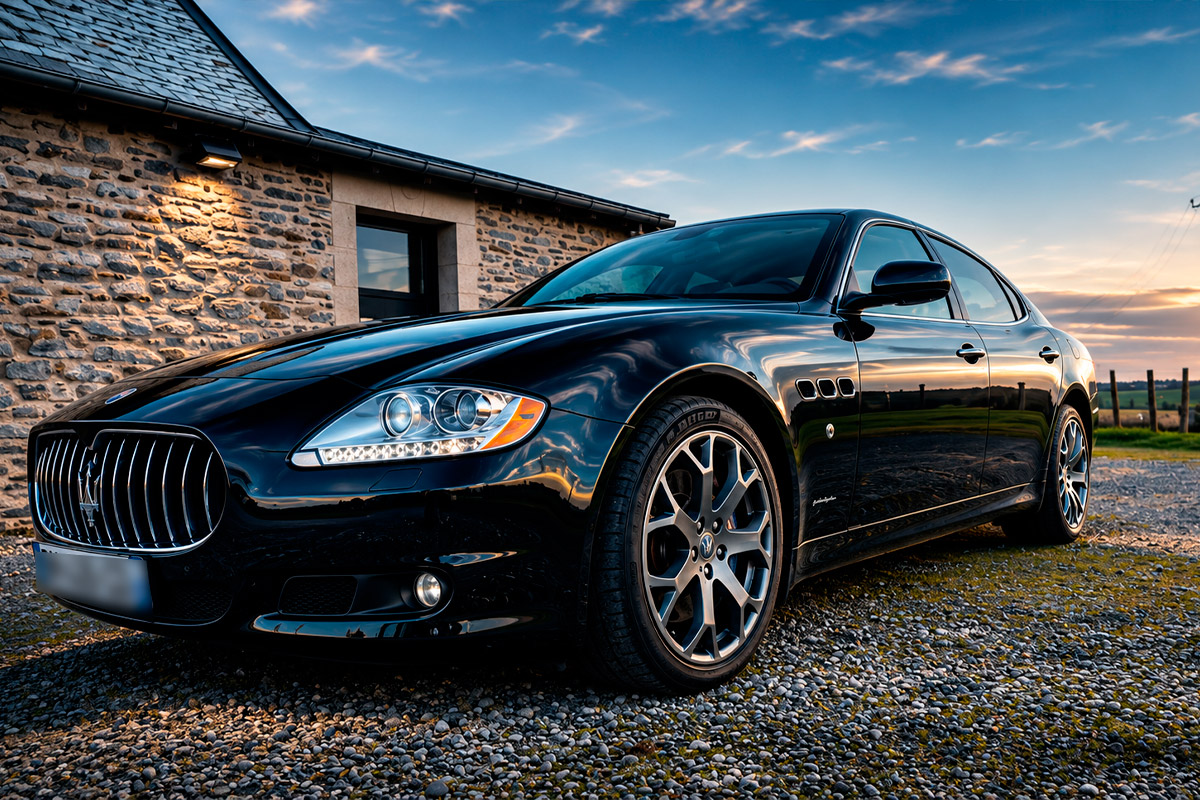
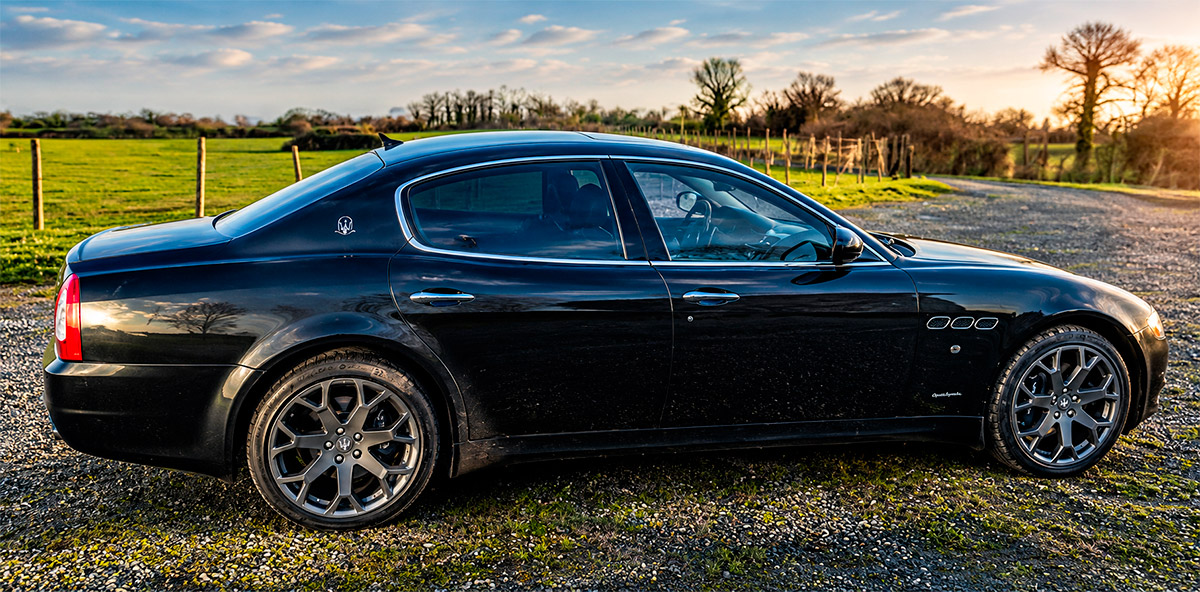
The steering is considered precise, and Sport mode further enhances the driving experience. But this handling comes at a price: the Maserati doesn't handle rough roads particularly well.
With its low-profile tires and limited ground clearance, speed bumps and potholes require constant attention. «You shouldn't go over speed bumps at 30; otherwise, you'll hear the front end scrape a little as you come off them. Given how low the tires are, potholes are the enemy.» Tristan even reports having experienced three tire blowouts, including some at low speeds. This issue highlights the challenges of driving this large sedan on certain roads.
The braking system also receives positive reviews. The owner specifically highlights the six-piston front calipers, which he considers essential given the vehicle’s performance and weight. Ultimately, the Quattroporte clearly prioritizes driving dynamics over total isolation for its occupants. This characteristic sets it apart from luxury sedans that are more focused on comfort.
Inside: leather that ages well, tacky plastics, and a few electronic glitches
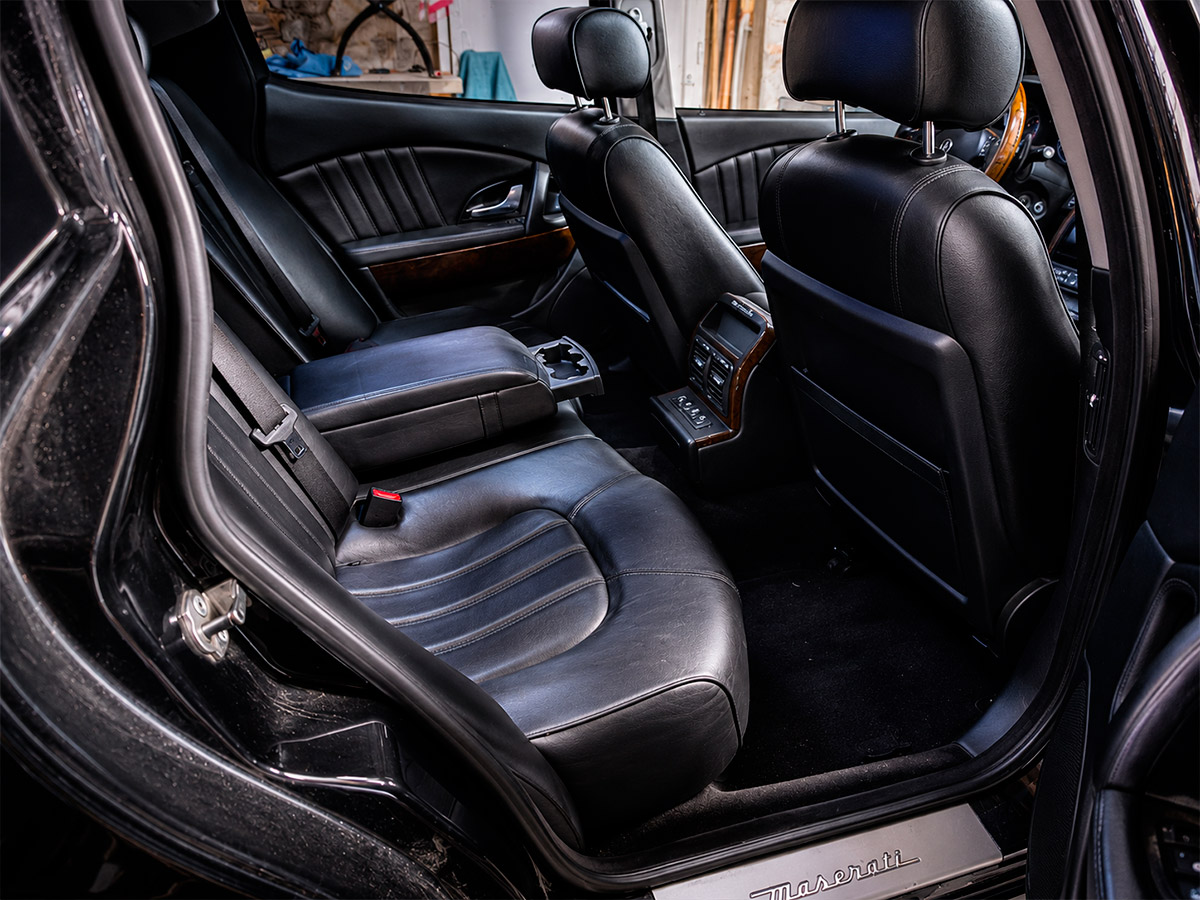
Inside, the Maserati Quattroporte immediately evokes its luxury positioning. Leather, wood trim, a center clock, and a traditional ambiance create an interior that’s very different from that of modern sedans. With over 220,000 km on the odometer, Tristan’s car also offers a glimpse into how the materials have held up over the years.
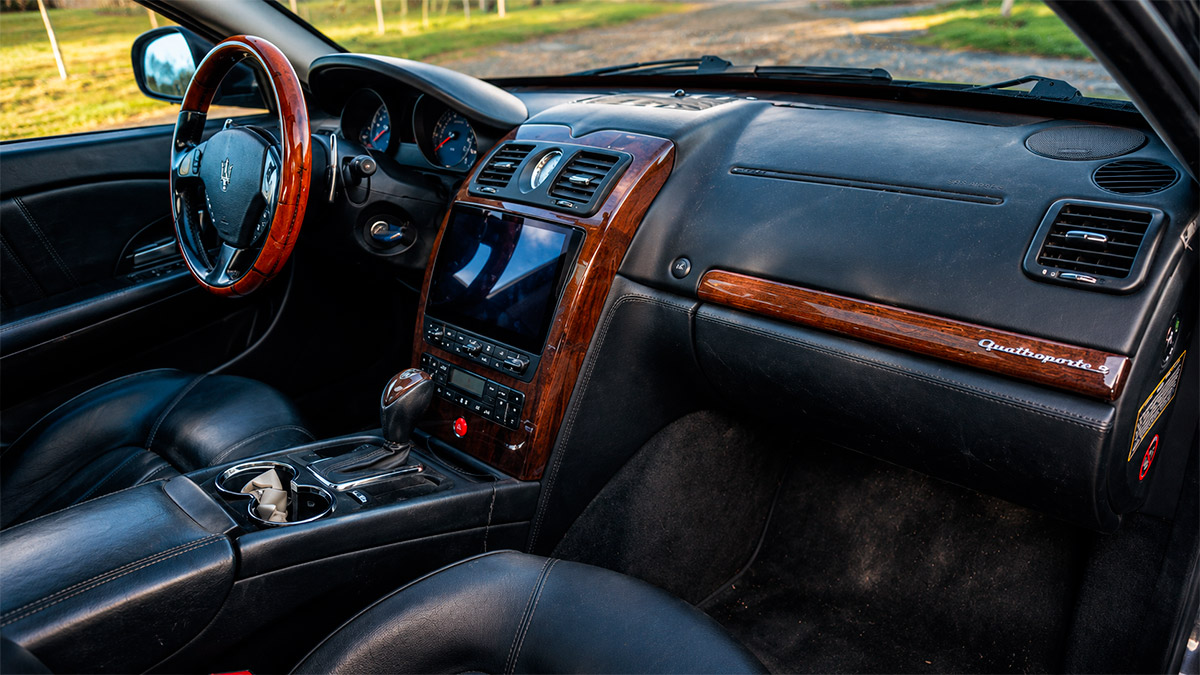
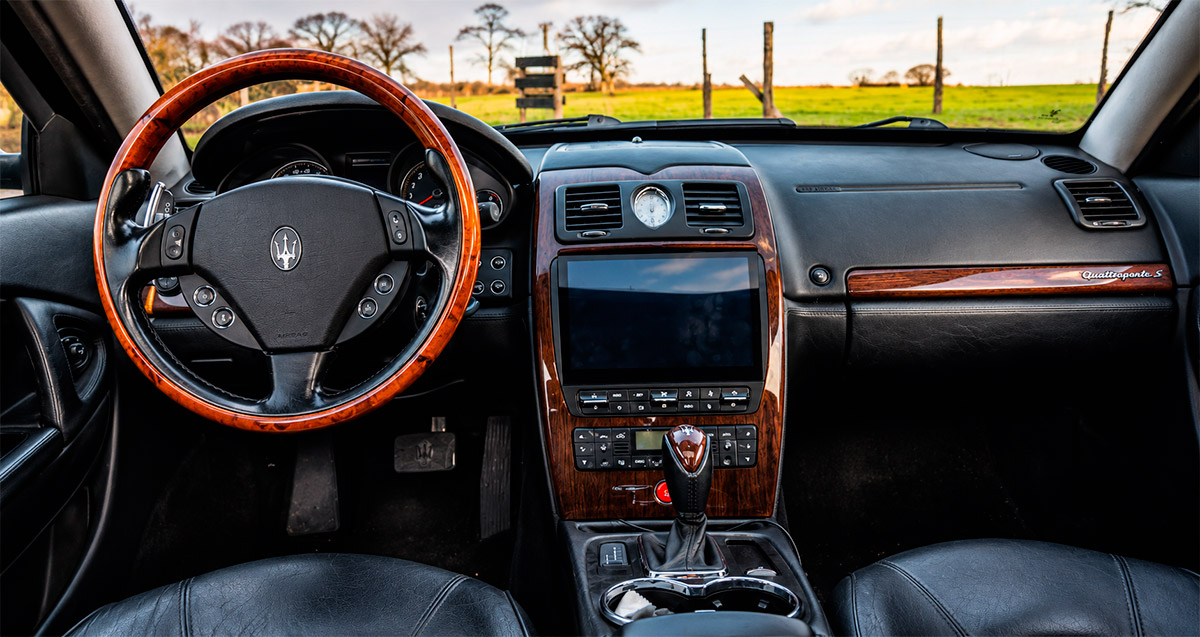
And the results are mixed. «Nothing moves; Italian plastics from that era have a bad reputation—they stick… It ruins the experience. Otherwise, Poltrona leather ages really well.»
The infamous sticky plastics—well known to owners of certain Italian cars of this generation—are therefore one of the interior’s main flaws. On the other hand, the leather upholstery seems to have stood the test of time quite well.
Another feature that gives away the car’s age is the factory-installed multimedia system. Tristan chose to replace it with a 10-inch touchscreen to modernize his Quattroporte. He’s satisfied with the overall ergonomics, even though, in his opinion, this car doesn’t encourage frequent adjustments while driving. «The only controls that really fall within easy reach while driving are the paddle shifters,» he points out.
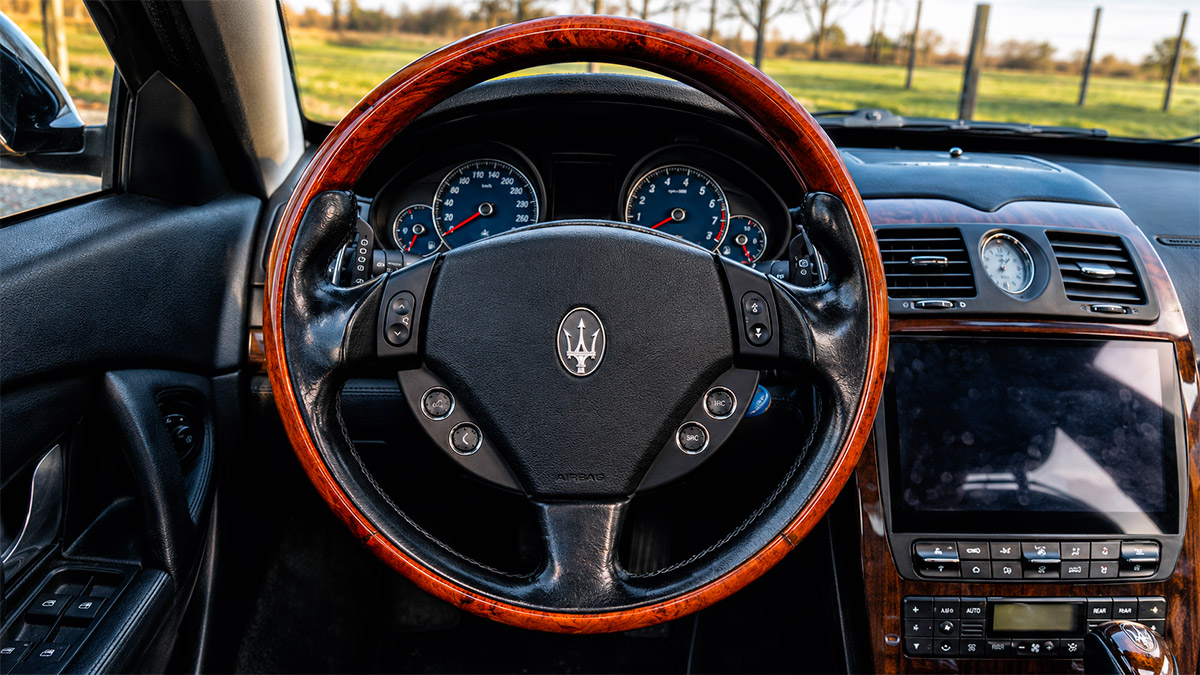
As for the electronics, they sometimes hold a few surprises. «Italy and electronics—it’s quite a story… Sometimes the indicator lights flash on and off… The car is alive!» A remark made in jest, but one that serves as a reminder that an Italian sedan of this generation may require a certain amount of patience when it comes to minor electrical quirks.
When it comes to interior comfort, Tristan particularly likes the front seats, which he finds comfortable and well-designed. He admits, however, that he has never really tested the back seats as a passenger.
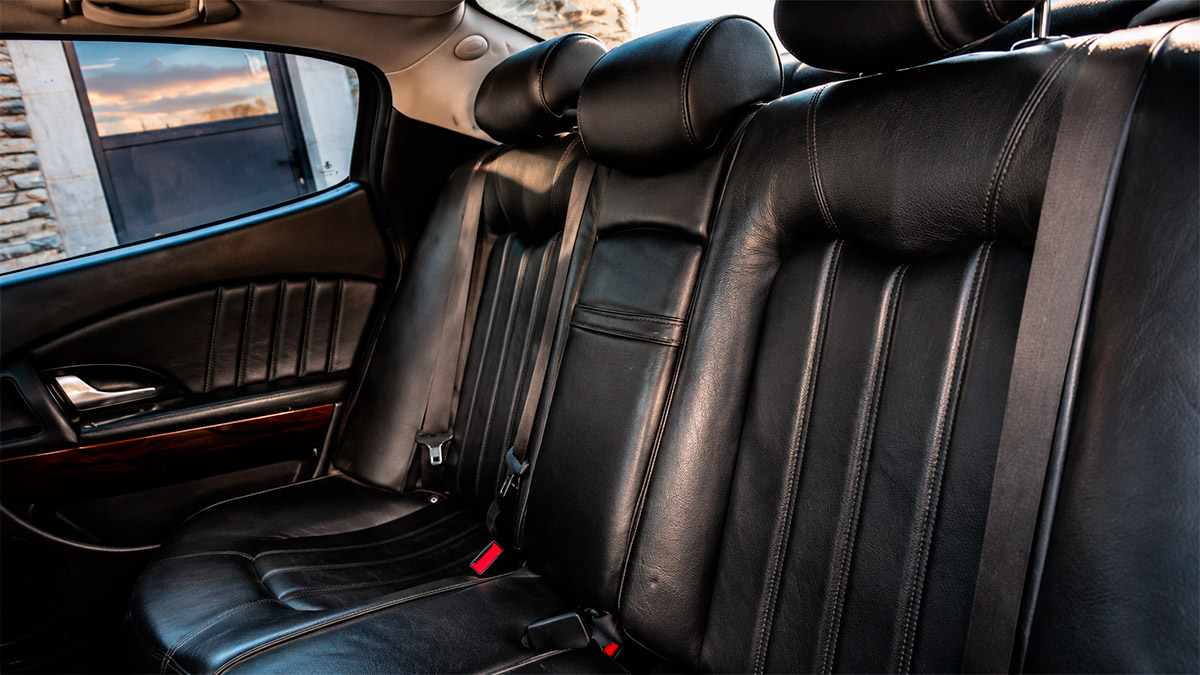
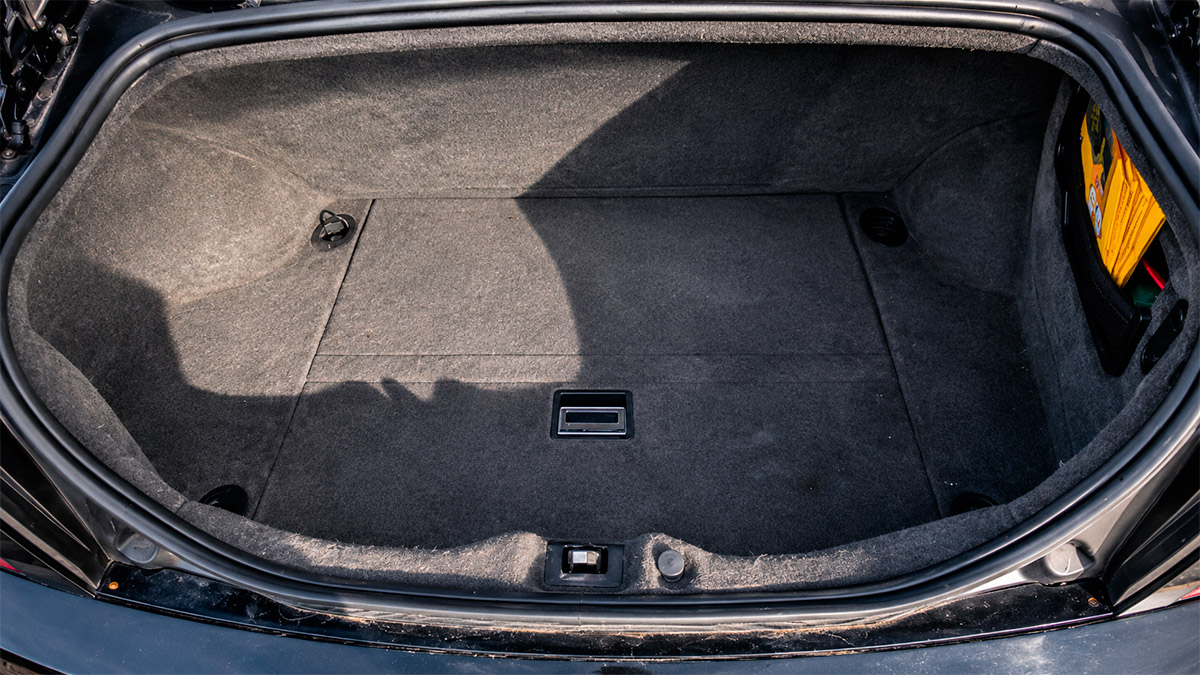
The trunk is another limitation of this large sedan. Despite the Quattroporte’s generous dimensions, its trunk space is compromised by the fuel tank’s location behind the rear seat. Tristan does, however, appreciate the additional storage space under the floor.
Fuel Consumption, Maintenance, and Reliability: The Price of Passion
This is probably the most interesting part of this review. Because while buying a used Maserati Quattroporte V8 may seem affordable compared to its new price, using it on a daily basis is another story. Tristan doesn’t try to downplay the fuel consumption of his naturally aspirated V8. The figures he provides are unambiguous.
Actual consumption figures recorded by Tristan
| Course Type | Consumption |
|---|---|
| City | 18 L/100 km |
| Highway at 130 km/h | 13 L/100 km |
| Average | 15 L/100 km |
With an average of 15 L/100 km, traveling 10,000 km requires about 1,500 liters of fuel. For example, at a price of 2 € per liter, that would amount to €3,000 in fuel for 10,000 km.
But fuel costs aren't the only expense to consider. In his five-year review, Tristan mentions several mechanical repairs: the air conditioning, the radiator, and the engine control module. He doesn’t specify the cost of these repairs, but they show that a Quattroporte of this age and mileage requires an appropriate maintenance budget.
Another particularly important component: tires. «The front tires last 20,000, and the rear ones 10,000.» A relatively short lifespan, especially on the rear tires, compounded by the three blowouts already mentioned. Tires are therefore a recurring expense for Tristan.
When it comes to maintenance, he has chosen not to use the official Maserati network. His Quattroporte is serviced at an independent specialty shop. This choice can help keep certain expenses under control, provided the car is entrusted to a professional who is familiar with its mechanics and specific features. Despite the repairs he’s had to deal with, Tristan doesn’t seem to regret his choice.
Why a Maserati instead of a BMW 7 Series or a Mercedes S-Class?
On paper, the Maserati Quattroporte competes in the world of large luxury sedans, going head-to-head with the BMW 7 Series and Mercedes S-Class, among others. But for Tristan, the comparison has clearly never been framed in those terms.
«I didn't hesitate between a BMW 7 Series and a Mercedes S-Class.» What appeals to him about the Maserati isn't necessarily the search for the best balance between comfort, technology, and running costs. It's, above all, its character.
When asked what gives his Quattroporte that extra touch of character, he simply replies: «Timeless design and a melodious sound.»
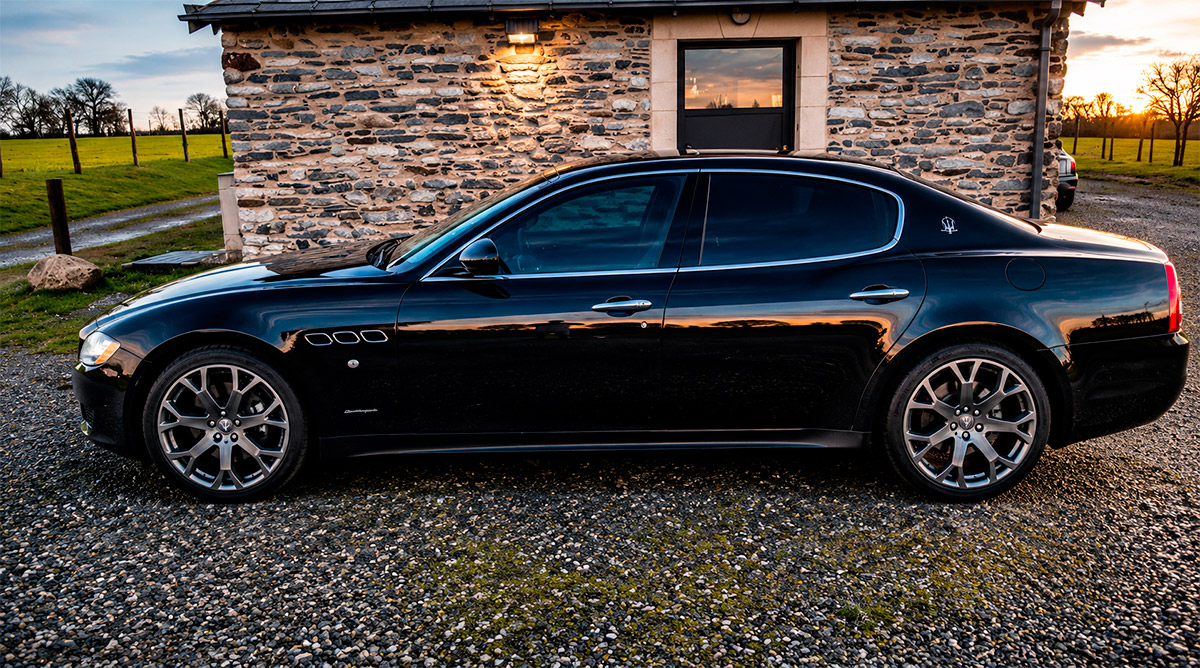
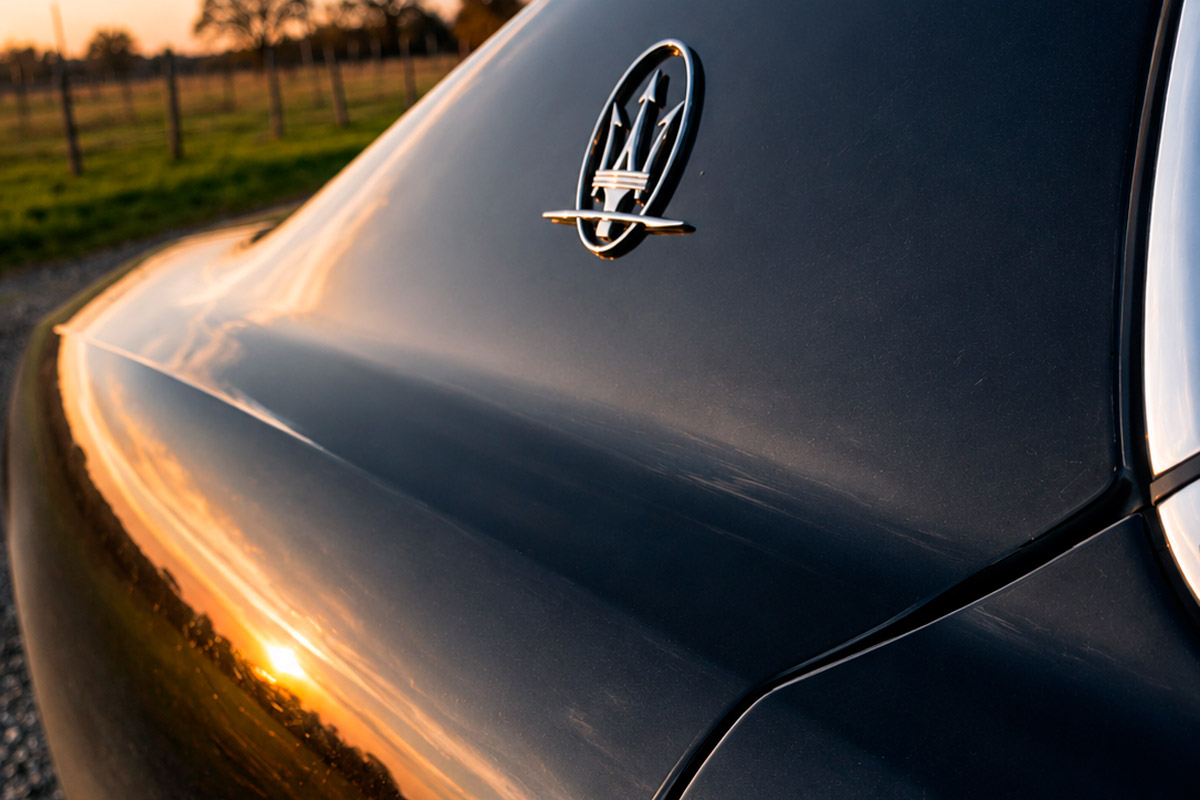
These two qualities pretty much sum up the appeal of this generation. Designed by Pininfarina, the Quattroporte has a silhouette that remains instantly recognizable, while its naturally aspirated V8 engine gives it a distinctive sound that’s hard to find in today’s large sedans.
That also explains why some enthusiasts are willing to overlook its flaws: high fuel consumption, demanding maintenance, electronics that can be finicky at times, and a firm ride on rough roads.
The Bottom Line: A Maserati with over 220,000 km on the odometer that still holds its appeal
After driving 90,000 km behind the wheel, Tristan offers a particularly interesting review of the Maserati Quattroporte S. His car has surpassed 220,000 km, and yet the qualities he highlights most are still those that have made the model’s reputation: the V8 engine, the sound, the precise handling, and the style.
Of course, not everything is perfect. Sticky plastics, flickering warning lights, mechanical repairs, and—above all—rapid tire wear serve as a reminder that this is no ordinary sedan to maintain. But what stands out from this experience is that a Quattroporte can still be a lot of fun even with high mileage—provided you accept its limitations and set aside the necessary budget.
So the Maserati Quattroporte S isn’t exactly the most practical car for daily commutes. But perhaps that’s precisely what makes it so appealing: it transforms an ordinary trip into an experience that its owner continues to enjoy, even after tens of thousands of kilometers.
Thank you to Tristan, a member of the Italpassion community, for his story and the photos of his Maserati Quattroporte S. You, too, can, Submit a test drive for your Italian car so that it can be published on Italpassion.
 English
 French
 Italian
 Spanish
 German
 Japanese
 Dutch