

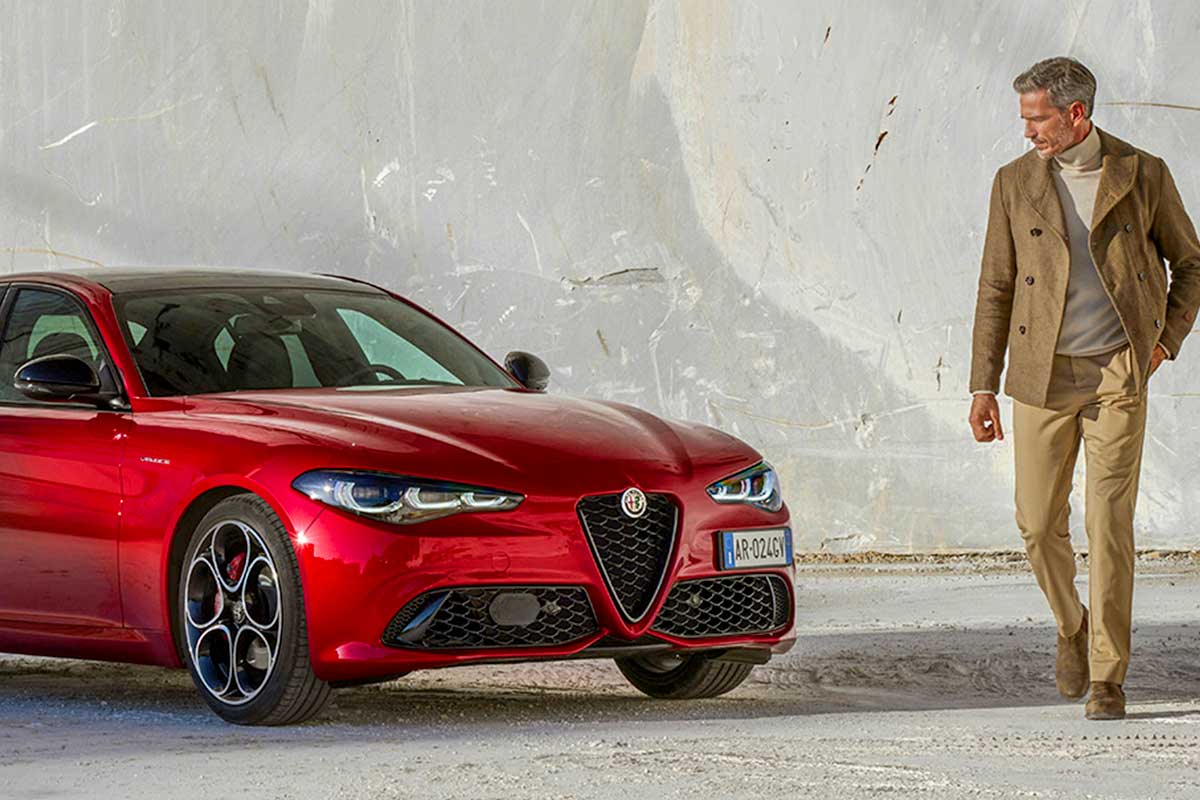
Ten years. In modern motoring, that's almost an eternity. And yet, the’Alfa Romeo Giulia is still there, true to form, even though its rivals have gone through one renewal, hybridization and technological revolution after another.
Launched in 2016, the Italian sedan should have disappeared long ago by today's standards. But between a restyling in 2023, discreet updates and above all a change of strategy at Alfa Romeo, It will continue its career until the end of the decade, before a new generation expected around 2028.
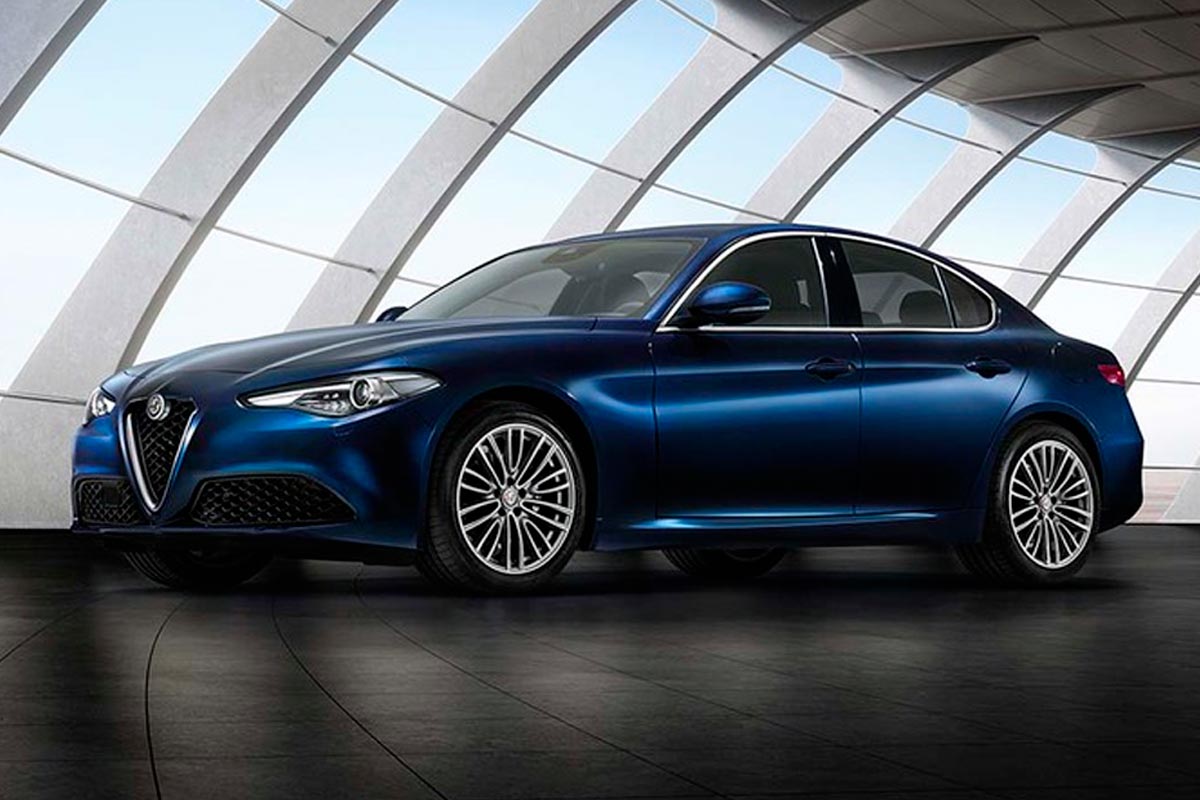
On paper, everything seems to work against it. Sales have never really taken off, so much so that it still has a nagging reputation as «the most beautiful car that nobody buys». And yet, judging an Alfa on volume alone has never made much sense.
A counter-current philosophy
What's striking even today is the extent to which the Giulia refuses to follow the trend. Where rivals such as the BMW 3 Series, Audi A5 and Mercedes C-Class multiply screens, hybrid systems and driving aids, the Italian remains faithful to an almost old-school approach.
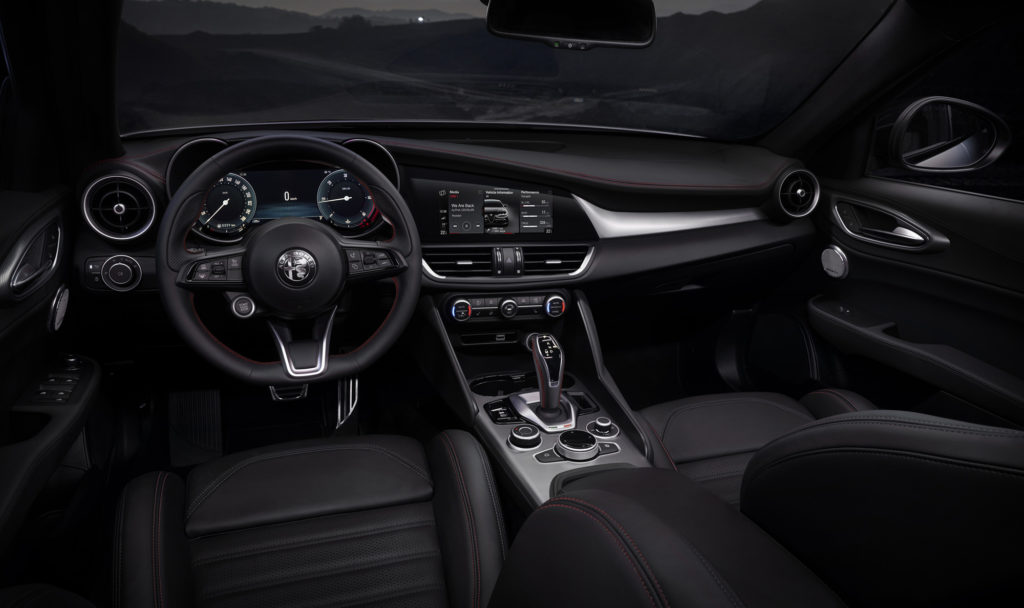
According to Autocar magazine's Sam Phillips, this is precisely its strength. The Giulia focuses on simplicity, ergonomics and, above all, driver involvement. Physical buttons, a clear interface and an immediate grip: here, you drive before you configure.
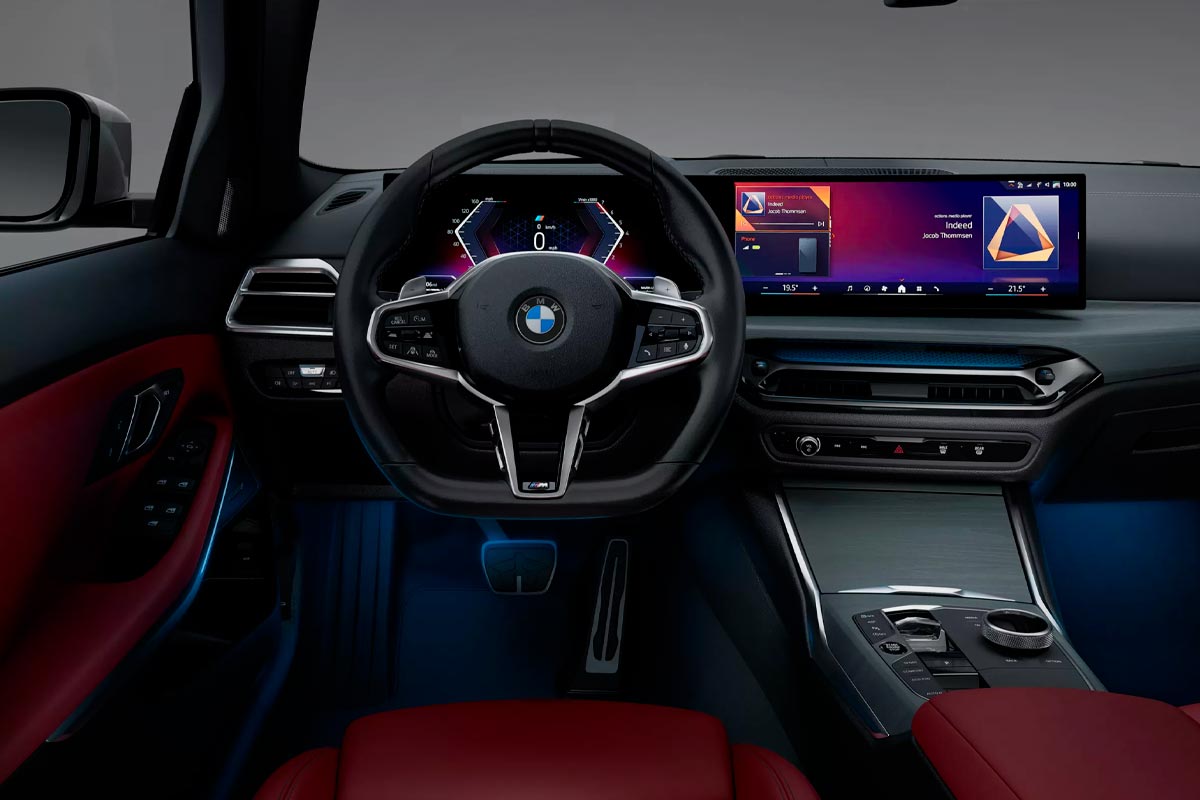
Of course, this has a downside. Compared to a state-of-the-art 3 Series, the interior looks dated, the infotainment system is outdated, and the lack of hybridization may seem anachronistic. But this «weakness» almost becomes a quality in a world where technology invades everything.
Driving pleasure as the main argument
Because the Giulia's true strength is not measured in pixels or electronic assistants. It can be felt behind the wheel. In its 280 hp 2.0 turbo version, the Italian sedan still impresses with its balance. With its quick steering, precise chassis and unspoiled sensations, it remains one of the benchmarks for driving pleasure. An impression confirmed by several technical analyses, The Giorgio platform was designed from the outset for rear-wheel drive, with a near-ideal weight distribution.
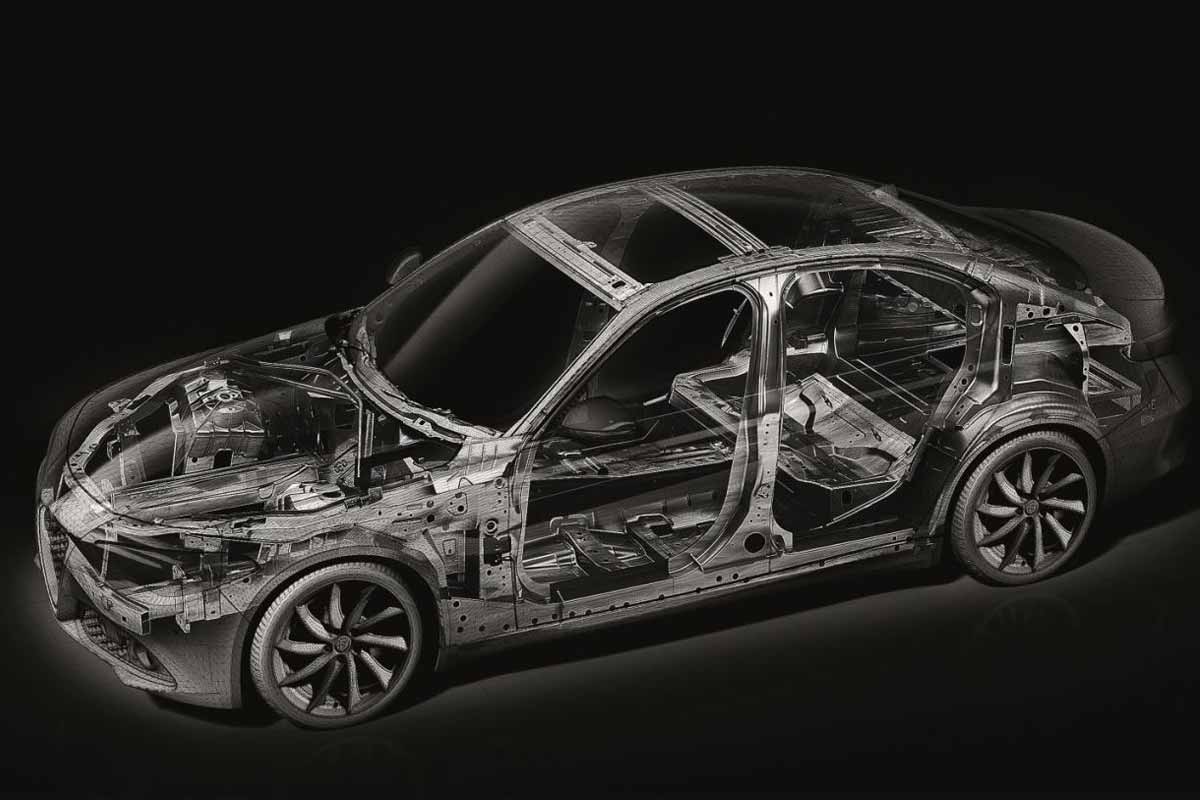

The Germans play a different game. Heavier, more filtered, more versatile too. But rarely as engaging. The Giulia, on the other hand, fully embraces its philosophy: less compromise, more emotion.
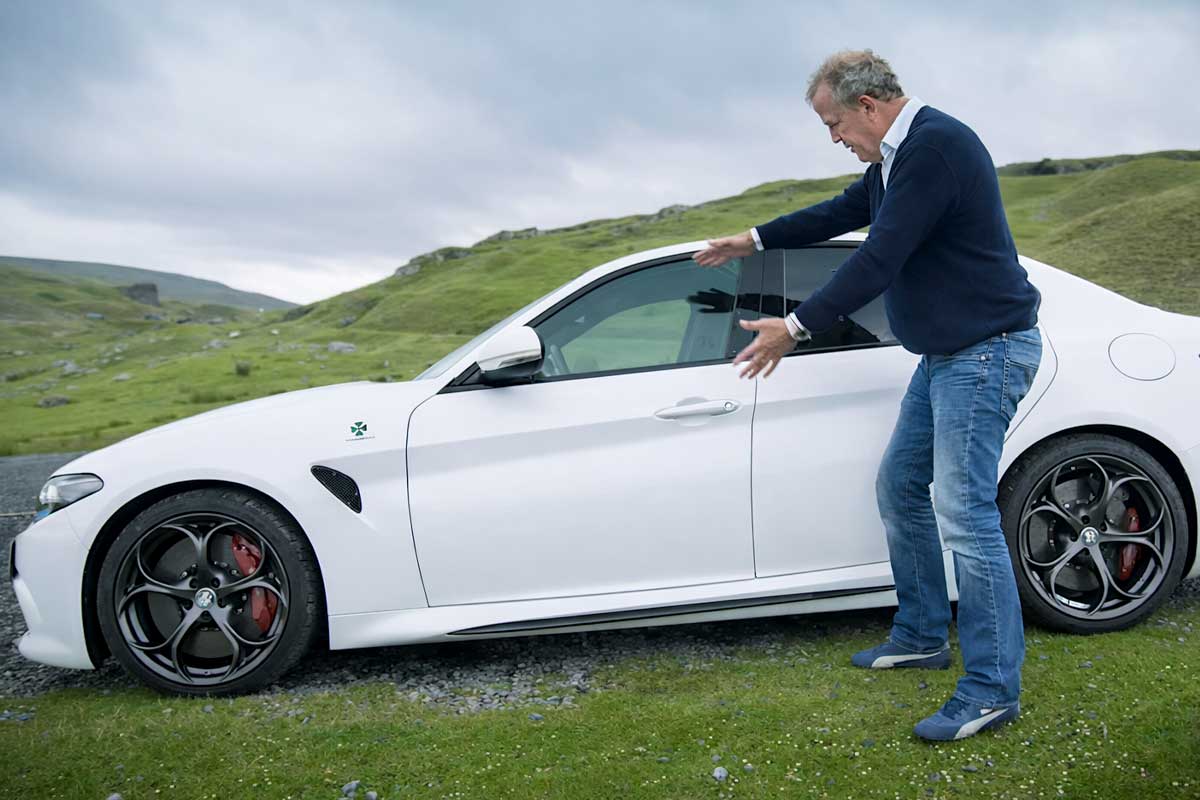
The same is true of Jeremy Clarkson, who has become highly critical of the modern automobile. Despite his reservations about ADAS and the comfort of recent versions, he acknowledges that the Giulia retains something that many have lost a direct connection to the road.
«At the same price, it's better»
The Giulia strikes hardest when it comes to value for money. According to Sam Phillips, for the same budget, it directly outperforms the BMW 3 Series on one key point: performance. With almost 280 hp, it offers almost 100 hp more than an equivalent version of the German sedan. For a similar level of performance, you'd have to go for an M340i... which costs around €20,000 more. As for the 330e rechargeable hybrid, while certainly powerful, it is considerably overweight, which affects the car's feel. The conclusion is simple: more power, less weight, and a more direct driving experience. In this respect, the Italian still has a clear advantage.
A car from another era... and that's precisely the problem (or the solution).
Over time, the Giulia's status has changed. What was once seen as technological backwardness has now become a form of resistance. In an automotive world dominated by touch screens, intrusive aids and complex powertrains, it embodies a simpler, almost nostalgic vision. A car designed for those who like to drive, not for those who want to be assisted.
And that's Sam Phillips' conclusion: those who value driving pleasure above all else should hurry up and buy one while there's still time. After all, with the next generation announced as electrified, this philosophy may well disappear. And perhaps that's where the Alfa Romeo Giulia's uniqueness lies: an imperfect car, sometimes outdated, but always capable of reminding us why we love to drive.

 English
  French
  Italian
  Spanish
  German
  Japanese
  Dutch
Dutch
For me, it's just perfect.
There are 2 of us.
The most beautiful thermal testament Alfa could offer us.
We've been dreaming about it for a long time, and now the dream has become reality.
If it's still the best sedan on the market 10 years later, it's because the Giorgio platform is exceptional. Without wishing to criticize the looks and technology of BMWs, I leave that to others. The Giulia is timeless, it never gets old.
If I had to find a small fault, I'd say the rearview camera isn't exactly top-notch. But what does it matter?
What remains incomprehensible are its modest sales figures, even though hybrid powertrains would obviously have been a big plus.
But when it comes to road feel and precision, the Giulia is unrivalled, in the face of increasingly aseptic rivals.
It's not a problem at all, but rather a real pleasure to see the last templar of thermal sedans stand the test of time.
I've already said it, but this «exceptional» platform is only exceptional for those who «tartage» on the road. On a daily basis, when you're driving to work on congested roads, it's comfort that really counts. In this respect, the Giulia is just average. The German panzers, on the other hand, can count on filtering that's often very meticulous, and can appeal to all those over 45 years old who drive them (the senior executives of companies who buy this kind of car!!).
And above all for the sales ...To buy an Alfa in the Fiat network ....euh ...you had to be brave!
I've got 48 of them, and when it comes to everyday comfort, they're perfect, whereas the German Panzer is designed to work with Mercedes E-class and S-class cars (and many others), and well, not only is it less comfortable (which is why Lexus is stealing more and more of their customers), it's also much more dangerous with its invasive technology.
And not totally false, they are not sold in Fiat dealerships, while VAG, Audi do not hesitate to sell cars over 200,000 € in the middle of Skoda and Seat!!!!
You didn't have to get into an Audi, BMW, Mercedes or even Porsche, because you'll never get the filtering right and we can even talk about their power and even in 2026... on/off!
In short, Alfa, Lexus or Maserati can rest easy, because in this respect too, they have a huge lead over the Panzers.
To say that the Giulia isn't comfortable, you don't need to have driven one. Particularly on freeways and country roads, it's particularly comfortable. You don't even need to put on a tartar to enjoy the ride, and even when you're driving peacefully, you'll be smiling. What's more, while the network is uneven, some dealerships are excellent (and others less so). There's no justification for constantly praising the Germans.
While I'm the first to say that some Alfa Romeos can be average, the Giulia clearly stands out from the crowd.
All the more reason to get the Giorgio evo back for the new Giulia, something that should have been decided from the outset in combustion, hybrid and electric versions, because of a bad decision by the previous team, this new model has fallen behind schedule. .
Dal 1986 ho acquistato solo ALFA ROMEO non sto ha dire tutti i modelli,quello che mi stupisce ancora oggi che è ancora rimasto il famoso cuore sportivo degli anni passati,si è vero che alcuni modelli hanno deluso le aspettative (da notare anche le altre case automobilistiche)ma ALFA È SEMPRE ALFA...
I've had 2: a 200 T, excellent, and my current one, a Veloce Q2, exceptional, 4 years1/2 and 60,000 km, a clock and still the same emotion every time I take the wheel. I'm going to keep it, because I won't be able to find anything like it in the future. It will become a collector's item.
I drive a Giulia 190 CV diesel sprint
Absolute pleasure, exceptional comfort, road feel, overall quality
I pity those who dare not choose it