

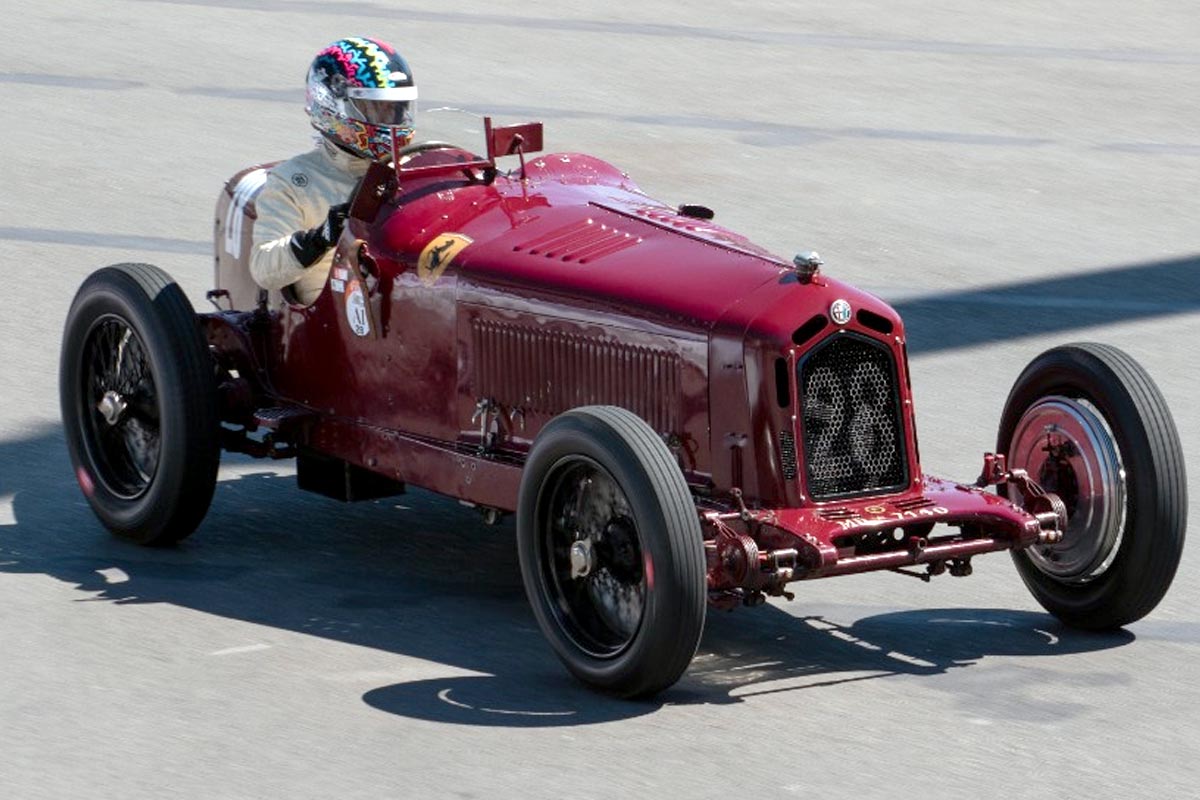
The Alfa Romeo Monza is one of the most successful cars in the history of the Milanese marque, in all configurations: Sport, Endurance and Grand Prix. Launched in 1931, it is powered by a supercharged 2.3-liter in-line eight-cylinder engine, delivering around 175 hp. The engine features two light-alloy blocks and heads, with two valves per cylinder and two gear-driven overhead camshafts. Weighing in at around 920 kilos, the beast is capable of reaching 210 km/h.
In its first year, the car won the Targa Florio, with Tazio Nuvolari, the 24 Hours of Le Mans with the Lord Howe - Sir Henry Birkin duo, and the Italian Grand Prix, with the Giuseppe Campari - Tazio Nuvolari duo. It was this victory on the Lombard circuit that gave the racing machine its name, “Monza”.
Veni, vidi, vici!
In 1932, a big first: Alfa Romeo made its first official appearance at the Monaco Grand Prix, first held in 1929. His team manager, Aldo Giovannini, entered three red 2.3-liter Alfa Romeo Monza cars specially prepared for Tazio Nuvolari, Giuseppe Campari and Mario Umberto Borzacchini. A fourth car, a white Monza, was intended for the German Rudolf Caracciola, who was not yet a member of the official factory team. Caracciola had nevertheless signed a contract with Alfa Romeo for 1932, following Daimler-Benz's withdrawal from competition at the end of 1931. Relations between the Italian trio and the German were not easy at first, due to national solidarity, but also because the Italian drivers were suspected of having made a deal to share the bonuses!
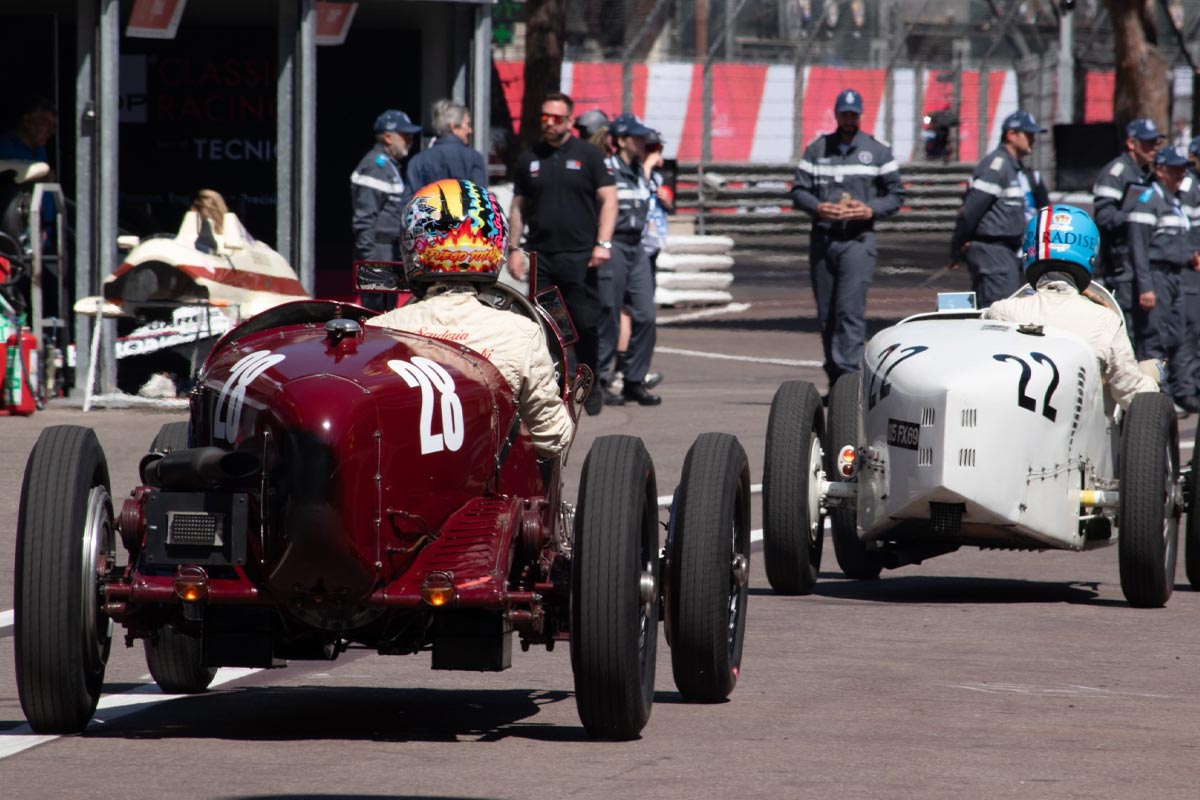
During the race, it was first the Monegasque Louis Chiron, driving a Bugatti, who led the way. Nuvolari, who started only 11th, climbed like an arrow to second place after only half an hour of racing! On lap 30, Chiron made a mistake at the chicane and rolled over - fortunately not seriously - but retired! Nuvolari inherited the lead, then had to contend with the late-race comeback of Carraciola, who quickly adapted to Monza! Nuvolari also experienced ignition problems, but held on to win by just 2.8 seconds from the white Monza!
One trick too many!
In 1933, the Monza's displacement was increased to 2.6 liters, increasing power from 165 to 180 hp and top speed to 225 km/h, until Scuderia Ferrari received the new P3s. Nuvolari returns and engages in a fierce battle for victory with his great rival, Achille Varzi, who has a Bugatti Type 51. The two men took it in turns to take the lead. At the start of the 99th and final lap, after more than 3 hours of racing, Nuvolari and Varzi were wheel-to-wheel, brushing up against each other dangerously on the Casino bend, but the Monza's engine gave up the ghost in the tunnel and the “flying Mantuan” had to retire, leaving victory to Varzi. Having even been helped by a few spectators and mechanics to push his car, he was even disqualified. This new reliability problem further strained Nuvolari's already conflict-ridden relations with Enzo Ferrari, and the Italian ended up slamming the door and leaving for Maserati.
In detail
We were able to get up close to this Alfa Romeo 8C at the historic Monaco Grand Prix 2026 to admire the details.
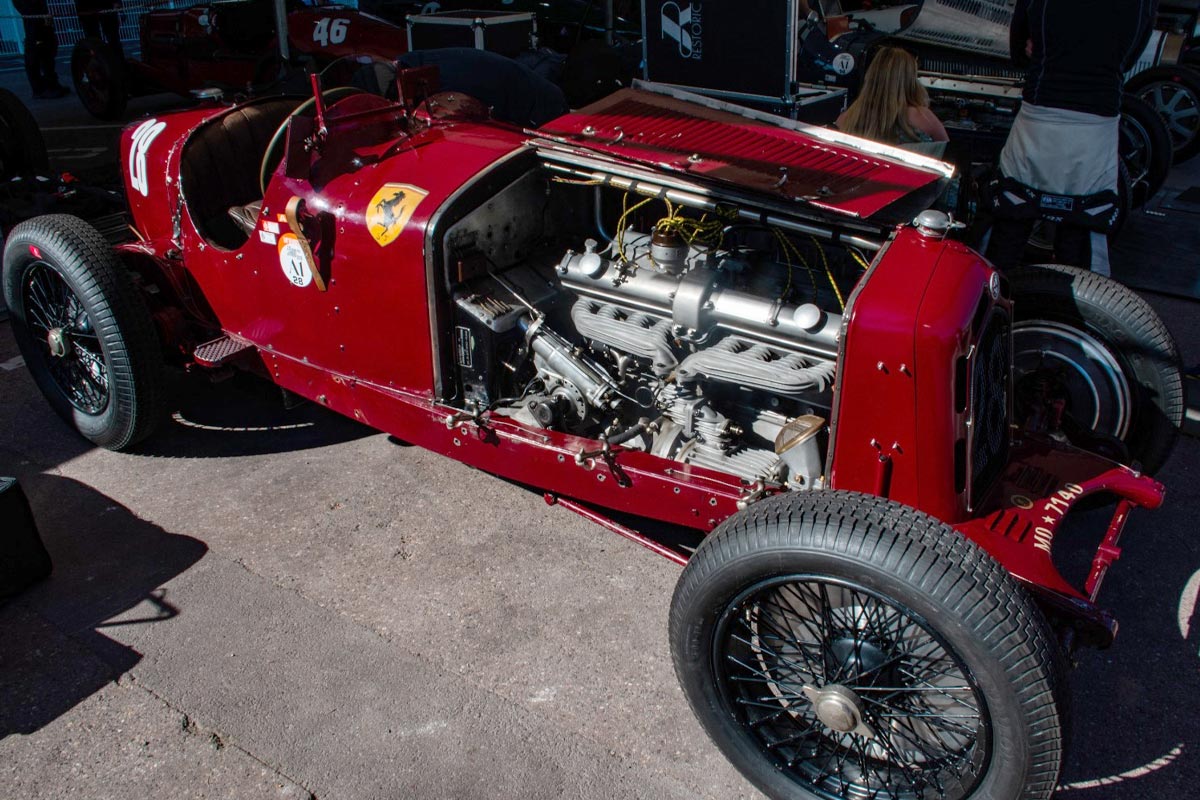
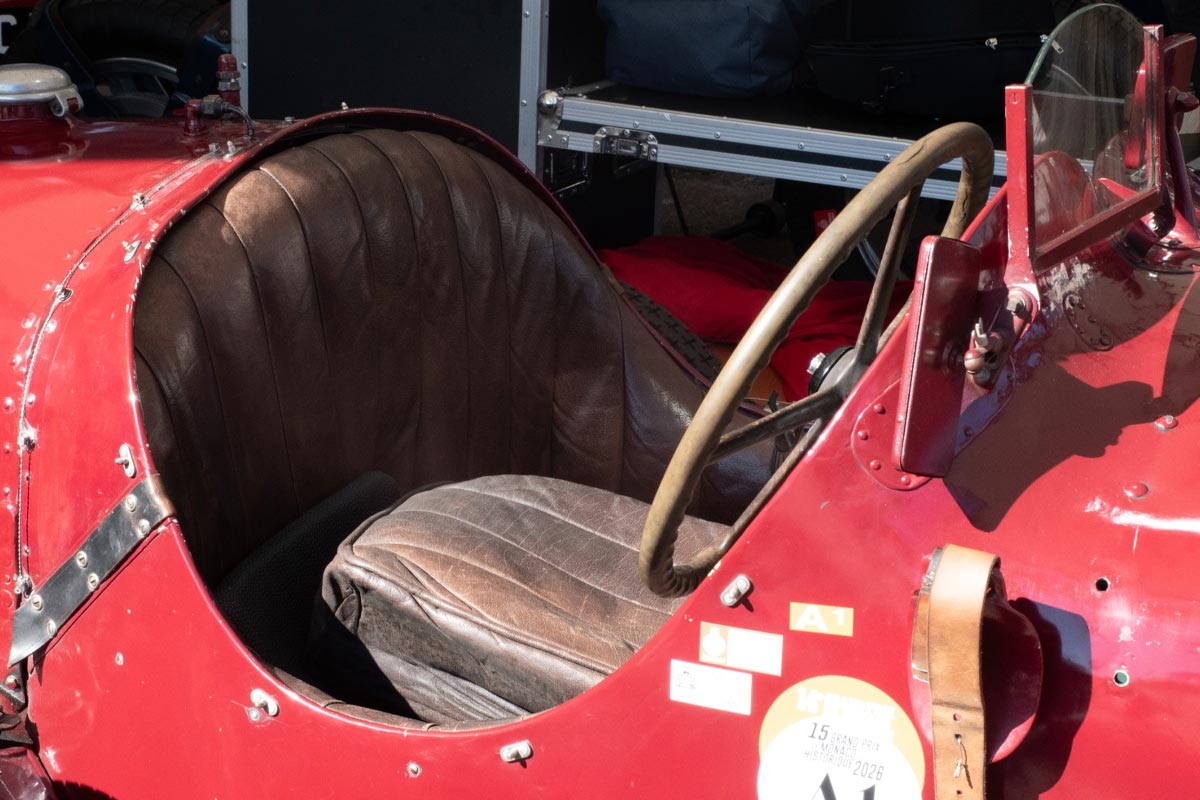
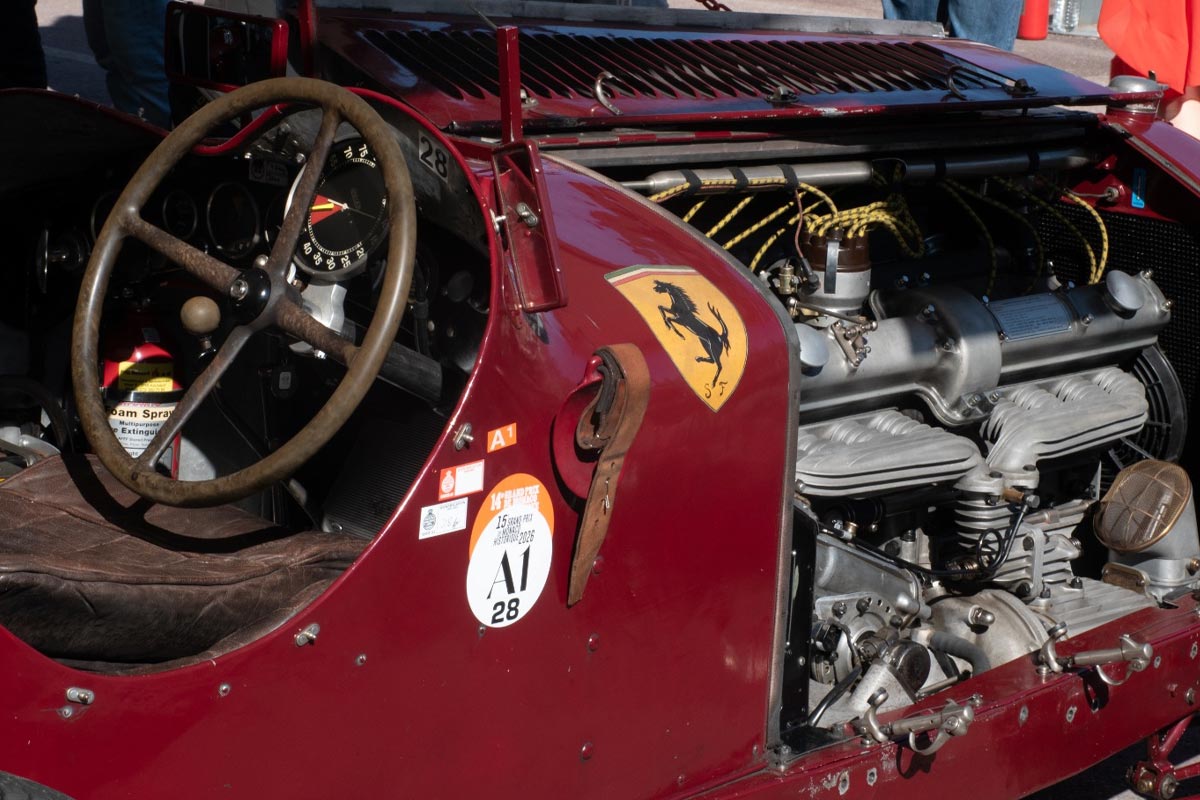
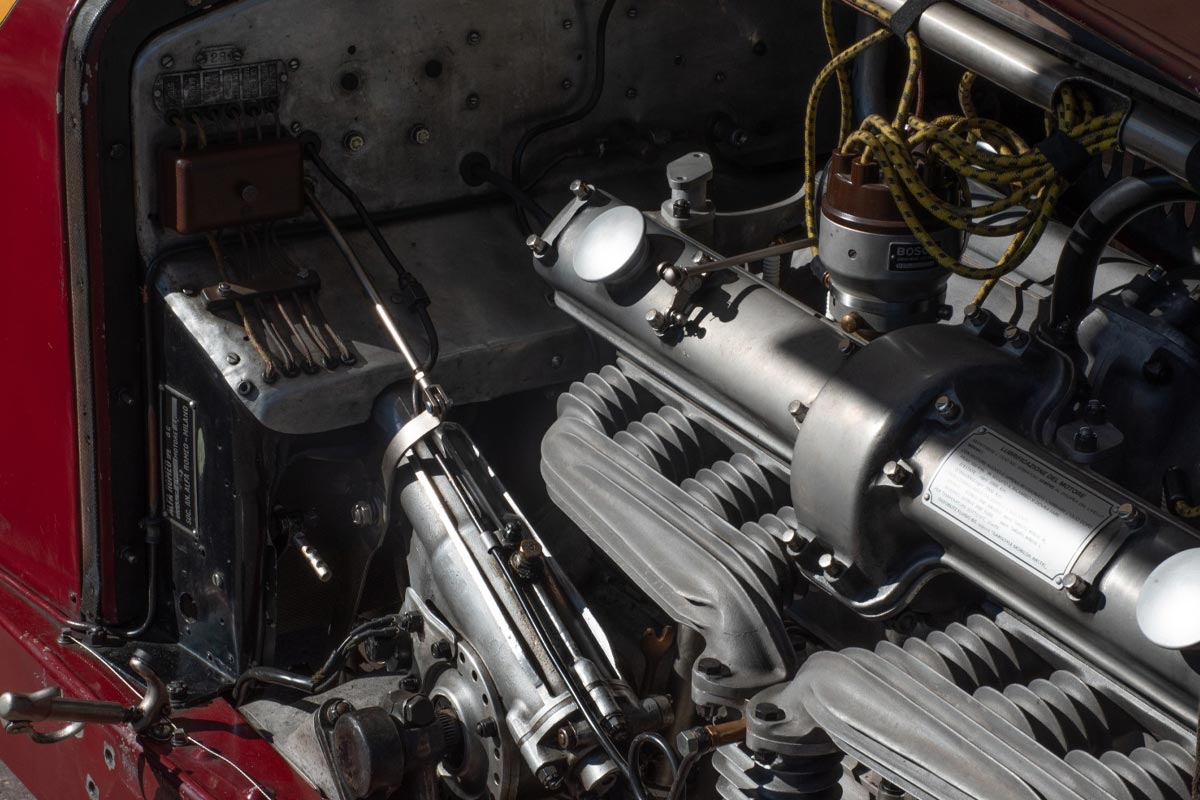
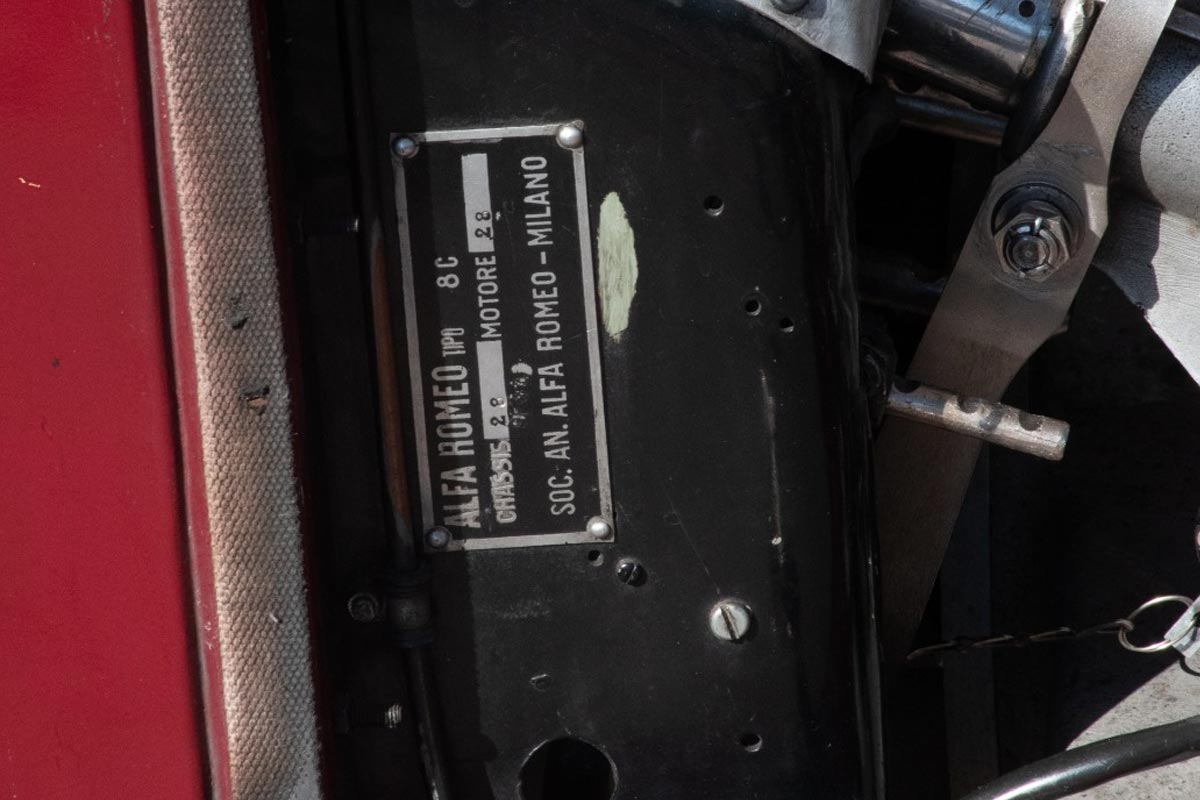
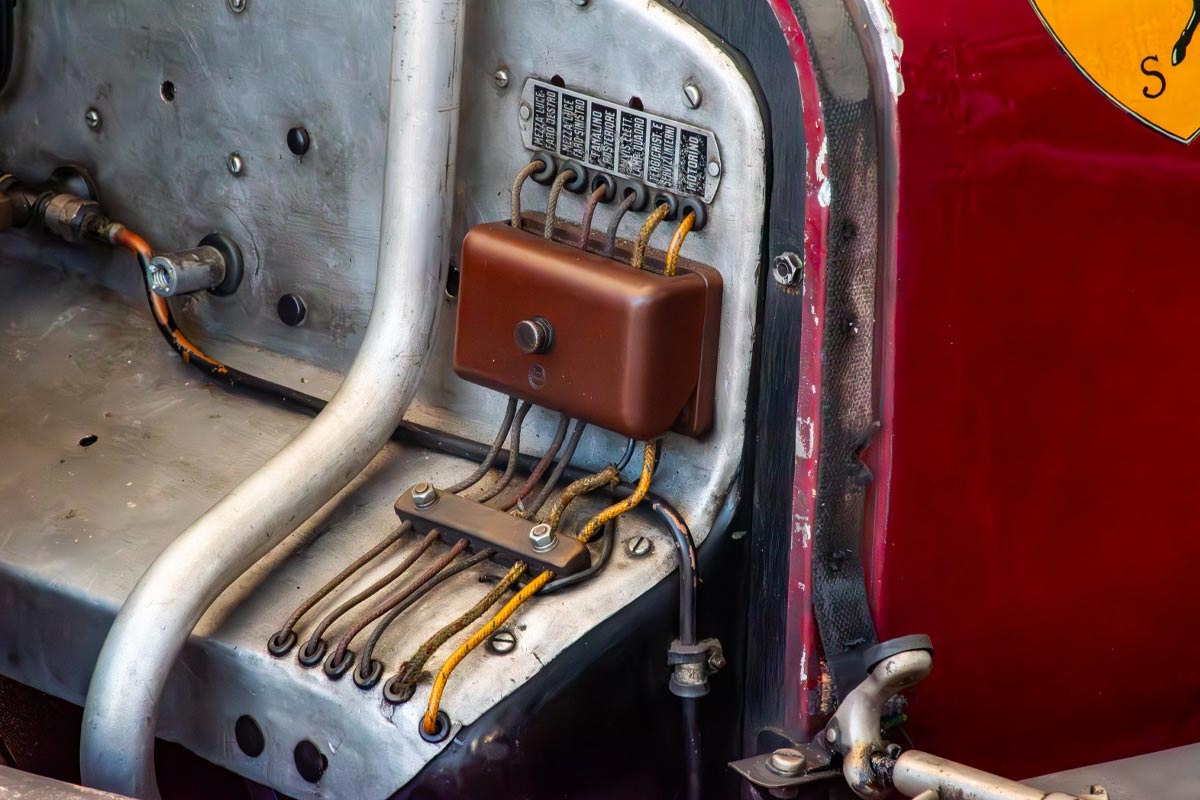
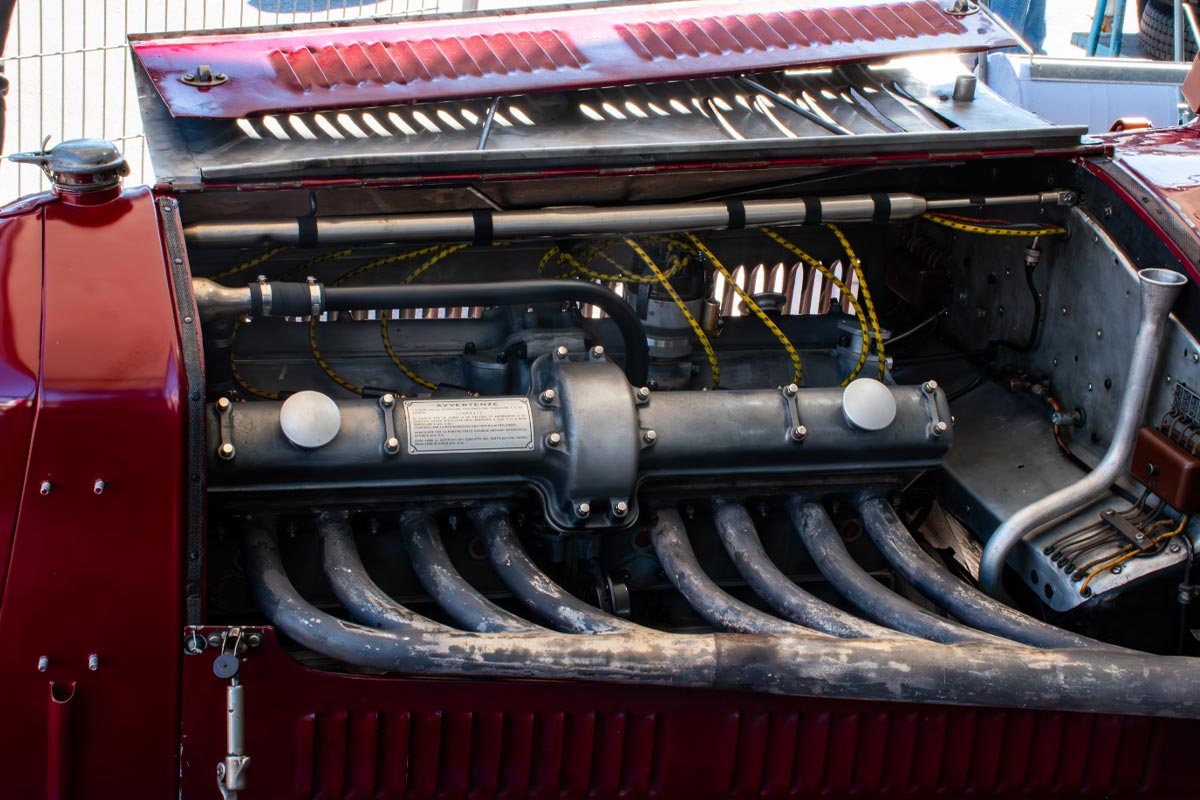
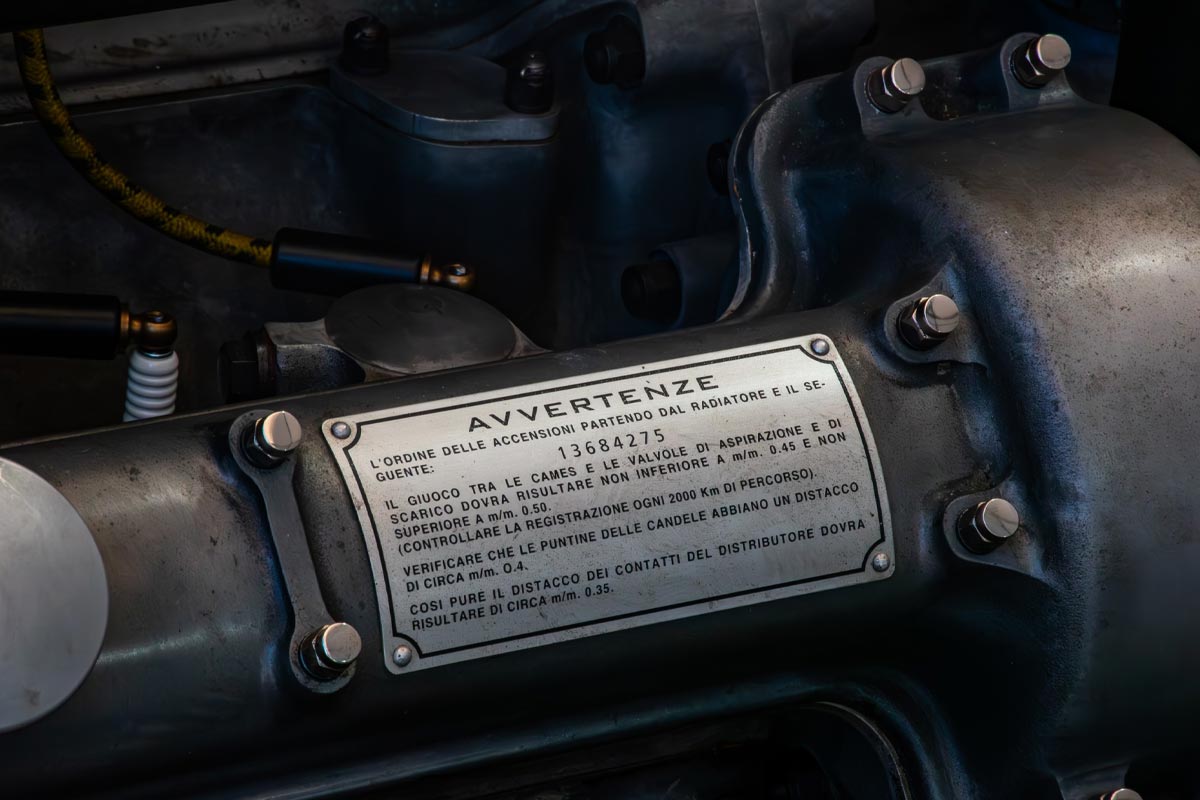
We learn that it's chassis no. 28 and engine no. 28. A plaque in the engine compartment bears witness to the precision of the mechanics and the rigor required to maintain them:
WARNINGS
The order of ignition, starting from the radiator, is as follows: 1 3 6 8 4 2 7 5
The clearance between cams and intake and exhaust valves must be minimum 0.45 mm and maximum 0.50 mm. (Check adjustment every 2000 km).
Check that the spark plug electrodes are approximately 0.4 mm.
Similarly, the spacing between the distributor contacts should be approximately 0,35 mm.”
On the other side, a plate with lubrication instructions:
ENGINE LUBRICATION
Keep the oil in the tank above minimum level.
With a new or reconditioned engine, change the oil after every two hours. 500 km.
Then change the oil:
- in summer all 2000 km
- in winter all 1000 km
The following oils are recommended:
- Summer : Oleoblitz Sport Semi-denso or Gargoyle Mobiloil BB
- Winter : Oleoblitz Sport Fluido or Gargoyle Mobiloil A
For temperatures below 0°C, use :
Oleoblitz Fluido Bis or Gargoyle Mobiloil Arctic
Yes, we're a long way from batteries!

 English
  French
  Italian
  Spanish
  German
  Japanese
  Dutch
Dutch