

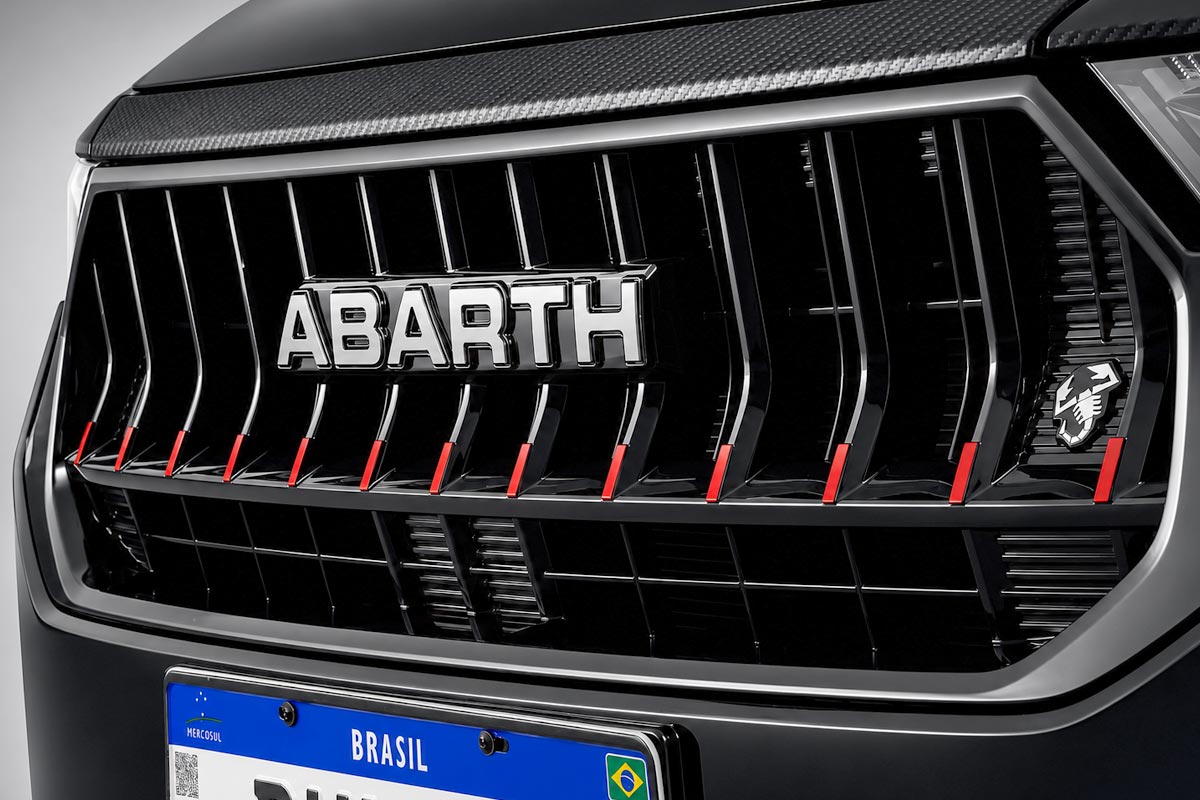
For months, statements from Abarth and Fiat executives had left room for doubt. This time, the message is much clearer. Olivier François, CEO of Fiat and Abarth, confirms unequivocally that’Abarth needs to bring back at least one internal-combustion model. This is a strong stance that confirms what enthusiasts have been saying ever since the brand switched to the all-electric %. But between this conviction and a car actually hitting the market, there remains a major obstacle: as of now, it still doesn’t add up.
Stellantis's messaging is evolving
In several public statements over the past few weeks, Olivier François has reiterated the same point. «I remain convinced of one thing: Abarth needs at least one gasoline-powered model in its lineup.» More recently, he confirmed this even more clearly to the French media L'Argus : «Abarth needs internal combustion engines. That’s very clear. We’re working on it.»
This shift in tone is far from insignificant. Since the discontinuation of the Abarth 595 and 695, the brand now offers only the electric 500e and 600e models. This strategy has never truly won over long-time customers, who are just as attached to performance as they are to the mechanical character, the sound, and the tuning potential that have built the Scorpion’s reputation.
The Fiat 500 Remains a Headache
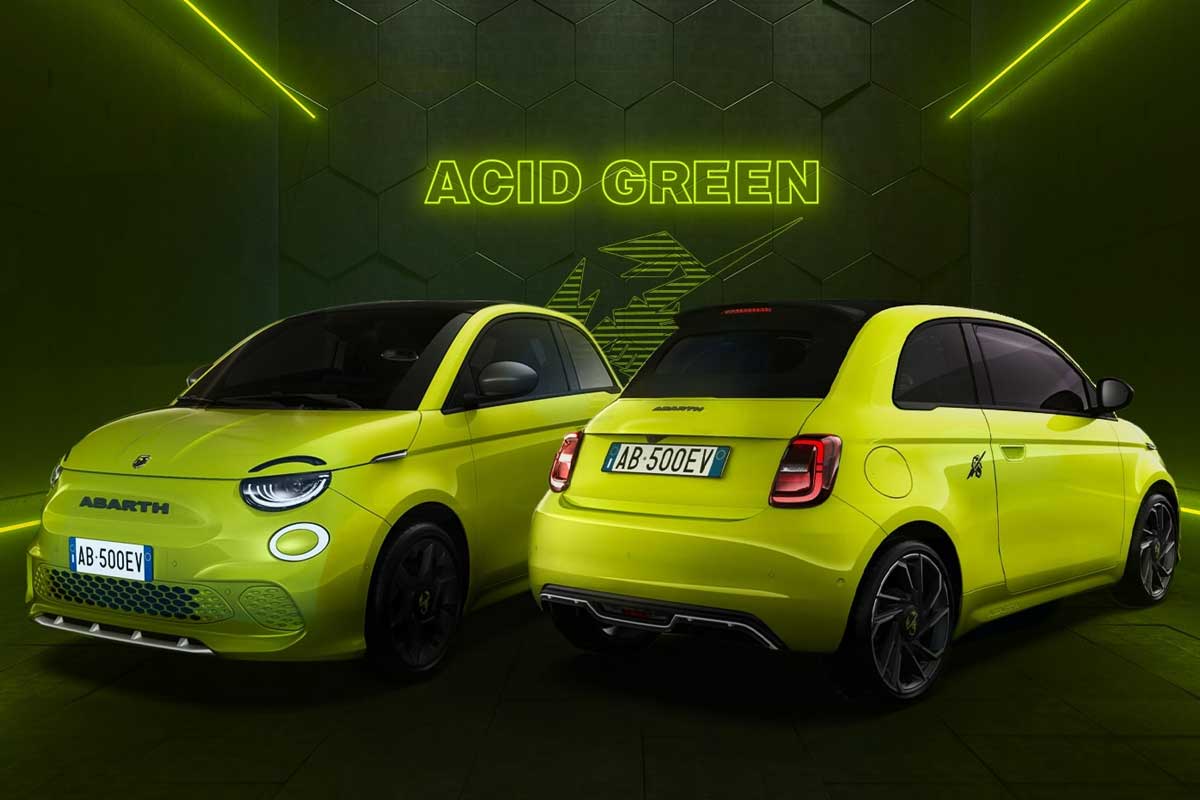
The problem is that wanting to put an internal combustion engine back in an Abarth doesn’t mean it can be done quickly. As Olivier François acknowledged, the most obvious candidate—the Fiat 500—is also the most complicated. «The 500 is difficult,» he explains, even going so far as to mention a possible future generation planned for around 2030.
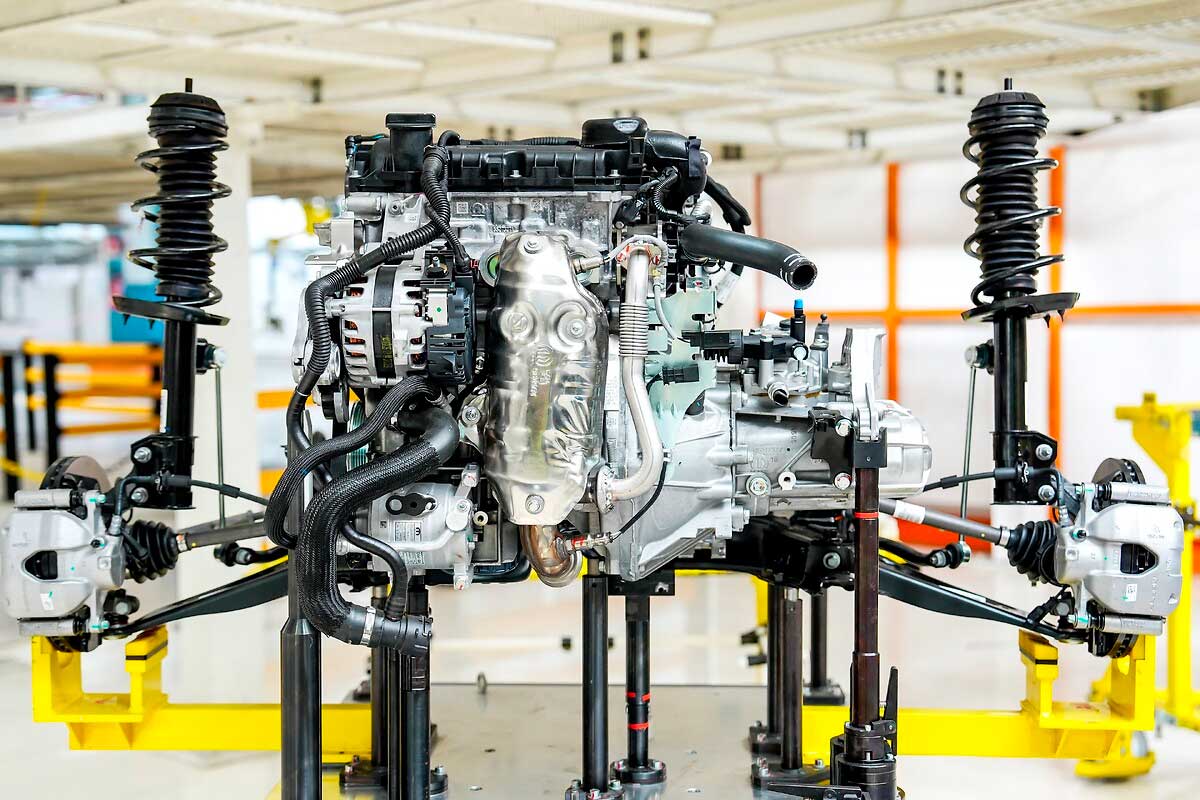
The reason is primarily technical. The platform for the current Fiat 500 was originally designed for an electric powertrain. Fiat successfully integrated the small three-cylinder gasoline engine from the new 500 Hybrid into it, but installing a much more powerful engine—one capable of bearing the Abarth badge—presents an entirely different challenge. The available space under the hood, cooling requirements, and necessary modifications make the task particularly complex.
Other possibilities remain on the table
That said, Stellantis isn’t closing any doors. Olivier François hints that the return of internal combustion engines may not necessarily come via the 500. «It could be the future 500, but other options remain on the table. » This statement takes on its full meaning as Fiat prepares to expand its lineup with several multi-energy models. The new Fiat Grizzly or the Fiat Grande Panda—which are already available with gasoline, hybrid, and electric powertrains—would offer a much more suitable platform for a future combustion-engine Abarth. An Abarth derived from these models thus appears technically much more feasible than an adaptation of the current 500.
A genuine commitment, but an unclear timeline
In just a few months, Stellantis’s stance has changed dramatically. After advocating for an exclusively electric future for Abarth, the group now publicly acknowledges that a brand with such strong emotional appeal likely cannot turn its back on internal combustion engines for good.
But this recognition alone is not enough to bring a new sports car to market. The technical constraints of the current 500, the necessary investments, and European regulations on CO₂ emissions continue to pose serious challenges.
In other words, Stellantis is now confirming what enthusiasts have been calling for for a long time: Abarth needs internal combustion engines. However, a solution does not yet exist. And while a comeback seems more likely today than it did a year ago, we’ll still have to wait a long time before we see a gasoline-powered Abarth roaring down European roads again. And here at Italpassion, we believe the solution could come from Brazil, which already has a track record of creating an Abarth variant for nearly every Fiat model.
 English
  French
  Italian
  Spanish
  German
  Japanese
  Dutch
Dutch
Wow! They've finally figured it out at Stellantis!!! Everything about this company is just as ridiculous.
Abarths are derivatives of Fiat…
The decision to produce only electric vehicles stems from the 2019–2020 phase of Olivier François’s strategy.
The decision to make a strategic shift dates back to 2024 (at the earliest).
Therefore, FCA’s liability is 100 %, while Stellantis’s is 0 %, as it has inherited the legacy of the all-EV strategy.
We’re dealing with amateurs who don’t understand what Abarths are all about—or what Abarth customers want. The slogan when the Abarth 500e was released was: «More Abarth than ever.» And then people act surprised…
I understand that sales of the Abarth 500e and 600e are fairly modest.
It's still hard to believe that years ago, people bet on just one horse: an electric one!!
Gosh, you managed to do that without the benefit of… HINDSIGHT… how did you pull that off?
Well, at the same time, we have to be realistic too! Nobody cares about Abarth 🙄. That was back in the ’70s, and by the way, the museum in Beaune is incredible when it comes to that.
«Doesn't anyone care about Abarths anymore?»
Sales of the Abarth 595 and 695 have been excellent for many years.
It's the most fun little car on the market—imperfect but awesome. With a unique exhaust note and a truly exhilarating driving experience.
Sure, but how many, really? Besides, it was still a Fiat 500… so a Fiat. Abarth isn’t a brand, so who cares about those few customers? As an option on the Fiat lineup, it works just fine.
Abarth cars have always been based on existing models. It goes without saying that the base model is a Fiat. Abarth is Fiat's sports car brand.
I think you don't get it
Check out the h&s corse website
Then you'll see just how much demand there is for it
A car with a gas engine 🤣
Spoiler: Nothing is coming until 2030, when the next 208 is set to be released.
The upcoming Abarth 500 will obviously be based on the upcoming Fiat 500, which itself is based on the upcoming Peugeot 208. The engine will be the 1.2L PureT… uuuuh, Turbo, Turbo!!! It will feature a special yellow paint color and special wheels.
There you go.
Best regards.
The next-generation Peugeot 208 will be unveiled in the spring of 2027,
with production scheduled to begin in July 2027 and the product set to go on the market in the second half of 2027.
It happens when you have managers who think the same way as the people in the European Parliament.
In any case, all we'd need to do is partner with Ducati and fit it with a modified 1000cc twin-cylinder engine.
The board has no idea what it’s doing. Planning an ICE for 2030 is unrealistic at this point. Legislation, marketing, and fuel prices will prevent a successful launch. Stellantis would be better off selling Abarth to a European brand, like BMW or Renault. They have the resources and the models. Hopefully not a Chinese brand.
Do you think that BMW, which owns MINI, and Renault, which owns Alpine, need a tiny little brand like Abarth that produces very few cars? .
It's been a while since we've seen a truly great car—namely, the Fiat Abarth 131
The 500 Cento is too small for that much horsepower; it needs a solid
Body, Manual Transmission, that
I need a real guy, not electric cars that look more and more like airplanes.
Why did production of the 595, 695, and Fiat 500 have to be stopped so suddenly? Let production of these models resume until a new, full-fledged Abarth 500 is available. Stellantis is simply killing the Italian auto industry.
The Abarth 600e is a brilliant driver's car! Anyone who hasn't tried it yet really needs to give it a go…
Just extend the 500 by 10 cm, like Toyota did with the Aygo X. They’ve fitted a 1.5-liter hybrid engine in it. Imagine how something like that would sell in the 500? 74 mpg and lively performance. Come on, Abarth—it’s time to step up and prove yourselves!
A tuning company—come to think of it, that was Abarth’s original line of work—could pull it off without any trouble, but Stellantis couldn’t? They don’t think people are idiots, do they?
Low-slung, rugged, manual, under 4 meters, and very powerful—you can’t make a cheap street sports car by mixing it with an SUV; THAT JUST WON’T WORK. What’s going on—did all the «car nuts» die off? An Abarth isn’t supposed to be «rational»—it never was—and that’s why so many «irrational» people like ME love it. I got my first one in 1964—a used Record Monza—and I’ve loved Abarth ever since. Greetings from ARGENTINA
Hi, I've been an Opel fan and Opel driver for over 55 years. The Abarth is a great car—I have one if
Every time I've had the chance to drive one, it's been a great experience. I own a 2024 Corsa F with almost
400 PS—as Opel fans say, «IT'S LIKE YOU'RE FLYING»
See you later, Alexsis.