
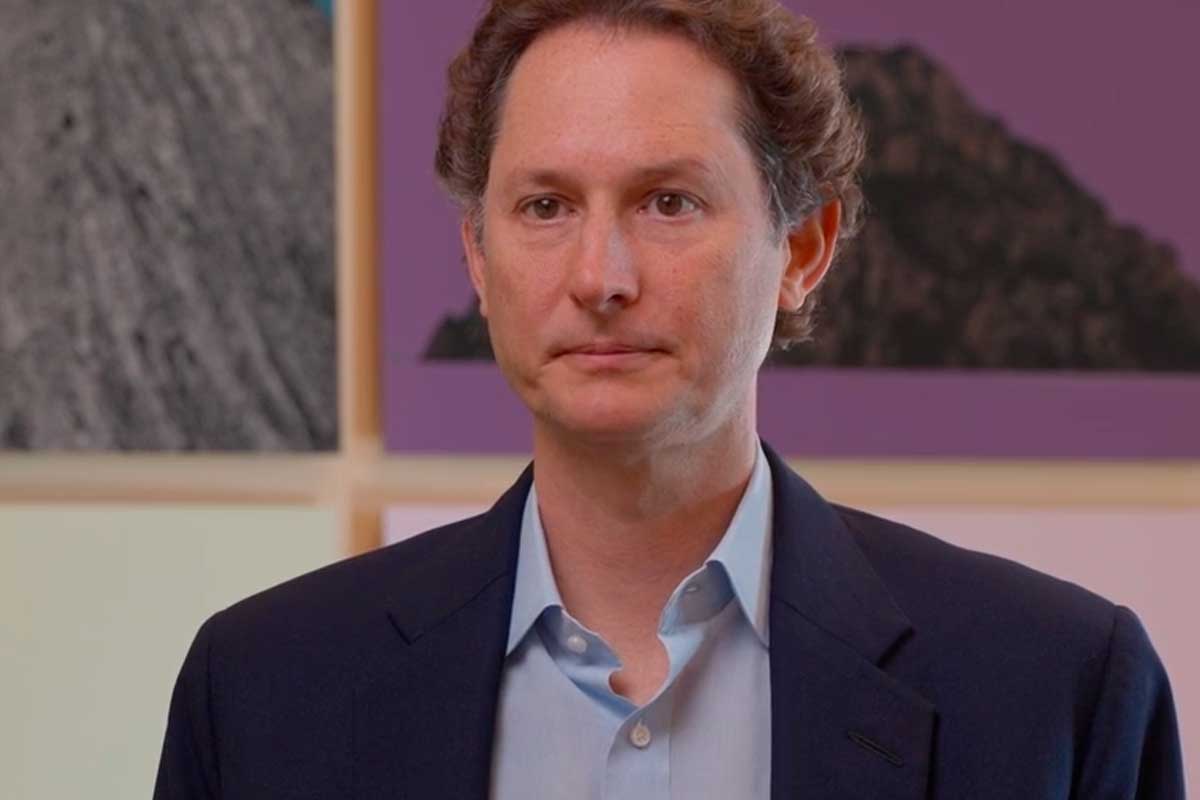
After a year 2025 described as the “most difficult” in its recent history, Stellantis is undergoing a profound reappraisal. Presenting the results of the Exor holding company, its chairman John Elkann made a lucid, almost brutal assessment of past strategic errors... and of the legacy left by the Carlos Tavares era.
A black year that forces us to rethink everything
The tone is set from the very first lines of the speech. John Elkann does not seek to minimize the situation:
«Stellantis [...] had its most difficult year, marked by a record loss and a sharp depreciation in its value.»
In the space of two years, the group went from an all-time record to a spectacular fall. In 2023, Stellantis posted sales of 189.5 billion euros and net profit of 18.6 billion. But by 2025, the reality was quite different: revenues had fallen to 153.5 billion euros, while the group recorded a colossal net loss of 22.3 billion.
For Elkann, this turnaround highlights an essential truth: even a giant like Stellantis is never safe from a brutal imbalance.
«This turnaround highlighted just how quickly the situation can change within a complex industrial company.»
The shadow of the Tavares strategy
Without ever directly naming Carlos Tavares, Elkann clearly points to certain structuring decisions taken under his tenure. In particular, he refers to a cost-cutting policy deemed too aggressive:
«A policy of drastic cost-cutting has limited the company's ability to deliver vehicles at the pace and to the quality standards our customers deserve.»
But the most striking criticism undoubtedly concerns electrification. Stellantis is said to have accelerated too quickly, without taking market realities into account:
«We also accelerated the transition to electrification faster than consumer demand ultimately warranted [...]. [...] In doing so, we strayed too far from our customers» preferences, and the ensuing adjustment was brutal."
A company relearning to listen
Following the departure of Carlos Tavares at the end of 2024, John Elkann acted as interim CEO for several months before the appointment of Antonio Filosa in the spring of 2025. A period during which the Chairman was personally involved in the field.
He recounts how he spent hundreds of hours traveling to factories to gain a concrete understanding of the problems. But beyond the numbers, it was a cultural change that seems to have left its mark. During a factory visit in Detroit, a phrase uttered by an employee sums up this turning point:
«We can finally talk openly about what's not working and how to fix it.»
This phrase, which struck John Elkann, reflects an internal change of direction: the end of an operation considered too vertical, where problems were sometimes hushed up, in favor of a more open environment.
2025, the year of the reset“
Faced with the scale of the difficulties, Stellantis embarked on an in-depth transformation. Elkann describes it as a “year of reckoning”. And this resulted in some heavy decisions, including exceptional charges of 25 billion euros:
«These difficult but necessary decisions are designed to challenge past assumptions and restore strategic flexibility.»
The objective is clear: to start afresh on a sound footing, with a strategy refocused on the fundamentals. Among the major changes, the Group is now emphasizing customers' freedom of choice between electric, hybrid and internal combustion engines:
«Putting customers» freedom of choice at the heart of company projects."
Antonio Filosa, the man of renewal
Since the beginning of 2026, Antonio Filosa has been officially leading the Group's turnaround. His profile, praised by Elkann, is based on in-depth knowledge of the company and a collaborative vision:
«Collaboration and responsibility are the foundations of sustainable progress.»
Under his leadership, Stellantis aims to return to its fundamentals: quality, engineering, production and proximity to the market. Despite the storm, John Elkann is optimistic about the future. The group now intends to move forward with more discipline and, above all, more listening. Electrification remains a key focus, but with a more pragmatic approach:
«I am convinced that Stellantis will turn things around. [...] This journey continues at a pace that must be driven by demand rather than directives.»
A phrase that perfectly sums up the group's new philosophy. After a period marked by radical choices that were sometimes out of touch with the market, Stellantis seems to be entering a more realistic phase. It remains to be seen whether this “reset” will be enough to restore lasting confidence... and boost the automotive giant's performance.
 English
  French
  Italian
  Spanish
  Portuguese
  German
  Japanese
  Turkish
  Dutch
Dutch